
Reviewed · CATANIA, SYRACUSE & ORTIGIA
Syracuse: Ortigia and Neapolis Guided Walking Tour
Greek gods meet real street corners in Syracuse. This small-group tour knits together Neapolis and Ortygia with a licensed guide and headsets, so you do not miss the key story bits.
I like that it starts in the Archaeological Park zone and then shifts onto Ortygia, the lime-white island, where monuments feel close to everyday life. You get a close look at the Temple of Athena and how it ties directly into the Cathedral of Syracuse, plus time with major ruins like the theaters and the dramatic rock-cut features.
One thing to plan for: entrance fees are not included, so your total cost may rise once you add the Archaeological Park ticket(s).
In This Review
- Key things I’d circle before you book
- Enter Neapolis, where Syracuse’s power is written in stone
- Temple of Athena to Cathedral of Syracuse: one site, two eras
- Neapolis Archaeological Park: theaters, viewpoints, and the big “how it worked” story
- Paradise Latomia and the Ear of Dionysos: rock-cut drama with an explanation
- Ortygia Island: lime-white streets, religion, and sea air
- How the 3 hours really feel on your feet
- Guides make or break it, and this one gets high praise
- Price and value: what you get for $317.20 per group
- Who should book this Syracuse walk
- Final call: should you book?
- FAQ
- How long is the Syracuse: Ortigia and Neapolis Guided Walking Tour?
- Where do I meet the guide?
- Is the tour a private group?
- Which languages are offered?
- Are entrance fees included?
- Is the tour good for kids?
- Should I expect a lot of walking?
- Is the tour wheelchair accessible?
Key things I’d circle before you book
- Licensed guides plus headsets to keep the talk clear, even in busy areas
- Temple of Athena to Cathedral of Syracuse connections you can spot with your own eyes
- Neapolis highlights like the two ancient theaters and big viewpoints over the Ionian Sea
- Ortygia street-walk time on the gorgeous lime-white island (not just a drive-by)
- A “Paradise Latomia” style stop and the famous Ear of Dionysos rock feature
Enter Neapolis, where Syracuse’s power is written in stone
Your tour begins at the Biglietteria Parco Archeologico Neapolis, on Via Luigi Bernabò Brea. Your guide meets you at the ticket office with a sign for the local partner, and you are set up with a headset right away, which is a small detail that pays off fast.
If your scheduled start uses the alternative option near Tempio di Apollo, the idea stays the same: you are in the right zone to start seeing ancient Syracuse as a real city, not a postcard. This area matters because it explains why Syracuse could be a Mediterranean capital. The architecture and the layout do the storytelling for you, and your guide helps you connect the dots.
Practical note: this is a walking tour, so comfy shoes are not optional. Bring a hat and water too, because the Sicilian sun does not negotiate.
Our reviewers also walked through other Catania, Syracuse and Ortigia walks in Syracuse.
- Syracuse: Boat Tour with Captain Mirko, Snorkeling & Caves
★ 4.7 · 746 reviews - Siracusa: Ortigia Boat Tour with Marine Grotto
★ 4.7 · 617 reviews - Siracusa: Ortigia & Sea Caves Speedboat Tour with Swim Stop
★ 4.9 · 499 reviews - Syracuse: Neapolis Archaeological Park Small Group Tour
★ 4.7 · 350 reviews
Temple of Athena to Cathedral of Syracuse: one site, two eras
The tour’s big early anchor is the Temple of Athena. Expect a photo stop and then about a half-hour guided walk through the ideas and clues you can see on the ground.
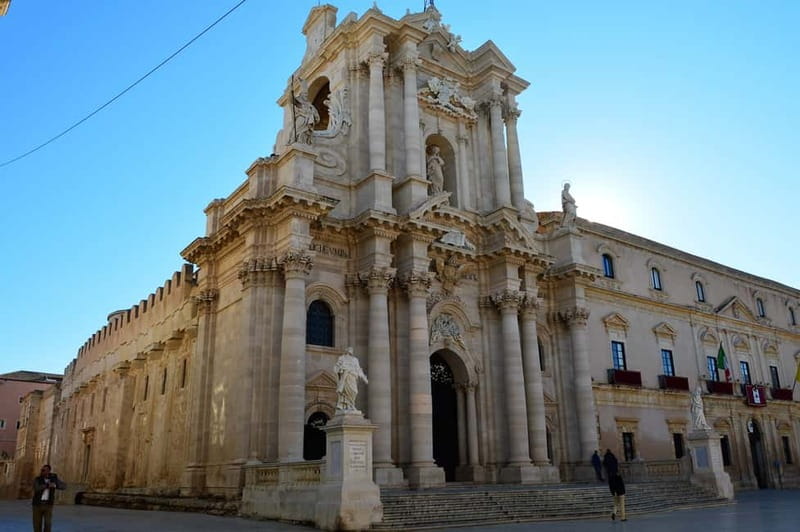
What I love here is the way the guide turns architecture into a timeline. Syracuse is often described through cultures, rulers, and wars, but here you get a concrete, visual lesson: the Cathedral of Syracuse incorporates elements tied to the Temple of Athena. Your guide walks you through the architectural styles that show up in the Cathedral, so it feels less like random ornament and more like a city recycling its own materials and meanings.
You also get the satisfaction of watching your understanding click into place. The Cathedral does not just look beautiful, it becomes a historical document. And because your time at the Temple of Athena is guided, you are not left wandering, trying to translate stone with no context.
Neapolis Archaeological Park: theaters, viewpoints, and the big “how it worked” story
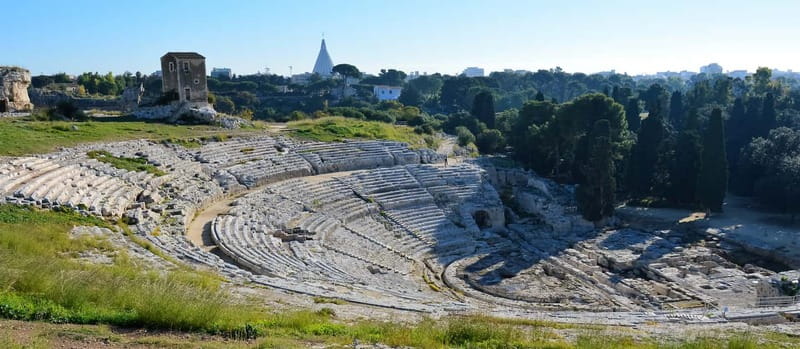
After Athena, the tour moves deeper into the Archaeological Park area. This is where you see why Syracuse’s influence stretched across the Mediterranean, not just because of power, but because of spectacle, public life, and religious practice.
The highlights here include the two ancient theaters, and the tour also references the Greek Theater and the Roman Amphitheater as part of the story. That matters, because you get a sense of how the same spaces could shift roles and styles over time. Your guide helps you understand the purpose of theater architecture in ancient cities, which turns your photos into something more useful later.
One of the best moments is the viewpoint component tied to the Greek Theater area, with sights out toward the Ionian Sea. Standing in these positions changes how you picture daily life. You start thinking about sight lines, crowds, and the rhythm of a city built to host gatherings.
A heads-up: entrance fees to monuments are not included. One review specifically called out an archaeological park ticket cost of about 13 euros per person, so if you are traveling with others, this is the part where budgeting really shows up.
Paradise Latomia and the Ear of Dionysos: rock-cut drama with an explanation
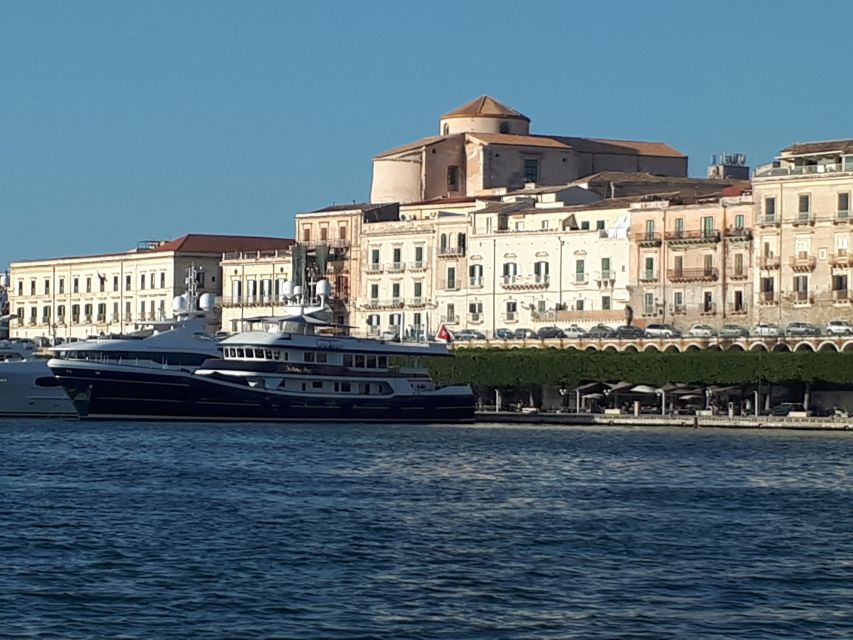
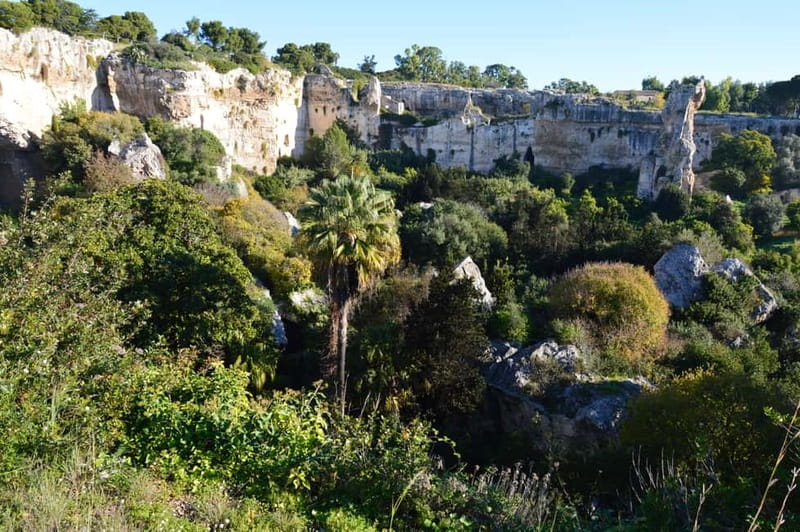
This tour includes stops connected to the famous rock-cut features in the Neapolis park area, including the Paradise Latomia and the Ear of Dionysos. Even if you have seen pictures online, the scale and setting are the kind of thing that feels better in person, because you can see how the rock shapes the space.
What makes these stops worth your time is the guided context. Your guide frames them through early Greek life and the religious and civic meanings tied to the landscape. Instead of treating the Ear of Dionysos like a silly tourist trick, you learn what the site represents and why Syracuse loved dramatic, carved environments.
The Ear of Dionysos especially helps with the “what am I looking at” problem. With a guide, you are not just pointing and snapping. You are learning how people used these spaces and what stories they attached to them.
Ortygia Island: lime-white streets, religion, and sea air
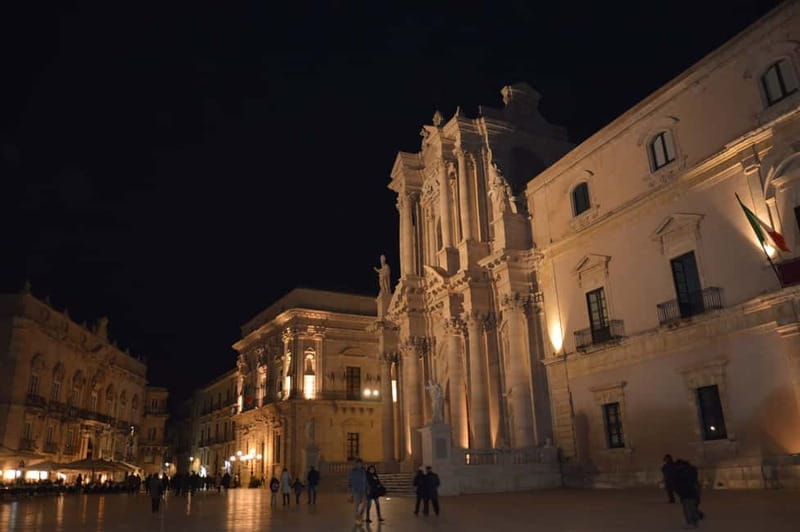
After the park portion, you shift to Ortygia, the island part of Syracuse. Ortygia is often described as lime-white, and the feeling is real once you are walking there, not just looking from afar. Streets feel narrower, architecture feels more layered, and the monuments blend into a living neighborhood.
The tour is designed for small groups, and that tends to help here, because Ortygia’s best moments come from short pauses. You will want time for photos, and you will probably want to ask follow-up questions when your guide spots something you would otherwise miss.
On at least some days, there may be a short taxi transfer between Neapolis and Ortygia to keep the full tour within the 3-hour window. If you see a quick ride in the plan, do not panic. It is usually about timing, not cutting corners.
How the 3 hours really feel on your feet

This is a 3-hour guided walking tour. That is a smart length for Syracuse, because you get the key monuments without turning the day into a marathon.
Still, it is not a sit-down museum tour. You should expect walking between major stops and a pace that moves you through the highlights. The upside is you cover a lot of ground, including both Neapolis and Ortygia. The tradeoff is that you need to be ready to keep moving and to decide in the moment where you want to linger.
The tour is a private group with capacity up to 5 per group, which is a big deal for comfort and questions. In real life, small groups also mean fewer bottlenecks at crowded photo moments.
Filed beside this one, more walking tours in Syracuse.

Guides make or break it, and this one gets high praise
One reason this tour earns a strong rating is that the guides often show up as the main character. Names like Marcelo, Anna, Laura, Giuseppe, and Rosanna come up again and again, and the common thread is clear: they connect the monuments to the bigger Syracuse story and keep the conversation flowing.
I especially like the way some guides handle tough curiosity. Giuseppe, for example, is described as answering lots of questions and even adding legends, while still staying grounded in the historical context. Marcelo is noted for moving from Greek origins into later periods with clarity, and keeping energy high even when weather shifts.
That matters because Syracuse can feel layered and confusing if you only rely on signage. A good guide helps you learn the patterns, not just memorize dates.
Price and value: what you get for $317.20 per group
The price is $317.20 per group (up to 5), and it includes a licensed guide plus headsets. It also includes skip-the-ticket-line, which is helpful when you are trying to stay on schedule.
Is it expensive? It can be, but it often feels fair for three reasons. First, this is a private group size, not a big bus-style experience. Second, the headset feature means you can hear the guide clearly, which you notice immediately. Third, the itinerary strings together major landmarks that would take more time (and more ticket stress) if you were doing it alone.
The big value caveat is the part that is not included: entrance fees to monuments. If you add the Archaeological Park admission and any other entry costs for your chosen sites, your total will rise. If you are traveling as a small group, that cost is easier to spread out.
Also remember: food and drinks are not included. So plan a snack strategy before or after, especially since the tour itself is about monuments, not meals.
Who should book this Syracuse walk

This tour is a good fit if you want the essentials of ancient Syracuse, but with a human guide who can explain what you are seeing. It works well for people who like walking tours that have structure, rather than wandering until you find something interesting.
It also fits families. The tour notes that children of all ages are welcome and that the guide involves parents and children in the experience. With a private group, you tend to get more flexibility if kids need a pause, or if adults need a slower pace.
If you want a deeper Syracuse context without building a research project yourself, you will likely appreciate this format.
Final call: should you book?
I think you should book this tour if you want a guided path through Neapolis and Ortygia that hits the Temple of Athena, the Cathedral connection, the theaters, and the standout rock-cut sites like the Ear of Dionysos. The small-group size, headsets, and skip-the-ticket-line perks make it feel efficient and easier to enjoy.
I would pause and double-check your budget if you know you will have trouble adding monument tickets on top of the base price. Once you account for entrance fees and bring water and comfy shoes, this is the kind of Syracuse experience that turns stone into a story you can actually follow.
FAQ
How long is the Syracuse: Ortigia and Neapolis Guided Walking Tour?
It runs for 3 hours. You can check availability to see the starting times.
Where do I meet the guide?
You meet at the Biglietteria Parco Archeologico Neapolis, Via Luigi Bernabò Brea, 96100 Siracusa. The guide meets you at the ticket office with a sign showing the name of the local partner.
Is the tour a private group?
Yes. It is a private group, up to 5 people.
Which languages are offered?
The live guide is available in English, French, Italian, Russian, Spanish, and German.
Are entrance fees included?
No. Entrance fees to the monuments are not included.
Is the tour good for kids?
Yes. The tour can accommodate children of all ages, and the guide involves both parents and children.
Should I expect a lot of walking?
Yes. It is a guided walking tour across Neapolis and Ortygia, so wear comfortable shoes.
Is the tour wheelchair accessible?
The tour is wheelchair accessible.
Our Wider Tours File for Syracuse
The Rest of Our Catania, Syracuse and Ortigia Walks in Syracuse
Not quite the day you had in mind? The rest of our Syracuse write-ups sit below
- From Syracuse: Mount Etna Guided Morning Hike & Food Tasting★ 4.8 · 173 reviews
- Syracuse: Ortigia and Neapolis Guided Walking Tour★ 4.7 · 205 reviews
- Syracuse: Ortigia Sunset Cruise with Aperitif★ 4.8 · 291 reviews
- Syracuse: Street Food Walking Tour in Ortigia with Tastings★ 4.9 · 293 reviews
- Syracuse: Coast and Sea Caves Full Transparent Boat Tour★ 4.8 · 330 reviews
- Syracuse: Ortigia Island and Sea Caves Boat Tour with Drinks★ 4.6 · 337 reviews
- Syracuse: Pillirina, Ortigia, and Sea Caves Tour by Boat★ 4.6 · 348 reviews
- Syracuse: Neapolis Archaeological Park Small Group Tour★ 4.7 · 350 reviews
- Siracusa: Ortigia & Sea Caves Speedboat Tour with Swim Stop★ 4.9 · 499 reviews
Catania, Syracuse & Ortigia, top to bottom.
 ★ 4.8Catania: Mount Etna Morning or Sunset Day Trip with TastingFrom $704,028 reviews
 ★ 4.8Catania: Sunset Jeep Tour of Mount Etna and Lava Flow CavesFrom $712,113 reviews
 ★ 4.9Catania: Mount Etna Trekking Trip off the Tourist PathFrom $781,351 reviews
 ★ 4.8Catania: Etna Sunset Tour with Pickup and Drop-offFrom $711,348 reviews
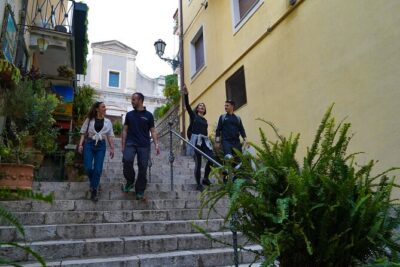 ★ 5.0Mt. Etna and Taormina village full day tour from CataniaFrom $1181,155 reviews
 ★ 4.7From Catania: Mount Etna Sunset Tour with Tasting and CaveFrom $451,119 reviews
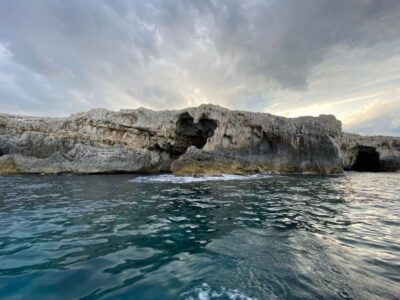 ★ 4.7Syracuse: Boat Trip of Ortigia Island and Sea CavesFrom $23937 reviews
 ★ 4.8Catania: Etna Morning Excursion with Tasting and PickupFrom $67820 reviews