
Reviewed · CATANIA, SYRACUSE & ORTIGIA
Syracuse: Neapolis Archaeological Park Small Group Tour
Syracuse history you can hear. This small-group visit to Neapolis Archaeological Park hits two big targets: the Ear of Dionysius experience and the Greek theater views over the bay. The main thing to consider is that this is real walking on uneven ancient ground, so comfy shoes matter.
What really makes the difference is the licensed guide. Names you might run into include Eva and Federica, who are praised for clear storytelling that connects Greek and Roman Syracuse instead of treating them like separate worlds. The tour is timed tightly (about 1.5 hours), so if you want to linger at every stop, you may feel a little rushed.
In This Review
- Key highlights worth your attention
- Why Neapolis in Syracuse feels different from most ruins
- Meeting at Largo Anfiteatro, 2 and how the tour runs (1.5 hours)
- Latomie del Paradiso and Grotta dei Cordari: the quarry that turns into a story
- Ear of Dionysius: where the echo stops being a trick
- Greek theater views that make the history feel real
- Neapolis Archaeological Park photo stop: quick reset, not filler
- Altar of Hieron II and the Roman amphitheater finish the circle
- Shared group versus private tour, and when radio receivers help
- Price and value: why $26 is a reasonable bet here
- Who this tour suits best
- Practical tips to get the most from your 1.5 hours
- Should you book the Syracuse Neapolis Archaeological Park small group tour?
- FAQ
- How long is the Syracuse Neapolis Archaeological Park small group tour?
- What language is the live guide?
- Where do we meet for the tour?
- Is this tour wheelchair accessible?
- Are entry tickets included in the tour price?
- What should I bring with me?
- Do we get help hearing the guide?
Key highlights worth your attention
- Ear of Dionysius inside the quarries: you go beyond the legend and learn how it was built for sound and space.
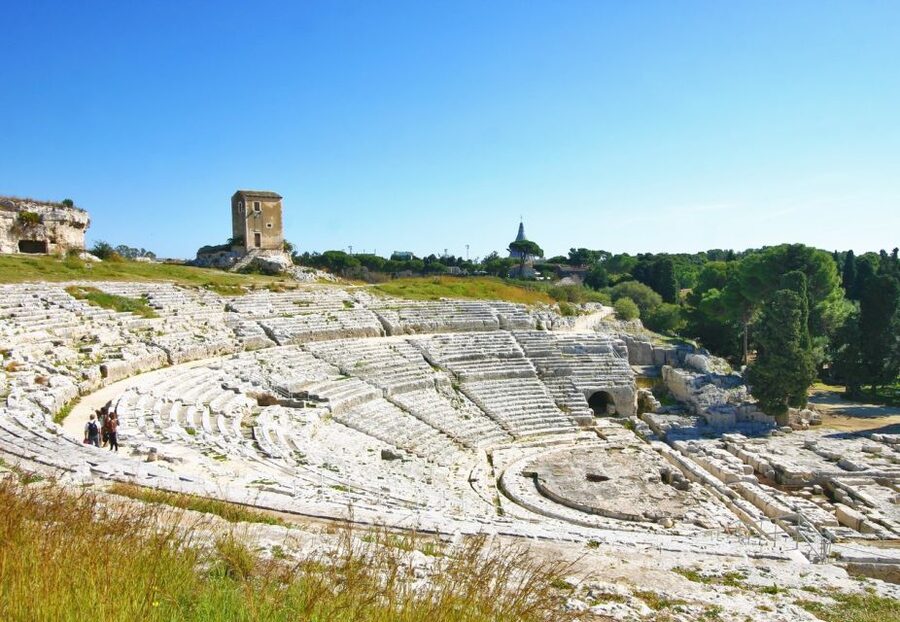
- Greek theater over the bay: you get the skyline payoff while also understanding the theater’s role.
- Latomie del Paradiso quarry walks: local flora and carved stone show how people used this terrain.
- Grotta dei Cordari: a quick guided stop that keeps the quarry theme moving.
- Altar of Hieron II and the Roman amphitheater: the ending ties Greek sacred space to Roman public life.
- Small-group flow (and radio receivers if needed): you can generally hear well, with extra help in larger shared groups.
Why Neapolis in Syracuse feels different from most ruins
Neapolis Archaeological Park is not just piles of old stone. It’s a whole system of places tied together by purpose: entertainment, ritual, industry, and public life. And because it’s laid out over Temenite Hill, you’re moving through the same kind of terrain ancient builders worked with.
You’ll also notice the mix of Greek and Roman layers without the tour getting abstract. The guide frames what you’re seeing as a timeline you can walk through. That’s what turns a good photo stop into something that actually makes sense.
Our reviewers also walked through other Catania, Syracuse and Ortigia walks in Syracuse.
- Syracuse: Boat Tour with Captain Mirko, Snorkeling & Caves
★ 4.7 · 746 reviews - Siracusa: Ortigia Boat Tour with Marine Grotto
★ 4.7 · 617 reviews - Siracusa: Ortigia & Sea Caves Speedboat Tour with Swim Stop
★ 4.9 · 499 reviews - Syracuse: Neapolis Archaeological Park Small Group Tour
★ 4.7 · 350 reviews
Meeting at Largo Anfiteatro, 2 and how the tour runs (1.5 hours)
You’ll meet at the Neapolis Archaeological Park entrance area, with the meeting point connected to Largo Anfiteatro, 2 in the options shown. The exact spot can vary depending on what you book, so check your confirmation and arrive a bit early.
The tour lasts about 1.5 hours, which is a smart length for this site. It gives you enough time to cover the key monuments without turning your day into a long endurance march. The pacing is structured around several short guided segments, plus a brief photo stop, so you’re never left staring at ruins wondering what you’re looking at.
Latomie del Paradiso and Grotta dei Cordari: the quarry that turns into a story
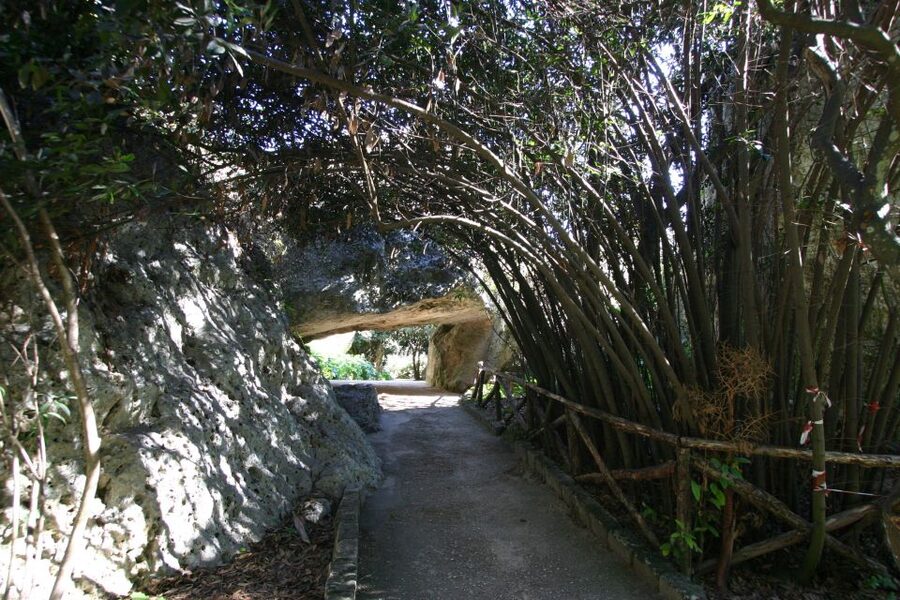
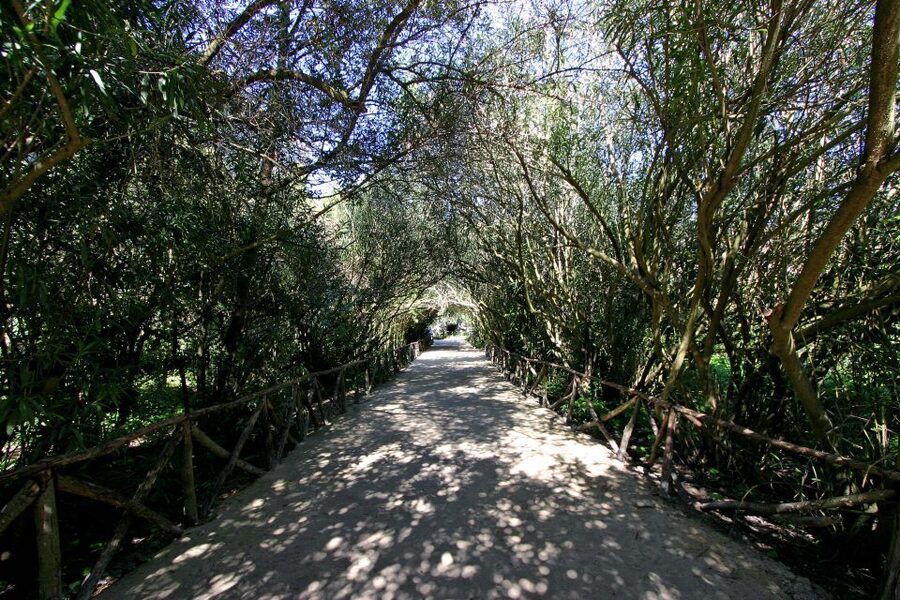
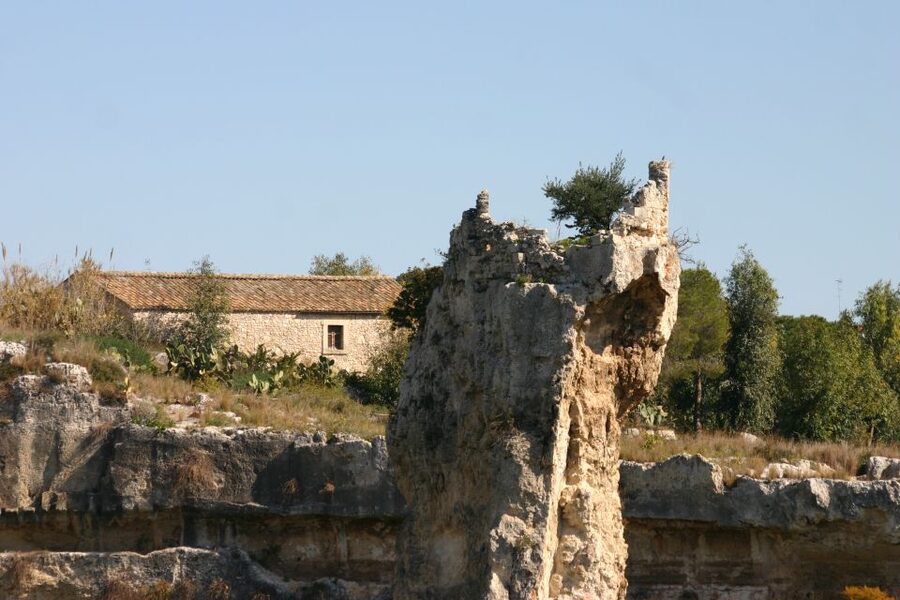
The first big “wow” zone is the quarry landscape. Latomie del Paradiso is carved rock, old workings, and a walking path through stone that shaped local life. It’s not only about what happened here, it’s also about why humans reused dramatic spaces over and over.
Expect a guided visit (about 15 minutes for Latomie del Paradiso), then you continue to Grotta dei Cordari for another 15 minutes. This second quarry stop keeps you oriented in the same environment rather than snapping to a completely different setting.
One practical benefit: quarries are easier to understand when you move slowly and have someone point out what’s human work versus natural shape. Without that, it’s easy to treat the stone like background. With a guide, you start to see it like infrastructure.
Ear of Dionysius: where the echo stops being a trick
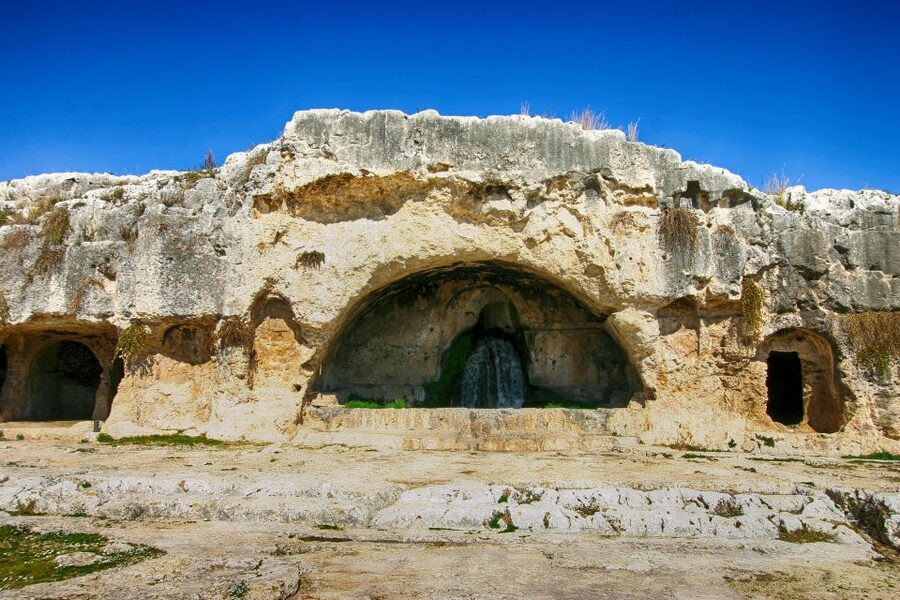
Then comes the headline stop, the Ear of Dionysius. You’ll go inside, with about 15 minutes of guided time, and the focus is not just on the famous name. You learn why this grotto is known for its shape and echoing sounds, and how the site’s design made acoustics part of the experience.
Here’s the thing I like about this stop: it’s one of the rare ruins where your own senses help you understand the place. You’re not just reading what used to be there. You’re hearing how space can behave differently because of the way it’s carved.
If you care about sound, rhythm, and design, this is your moment. If you’re not a “history first” person, it’s still a memorable break from standard sightseeing because you can experience something immediately.
Greek theater views that make the history feel real
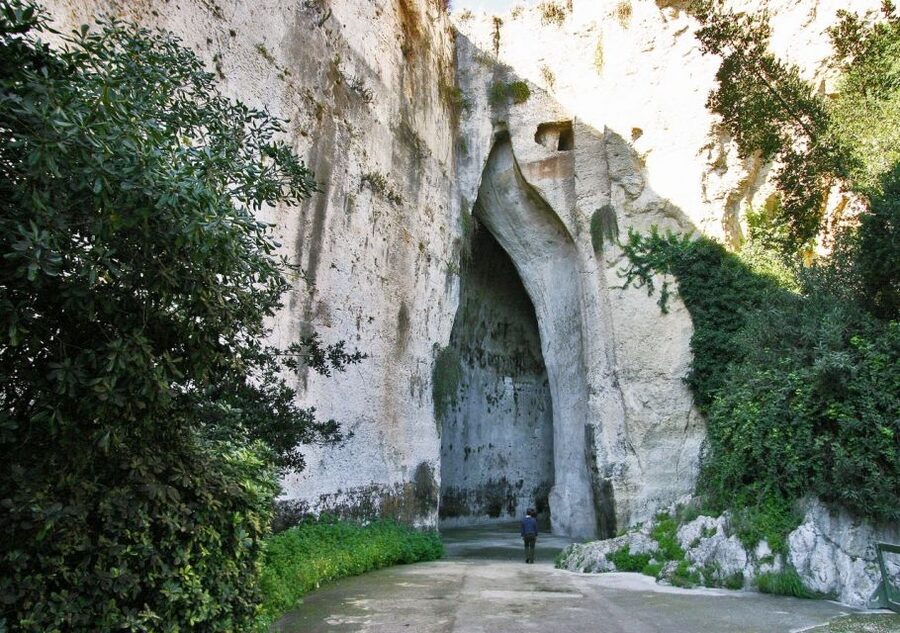
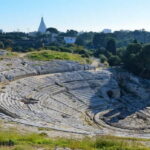
After the quarries, you shift to the outdoor monument with a built-in viewpoint: the Greek theater. You’ll have about 30 minutes here, which is long enough to do the key orientation steps and still soak up the panorama.
This is where the tour delivers one of the most satisfying payoffs: views over the town’s bay while you learn what this theater was for. Even if you know the broad story of ancient Greek drama, the guide’s job is to show how this specific site fits its city.
Practical tip: plan to keep moving. The theater area rewards quick repositioning. If you stand in one spot too long, you miss the way sightlines and elevation change as you walk.
Neapolis Archaeological Park photo stop: quick reset, not filler
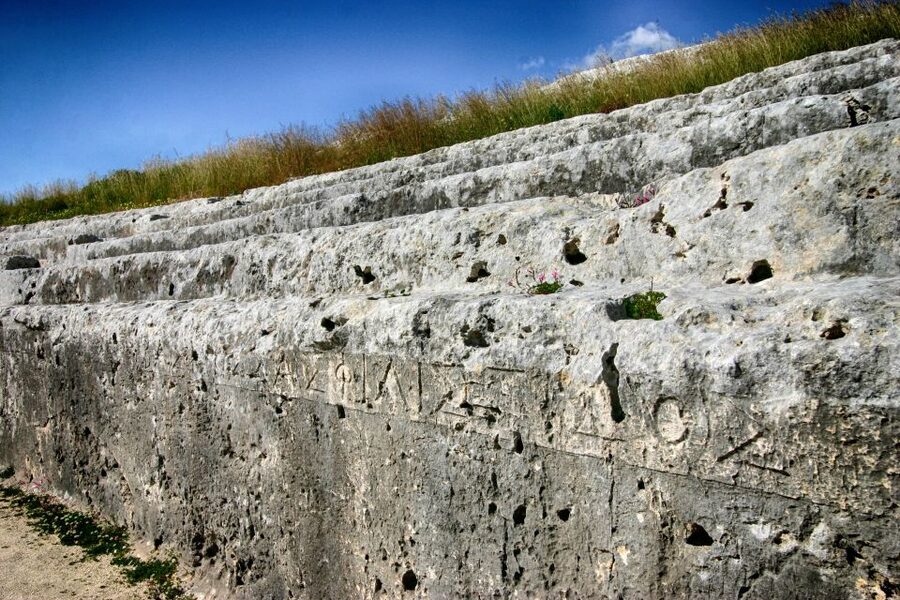
You’ll have a brief photo stop (around 5 minutes) in the park area. Think of it as a reset button. Use it to capture wide shots before you head toward the more specific final monuments.
Because the tour is time-managed, you shouldn’t expect long wandering here. But it’s still useful. The photo stop is the point where you can translate what you just learned into images, so your later self can remember what goes with what.




Altar of Hieron II and the Roman amphitheater finish the circle
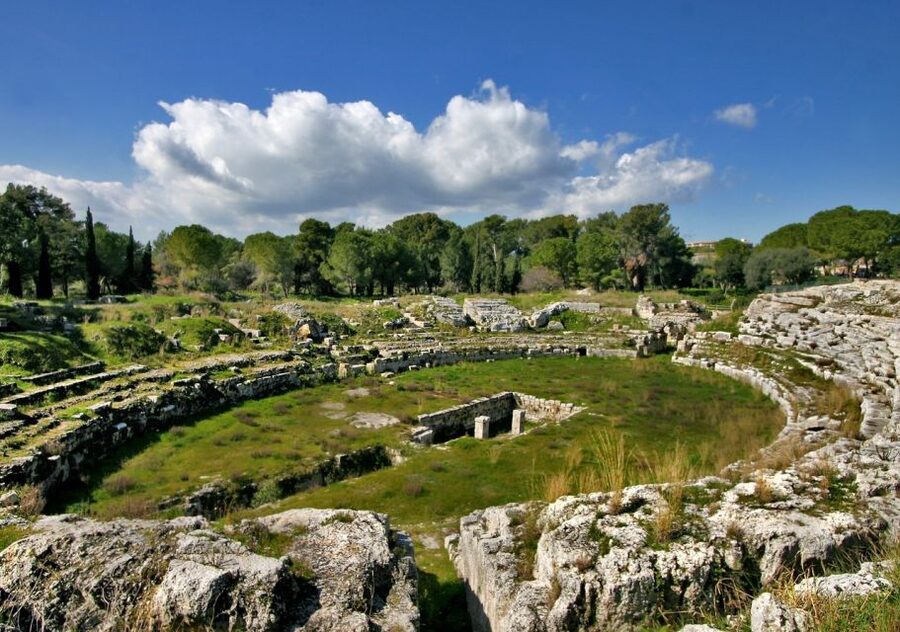
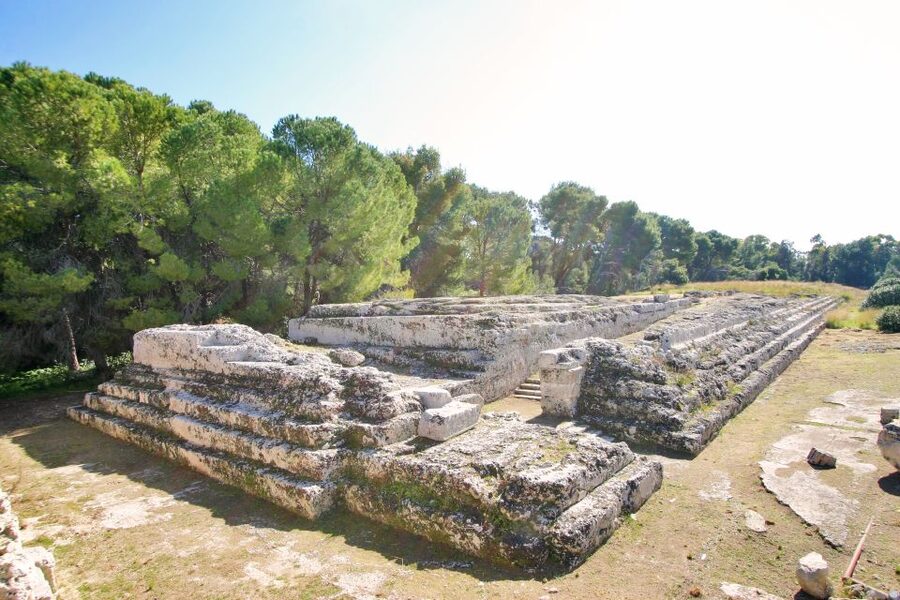
The ending sequence connects ideas. First you visit the Altar of Hieron II (about 10 minutes) and then you move to the Roman amphitheater for about 15 minutes.
The altar stop matters because it brings a sacred, civic angle into the mix. Then the amphitheater adds the Roman layer of public spectacle, showing how new rulers adapted older civic spaces and traditions into their own style of life.
If you’ve been picturing Greek Syracuse mainly as theater and philosophy, the Roman amphitheater is a useful corrective. It reminds you that the city kept changing, and the built environment changed with it.
Shared group versus private tour, and when radio receivers help
You can choose between a shared group or a private tour. In smaller shared groups, you’ll likely enjoy a calmer pace, and many people find it easy to hear the guide without tech.
For larger shared groups, radio receivers are available, which is especially helpful when the site forces sound to bounce around. This matters because Neapolis isn’t a tidy indoor museum, and you’ll be moving between echoing stone and open outdoor areas.
If you want maximum flexibility, go private. If you want the best value and you’re comfortable with a structured route, the shared option works well, especially at this length.
Price and value: why $26 is a reasonable bet here
At $26 per person for about 1.5 hours, the tour sits in the category of “pay for guidance, not just admission.” That’s important, because Neapolis can feel confusing if you don’t know what to look for. You’re paying for someone to turn stone into a story you can follow.
Entry tickets are included only if you select an option that adds them. So if you’re comparing deals, check whether your booking includes admission before assuming it’s fully packaged. Either way, the guided time is the core value: you’re spending your limited daylight in a way that makes the site click.
Also, this tour is led in Italian. If you don’t speak Italian, consider whether you’ll be comfortable following along in another language. In rare cases of very small shared tours, explanations could be in two languages, but don’t count on that as your plan.
Who this tour suits best
This tour is a great fit if you like:
- A fast, focused archaeology visit that hits the biggest monuments.
- Stops where you can use your senses, especially around the Ear of Dionysius.
- Clear connections between Greek and Roman Syracuse rather than separate lectures.
It may be less ideal if you need lots of free roaming time. The tour is built around specific guided moments, so if you want to wander for long stretches on your own, you might want to do some independent exploring before or after.
Practical tips to get the most from your 1.5 hours
- Wear comfortable shoes. You’ll be walking through historic stone terrain, not a smooth park path.
- Bring your passport or ID card. It’s listed as needed.
- If you’re sensitive to timing, pick a departure slot that matches your energy level. At this length, you do not get endless “extra time.”
- Ask questions. People who enjoy this type of tour tend to love hearing how the guide interprets what you’re seeing right now, not just facts you could read later.
Should you book the Syracuse Neapolis Archaeological Park small group tour?
If your goal is to make Neapolis feel understandable in a short visit, I’d book it. The tour’s strongest advantage is guidance through the places that matter most, especially the Ear of Dionysius and the Greek theater viewpoint. At $26 for about 1.5 hours, it’s a solid value for turning a confusing site into a coherent walk.
Choose shared if you want the best price and you’re fine with a set route. Choose private if you want more flexibility, quieter pacing, and more room for questions. Either way, go in with comfy shoes and you’ll leave with a much clearer picture of how Greek and Roman Syracuse shaped the stone around you.
FAQ
How long is the Syracuse Neapolis Archaeological Park small group tour?
The tour lasts 1.5 hours.
What language is the live guide?
The live tour guide speaks Italian.
Where do we meet for the tour?
The meeting point may vary depending on the option booked, but it is tied to Largo Anfiteatro, 2 for the listed starting and drop-off options.
Is this tour wheelchair accessible?
Yes, the tour is listed as wheelchair accessible.
Are entry tickets included in the tour price?
Entry tickets are included only if you select the option that includes them.
What should I bring with me?
You should bring a passport or ID card.
Do we get help hearing the guide?
Radio receivers are available only for the large shared group tour option. In other cases, you may not need them.
Our Wider Tours File for Syracuse

The Rest of Our Catania, Syracuse and Ortigia Walks in Syracuse
Not quite the day you had in mind? The rest of our Syracuse write-ups sit below
- From Syracuse: Mount Etna Guided Morning Hike & Food Tasting★ 4.8 · 173 reviews
- Syracuse: Ortigia and Neapolis Guided Walking Tour★ 4.7 · 205 reviews
- Syracuse: Ortigia Sunset Cruise with Aperitif★ 4.8 · 291 reviews
- Syracuse: Street Food Walking Tour in Ortigia with Tastings★ 4.9 · 293 reviews
- Syracuse: Coast and Sea Caves Full Transparent Boat Tour★ 4.8 · 330 reviews
- Syracuse: Ortigia Island and Sea Caves Boat Tour with Drinks★ 4.6 · 337 reviews
- Syracuse: Pillirina, Ortigia, and Sea Caves Tour by Boat★ 4.6 · 348 reviews
- Syracuse: Neapolis Archaeological Park Small Group Tour★ 4.7 · 350 reviews
- Siracusa: Ortigia & Sea Caves Speedboat Tour with Swim Stop★ 4.9 · 499 reviews
Catania, Syracuse & Ortigia, top to bottom.
 ★ 4.8Catania: Mount Etna Morning or Sunset Day Trip with TastingFrom $704,028 reviews
 ★ 4.8Catania: Sunset Jeep Tour of Mount Etna and Lava Flow CavesFrom $712,113 reviews
 ★ 4.9Catania: Mount Etna Trekking Trip off the Tourist PathFrom $781,351 reviews
 ★ 4.8Catania: Etna Sunset Tour with Pickup and Drop-offFrom $711,348 reviews
 ★ 5.0Mt. Etna and Taormina village full day tour from CataniaFrom $1181,155 reviews
 ★ 4.7From Catania: Mount Etna Sunset Tour with Tasting and CaveFrom $451,119 reviews
 ★ 4.7Syracuse: Boat Trip of Ortigia Island and Sea CavesFrom $23937 reviews
 ★ 4.8Catania: Etna Morning Excursion with Tasting and PickupFrom $67820 reviews
Filed under