
Reviewed · VENICE CONCERTS, OPERA & LA FENICE
Venice: Traveling Opera in a Historic Palace on Grand Canal
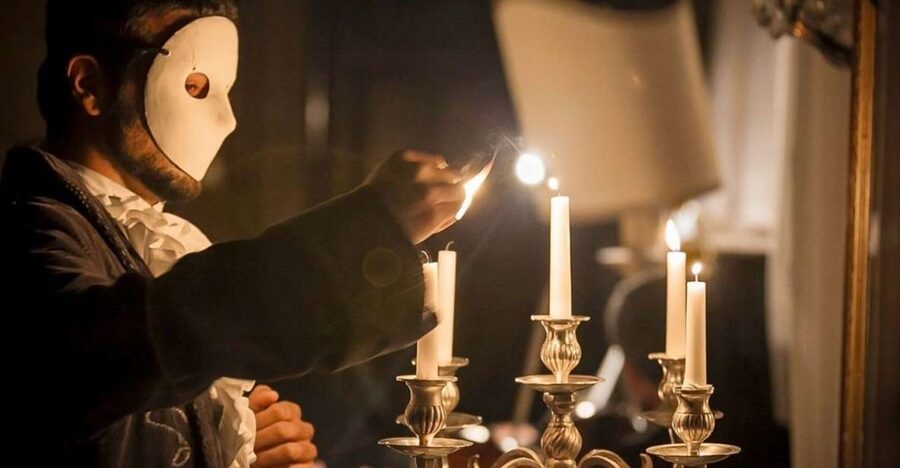
Opera gets a whole new address in Venice. I love how this Italian opera night turns a historic palace on the Grand Canal into the theater itself, so the music happens around you instead of way across the room. Two things that really won me over are the up-close performances in a small space and the chance to watch the story unfold as you move through the palazzo’s rooms.
One possible catch: this is not a sit-and-stare show. You’ll climb 30 steps to reach the halls, and there are no pre-assigned seats, so you need a little patience when you arrive and choose your view.
In This Review
- Key things to know before you go
- Arriving in Palazzo Barbarigo-Minotto, and Why Timing Matters
- A Room-to-Room Opera Format Instead of a Traditional Stage
- Act One in the First Hall: Getting Seated, Then Getting Pulled Into the Story
- The Palace Rooms You Don’t Just Walk Through
- The Music Setup: Strings and Piano That Fill the Rooms
- Language, Translations, and How to Follow Without Stress
- Seating Reality: No Assigned Seats, Small Chairs, and Better Views by Moving
- What Operas You Might See, and Why the Format Still Works
- Drinks, the One Rule About Food, and How to Plan Your Evening
- Dress Code That Feels Venetian, Not Costume
- Who Should Book This Opera in a Palace
- Should You Book This Room-to-Room Opera at Palazzo Barbarigo-Minotto?
- FAQ
- How long is the opera experience?
- Is there a specific meeting point?
- Do I get pre-assigned seats?
- What time should I arrive?
- Is there an elevator to the performance rooms?
- Is food allowed during the experience?
- What language is the opera performed in?
- Is there an English or French translation?
- Do I need to dress up?
- Is there free cancellation?
Key things to know before you go
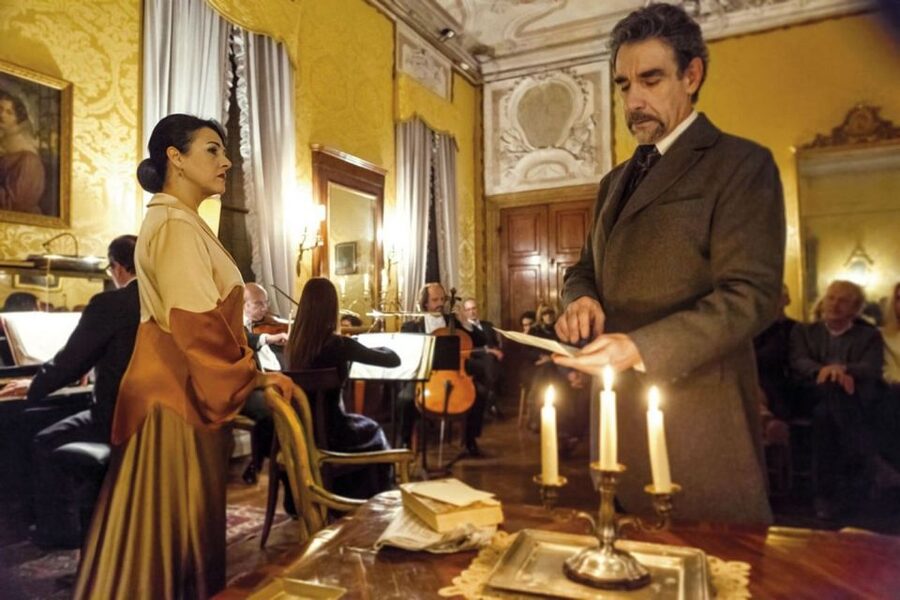
- Three-act, three-room staging: you change locations as the opera changes.
- A 360-degree feel: the stage is built around where you are sitting.
- Palazzo Barbarigo-Minotto details: paintings by Tiepolo and stuccoes are part of the experience.
- Italian singing, with translation available: translations can be purchased at the front desk.
- Small ensemble, big sound: strings and piano fill the rooms better than you expect.
- No food allowed: plan to eat before you go, then enjoy the performance.
Arriving in Palazzo Barbarigo-Minotto, and Why Timing Matters
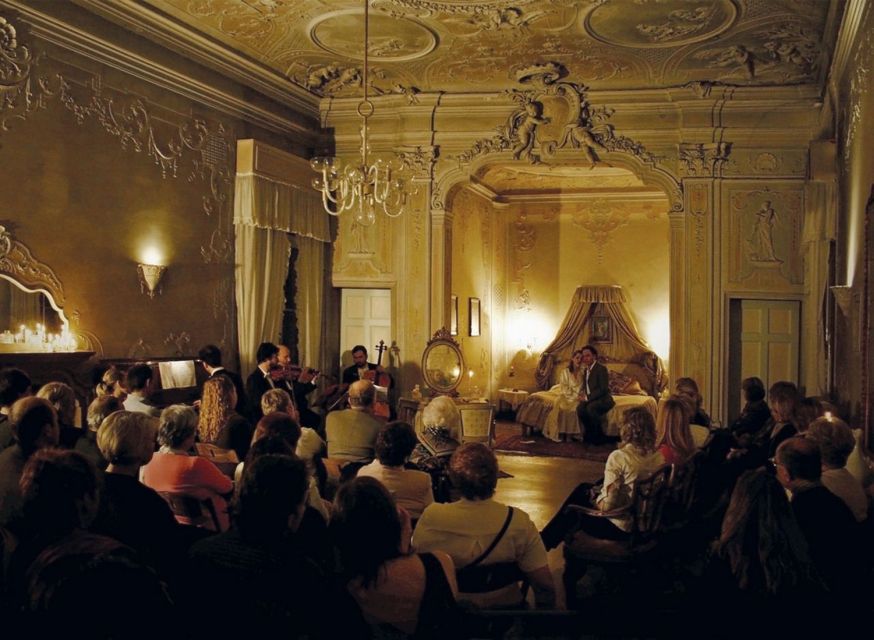
This experience takes place in the Palazzo Barbarigo-Minotto, a Venetian-Gothic-style palazzo on the Grand Canal. If you like Venice for its architecture, details, and “real places” instead of faceless attractions, you’ll get a lot out of standing inside these rooms before the first note.
Doors open 30 minutes before the show, and admission may not be guaranteed after curtain time. That matters because you’re not just checking in, you’re also selecting seats on arrival and getting ready to move. There’s also no elevator, and you’ll climb 30 steps to reach the halls where the performance takes place, so I strongly suggest wearing shoes that feel stable on Venetian walkways and steps.
One more practical note: there is a host or greeter (English, French, Italian), but this is not a guided walking tour through Venice’s sights. Think of it as a ticket to opera in a special setting, with staff help for smooth entry.
We wrote up further Venetian concert and opera nights in Venice on the same pass through the archive.
- Venice: La Fenice Opera House Entry Ticket with Audio Guide
★ 4.6 · 11,742 reviews - Venice: Interpreti Veneziani Concert at Church of San Vidal
★ 4.8 · 3,256 reviews - Venice: Vivaldi’s Four Seasons Live Classical Music Concert
★ 4.6 · 2,524 reviews - Venice: Vivaldi’s Four Seasons Concert & Music Museum Visit
★ 4.8 · 2,065 reviews
A Room-to-Room Opera Format Instead of a Traditional Stage
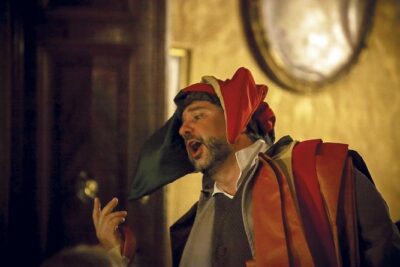
The biggest difference from standard opera nights is the staging. The production is designed for interaction between singers, musicians, and audience, and the “stage” uses a clever 360-degree approach. Instead of one fixed set and a distant curtain, the performance lives in the palace itself.
You’ll move through three different rooms, one for each act. That means the “scene change” is not hidden in backstage machinery. You physically relocate, and the entire atmosphere shifts with you. It’s a simple idea, but it changes your experience: you’re not waiting for the next act, you’re stepping into it.
If you’ve seen opera in a large theater, this format is a real reset. Here, your distance to the performers can feel like a few steps, and the actors do not just project to the back row. The intimacy also makes acting details easier to catch, like how characters pace, react, and build emotion in real time.
Act One in the First Hall: Getting Seated, Then Getting Pulled Into the Story
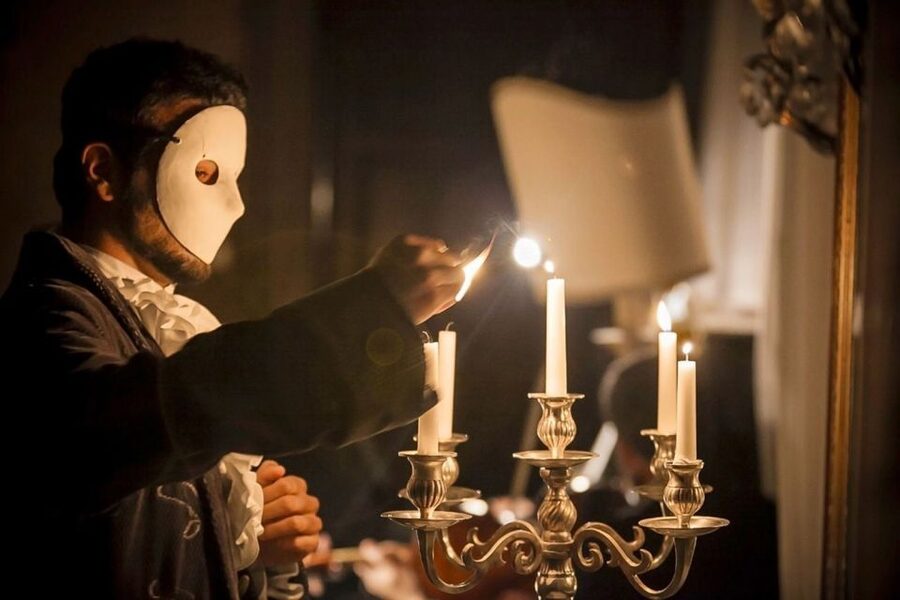
Before Act One starts, you choose your seating. The tour does not include pre-assigned seats, so arrive early enough to pick the best spot for your group. You may want to prioritize closeness over height, because the production leans into proximity.
Singing is in Italian. If Italian isn’t your strong suit, you can purchase a translation (English or French) at the front desk. This is one of those “small action, big payoff” choices: having the story line in front of you helps you connect the music to what’s happening on stage and in character.
Act One happens in the first room, and the production is built to feel like you’re part of the space. The most enjoyable part is how the performers use the room. You’ll notice how hand gestures and facial expressions matter when you’re not watching from far away.
The Palace Rooms You Don’t Just Walk Through
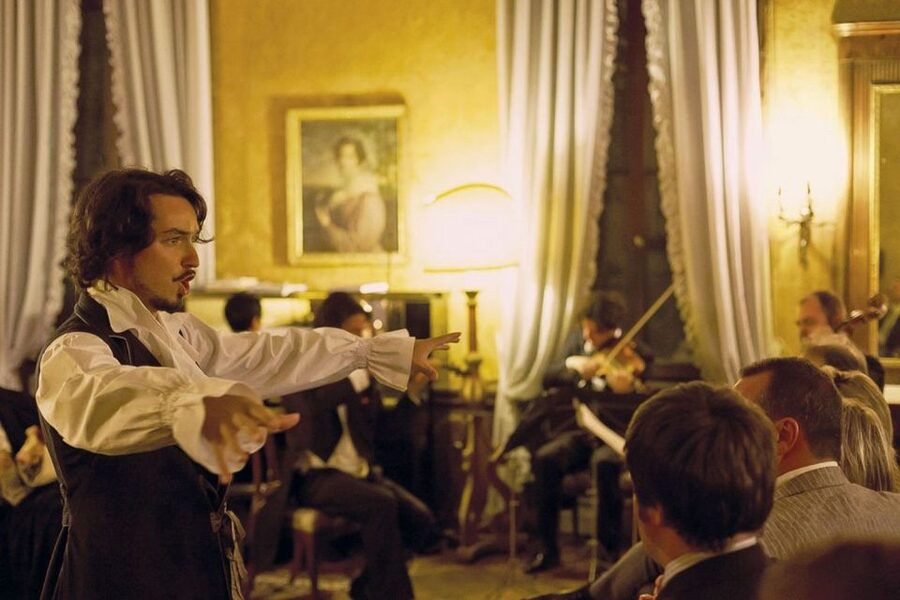
A normal opera night gives you one viewpoint and a whole lot of darkness. Here, the palace rooms are part of the show, and you can feel it before the singing begins. The palazzo’s rooms are decorated with paintings by Tiepolo and stuccoes, and you’re not stuck with them behind a glass case.
You also get views overlooking the Grand Canal. Depending on where you end up seated and which room you’re in at each act, those window views can become a pause point, a visual reset between scenes. It’s also the kind of contrast Venice does well: old-world drama on the canal while the music continues right next to you.
This is one reason I think this works even for people who are new to opera. You don’t have to be an expert in the genre to enjoy what your eyes are catching. You’re watching music, yes, but you’re also in a working Venetian “palazzo moment.”
The Music Setup: Strings and Piano That Fill the Rooms
Don’t expect a massive symphony orchestra. The production uses a professional ensemble with a small group of strings and piano, and that’s part of the appeal. In these rooms, fewer instruments can actually sound more immediate.
The piano and strings are placed so they can support the singers without overpowering the drama. In a standard house, you rely on acoustics designed for distance. Here, you’re close enough that you hear nuance: bow changes, phrasing, and the way the accompaniment responds to the singers’ acting.
If you care about how music works, this is a fun night to pay attention to the interplay. You’ll often feel the orchestra lines land right where the singers are shaping emotion, especially during transitions between quieter and louder moments.
Language, Translations, and How to Follow Without Stress
Because the singing is in Italian, the simplest way to avoid frustration is to plan for story support. A translation (English or French) is available for purchase at the front desk, and I recommend you do it if you want to follow every beat confidently.
You can still enjoy the performance without translation, especially if you know the basic plot of the opera. But opera is about timing, motives, and subtext, and translation helps you catch why a character makes a choice at a particular moment.
The good news: the production style is built to make the story readable. Acting matters a lot, and singers use character work to carry you through scenes. Even if you miss a few Italian words, you’re rarely left guessing what’s going on emotionally.
Our reviewers also walked through other history tours in Venice.




Seating Reality: No Assigned Seats, Small Chairs, and Better Views by Moving
Since seats are chosen on arrival, you’re in control of your view. That’s a plus. Pick your spot early, then commit and let the show happen around you.
A practical heads-up: chairs can be a bit firm for some people. The good trade-off is that you won’t be stuck in one position for the entire 2 hours. Moving between rooms gives you a natural break, and different room layouts can give you better angles across the acts.
What I suggest: if you’re traveling with someone who cares about comfort, plan for a “show posture” mindset. Wear something you can sit in for a couple of acts, and bring a layer if Venice evening air feels cool.
What Operas You Might See, and Why the Format Still Works
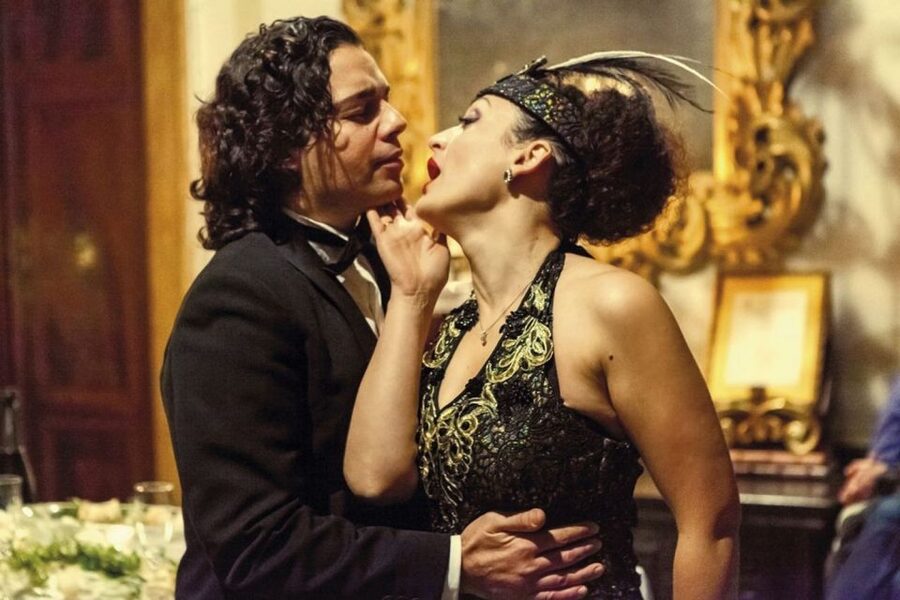
The night is presented as Italian opera in this special palace setting. The exact opera title can vary by date, and you might see works such as La Traviata, Rigoletto, or The Barber of Seville, based on past performances.
Here’s the important part for your planning: the format stays the same. Even if you don’t know the opera, you’ll still get the room-to-room structure, the close-up staging, and the “you are in the story” feel that these productions aim for.
If you already love opera, you may appreciate hearing how a familiar work lands differently in a smaller ensemble and a palace environment. If you’re brand-new, it’s a friendly way in because you’re not dealing with the intimidation of a huge hall and giant distance.
Drinks, the One Rule About Food, and How to Plan Your Evening
Food is not allowed on the premises. So if you’re thinking of making this an all-in-one evening, handle dinner plans first. Venice evenings move slower than you might expect, and you don’t want to rush through food right before climbing steps and choosing seats.
That said, some performances include a small drink during the pacing. Guests have mentioned prosecco or champagne, and a drink after the first act. If that’s part of your specific show, it fits the same idea as the room changes: the evening has gentle “reset” moments that keep you engaged while the story shifts.
Bottom line: plan to eat beforehand, then show up ready for a concentrated 2-hour opera experience with a touch of celebration.
Dress Code That Feels Venetian, Not Costume
There’s no mandatory dress code, but the request is clear: wear clothes that are comfortable and suitable for the occasion. That means closed shoes, long trousers for men, and generally smart-casual for the setting.
I like this because it keeps the night from feeling stiff. You can dress up a bit if you want photos and ambiance, but you’re also free to wear something that won’t distract you from sitting, standing, and moving between rooms.
If you’re deciding between outfits, think practical first. You’ll be navigating steps and spending time in indoor halls. If your shoes are comfortable, the rest is easy.
Who Should Book This Opera in a Palace
This is a great choice if any of these describe you:
- You want Venice at its most atmospheric, not just a museum checklist.
- You like opera but hate the distance and formality of big stages.
- You’re going for a “special night” that feels rare and personal.
- You want a first opera experience that explains itself through acting and staging.
It also helps if you enjoy detail. The Tiepolo paintings, stuccoes, and canal views make this more than music. It becomes a complete Venice evening.
If you strongly dislike stairs, this might be harder. Remember: there are 30 steps and no elevator to reach the halls. Also, since seating is not pre-assigned, you should plan to arrive with enough time to choose a spot you’ll be happy with for the acts.
Should You Book This Room-to-Room Opera at Palazzo Barbarigo-Minotto?
Yes, if you’re aiming for an opera night that feels close, human, and distinctly Venetian. The value here is not just that you’re in a famous city, it’s that the palace becomes part of the storytelling. You get intimate staging, strong vocal performances, and music by a small professional ensemble in rooms that make the sound feel personal.
I’d skip it only if you need a fully traditional opera setup with assigned seats, or if stairs are a dealbreaker for you. Otherwise, this is one of those Venice experiences that upgrades your expectations. It turns opera from a distant spectacle into something that feels like you’re standing inside the world the singers are creating.
FAQ
How long is the opera experience?
The show lasts about 2 hours.
Is there a specific meeting point?
The meeting point may vary depending on the option booked. The coordinates provided are 45.43186950683594, 12.332376480102539.
Do I get pre-assigned seats?
No. Seats are chosen by guests upon arrival, so you should arrive early if you care about your view.
What time should I arrive?
Doors open 30 minutes before the show start. Admission is not guaranteed after curtain time.
Is there an elevator to the performance rooms?
No. There are 30 steps to climb to reach the halls where the concert takes place.
Is food allowed during the experience?
Food is not allowed on the premises.
What language is the opera performed in?
The singing is in Italian.
Is there an English or French translation?
A translation (English or French) is available for purchase at the front desk.
Do I need to dress up?
Dress code is not mandatory. The request is for comfortable but suitable clothes, with examples like closed shoes and long trousers for men. A jacket and tie are not required.
Is there free cancellation?
Yes. You can cancel up to 24 hours in advance for a full refund.
The Rest of Our History Tours in Venice


Venetian Concert and Opera Nights in Venice We Also Walked
Not quite the day you had in mind? The rest of our Venice write-ups sit below
- Venice: Traveling Opera in a Historic Palace on Grand Canal
- Luxury Tour of Murano & Burano by Private Boat and Guide★ 5.0 · 167 reviews
- Da Vinci Interactive Museum Venice Scuola di San Rocco★ 4.0 · 168 reviews
- Venice Gondola Experience★ 3.5 · 169 reviews
- Venice: Religion Walking Tour with Doge’s Palace Tickets★ 4.6 · 171 reviews
- Venice: Doge’s Palace Guided Tour With Tickets & Optional Gondola★ 4.5 · 172 reviews
- Lords of the Night Prisons Palace: Cells & Torture Tools Visit★ 4.0 · 177 reviews
- Venice: Private Grand Canal Gondola Ride from Rialto★ 4.1 · 178 reviews
- Venice: St. Mark’s Basilica Tour with Doge’s Palace Option★ 4.2 · 178 reviews
Venice Concerts, Opera & La Fenice, top to bottom.
 ★ 4.6Venice: La Fenice Opera House Entry Ticket with Audio GuideFrom $1411,742 reviews
 ★ 4.8Venice: Interpreti Veneziani Concert at Church of San VidalFrom $373,256 reviews
 ★ 4.6Venice: Vivaldi’s Four Seasons Live Classical Music ConcertFrom $412,524 reviews
 ★ 4.8Venice: Vivaldi’s Four Seasons Concert & Music Museum VisitFrom $462,065 reviews
 ★ 4.8Venice: Vivaldi Four Seasons Concert at Vivaldi ChurchFrom $421,864 reviews
 ★ 4.8Venice: The Three Tenors Concert TicketFrom $391,183 reviews
 ★ 4.5I Musici Veneziani Concert: Vivaldi Four SeasonsFrom $42945 reviews
 ★ 4.5Musica a Palazzo ‘Traveling Opera’ Performance in VeniceFrom $117722 reviews