
Reviewed · PALERMO, MONREALE & CEFALù
Discover Palermo in 3 hours. Art, history, markets and street food
Palermo in three hours, with stories and snacks. This is a tight, high-impact walk through the historic center, where Capo Street Market energy, Palermo Cathedral art, and big-city legends all fit into one morning. It is a walking tour guided only in Italian, with a local who tells you what to notice and what it all means.
I especially like the way the guide connects monuments to real Palermo, from the Beati Paoli mysteries to Santuzza and the tale tied to the Baroness of Carini. You also get practical taste-time, since the route includes free tastings of food and drinks, plus guidance on where to find the best cannoli and coffee.
One thing to consider: this tour is Italian only, so if your Italian is shaky, you might miss some of the story heavy lift. Also, it is a walking-centered experience, so comfy shoes matter more than you think for a 3 hour loop.
In This Review
- Key highlights you will actually feel on the walk
- Timing, pace, and why 3 hours is a smart way to start in Palermo
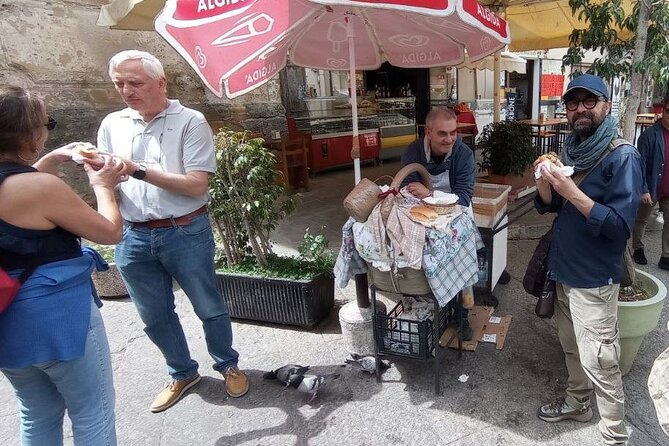
- Capo Street Market: Arab origins, real aromas, and easy street-food wins
- Palermo Cathedral: Norman-Arab art you can actually appreciate quickly
- Piazza Giuseppe Verdi, the Massimo exterior, and why the Florios matter
- Quattro Canti: Baroque stage set at the center of the old city
- Piazza Pretoria and the Fountain of Shame nickname
- Piazza Olivella: Sant’Ignazio and museum-adjacent culture
- Piazza Bellini: Martorana, San Cataldo, and Santa Caterina area
- Teatro dell’Opera dei Pupi and the Cassaro sweep
- Where the guide’s stories make the monuments click
- Price, value, and what you are really buying for $34.76
- Who should book this Palermo walk, and who might want something else
- Should you book this Palermo in 3 hours tour?
- FAQ
- What language is the guide?
- How long is the Palermo walking tour?
- What is included in the price?
- Are meals included?
- Where do I meet, and where do I finish?
- How big is the group?
- What is the cancellation policy?
Key highlights you will actually feel on the walk
- Capo Street Market entry and built-in tastings along the historic corridors of Via Porta Carini and Via Bandiera.
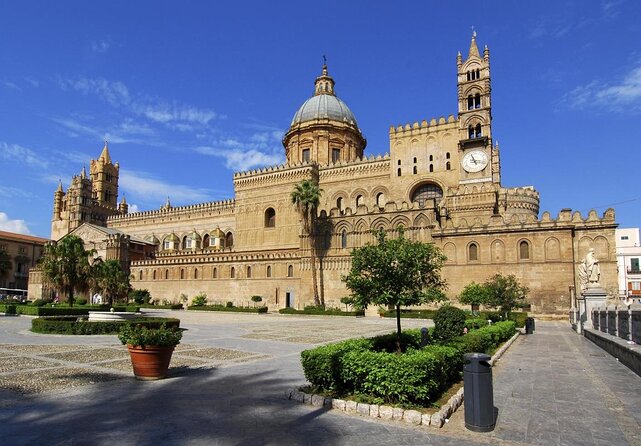
- Norman-Arab Cathedral, built in 1185, with royal tombs, the Santa Rosalia chapel, and an extraordinary sundial.
- Teatro Massimo and the Florio family, with context for the Belle Epoque vibe.
- Quattro Canti and Piazza Pretoria, including the Fountain of Shame nickname and its 48 marble statues.
- Piazza Bellini churches featuring the Martorana, San Cataldo, and Santa Caterina complex.
- Opera dei Pupi at Teatro dell’Opera dei Pupi, a Palermo tradition linked to UNESCO.
Timing, pace, and why 3 hours is a smart way to start in Palermo
This tour is built for a short visit, and I like that. You start at 10:30 am at Via Cavour 135, and you finish in Piazza Bellini. In plain terms, you get a curated walk of the historic center without spending your whole day on tickets, lines, and deciding what to do next.
The pace also helps you get your bearings fast. You move through major squares, then cut into the older streets that connect everything, including the oldest arteries like the Cassaro. If you are visiting for only a couple days, this is exactly the kind of “orientation plus culture” outing that makes later wandering easier.
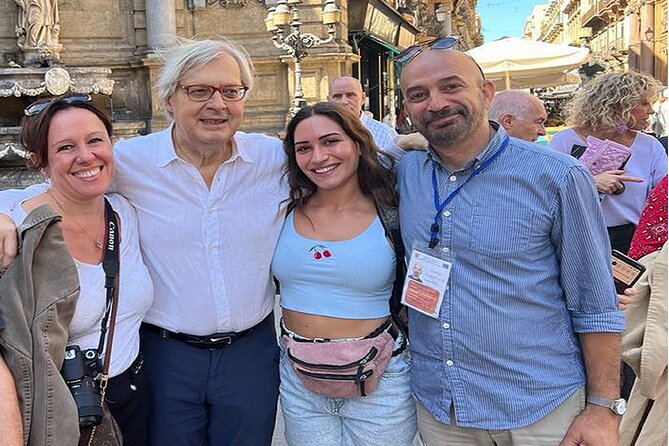
Group size is capped at 16 travelers, which matters in a place like Palermo. With a smaller group, the guide can keep the discussion flowing while you are still able to see details at each stop, not just speed past them.
Worth an aperitivo-hour scroll, our other Palermo, Monreale and Cefalu days in Palermo.
- Palermo: NO Mafia Walking Tour
★ 4.8 · 2,431 reviews - Palermo: Hop-on Hop-off Bus Tour 24-hour Ticket
★ 3.9 · 2,410 reviews - Palermo Original Street Food Walking Tour by Streaty
★ 5.0 · 2,105 reviews - Segesta, Erice and Salt Pans Full-Day Excursion from Palermo
★ 4.2 · 1,791 reviews
Capo Street Market: Arab origins, real aromas, and easy street-food wins
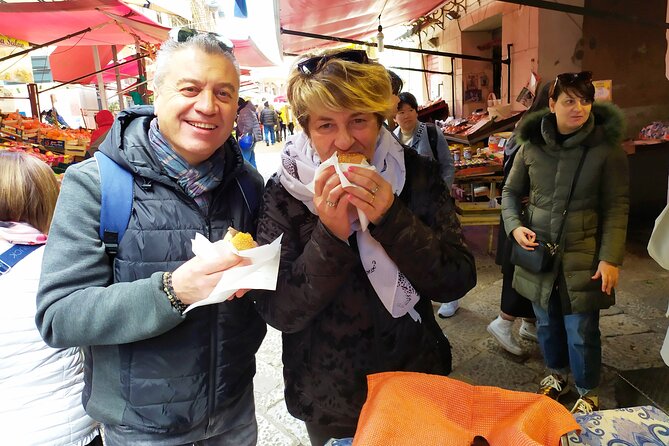
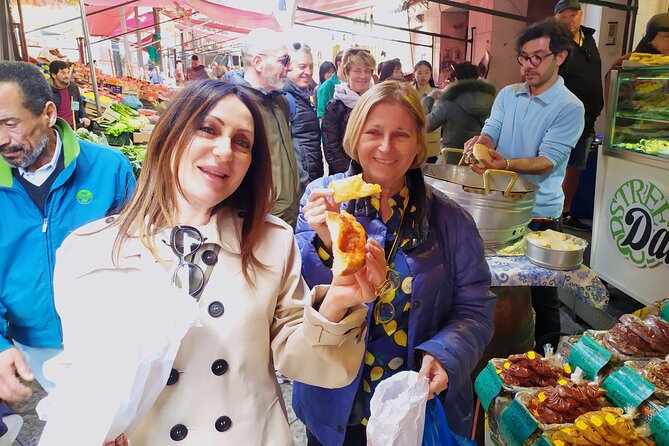
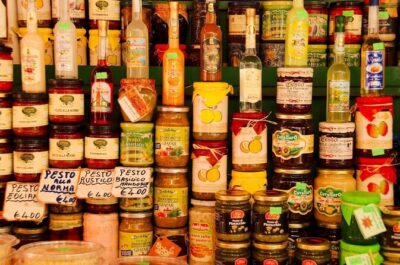
Capo Street Market is the kind of place that pulls you forward, even if you have never been to Palermo before. The focus here is on the market atmosphere that runs daily along Via Porta Carini and Via Bandiera, rooted in Arab influence. You get ticket entry, and the tour includes built-in chances for tasting food and drinks.
What makes this valuable is not just the food. It is the context. The guide points out how markets are tied to how the city lives, and how the same block can feel traditional and fast-moving at the same time. You also learn practical things you can use later: what to order when you are standing in front of case after case, and how to spot the places where locals tend to go.
A minor note: the market is busy and active, so if you need very quiet sightseeing, this part may feel loud. But that is also the point. Palermo’s streets have volume. Here you get to experience it in the safe, guided way.
Palermo Cathedral: Norman-Arab art you can actually appreciate quickly
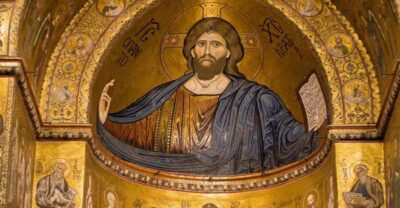
At the Cattedrale di Palermo, you get a strong hit of art and history without getting lost. The cathedral’s standout claim is its Norman-Arab character, built in 1185. That hybrid style is the reason it belongs to the UNESCO Arab-Norman itinerary, alongside Monreale and Cefalù (included since 2015).
Inside, you will spend time with the cathedral’s major features: royal tombs, the chapel of Santa Rosalia, and an extraordinary sundial. Even if you do not consider yourself a cathedral person, these are concrete things your eyes can latch onto fast. You are not just hearing dates. You are seeing how design, faith, and power show up in stone and light.
The cathedral stop is also good for balancing the tour. After the market energy, this gives you breathing room and a different kind of attention. And since cathedral admission is included, you avoid the common hassle of trying to time a big interior visit on your own.
Piazza Giuseppe Verdi, the Massimo exterior, and why the Florios matter
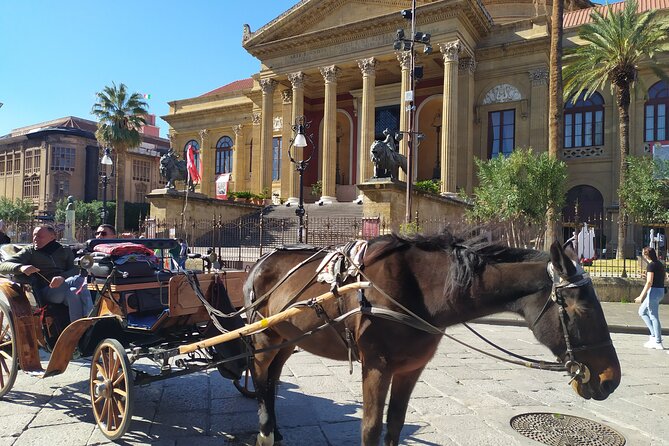
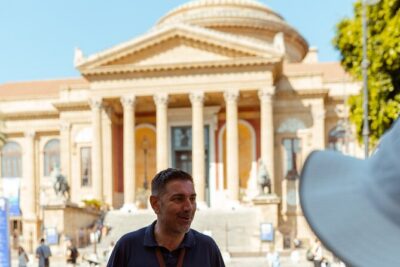
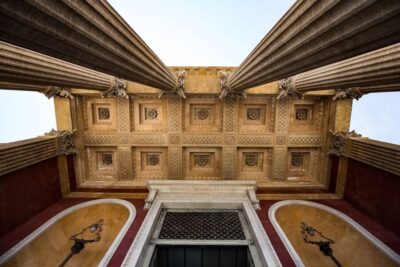
Your route then brings you to Piazza Giuseppe Verdi, which is also Piazza Massimo. This is where you see the imposing Teatro Massimo, the largest theater in Italy. It is tied to Palermo’s Belle Epoque image, and the guide connects it to the Florio dynasty.
This stop works because it answers a question you might have from the outside: why is this theater such a big deal? The guide’s job is to make that “big building” feel connected to people and ambition, not just architecture. You also learn where the Florios fit into Palermo’s social story, which helps you recognize the city’s wealth patterns in the other palaces and streets you pass.
One practical upside: this is a quick viewing moment that still gives you cultural payoff. You are not sacrificing time to it, which keeps the whole 3 hours from feeling like a series of quick photo stops.
Quattro Canti: Baroque stage set at the center of the old city
Then you hit Quattro Canti, described as a scenographic baroque square that sits at the center of Palermo’s ancient city structure. I like this stop for two reasons.
First, it is a perfect visual reset. After interiors and busy market streets, the open square lets you see the city layout. Second, it teaches you how Palermo’s baroque identity is not separate from its everyday life. These squares are not museum pieces. They are anchors where the city keeps moving.
Because this part is outside, it is also easier if you have limited energy. You can look in all directions without worrying about shoes, steps, or entry timing.
Piazza Pretoria and the Fountain of Shame nickname
Next comes Piazza Pretoria, famous for its fountain. The key details to remember are these: the fountain has 48 statues made of white Carrara marble, sculpted in the middle of the Renaissance by Tuscan sculptors. It was purchased in 1573, and Palermitans gave it the nickname Fontana della Vergogna, the Fountain of Shame.
Why I find this stop so good is the story angle. A fountain is supposed to be beauty. Here, the story includes discomfort and irony, which makes it more memorable. When you know why the nickname stuck, you do not just see statues. You notice attitudes, rumors, and the politics of taste.
It is a short stop, but it is one of those places your brain keeps returning to later when you are walking and comparing baroque and Renaissance flavors.
Kept in the same folder as this one, three-hour experiences in Palermo.
Piazza Olivella: Sant’Ignazio and museum-adjacent culture
At Piazza Olivella, you get a scenic square with the Baroque church of Sant’Ignazio and access tied to the Archaeological Museum area. The museum is described as one of the most important in Italy, and even without going deep for hours, having it as a stop in a short tour helps you understand Palermo as a layered city, not a single-era postcard.
This is also a good point in the walk for a change in rhythm. Squares like this allow you to look up at facades, then turn back to street life with fresh eyes.
Piazza Bellini: Martorana, San Cataldo, and Santa Caterina area
Then you move to Piazza Bellini, a historical and monumental square surrounded by major sights. Here the big draw is that you can see the city’s cultural mix almost immediately.
You will pass by the Church of the Martorana from the 12th century, the Arab-style church of San Cataldo, and the Church and Monastery of Santa Caterina. That lineup is a strong reminder that Palermo is not just “Italian Europe.” It is an intersection city, and you feel it in the architectural cues.
This part is also helpful for photo planning, because the churches’ styles create clear visual differences. If you are walking with a guide, you can pick up what to look for quickly, which saves time when you go back on your own.
Teatro dell’Opera dei Pupi and the Cassaro sweep
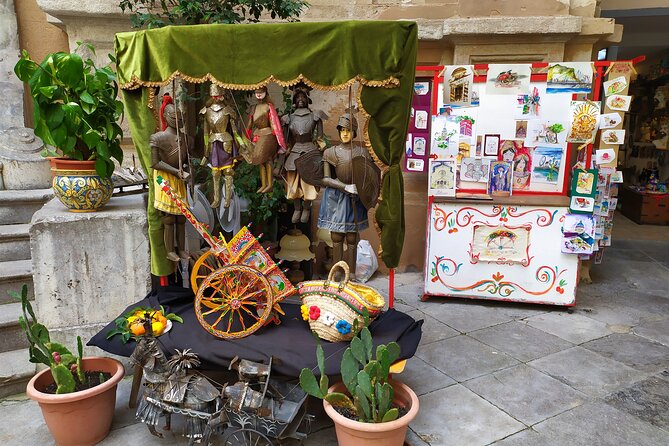
The tour also includes Teatro dell’Opera dei Pupi, associated with Mimmo Cuticchio. This is a typical Palermo tradition dating back to around 1800, and it is linked to UNESCO heritage.
Even if you do not know puppet opera beforehand, it is worth your attention because it is culture you can understand without needing a formal art background. You are connecting theater, local storytelling, and identity. A guide can help you see why Palermo protects this tradition rather than treating it as old-fashioned entertainment.
From there, you move toward the Cassaro, described as the oldest street in Palermo, lined with palaces, churches, and convents. This is where the city starts to feel like a single connected museum made of real streets. You are not only visiting landmarks. You are learning the spine of the center.
Where the guide’s stories make the monuments click
A big reason this tour scores so high is the storytelling style, especially with guides like Maurizio and Fabrizio. People consistently talk about how the guide stays lively, answers questions, and turns a quick walk into a narrative you can carry with you after the tour ends.
You hear the adventures of the mysterious sect of the Beati Paoli, the miracles tied to Santuzza, and the tale connected to the terrible murder of the Baroness of Carini. These are not random dramatic add-ons. They are part of how Palermo explains itself. When you hear these stories, baroque facades and church corners feel less like scenery and more like stages where people once lived, feared, and celebrated.
And then there is the practical food part. The tour includes tips on where to eat the best cannoli and where to drink the best coffee, plus the earlier tastings at the market. That is the kind of advice that pays off later, because you will know what to look for when you are choosing places on your own.
Price, value, and what you are really buying for $34.76
At $34.76 per person, you are not just paying for a walk. You are paying for a local guide who helps you turn a compact route into meaningful sightseeing.
Here is what makes the value feel fair based on what is included:
- Capo Market entry plus the chance for free tastings (food and drinks are not fully included, but you do get sampling).
- Palermo Cathedral admission is included.
- You also get guided access and time at several major squares and monuments, including areas tied to the archaeological museum and other highlighted stops.
For short-stay travelers, this is often cheaper than piecing together several sites and timing them yourself. And because the guide helps you notice details, you get more from each stop than you might on a self-guided route where you only have your phone and guesses.
If you already planned to tour the Cathedral anyway and you care about seeing the market and baroque center, this price starts to look like a bargain, not an add-on.
Who should book this Palermo walk, and who might want something else
This tour fits best if you:
- want an organized first look at historic Palermo,
- like art, architecture, and real street atmosphere in the same morning,
- enjoy learning local stories that connect buildings to people,
- and you want guidance on food, especially cannoli and coffee.
It may not be the best fit if you:
- need a guide in English (this is only in Italian),
- want long museum time or slow pacing,
- or dislike walking through lively market streets.
Also, it is described as good for cruise passengers, and the meeting point and route make sense if you need a morning plan. You will not be stuck across town all day.
Should you book this Palermo in 3 hours tour?
If you want a smart start in Palermo, I think this is an excellent choice. The combination of Capo Market, Palermo Cathedral, major baroque squares like Quattro Canti, and the instantly recognizable Fontana Pretoria gives you a wide view without wasting hours. Add in the guide storytelling and the food tastings, and you come away with both memories and practical next-step ideas.
The main “wait, check first” item is language. If Italian is comfortable enough for you to follow stories, book it and enjoy the full experience. If Italian is not there yet, consider a different option with your language, because the tour promises that narrative layer, and that is a big part of the payoff.
FAQ
What language is the guide?
The tour is only in Italian, so you will need enough Italian to follow the guide’s explanations and stories.
How long is the Palermo walking tour?
It runs for about 3 hours.
What is included in the price?
The price includes entrance to the Capo Market, free tastings of food and drinks, and entrance to Palermo Cathedral.
Are meals included?
Food and drinks are not included as a full meal. However, the tour includes free tastings during the experience, and the guide shares where to eat later.
Where do I meet, and where do I finish?
You start at Via Cavour, 135, 90139 Palermo PA, Italy and finish in Piazza Bellini, 90133 Palermo PA, Italy. The start time is 10:30 am.
How big is the group?
The tour has a maximum of 16 travelers.
What is the cancellation policy?
You can cancel for a full refund if you cancel at least 24 hours before the experience’s start time. Free cancellation is available within that window.
Three-hour Experiences in Palermo That Made the Same Shortlist
Palermo, Monreale and Cefalu Days in Palermo, Written Up Separately
Not quite the day you had in mind? The rest of our Palermo write-ups sit below
- Palermo: Anti-Mafia Heroes Evening Walking Tour★ 4.6 · 172 reviews
- From Palermo: Half-Day Corleone Excursion★ 3.8 · 182 reviews
- Tour Cappella Palatina e palazzo Reale: patrimonio Unesco★ 4.8 · 183 reviews
- Palermo: Full-Day Snorkeling Boat Tour with Lunch and Wine★ 5.0 · 196 reviews
- Wanna be Sicilian: Palermo Cooking Class and Market Tour★ 5.0 · 197 reviews
- Sicily: Etna Volcano & Taormina Tour★ 4.4 · 199 reviews
- From Palermo: Erice and Marsala Day Trip with Lunch★ 4.8 · 199 reviews
- Palermo: Cappella Palatina and Palazzo dei Normanni Tour★ 4.8 · 214 reviews
- Palermo Half Day Boat Tour with Palermo Experiences★ 5.0 · 224 reviews
Palermo, Monreale & Cefalù, top to bottom.
 ★ 4.8Palermo: NO Mafia Walking TourFrom $402,431 reviews
 ★ 3.9Palermo: Hop-on Hop-off Bus Tour 24-hour TicketFrom $172,410 reviews
 ★ 5.0Palermo Original Street Food Walking Tour by StreatyFrom $832,105 reviews
 ★ 4.2Segesta, Erice and Salt Pans Full-Day Excursion from PalermoFrom $821,791 reviews
 ★ 4.5Palermo: Teatro Massimo Opera House Guided TourFrom $141,573 reviews
 ★ 4.2From Palermo: Monreale and Cefalù Half-Day TripFrom $711,354 reviews
 ★ 4.9Palermo: Street Food and History Walking TourFrom $541,294 reviews
 ★ 4.2Palermo: Agrigento and the Valley of the Temples Day TourFrom $771,240 reviews