
Reviewed · PALERMO, MONREALE & CEFALù
Discover the Charm of Palermo: A 3-Hour UNESCO Sites Walking Tour
Palermo throws history at you fast, then slows it down with real street-level detail. This 3-hour UNESCO walking tour is a smart loop through baroque and Norman-Arabic architecture, with expert context at every turn. I especially like how the pacing mixes big monuments with local life, not just postcard stops.
Two things I really like: you get the Cathedral entrance included, and you end up with a classic Sicilian treat like cannolo or granita. The guiding style also seems built for questions, with named guides such as Valeria and Fabio showing up often in the best stories people tell.
The main drawback to factor in is that some major interiors may require extra tickets. The tour focuses on the area around the Palatine Chapel and related buildings, but you should not count on entry being included everywhere.
In This Review
- Key Highlights Worth Marking on Your Map
- Where This Palermo Walk Fits in Your Day
- Teatro Massimo: The Big Stage in Palermo’s Center
- Market Lanes and Via Maqueda Energy: Palermo as a Living City
- San Domenico and Piazza Caracciolo: A Church With a Purpose
- Garraffo Fountain, the Stock Exchange, and the Descent of the Judges
- La Martorana (Santa Maria dell’Ammiraglio): Where Cultures Overlap
- Piazza Pretoria and Quattro Canti: Palermo’s Baroque Geometry
- Cattedrale di Palermo: The UNESCO-Grade Cathedral Stop (Entry Included)
- Villa Bonanno: A Garden Pause Behind the Palace of the Normans
- Palazzo dei Normanni and the Palatine Chapel Mosaics from Outside
- Price and Value: What $31.88 Buys You in Palermo
- Tips to Make This Walk Feel Effortless
- Should You Book This Palermo UNESCO Walking Tour?
Key Highlights Worth Marking on Your Map
- Teatro Massimo, Palermo’s opera-house landmark with famous acoustics
- Norman and Arab influence explained at major UNESCO-linked stops
- Inside visit to Cattedrale di Palermo (entry included)
- Street markets and fountains that show Palermo as a living city
- Sweet stop at the end with cannolo or granita included
- Small group size (max 20) that keeps the walk manageable
Where This Palermo Walk Fits in Your Day
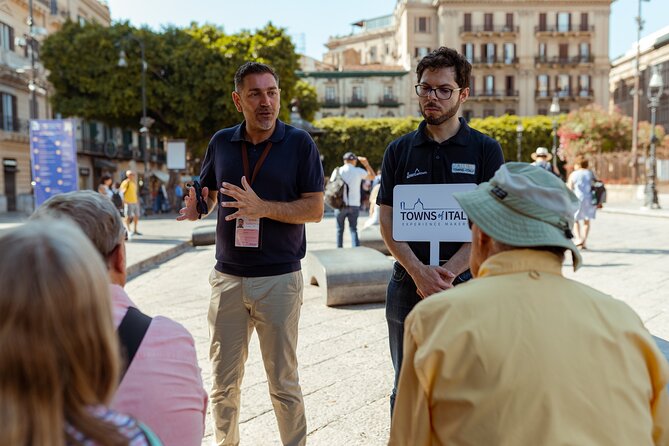
Palermo can feel like a lot on day one. That’s why this tour works so well early in your trip, when you want quick orientation without spending the whole day in transit or guessing where to go next. In about 3 hours, you cover a large chunk of the historic core on foot, keeping you close to the city’s key architecture and atmospheres.
You’ll be walking mostly through central Palermo, where streets change character block to block. One minute you’re near grand squares and church facades, the next you’re in market lanes where food, chatter, and everyday errands take center stage. If you like learning while you walk, this format is a good match.
The tour runs regardless of weather, so plan on layers and bring something for rain if the forecast looks messy. Palermo weather can change quickly, and the experience is designed to keep moving even when it’s not ideal outside.
Worth an aperitivo-hour scroll, our other Palermo, Monreale and Cefalu days in Palermo.
- Palermo: NO Mafia Walking Tour
★ 4.8 · 2,431 reviews - Palermo: Hop-on Hop-off Bus Tour 24-hour Ticket
★ 3.9 · 2,410 reviews - Palermo Original Street Food Walking Tour by Streaty
★ 5.0 · 2,105 reviews - Segesta, Erice and Salt Pans Full-Day Excursion from Palermo
★ 4.2 · 1,791 reviews
Teatro Massimo: The Big Stage in Palermo’s Center
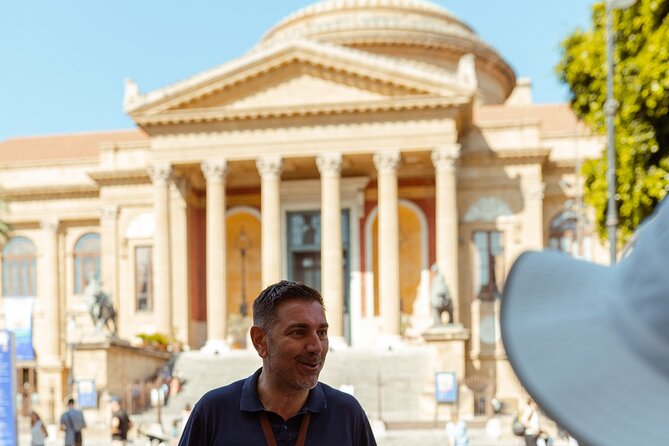
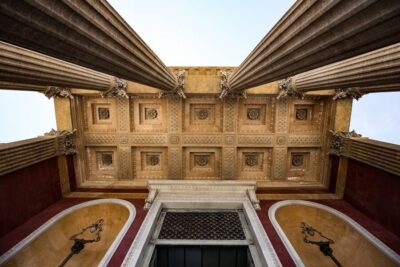
The walk kicks off at Teatro Massimo Vittorio Emanuele, the city’s major opera house on Piazza Verdi. It’s not just an elegant building to pass by. It’s also a statement about Palermo’s cultural ambitions, dedicated to King Victor Emanuel II, and known for excellent acoustics.
If you don’t plan to see a performance, this stop still delivers. It gives you a clear sense of the city’s scale and “what matters here,” because Teatro Massimo is one of those landmarks that tells you Palermo has grand tastes.
From this area, the route starts feeding you into the commercial heart of the city. You also pass through places like the Galleria delle Vittorie, which is a reminder that Palermo’s center has changed over time. Some structures have not aged gracefully, but that contrast is part of the city’s story.
Market Lanes and Via Maqueda Energy: Palermo as a Living City
A big part of the appeal is that the tour keeps you near how people actually move and eat. After Teatro Massimo, you’ll cross streets and end up around lively market areas, including a typical open-air market connected with the path near Via Bandiera.
Then comes a key walk-and-watch moment around Piazza Caracciolo, where the market winds through alleys and adjacent streets. This spot is the kind of place you could wander for hours, but the tour keeps you from getting lost by turning your wandering into learning. You get the origin story of how the market area used to be called la Bucceria, linked to the French word for butcher’s shop.
This is also where you’ll feel why a guided walk helps. Palermo’s center is busy, and the “where am I, what is this called, and why does it matter” questions pop up constantly. A good guide keeps you from turning your trip into a map app marathon.
Practical note: restrooms can be tricky to find in dense historic areas. If you need one, I’d treat your first chance to stop as your best chance.
San Domenico and Piazza Caracciolo: A Church With a Purpose
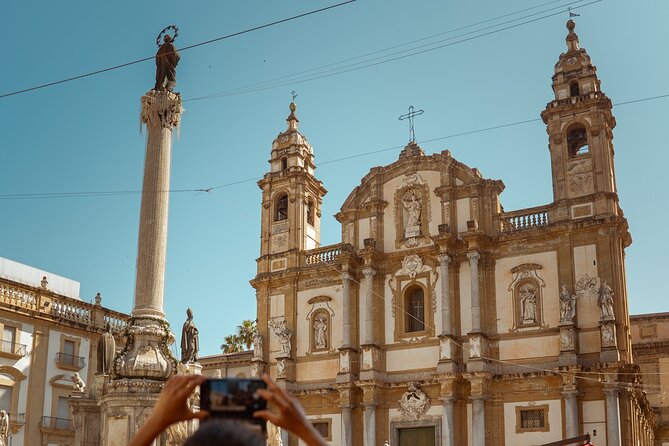
Next you’ll reach Chiesa di San Domenico in the square that dominates like a queen. On the surface, it’s a beloved church because of its size and importance. What makes it more memorable, though, is what it represents.
San Domenico is often described as a kind of Pantheon of the illustrious men of Sicily, and it’s also considered a symbol in the fight against the mafia. When the guide connects the art and the social meaning, it stops being just another church stop and turns into a lesson about how Palermo tells its own stories.
You also keep bouncing between sacred spaces and daily-life spaces. That mix is a big value here, because it helps you see Palermo as layered, not stuck in one era.
Garraffo Fountain, the Stock Exchange, and the Descent of the Judges
As you move along, the tour threads together art, commerce, and government myths in a way that feels surprisingly human.
You’ll pause at the Garraffo Fountain in Piazza Marina, down the ancient Cassaro street, now Via Vittorio Emanuele. It’s a Baroque fountain that gives you a burst of detail in an area where streets can otherwise blur together. Baroque works best when you pause, look up, and take time to notice shapes, not just glance.
From there, the Palermo Stock Exchange stop adds an economic-history angle. Trading began in the city’s center in 1840s, with official opening in 1845, and it was one of the most important exchanges in Sicily until the late 1990s when institutions unified. It’s a reminder that the city’s money history has been part of Palermo’s everyday rhythms for generations.
Then you’ll walk the descent of the Judges, a named street that explains itself once you know what you’re looking for. It connects to the Judges of the Praetorian Court who once lived nearby, and you learn how roles were chosen, how long offices lasted, and how the power structure worked in Palermo’s past.
These stops are short, but they matter because they break the usual “church, church, church” pattern. You get a fuller sense of how Palermo functioned.
La Martorana (Santa Maria dell’Ammiraglio): Where Cultures Overlap
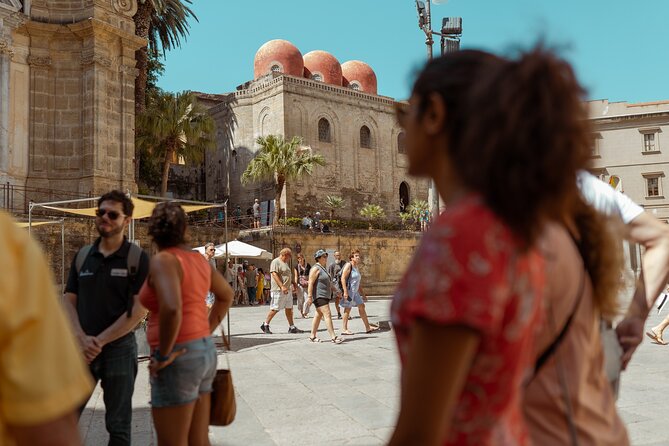
One of the most interesting landmarks on the route is Santa Maria dell’Ammiraglio, also known as La Martorana. It sits over piazza Bellini in the middle of Palermo, and the guide uses the site to explain Palermo’s cultural overlap.
You’ll hear how the church was built from 1143 to 1185 by George of Antioch, a Greek admiral, with the intention of honoring the Virgin Mary for protection. What makes it truly stand out is the church’s ongoing Greek-Byzantine identity, with ceremonies tied to ancient Greek or Albanian language. The church belongs to the Eparchy of Piana degli Albanesi of the Italo-Albanian Catholic Church.
This is where the tour’s UNESCO angle feels real. It’s not just about dates or styles. It’s about how different communities left visible marks on the same streets.
Kept in the same folder as this one, three-hour experiences in Palermo.
Piazza Pretoria and Quattro Canti: Palermo’s Baroque Geometry
Now you shift into the part of Palermo that feels almost like theater staging again, but this time the set is a square.
At Piazza Pretoria, you’ll see how unusual the fountain story is. The fountain was created for the garden of Don Luigi de Toledo in Florence, then later ended up in Palermo. Before Palermo got the famous fountain, this plot had been a garden connected to the nuns of San Domenico al Maglio, and after pressure it was acquired in 1551. The later construction near the site adds another layer to the timeline.
Then comes Quattro Canti, also known as Piazza Vigliena. This is one of Palermo’s most popular meeting points because it’s symmetrical, dramatic, and central. The four buildings were built between 1608 and 1620, and the decorative elements were completed in 1663. It’s a perfect place to get your bearings because several major streets intersect here.
If you want a simple planning tip: once you understand where Quattro Canti sits, the city starts making more sense on your own. You get a “center of gravity” feeling for Palermo’s layout.
Cattedrale di Palermo: The UNESCO-Grade Cathedral Stop (Entry Included)
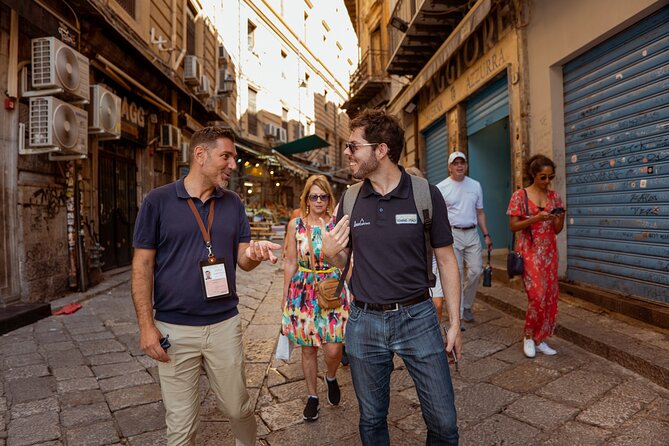
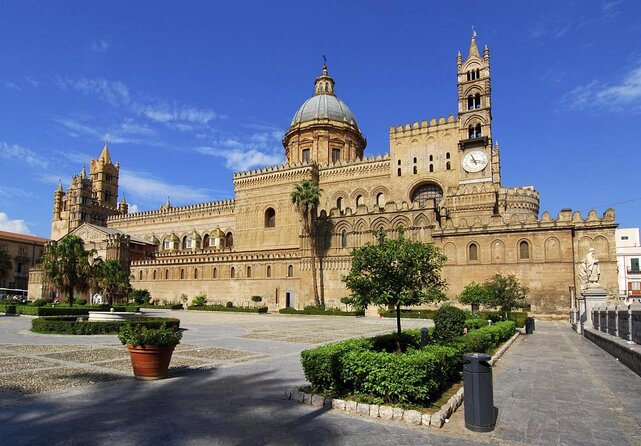
The highlight most people care about is the cathedral. Cattedrale di Palermo is a Norman architectural treasure in Sicily and a must-see when you’re in Palermo.
It was built in 1184 by the Normans as a re-converted Christian church on the site of an earlier Muslim mosque, which itself had been built over a Christian basilica. That layering is not just a fact, it’s the entire point of the building. Palermo’s past is stacked, and this cathedral is where you can see it.
The tour also explains how architectural competitiveness played a role. The Cathedral of Palermo was built to surpass Monreale in beauty, so the end result feels like intentional exaggeration. You’ll also learn that what you see today reflects stratification of styles over centuries, including Gothic to Medieval, Arabic details such as a passage engraved on a column, and Neoclassical elements.
Inside a cathedral, a guide makes a big difference. You’ll get help noticing what matters, not just admiring the overall look. And since the Cathedral entrance is included, you avoid the hassle of paying separately just to make the stop worth it.
Villa Bonanno: A Garden Pause Behind the Palace of the Normans
Next is a calmer, greener moment at Villa Bonanno, a garden always open located behind the Palace of the Normans in Victory Square. It was built in 1905 by Mayor Bonanno, and the garden has palm trees plus statues and busts of famous Palermo figures.
This stop is also connected to archaeology. Remains of Roman patrician houses were found there, including mosaics such as the seasons and Orpheus. You’ll hear that those mosaics are now kept at the National Archaeological Museum.
Even if you are not an archaeology person, this pause helps you catch your breath. In a 3-hour walk, Villa Bonanno gives you a break from the most intense sightseeing while still keeping you in the UNESCO-linked story.
Palazzo dei Normanni and the Palatine Chapel Mosaics from Outside
The final major landmark is Palazzo dei Normanni, also called the Royal Palace. It’s described as tracing Palermo’s history from the earliest Punic settlements to more modern times, which tells you why the complex matters.
The main reason people come here is the Cappella Palatina or Palatine Chapel, with its sumptuous Arab-Norman decoration. The Palatine Chapel has been listed as a World Heritage Site since 2015. In this tour, you’ll learn about its mosaics and artistry through a stop connected to the chapel area.
One important caution: the admission for the Palazzo dei Normanni is noted as not included. So you should expect the tour to focus on what you can see and understand without counting on inside access everywhere. If you want to go deeper, you may need to plan extra ticket time on a separate visit.
Price and Value: What $31.88 Buys You in Palermo
At $31.88 per person for about 3 hours, this tour is priced like a good deal on a route with real entries and real guidance. Here’s why it feels like value:
- The Cathedral entrance is included, which is one of the biggest paid stops in the loop.
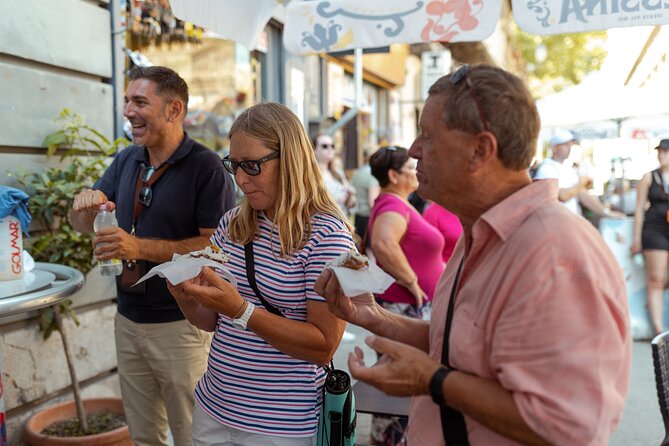
- You get a classic end treat, a typical Sicilian cannolo or granita.
- You’re not just looking at buildings, you’re learning why Palermo’s architecture mixes Norman, Arabic, Byzantine, and later layers.
I also like that the tour is capped at 20 travelers, which helps keep the experience from turning into a big slow-moving crowd. That size makes questions more likely to be answered and keeps you moving at a walkable pace.
Tips to Make This Walk Feel Effortless
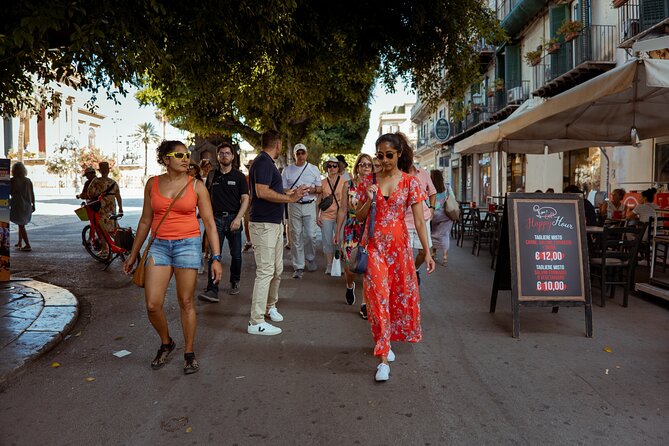
Bring comfortable shoes, because even “short” pauses add up over 3 hours in central Palermo. If you’re sensitive to cold or heat, dress in layers and carry something light for rain just in case.
Expect crowds around the market zones. Palermo’s center can be loud and busy, and your best move is to keep close to the guide and stay aware when the streets get congested.
If you’re the type who likes to take photos, you’ll do fine, but plan to pause in the big square moments like Quattro Canti and Piazza Pretoria. Those are naturally good photo stops, and they’re where you’ll get the most directional payoff.
Should You Book This Palermo UNESCO Walking Tour?
Book it if you want a tight route that covers the city’s major UNESCO-linked architecture without wasting half your day planning. This is especially worth it on your first or second day, when you want orientation plus explanations that make the monuments feel connected.
I’d skip it or supplement it if you specifically want long interior time in every major complex. This walk is built for learning at key points, and some interior access may require extra planning since not all admissions are included.
If your goal is get your bearings fast, learn what makes Palermo’s architecture different, and finish with a real Sicilian snack, this tour is a strong choice.
Our Wider Tours File for Palermo
Palermo, Monreale and Cefalu Days in Palermo, Written Up Separately
Not quite the day you had in mind? The rest of our Palermo write-ups sit below
- Palermo: Anti-Mafia Heroes Evening Walking Tour★ 4.6 · 172 reviews
- From Palermo: Half-Day Corleone Excursion★ 3.8 · 182 reviews
- Tour Cappella Palatina e palazzo Reale: patrimonio Unesco★ 4.8 · 183 reviews
- Palermo: Full-Day Snorkeling Boat Tour with Lunch and Wine★ 5.0 · 196 reviews
- Wanna be Sicilian: Palermo Cooking Class and Market Tour★ 5.0 · 197 reviews
- Sicily: Etna Volcano & Taormina Tour★ 4.4 · 199 reviews
- From Palermo: Erice and Marsala Day Trip with Lunch★ 4.8 · 199 reviews
- Palermo: Cappella Palatina and Palazzo dei Normanni Tour★ 4.8 · 214 reviews
- Palermo Half Day Boat Tour with Palermo Experiences★ 5.0 · 224 reviews
Palermo, Monreale & Cefalù, top to bottom.
 ★ 4.8Palermo: NO Mafia Walking TourFrom $402,431 reviews
 ★ 3.9Palermo: Hop-on Hop-off Bus Tour 24-hour TicketFrom $172,410 reviews
 ★ 5.0Palermo Original Street Food Walking Tour by StreatyFrom $832,105 reviews
 ★ 4.2Segesta, Erice and Salt Pans Full-Day Excursion from PalermoFrom $821,791 reviews
 ★ 4.5Palermo: Teatro Massimo Opera House Guided TourFrom $141,573 reviews
 ★ 4.2From Palermo: Monreale and Cefalù Half-Day TripFrom $711,354 reviews
 ★ 4.9Palermo: Street Food and History Walking TourFrom $541,294 reviews
 ★ 4.2Palermo: Agrigento and the Valley of the Temples Day TourFrom $771,240 reviews