
Reviewed · GUIDED
Florence: Guided Tour of Medici Family Secrets and Chapels
Florence’s Medici power struggle still reads like drama. This 2 hour guided walk lets you pair Medici Chapel awe with real city landmarks tied to art, banking, and politics. The biggest wins for me are the pre-reserved skip-the-line entry and a guide who keeps the story moving at a smart pace.
One thing to plan for: entry is timed, and tickets expire quickly. You also need to show up about 15 minutes early, and the tour is not suitable if you have mobility limitations or need wheelchair access.
In This Review
- Key things I’d circle before you go
- Why the Medici story makes Florence click
- Starting at Piazza di Madonna degli Aldobrandini, then straight to the timed entry
- Medici Chapel: marble, meaning, and what to look for
- New Sacristy with Michelangelo: the burials that feel like theater
- Michelangelo’s Secret Room, plus the hidden crypt angle
- “How art became power” in the streets near San Lorenzo
- Piazza del Duomo to Piazza della Signoria: where religion meets government
- Palazzo Medici Riccardi courtyard views: the Medici’s old home, seen from outside
- Palazzo Vecchio and the Uffizi viewpoint: a practical way to end your Medici education
- How much you’re really paying, and why it’s not just a $93 ticket
- Guide quality makes or breaks it, and the names you’ll want to see
- Who should book this Medici secrets tour
- Should you book it?
- FAQ
- Where do I meet the guide?
- How long is the tour, and what language is it in?
- Does this tour include entry to Michelangelo’s Secret Room?
- Are the tickets skip-the-line?
- How early should I arrive?
- Is this tour suitable for wheelchair users or mobility impairments?
Key things I’d circle before you go
- Medici Chapel, octagonal and inlaid with marble you can actually look at closely, not just rush through.
- Michelangelo’s burials in the New Sacristy are treated as living history, not a quick photo stop.
- Hidden crypt story and a 2004 discovery gives the chapel a real sense of mystery and research.
- Michelangelo’s Secret Room viewed from outside explains what he did in 1530 without promising entry you will not get.
- Palazzo Medici Riccardi and Palazzo Vecchio context helps you understand how buildings turned into leverage.
- A compact route from San Lorenzo to Piazza della Signoria and onward makes this a strong first or second Florence tour.
Why the Medici story makes Florence click
The Medici didn’t just collect art in Florence. They used art, architecture, and religious prestige to control how people thought, what leaders looked like, and which families got blamed when things went wrong. This tour works because it keeps that cause and effect front and center.
You get a guided view of the Medici world at the exact places where their power was staged. One moment you’re standing near the Basilica di San Lorenzo complex, the next you’re thinking about what it meant that the Medici helped shape public life. I also like that the tour ties the family’s rise to banking and rivalry, including names like the Strozzis and the Pazzis, so the Renaissance doesn’t feel like a set of disconnected masterpieces.
The pacing matters too. In just two hours, you walk enough to get oriented in central Florence, without trying to conquer the entire city like a forced march.
We wrote up further guided tours in Florence on the same pass through the archive.
- The Best tour in Florence: Renaissance & Medici Tales – guided by a STORYTELLER
★ 5.0 · 12,316 reviews - Florence: Duomo Cathedral Guided Tour
★ 3.9 · 5,970 reviews - Uffizi Gallery Small Group Tour with Guide
★ 4.5 · 4,923 reviews - Florence: Accademia Gallery Guided Tour
★ 4.6 · 4,156 reviews
Starting at Piazza di Madonna degli Aldobrandini, then straight to the timed entry
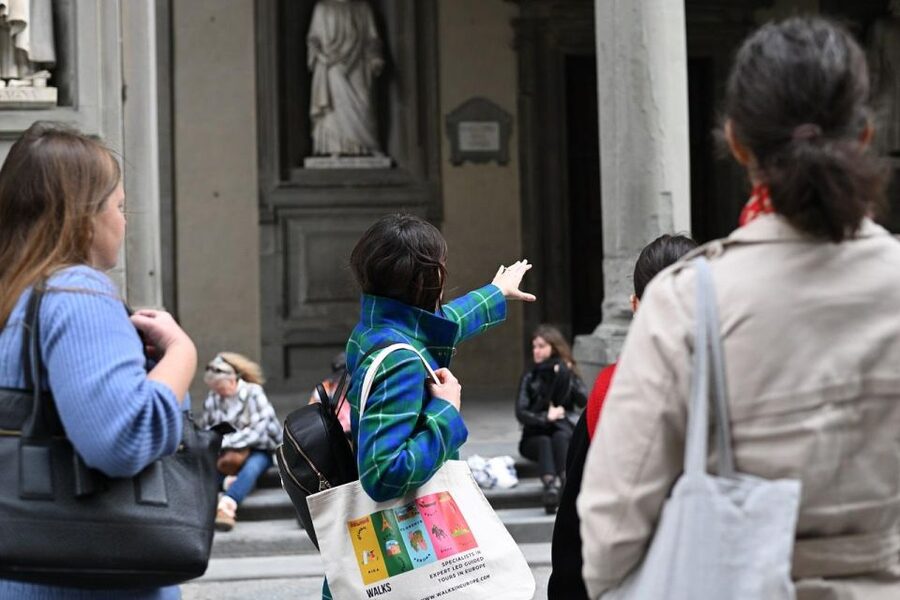
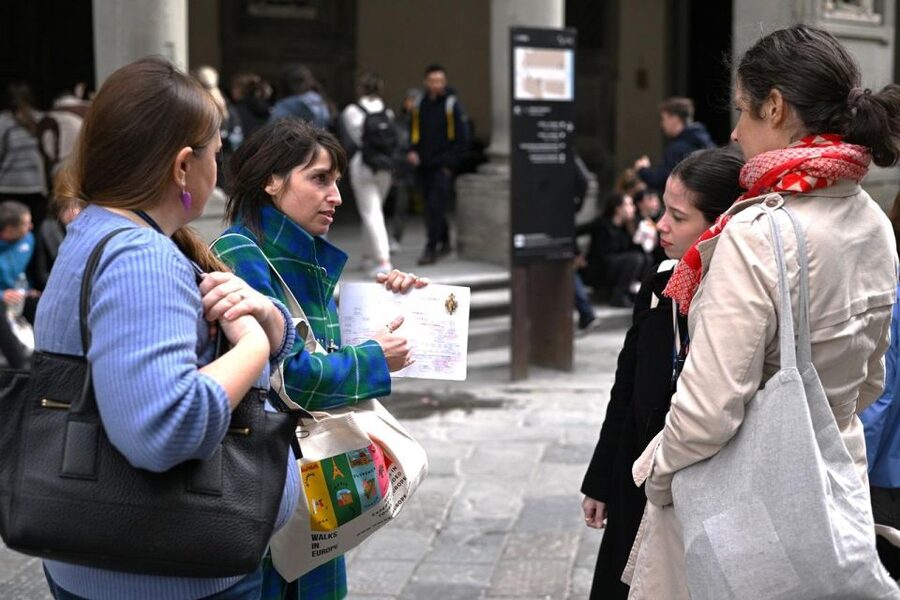
The tour begins in Piazza di Madonna degli Aldobrandini at the entrance to the Medici Chapels. Your guide will be holding a sign that says Walks in Europe, which is a nice change from the usual mystery-meetup chaos.
This matters because your time is controlled by the entry window. Tickets are timed and expire within about 5 to 10 minutes, so you do not want to arrive late and hope for mercy. When you’re traveling in peak season, that discipline is what turns a good tour into a smooth one.
Also, bring light. Luggage and large bags are not allowed in the monument, and that can stop you at the door if you show up with a backpack that’s basically a second suitcase.
Medici Chapel: marble, meaning, and what to look for
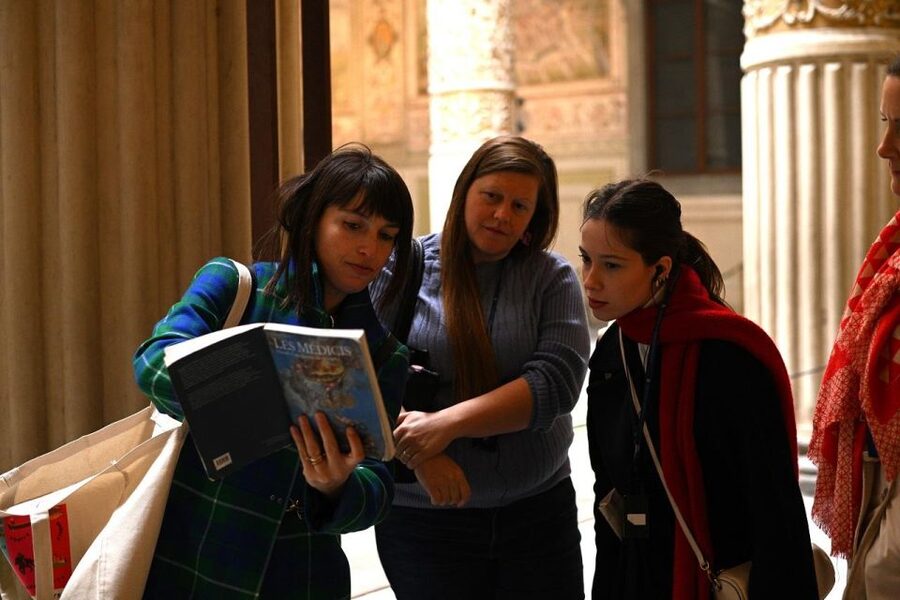
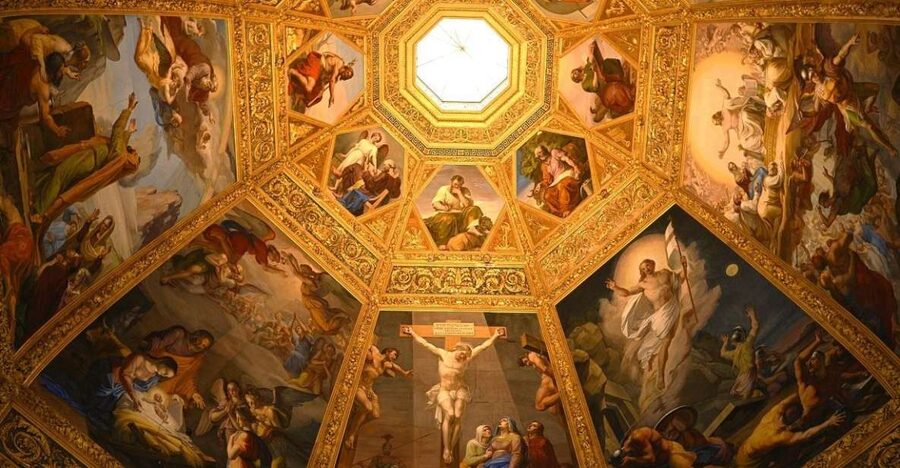
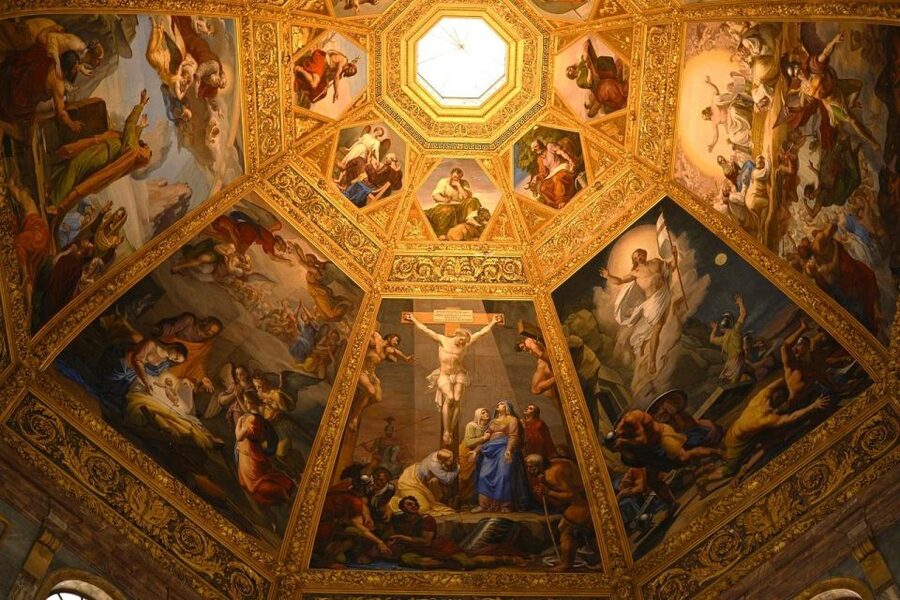
The star stop is the Medici Chapel, where you’ll get a guided visit of about 30 minutes. This is the octagonal chapel, designed with inlaid marble that looks decorative from far away but becomes far more interesting when you slow down and notice how the materials and layout create a sense of order and status.
Here’s what I’d focus on as you look around. Notice how the space communicates permanence. The Medici wanted visitors to feel that their rule was not temporary, even when political rivals were everywhere. The guide’s job is to connect visual details to family strategy, and the chapel is the perfect place for that. The story is not abstract once you’re inside a space built to present authority.
In the feedback I’ve seen, the most consistent praise is for guides who make this chapel feel astonishing without turning it into a lecture. You’ll see why the room makes people go quiet, then start pointing out details.
New Sacristy with Michelangelo: the burials that feel like theater
After the chapel, the tour turns to the New Sacristy at the Basilica di San Lorenzo complex, where members of the Medici family rest. This is where Michelangelo’s artistic influence becomes impossible to ignore.
You’re there for burials decorated by Michelangelo, and the tour frames them as more than “beautiful art.” Think of them as controlled messaging. If you’re trying to understand Renaissance power, this is one of the most practical places to see it.
I’d also take a moment on your own to look for the overall design logic, not only the faces and figures. Guides tend to point out how the arrangement supports the idea of rank, legacy, and legitimacy. It’s a reminder that religion, art, and politics were tangled together in Florence.
The tour also includes the Chapel of the Princes, described as adorned with marble and sparkling semi-precious stones. If you like seeing how wealth announces itself through material choices, this section delivers.
Michelangelo’s Secret Room, plus the hidden crypt angle
Not everything is entered on this tour. You will hear about Michelangelo’s Secret Room and you’ll be able to view it from outside. The key detail here is what Michelangelo did in 1530: he hid for many weeks. Even without entry, the guide’s framing makes the place feel loaded with human urgency, not just architectural interest.
The story gets even better with the hidden crypt. This vaulted chamber was unknown to many tourists and remained undiscovered until 2004, when researchers lifted a stone slab behind the chapels’ main altar. That piece of information does something important for your visit: it turns your assumptions upside down. You stop thinking of the chapel as “fully known” and start thinking of it as a site where research can still reveal surprises.
You do not need to be a Michelangelo expert to enjoy this portion. What you need is a willingness to listen for the narrative thread, because the guide connects the physical spaces to the bigger question: how did the Medici want people to interpret their story?
“How art became power” in the streets near San Lorenzo
Once you step out of the main religious spaces, the tour uses the surrounding streets and squares to rebuild the context. You’ll walk through the San Lorenzo neighborhood area and get a quick sense of where the Medici story took root.
The tour covers the family founders and how their bank rose fast, becoming one of the most successful in Europe. That banking success is not just a side fact. It explains how the Medici could fund prestige projects and become a political force, long before they looked like obvious rulers.
You’ll also hear about rivalries with other prominent families like the Strozzis and the Pazzis. In Florence, these conflicts were never only about money. They were about legitimacy, reputation, and control of the story. Hearing that while walking through central neighborhoods helps the drama land.
- The Best tour in Florence: Renaissance & Medici Tales – guided by a STORYTELLER
★ 5.0 · 12,316 reviews



Piazza del Duomo to Piazza della Signoria: where religion meets government
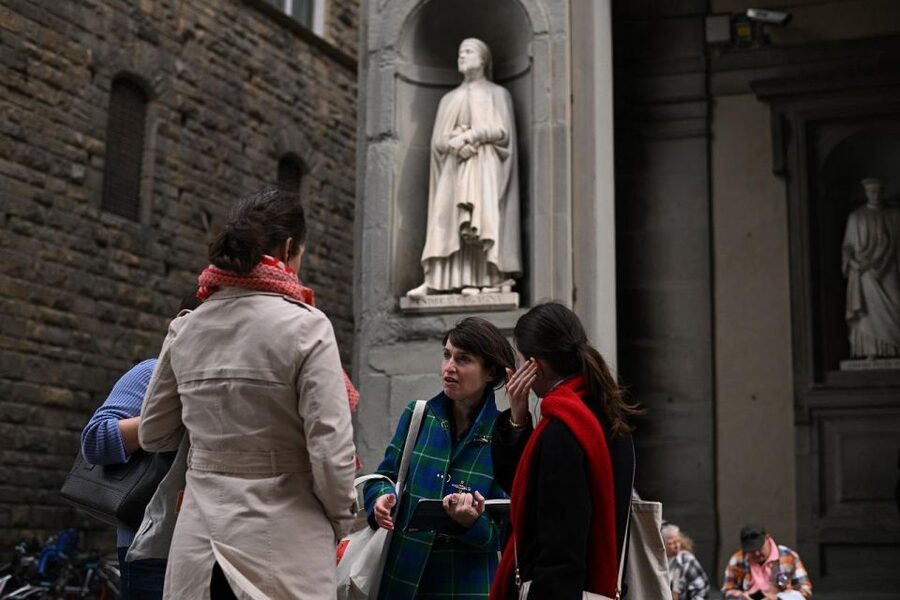
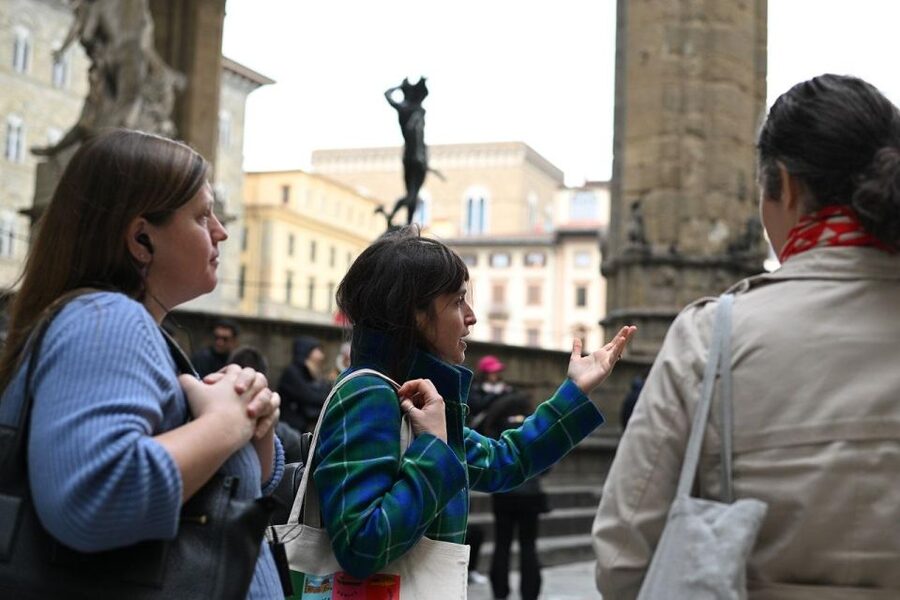
The tour stops for short guided time at Piazza del Duomo and then heads to Piazza della Signoria, described as the political heart of Florence since the 14th century. This section is useful because it helps you understand Florence’s layout: religious grandeur and civic power sit close enough to feel connected.
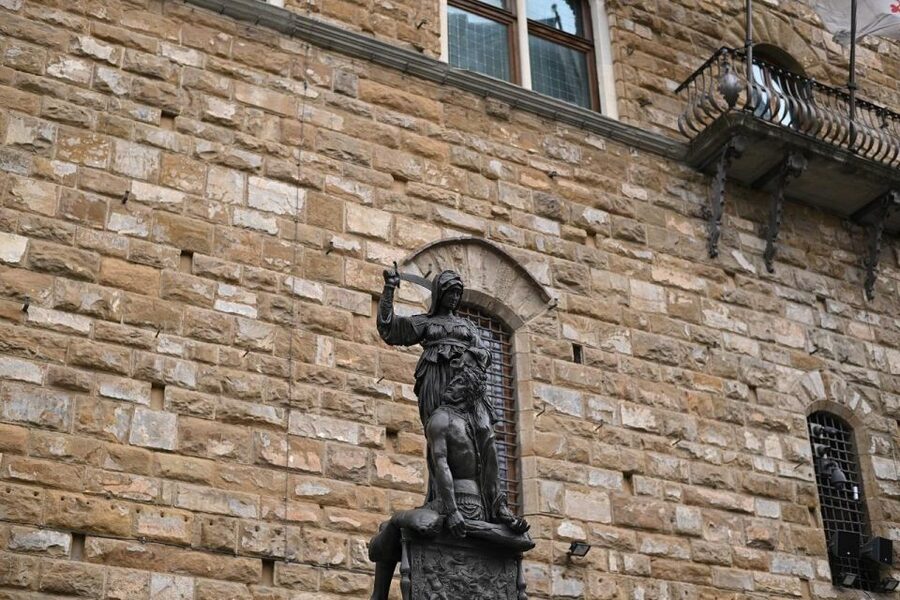
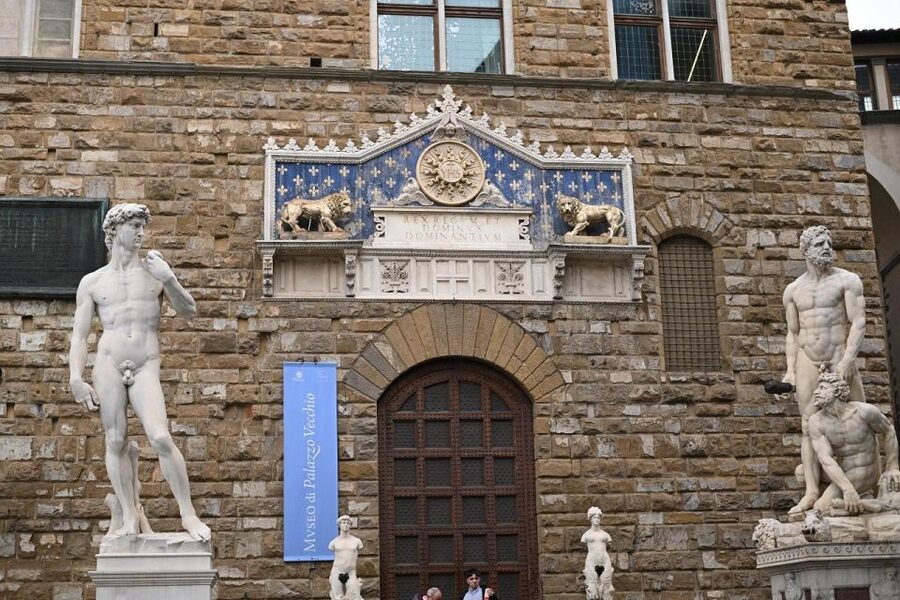
At Piazza della Signoria, you’ll learn how the medieval government building was transformed into a Medici palace in 1540. Seeing the idea of transformation in a real public square makes the history feel more grounded. This is where you start to see the Medici as master operators, not just art patrons.
Guides on this kind of tour tend to work best when they keep you looking at the right angles and asking the right question. For example, don’t just look at the big buildings. Think about what kind of message the location sends. That is the “art and power” theme the tour keeps returning to.
Palazzo Medici Riccardi courtyard views: the Medici’s old home, seen from outside
You’ll also pass by Palazzo Medici Riccardi. The tour focuses on seeing it from the courtyard area, which is a great way to respect the exterior scale without trying to force an indoor visit that may not be part of the timed plan.
This stop is valuable because it reminds you the Medici were rooted in Florence long before the family title of power got written into every stone. The palace courtyard view gives you a sense of how close daily life was to political ambition.
The guide’s commentary about the Medici influence on Florence helps you connect that courtyard setting to the broader Renaissance pattern: private wealth turned into public authority, then got wrapped in religious and artistic symbols.
Palazzo Vecchio and the Uffizi viewpoint: a practical way to end your Medici education
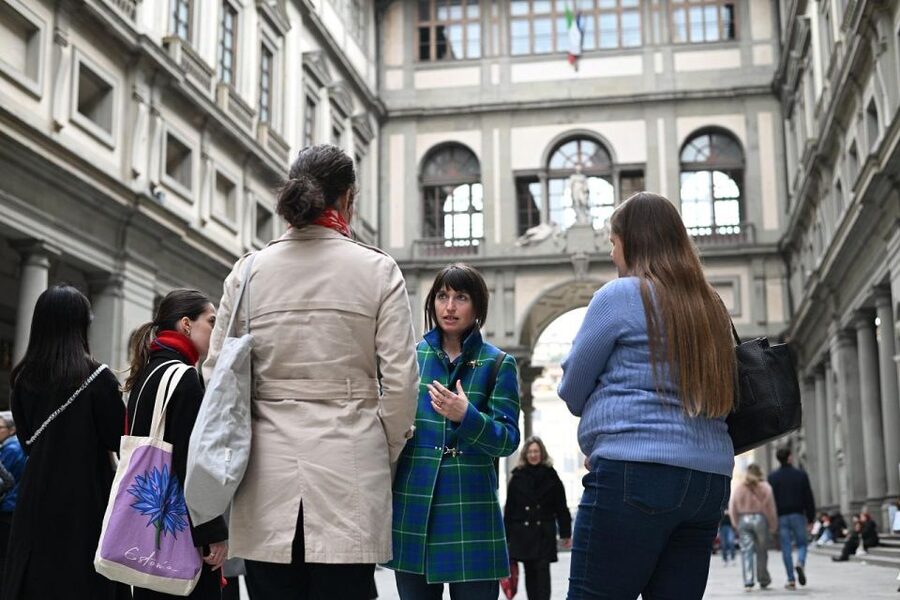
You’ll finish with a stop at Piazzale degli Uffizi, plus a guided visit and a viewpoint component that helps you stitch everything together visually.
Before that, you’ll also see the exterior of Palazzo Vecchio from an exclusive vantage point. Even when you’re not inside, this part teaches you how to read Florence like a map. You start to notice the city’s different “centers,” and you understand why Piazza della Signoria mattered so much.
The ending viewpoint at Piazzale degli Uffizi is a smart closer. You get a chance to reflect on the art, power, and hidden secrets that shaped the family. More practically, you leave with a better mental model of where things are, so your next day in Florence feels easier. That matters when you only have a few days and want to spend time on what you truly care about.
How much you’re really paying, and why it’s not just a $93 ticket
At $93 per person for about two hours, this tour costs more than a generic street walk. But the price makes sense once you factor in what you’re buying.
You get expert local guidance plus pre-booked tickets to the Medici Chapels and the New Sacristy. In places like this, timed entry is half the battle. Skip-the-line access is not just about comfort, it’s about time saved when lines can be brutal and your ticket window is short.
Two hours also keeps it realistic. The tour doesn’t try to swallow Florence. It targets the Medici core: the chapels, Michelangelo-linked tomb art, and the power locations that explain how the family shaped the city.
If you’re doing Florence for the first time, or you want a fast but meaningful backbone for your next self-guided walks, this is strong value.
Guide quality makes or breaks it, and the names you’ll want to see
The tours seem to rise or fall on storytelling, and the guide feedback here is consistently positive. I’ve seen repeated praise for guides such as Valentina, Chiara, Marco, Emmanuella, Michaela, Laura, Nora, Vanessa, Elisa, Simona, Alex, Julia, Roberta, Sylvia Botticelli, and Anne Lisa.
What those names have in common is style: guides who can answer questions, keep a good pace, and make the Medici feel like real people rather than textbook characters. Some guides also adjust on the fly when rain hits, swapping to indoor cathedral options and still tying it back to Medici-era context. If you care about a tour where your questions actually get answered, this is the right kind of operation.
Who should book this Medici secrets tour
This one fits best if you:
- want a focused Medici overview in a short window
- care about how art and politics overlap
- want skip-the-line timed entry to the chapels and New Sacristy
- like guided interpretation that points out what to notice, not just where to stand
It might not fit if you:
- need wheelchair access or have mobility impairments, since the tour is not suitable for wheelchair users
- plan to bring large bags or heavy luggage, since large backpacks and bags are not allowed in the monument
Should you book it?
Yes, if your time in Florence is limited and you want a guided entry into one of the most important Medici-centered places. The combination of timed skip-the-line access, Michelangelo-related stops, and quick power-site context is exactly what turns the Renaissance from a list of names into a story you can walk around.
If you’re the type who loves museums, this will feel worth it. If you hate timed entry stress, just plan to arrive early and keep your bag situation simple. Get that part right, and the chapel visit alone can make the whole tour feel like time well spent.
FAQ
Where do I meet the guide?
Meet in Piazza di Madonna degli Aldobrandini by the entrance to the Medici Chapels. The guide has a sign that says Walks in Europe.
How long is the tour, and what language is it in?
The tour lasts about 2 hours and is conducted in English.
Does this tour include entry to Michelangelo’s Secret Room?
No. Entry to Michelangelo’s Secret Room is not included. You only view it from an external viewpoint.
Are the tickets skip-the-line?
Yes. The tour includes pre-booked tickets to the Medici Chapels and the New Sacristy, which helps you skip the ticket line.
How early should I arrive?
You should arrive at the meeting point 15 minutes before the tour starts due to timed entry tickets.
Is this tour suitable for wheelchair users or mobility impairments?
No. It is not suitable for people with mobility impairments and wheelchair users.
Guided Tours in Florence We Also Walked


Our Wider Tours File for Florence


Not quite the day you had in mind? The rest of our Florence write-ups sit below
- David & Accademia Gallery: 1-Hour Small Group Tour★ 4.5 · 169 reviews
- Cinque Terre & Pisa Premium Tour from Florence★ 5.0 · 170 reviews
- Chianti Wine Tastings Day Trip at Sunset from Florence★ 4.5 · 171 reviews
- Private Transfer from Florence Airport to your Hotel in Florence★ 4.5 · 172 reviews
- Private Uffizi Gallery Tour with Reserved Entry★ 5.0 · 174 reviews
- Tasty Florence Street Food with Guided Walking of the City★ 5.0 · 174 reviews
- Uffizi Gallery Timed Tickets with Audio guide★ 4.0 · 174 reviews
- Florence: Tuscany Bike Tour with Wine & Olive Oil★ 4.9 · 174 reviews
- Florence: Small Group Guided Walking Tour★ 4.7 · 176 reviews
Guided, top to bottom.
 ★ 4.7Colosseum, Roman Forum & Palatine Guided TourFrom $7863,148 reviews
 ★ 4.5Vatican Museums, Sistine Chapel & St Peter’s Basilica Guided TourFrom $2239,149 reviews
 ★ 4.8Rome: Colosseum, Palatine Hill and Roman Forum Guided TourFrom $5232,814 reviews
 ★ 4.7Rome: Guided Tour of Colosseum, Roman Forum & Palatine HillFrom $5527,897 reviews
 ★ 4.2Rome: Colosseum & Forum with Audio Guide App -Optional ArenaFrom $4124,770 reviews
 ★ 4.5Rome: Colosseum, Roman Forum and Palatine Hill Guided TourFrom $5923,903 reviews
 ★ 4.4Naples: Naples Underground Entry Ticket and Guided TourFrom $2121,781 reviews
 ★ 4.3Rome: Pantheon Fast-Track Ticket and Official Audio GuideFrom $621,008 reviews