
Reviewed · TICKETS
Florence: Santa Croce Church Tour with Entry Ticket
Santa Croce moves fast, in the best way. A guided tour here turns Florence into a walkable art lesson, with reserved access to the Basilica and a route that connects names you already know to the spaces that shaped them. I love the direct payoff: you see major burials and major artworks in one efficient circuit, without wandering and guessing. The other thing I really like is the way the guide threads architecture, painting, and sculpture together, so everything clicks instead of feeling like random stops.
One consideration: the dress code is strict. Knees and shoulders must be covered, and if you’re refused entry, the tour won’t be rescheduled or refunded. Plan your outfit accordingly before you head to the church.
If you want a church visit that feels like a guided highlight reel, with time to revisit what grabs you, this is a strong choice. You’ll also get to hear the guide clearly thanks to the radio system, which matters when you’re in busy interiors and smaller chapels.
In This Review
- Quick, Specific Reasons This Tour Works
- Where Santa Croce Fits in Florence, and Why It’s Worth Your Time
- Meeting at Dante’s Monument, Then the Calcio Storico Warm-Up
- Inside Santa Croce: The Guide’s Route Through Frescoes, Chapels, and Tombs
- Donatello and the Chapel of Fools: Art and Architecture in Conversation
- The Cemetery, the 1966 Flood Story, and How Restoration Changes What You See
- Exterior Polychrome Marble, Then the Bell Tower, Crypt, and Chapels
- What the Add-On Wine Tasting Really Adds
- Price and Value: Is $54.66 Worth It?
- Who This Tour Suits Best (and Who Might Skip It)
- Practical Tips So You Enjoy Every Minute
- Should You Book This Santa Croce Church Tour?
Quick, Specific Reasons This Tour Works
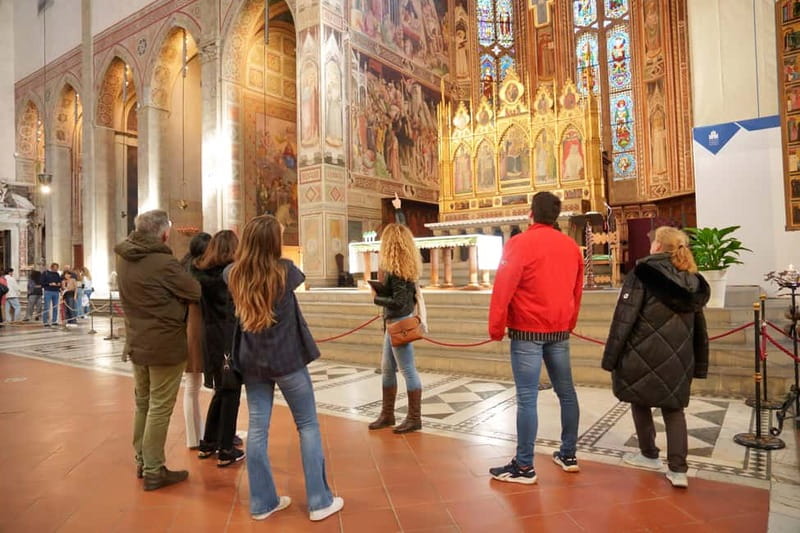
- Reserved entry with a real guide, not a rushed pass through the doors
- Tombs of Michelangelo, Machiavelli, Galileo, and more, tied to the story of Florence
- Giotto frescoes in the Bardi and Peruzzi Chapels, plus major work in the Cappella Maggiore
- Donatello’s crucifix and the architectural focus of Brunelleschi’s Chapel of Fools
- A story you can see in layers, including aftermath of the 1966 flood and later restoration
- Optional wine tasting with a wine expert and Tuscan appetizers if you want to extend the day
Where Santa Croce Fits in Florence, and Why It’s Worth Your Time
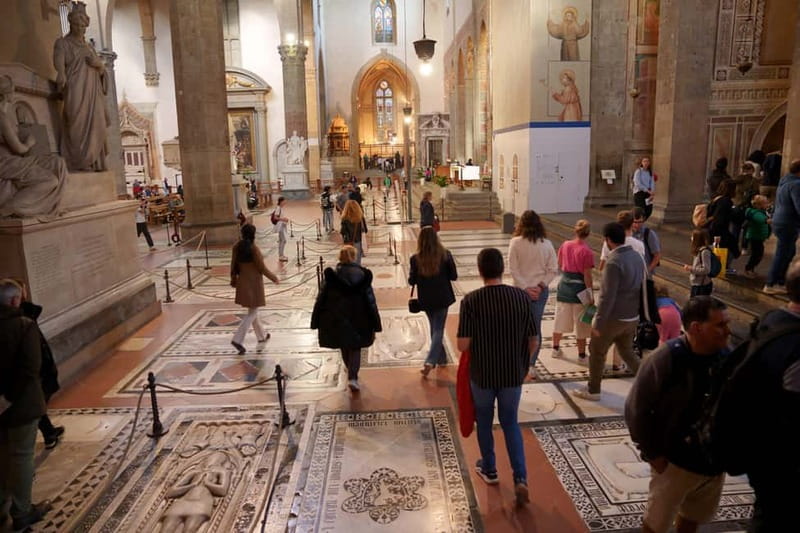
Santa Croce Basilica is often described as a church, but on the ground it feels more like a cultural hub for Italian “greats.” You’ll hear it called the temple of the Italian Glories, and that framing is useful. This place is where Florence puts memory into stone and paint.
The practical win is that the tour is built for understanding quickly. Instead of trying to read everything yourself, you get a guided route that hits the big artistic and historical anchors, then still leaves you with a chance to circle back afterward. That balance is what makes this feel efficient rather than stressful.
Also, Santa Croce is a place where details matter. The exterior’s polychrome marble façade is only the beginning. Inside, the chapels, tombs, and fresco cycles are where you start to see how Florentines used art to say something serious about faith, power, and identity.
We wrote up further entry tickets in Florence on the same pass through the archive.
- Florence: Skip-The-Line Uffizi Gallery Timed Entry Ticket
★ 4.5 · 27,832 reviews - Florence: Timed Entrance Ticket to Michelangelo’s David
★ 4.6 · 16,983 reviews - Florence: Michelangelo’s David Skip-the-Line Entry Ticket
★ 4.5 · 12,764 reviews - Florence: Leonardo Interactive Museum Entry Ticket
★ 4.5 · 11,763 reviews
Meeting at Dante’s Monument, Then the Calcio Storico Warm-Up
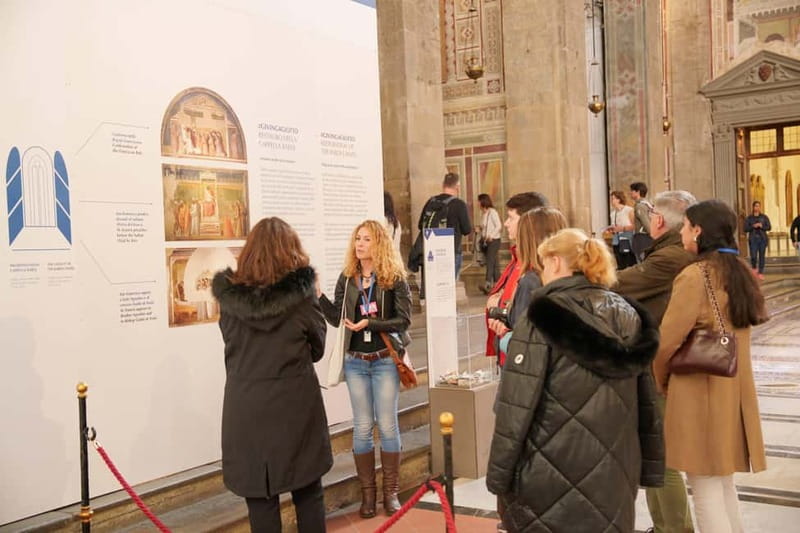
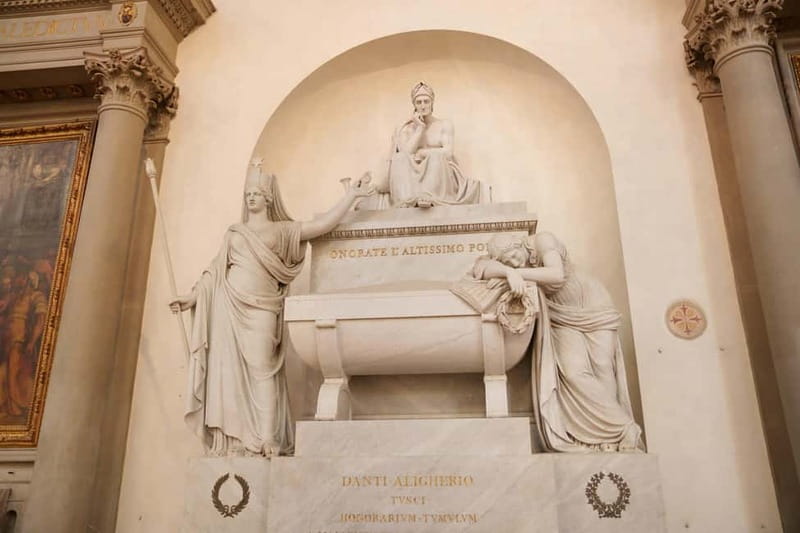
You start near Largo Piero Bargellini, 1, at the Monument to Dante Alighieri. That location choice matters because it sets you up in the right Florence rhythm: you’re not starting in a back alley or a random street. From there, you walk into the church area with the guide shaping what you’re about to see.
Right away, you get a cultural connection that’s easy to remember. The guide explains the annual medieval-style soccer event, Calcio Storico Florentino, which takes place every June. It’s not just trivia. It helps you understand the local habit of celebrating history in public spaces, then applying that same energy to art and civic pride.
As you move toward the entrance, you’ll also notice a memorial tied to Giovanni Battista Niccolini. This 19th-century playwright’s memorial is described as an inspiration for the Statue of Liberty. Even if you’re not expecting an American connection in Florence, it’s exactly the kind of detail a good guide catches.
Inside Santa Croce: The Guide’s Route Through Frescoes, Chapels, and Tombs
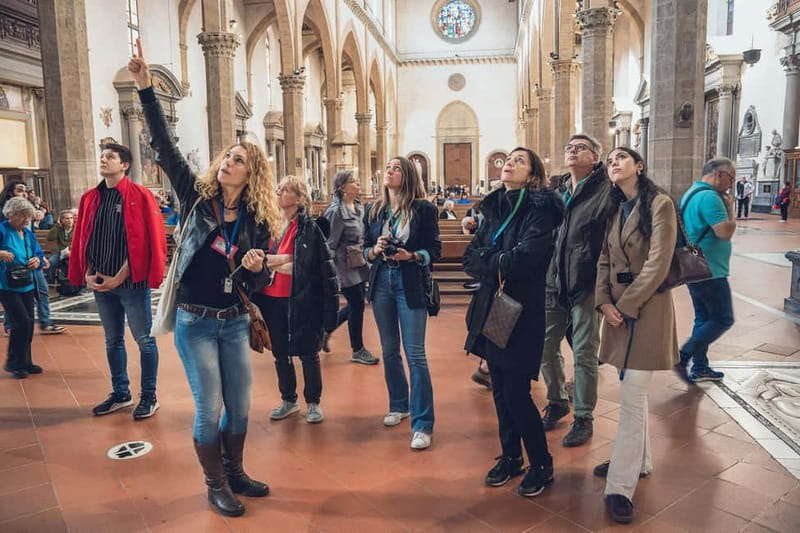
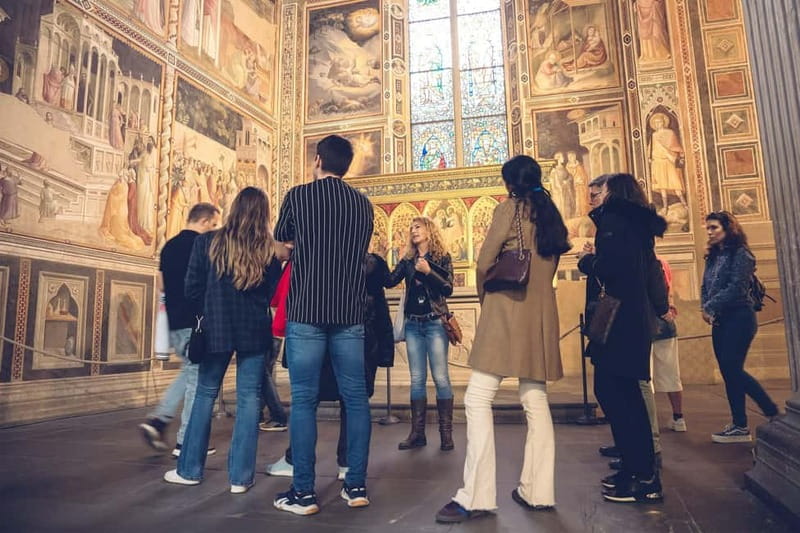
The heart of the tour is the Basilica interior, roughly an hour of focused viewing. What makes it work is how the guide connects the art to the people and themes. You’re not just shown objects. You’re taught how they fit together.
A big highlight is the Cappella Maggiore. You’ll hear about frescoes by Gaddi from 1380, and the guide explains how the images tell the story of Santa Croce. That’s a helpful way to look at frescoes, since they can feel overwhelming if you’re staring at them without a map.
Next, you’ll move through chapels where Giotto frescoes come into play. The Bardi and Peruzzi Chapels are famous for scenes from the life of St. Francis and St. John the Evangelist. If you’ve seen Giotto before, this is a chance to compare style and impact with the setting and scale here. If you haven’t, this is often the moment where first-time visitors go from seeing paintings to understanding what makes them important.
Then comes the reason many people book: the tombs. You’ll learn about the burial places of Michelangelo, Machiavelli, Galileo Galilei, and more. The tour doesn’t just point at names. It gives context for why these burials matter to Florence, and why Santa Croce became the kind of place where intellectual and artistic achievement gets formalized.
You’ll also see Donatello’s work, including Donatello’s crucifix, described as one of the Renaissance jewels. When you hear that while you’re looking at it, it stops being marketing language and becomes a practical lens: you start noticing proportion, material choices, and the emotional weight the sculpture carries.
Donatello and the Chapel of Fools: Art and Architecture in Conversation
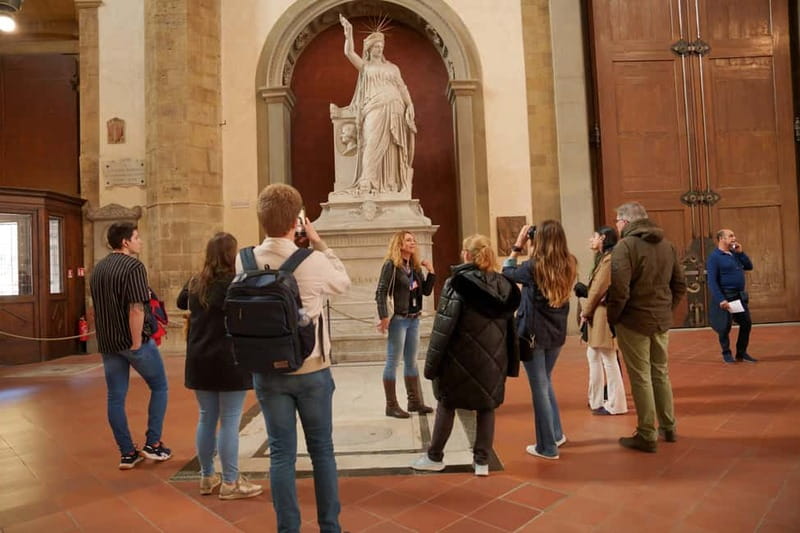
A strong part of this tour is that it doesn’t treat the church as two separate worlds, paintings over here and architecture over there. The guide brings them together.
Donatello is one of the key anchors. You’ll learn about his art and specifically his crucifix as you pass through the interior. This is where I think the tour earns its guided-entry value, because you’re not just looking at a famous name. You’re being told what to notice and why the design choices land.
From there, you shift to architectural harmony through Brunelleschi. The tour includes the Chapel of Fools, which is designed by Brunelleschi. The guide explains it as a model of perfect architectural harmony, and that phrasing matters. When you’re standing there, you can feel what the guide means by balance and proportion, not just hearing a compliment.
If you like art history that turns into actual sight, this section is the payoff. Even if you’re not an architecture buff, Brunelleschi’s presence tends to give people a satisfying wow moment, because it feels controlled and intentional rather than decorative.
The Cemetery, the 1966 Flood Story, and How Restoration Changes What You See
Santa Croce has a literal layer-cake history. One of the most interesting parts of the tour is the discussion of the monumental cemetery area and the impact of the tragic flood of 1966.
You’ll hear about damaged paintings destroyed in that flood and later restored. That detail changes how you look at the artworks. Restoration isn’t just fixing damage. It affects color, clarity, and what you assume the original experience looked like. Standing in a restored space, you start paying attention to how the church survived, then what visitors can still read today.
This is also a moment where the guide’s clarity matters. If you’re left on your own, you might see restoration signs as general damage and move on. With a guide, you get a story you can place into the bigger Florence timeline.
Exterior Polychrome Marble, Then the Bell Tower, Crypt, and Chapels
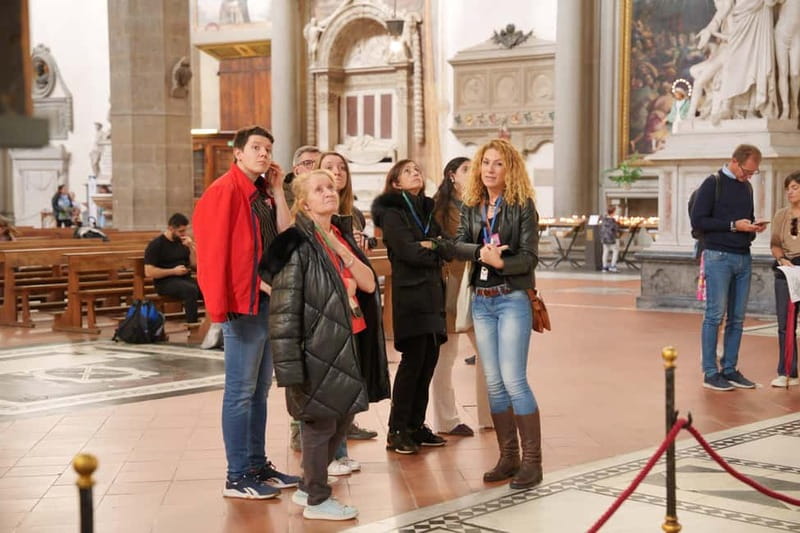
After the interior, the tour shifts to the exterior, including the polychrome marble façade. Seeing that outside view after you’ve been inside helps you understand how the church presents itself to the street. It also gives you a mental reset if you’ve been staring at artwork up close for a while.
Then the tour broadens again with stops around the bell tower, crypt, and 16 chapels. That’s a lot of ground, but the route is structured. The tour is described as taking about an hour overall, and you’re given time to continue exploring afterward.
Here’s the practical value: the bell tower and crypt can be confusing on your own because you may not know what the guide would call out as significant. With a guided route, you get the context fast, so your independent return feels like you’re confirming, not just re-starting.
- The Best tour in Florence: Renaissance & Medici Tales – guided by a STORYTELLER
★ 5.0 · 12,316 reviews



What the Add-On Wine Tasting Really Adds
If you upgrade, you get a wine-tasting option run with a wine expert and a platter of Tuscan appetizers.
This add-on makes sense if you want to turn the art focus into an evening-friendly rhythm. After standing in chapels and tomb spaces, tasting Tuscan wine gives you a more sensory finish to the day, especially if your Florence itinerary is heavy on museums.
It also offers a value argument. You’re paying more, but you’re not just paying for wine. You’re paying for an expert guide who can connect what you’re tasting to the region, plus food that keeps the experience from feeling like a quick shot and run.
If your day is already booked with lots of meals and tastings, you might skip it and keep your energy for re-visiting what you loved most in Santa Croce.
Price and Value: Is $54.66 Worth It?
At $54.66 per person, the cost is not low, but it’s not random either. You’re paying for several concrete pieces that add up:
- A certified guide
- A radio system, so you can hear clearly during the tour
- Entrance tickets with reservations
- The structured time in the Basilica, including interior and key surrounding areas
- The wine tasting and appetizers only if you pick the upgrade
The reservation and radio system alone are often worth something in Florence. Churches can be crowded, lines can be unpredictable, and acoustics are not always your friend. A guide route also saves you from spending your limited visit time figuring out what to prioritize.
I think this price becomes especially fair if it’s your first time in Florence and you want one targeted, high-impact church experience that hits many famous names and artworks in a compact window. If you already know exactly what you want and you’re comfortable with self-guided exploration, you could do this without a tour. But for most people, the guided organization is what makes the time feel worth paying for.
Who This Tour Suits Best (and Who Might Skip It)
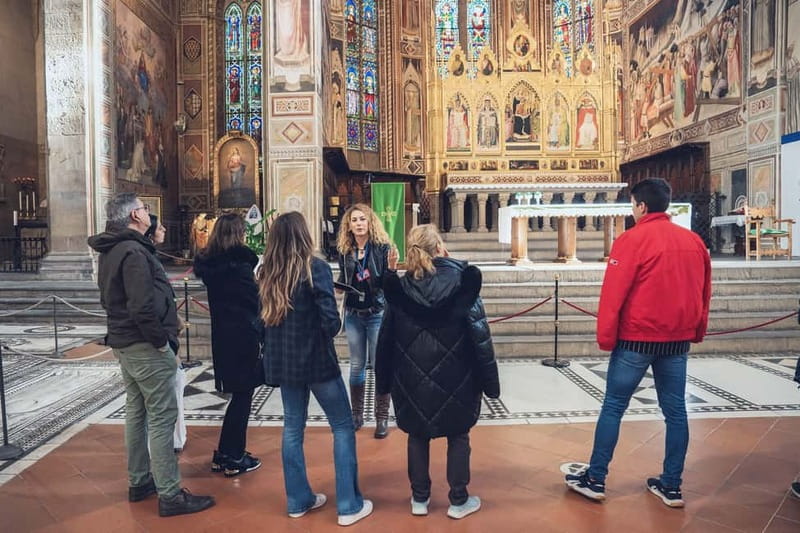
This tour is best for you if you want a guided art and history session that still lets you breathe after. It’s a strong fit for first-timers who want Michelangelo, Machiavelli, Galileo, Giotto, Donatello, and Brunelleschi in one visit. It’s also great for anyone who likes questions, because the best guides in this experience are praised for answering them clearly and keeping it entertaining.
In the guide lineup, names like Lara, Marcello, Viviana, Guido, Marie, Ilaria, Elena, Helena, and Leonardo show up in excellent feedback for being funny, professional, and able to connect details to the bigger picture. That pattern matters. It suggests you’re more likely to get a living explanation than a script reading.
You might consider skipping if:
- You want to stay in total silence and explore without a route
- You’re traveling with someone who hates explanations, even short ones
- You’re not able to meet the dress requirement (shoulders and knees covered)
Practical Tips So You Enjoy Every Minute
Start with the easy one: wear the right clothes before you arrive. Sleeveless shirts and shorts are forbidden. Knees and shoulders must be fully covered for both men and women. If you show up unprepared, entry refusal is part of the reality here, and that’s not a gamble you want to take.
Next, bring comfortable shoes. Santa Croce involves walking between areas like the interior, exterior, and multiple chapels. Even if the tour is around an hour, the total time on your feet during the visit can add up.
Finally, use the tour structure to your advantage. After the guided portion ends, you’ll have a chance to return to anything you want to see again. That’s your moment to do two things:
- Re-check the tombs or artworks you couldn’t absorb in one pass
- Take photos where you felt the space clicked visually
Should You Book This Santa Croce Church Tour?
Yes, if you want a high-value Florence stop that feels organized and meaningful. This tour is made for getting the essentials fast, with reserved entry, clear guidance through major artworks, and a route that includes tombs, frescoes, Donatello, Brunelleschi, and restoration history.
If you’re the type who likes your museum time to turn into understanding, this is a smart bet. And if you’re on the fence because of the price, think of what you’re getting: a guide route plus reserved access plus the radio system. That’s a practical package, not just a nice idea.
Book it when you can, but dress for entry first. If your schedule is tight, choose the start time that gives you breathing room afterward, so you can circle back to the one chapel or tomb that really stuck with you.
Entry Tickets in Florence We Also Walked

Our Wider Tours File for Florence

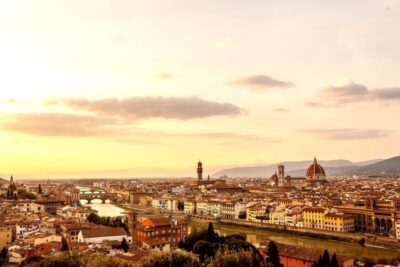
Not quite the day you had in mind? The rest of our Florence write-ups sit below
- David & Accademia Gallery: 1-Hour Small Group Tour★ 4.5 · 169 reviews
- Cinque Terre & Pisa Premium Tour from Florence★ 5.0 · 170 reviews
- Chianti Wine Tastings Day Trip at Sunset from Florence★ 4.5 · 171 reviews
- Private Transfer from Florence Airport to your Hotel in Florence★ 4.5 · 172 reviews
- Private Uffizi Gallery Tour with Reserved Entry★ 5.0 · 174 reviews
- Tasty Florence Street Food with Guided Walking of the City★ 5.0 · 174 reviews
- Uffizi Gallery Timed Tickets with Audio guide★ 4.0 · 174 reviews
- Florence: Tuscany Bike Tour with Wine & Olive Oil★ 4.9 · 174 reviews
- Florence: Small Group Guided Walking Tour★ 4.7 · 176 reviews
Tickets, top to bottom.
 ★ 4.5Vatican: Museums & Sistine Chapel Entrance TicketFrom $38144,003 reviews
 ★ 4.6Milan: Cathedral and Duomo’s Terraces Entrance TicketFrom $3061,054 reviews
 ★ 4.6Venice: Doge’s Palace Reserved Entry TicketFrom $4142,716 reviews
 ★ 4.5Florence: Skip-The-Line Uffizi Gallery Timed Entry TicketFrom $3027,832 reviews
 ★ 4.4Naples: Naples Underground Entry Ticket and Guided TourFrom $2121,781 reviews
 ★ 4.3Rome: Pantheon Fast-Track Ticket and Official Audio GuideFrom $621,008 reviews
 ★ 4.8Pompeii: Entry Ticket and Guided Tour with an ArchaeologistFrom $3519,459 reviews
 ★ 4.6Florence: Timed Entrance Ticket to Michelangelo’s DavidFrom $2616,983 reviews