

Reviewed · POMPEII ARCHAEOLOGICAL SITE
Pompeii: Entry Ticket and Guided Tour with an Archaeologist
Pompeii hits hard, even on day one. This small-group archaeologist-led walk turns the ruins into a living story, with skip-the-line access and a route that helps you make sense of what you’re seeing.
I love the personal feel, up to 20 people, and the way guides can point out the stuff you would normally miss. I also like that you get headsets for groups of 10 or more, so you can still hear the explanations in busy areas. The main drawback to plan for: the walking is real, with uneven ground and a few steps.
In This Review
- Key things to know before you go
- Pompeii makes more sense with an archaeologist beside you
- The $35 value: ticket, expert guide, and time saved
- Where the tour starts: a fast orientation at Porta Marina
- Temple of Apollo and the religious focus of Pompeii
- Foro Civile: Pompeii’s civic heartbeat
- House of the Faun: why the most famous house is never just decoration
- The Lupanar brothel: taboo topics, handled with context
- House of Menander: art, privacy, and how status shows up
- Macellum and Forum Baths: the everyday Pompeii stops
- Other highlights you get from the route, not just from the big signs
- Pacing, headsets, and the real-world walking issue
- What guides like Teresa and Anna bring to the ruins
- Who should book this Pompeii archaeologist tour
- Should you book this Pompeii guided tour with an archaeologist?
- FAQ
- How long is the Pompeii entry ticket and guided tour?
- What is included in the price?
- Do I get skip-the-line access?
- What languages are available for the live guide?
- Is the tour wheelchair accessible?
- Are unaccompanied minors allowed?
- Can I bring a dog?
- What is the cancellation policy?
Key things to know before you go
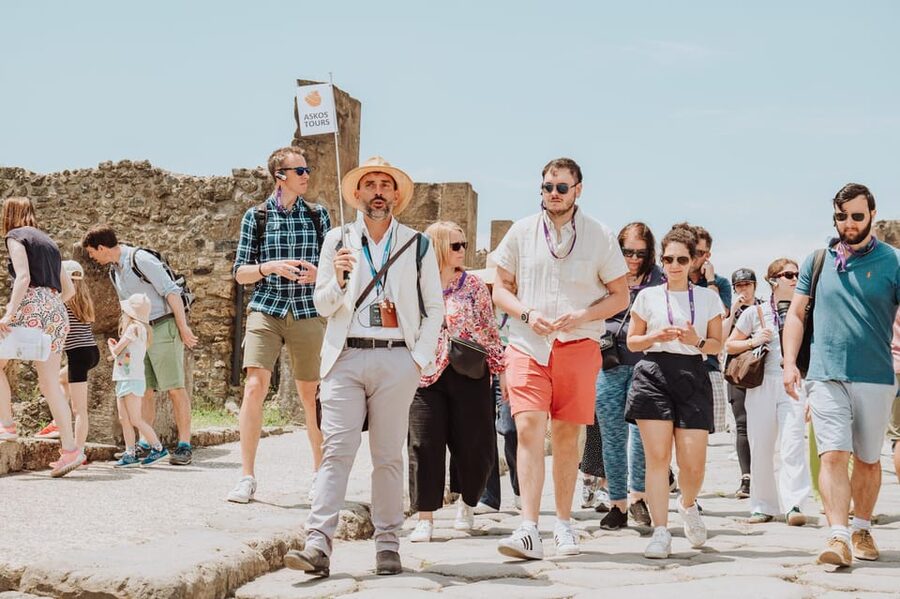
- Skip-the-line entry saves time so you can start seeing Pompeii sooner
- Archaeologist guide means you get context, not just labels on signs
- Small group size (up to 20) keeps the pace human and helps questions land
- Headsets for 10+ help you hear instructions even when crowds get thick
- House stops plus civic sites give you both daily life and public Pompeii
Pompeii makes more sense with an archaeologist beside you
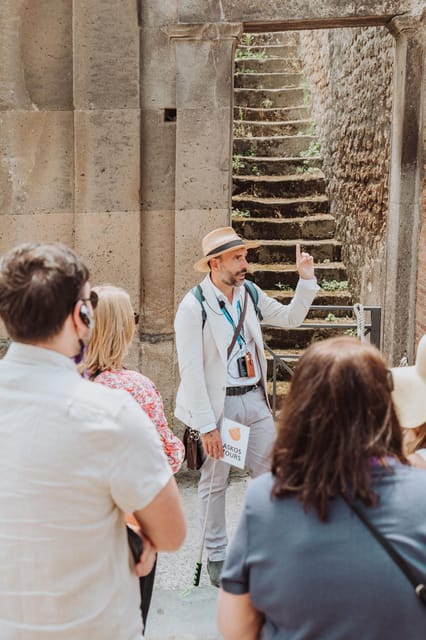
Pompeii is one of those places where everything looks important. The problem is, without guidance, your brain grabs random fragments and you leave with a handful of photos, not a real understanding.
That is why I like a tour led by an archaeologist. You’re not just walking through space, you’re learning how the pieces connect: public life versus private life, religious spaces versus commerce, and what these buildings reveal about how people ate, worked, shopped, and socialized.
The group size matters too. Up to 20 people keeps you from feeling like you are stuck behind a moving wall. In that kind of setup, your guide can slow down when the site gets tricky and help you look at the details that make Pompeii feel so human.
Our reviewers also walked through other Pompeii site visits in Pompei Campania.
- Pompeii: Entry Ticket and Guided Tour with an Archaeologist
★ 4.8 · 19,459 reviews - Pompeii: Small Group Tour with an Archaeologist
★ 4.8 · 12,264 reviews - Pompeii: Skip-the-Line Entrance Ticket with Audio Guide
★ 4.0 · 2,509 reviews - Naples: Pompeii and Mt. Vesuvius with Lunch and Wine Tasting
★ 4.5 · 2,454 reviews
The $35 value: ticket, expert guide, and time saved
At $35 per person for a 2-hour guided experience, you are paying for three things that often cost extra in Italy: entry, interpretation, and time.
You get the Pompeii entrance ticket as part of the package. You also get an archaeologist guide, plus a small group tour format. And then there is the practical win, skip-the-line access, which is not a luxury when Pompeii’s ticket areas are crowded.
What you still need to cover yourself is simple: food and drinks, transportation to and from Pompeii, and your own time planning. Pompeii is a walking experience, so I recommend treating this as a “morning or afternoon anchor” on your schedule, not something to squeeze in between multiple appointments.
Where the tour starts: a fast orientation at Porta Marina
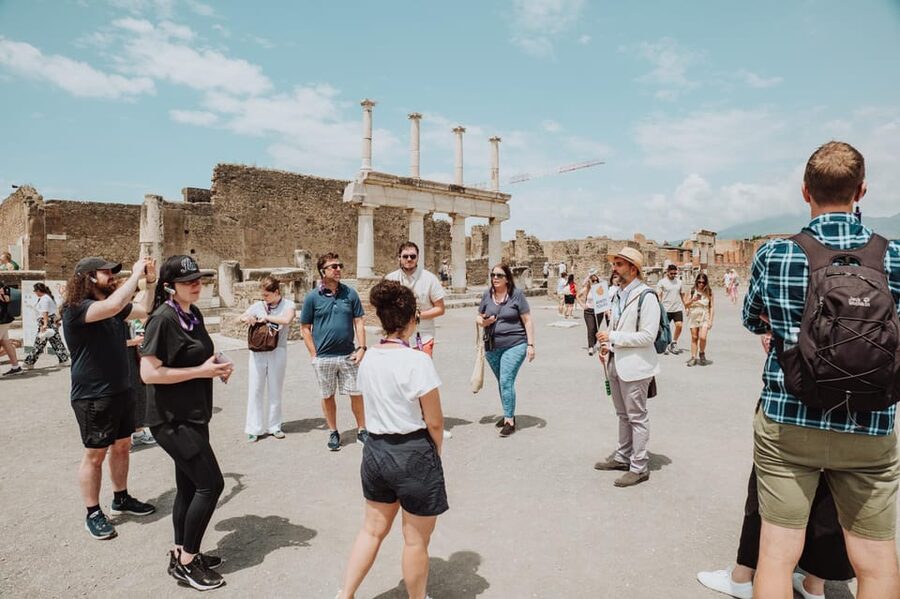
Your tour begins with a stop near Porta Marina, the Marina Gate area. Even when you are only passing by here for around 10 minutes, the value is orientation. This is where you start building a mental map of how the town moves.
From the first minutes, you are learning what the guide wants you to notice as you go. That matters because Pompeii is not laid out like a museum floorplan. Streets curve, buildings cluster, and entrances can look similar at first glance.
A good sign that this tour fits you is if you like getting oriented early. If you hate feeling lost in historic places, starting with the gate area helps you settle in fast.
Temple of Apollo and the religious focus of Pompeii
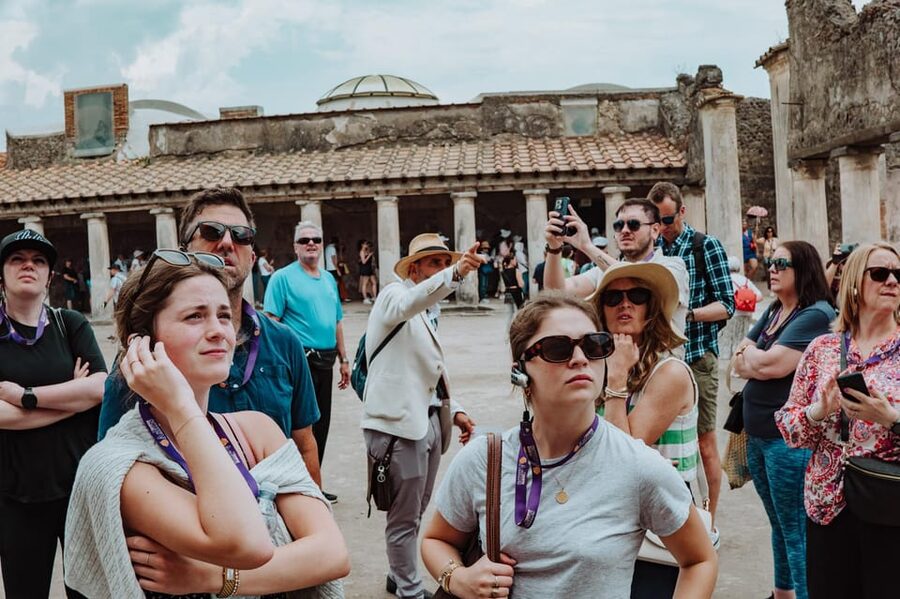
Next comes Temple of Apollo, also passed by for about 10 minutes. Don’t underestimate short stops. In Pompeii, religious buildings shape the daily calendar, the public gathering habits, and the way people understood their world.
Your guide uses these stops to explain how belief showed up in architecture and street life. Even if you are not a hardcore history person, you start to see patterns: what is public, what is ceremonial, and what is meant for community events.
The main consideration here is attention. Because it is a pass-by segment, you will get the most value if you actively listen and look rather than just walk and snap pictures. That is true for the whole tour, but it shows early.
Foro Civile: Pompeii’s civic heartbeat
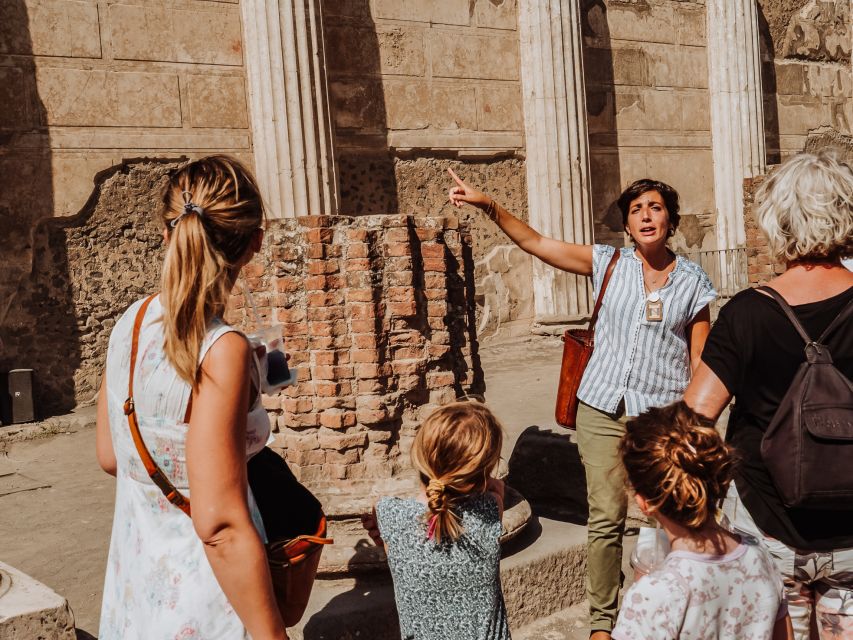
You spend around 20 minutes in the Foro Civile di Pompei area. This is where Pompeii feels like a real town, not a collection of houses.
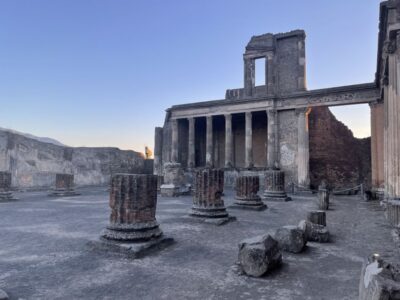
The civic forum space connects religion, politics, and public business. Here you also get a feel for major public structures nearby, including the Forum and the Basilica. The guide’s job is to help you see what would have been happening in these spaces, how crowds moved, and why these locations mattered.
This stop is also a turning point. You move from understanding the “where” of Pompeii to understanding the “why.” Once you grasp that, the houses that come next hit differently, because you start comparing private comfort to public duty.
House of the Faun: why the most famous house is never just decoration
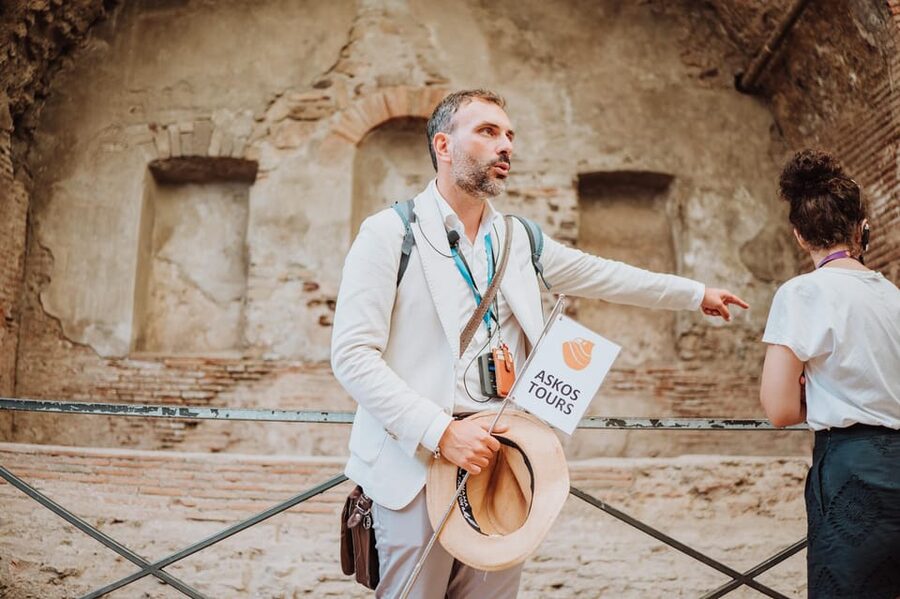
The House of the Faun is a guided segment of about 20 minutes. This stop is a highlight for a reason: it is one of Pompeii’s celebrated residences, and it gives you a window into status and taste.
What I like about this kind of house visit is that it answers a practical question for you. Instead of only staring at walls, you get help reading how the home functioned. You learn how rooms relate to each other, how people would have moved through the space, and how art and design were used to signal identity.
Even if you do not know Roman architecture terms, the guide makes it understandable. You start to notice design choices and what they suggest about daily routines.
One drawback to plan for: you will be walking through uneven routes and possibly climbing a few steps. That is normal at Pompeii, so sturdy shoes are not optional. This is also a time when heat or rain can change your experience, so layer up and keep your pace steady.
We wrote up further entry tickets in Pompei Campania on the same pass through the archive.


The Lupanar brothel: taboo topics, handled with context
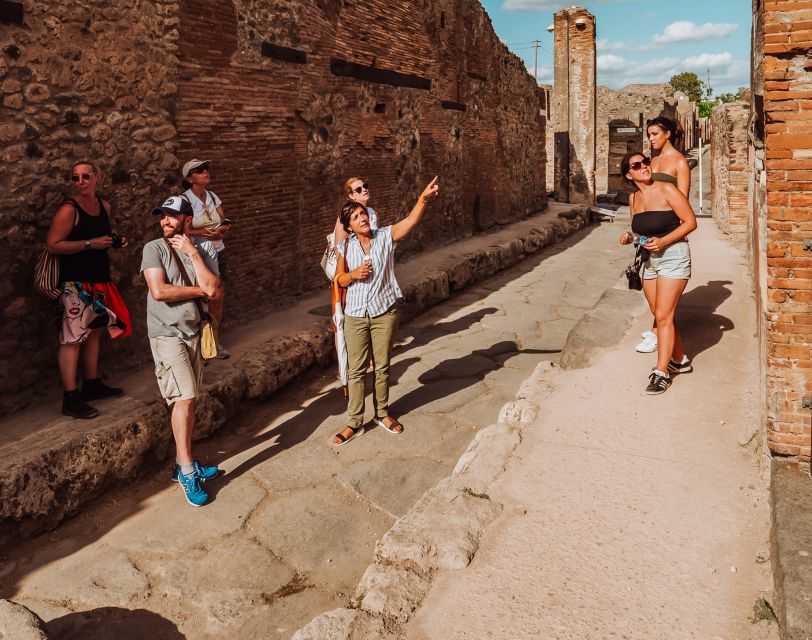
Then the tour shifts to the Lupanar, guided for about 20 minutes. This is one of the places where Pompeii can feel like the past is watching you right back.
The Lupanar is included for a reason. It lets the guide talk about social structures and daily life, including how different groups interacted in a real city. You do not just hear a sensational story. You get framing: what this site was for, and how it fits into the wider pattern of Pompeian society.
This segment can be uncomfortable for some people, and that is fair. If you prefer tours that avoid adult-themed subjects, this stop may test your comfort level. If you can handle it, you will get a more complete picture of Pompeii as a functioning town, not a sanitized postcard.
House of Menander: art, privacy, and how status shows up
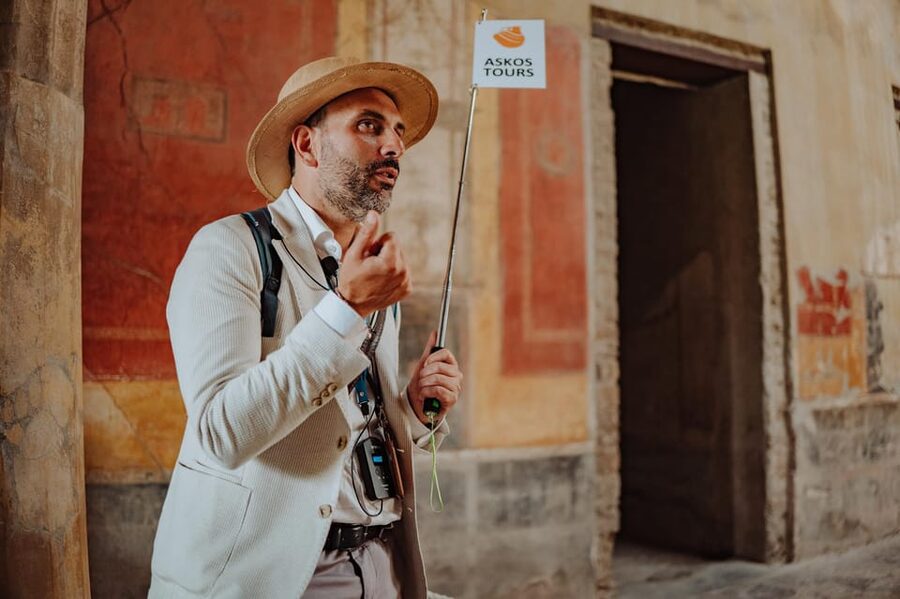
Next is the House of Menander, another guided stop of about 20 minutes. Like the House of the Faun, it is a key residence that helps you connect architecture to social identity.
The biggest value here is perspective. You start comparing what you saw in the civic spaces to what private life could look like. Your guide helps you understand what makes a house feel grand or intimate, and how decorative elements and layout communicate status.
This is also where the small-group format pays off. When you have a guide to answer small questions in real time, you stop guessing. You start noticing transitions, viewpoints, and the way the home is organized.
If you are traveling with kids, this is a mixed bag depending on your child’s interests and maturity level. Also note a practical rule: unaccompanied minors are not allowed on this tour, so family plans need adult participation.
Macellum and Forum Baths: the everyday Pompeii stops
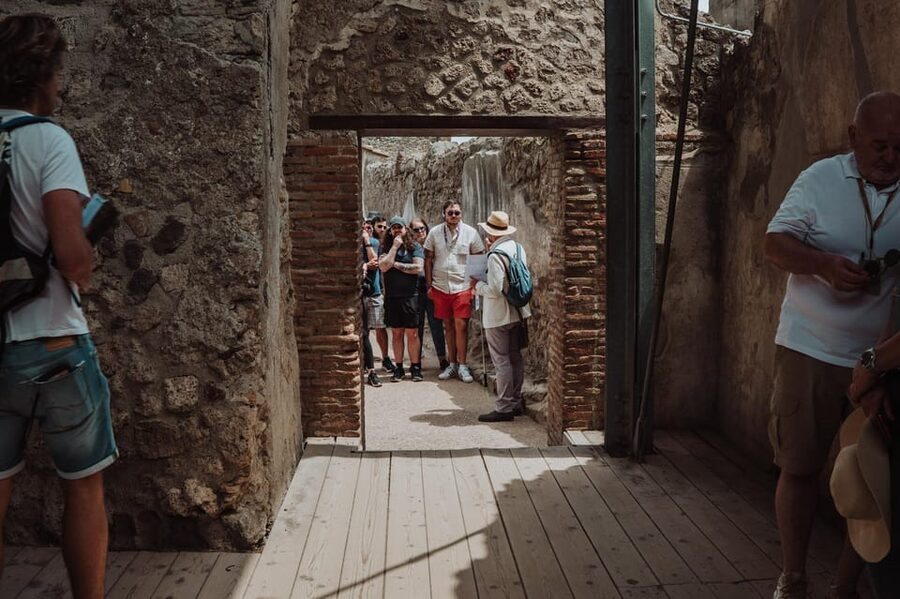
After the houses, you slow down into commerce and routines with the Macellum of Pompeii (about 10 minutes) and the Forum Baths (about 10 minutes).
The Macellum is a market setting, which gives you an essential contrast. You have seen where people lived and worshipped. Now you see where they bought, sold, met, and moved through the rhythms of a working town.
The Forum Baths, meanwhile, help you understand leisure and hygiene. This is one of those topics that feels surprisingly modern. Your guide helps you recognize what bath spaces were for, how they shaped social life, and why a city’s public amenities matter.
These shorter segments can be easy to rush if you let your energy drop. The fix is simple: keep listening even when the time is brief. The best tours are often the ones where you notice the small places that explain how everyday life worked.
Other highlights you get from the route, not just from the big signs
Even with a structured route, the tour experience includes the kinds of stops that add emotional weight and detail. You are set up to encounter major sights like the Marina Gate area, the Forum zone, ancient baths, and the Lupanar.
You also get time for the celebrated Plaster Casts of victims, plus stops connected to theaters and commercial life, like the Termopolium. This matters because it rounds out the story beyond temples and mansions.
Here is the practical advantage for you: Pompeii is huge. Even if you love history, you cannot realistically see everything carefully on your own in a single day. A guide helps you hit the moments that change how you understand the city.
Pacing, headsets, and the real-world walking issue
This is a 2-hour walking tour, and that means your body has to cooperate. Pompeii’s surfaces are uneven and you may need to climb a few steps. That is not a complaint, it is just reality, and it affects comfort as much as weather.
Shoes are the biggest decision you control. Bring comfortable footwear with grip. If it is raining, you still go, because the guide adjusts the pace and route to keep things moving.
Headsets help, especially when crowds compress around popular areas. One thing to watch: some people find the headset fit a bit fussy. If you are sensitive to audio gear, try to position it right before you start listening closely. And if you know you get distracted by small comfort issues, test the setup early.
Also, yes, you will walk enough to feel it. If you have a tendency to forget water, make a plan. A quick bottle is smart, especially if the day turns longer than you expected in the weather.
What guides like Teresa and Anna bring to the ruins
A standout theme in the experience is how guides connect scholarship to storytelling. Names that show up again and again include Teresa, Anna, Giancarlo, Alfredo, Paolo, Mario, Raffaella, Jolanda, and Amedeo.
What you should take from that, even without focusing on specific people, is the style: guides are animated, funny at the right moments, and ready to explain what you are looking at in plain language. Several guides are archaeologists or have advanced academic backgrounds, and it shows in the clarity of explanations.
I also like that the tour does not end at the last stop. You get guidance on what to explore next, either more ruins or the contemporary city. That advice helps you avoid the common trap of wandering without a sense of priorities.
Who should book this Pompeii archaeologist tour
This tour fits you best if you want:
- A guided route that keeps you from getting lost in the scale of Pompeii
- Context that links buildings to daily life
- A small group vibe so you can actually hear and ask questions
- Skip-the-line time savings
It is not a great match if you rely on wheelchair access or if mobility is a challenge. Mobility scooters are not allowed, and the tour is not suitable for wheelchair users. If you have mobility limits, check your comfort level with uneven surfaces and steps before booking.
If you travel with pets, note the rule set. Only dogs up to 10 kg and 40 cm height are permitted. The dog must be on a leash and held in your arms inside buildings, and collecting excrement is mandatory.
Should you book this Pompeii guided tour with an archaeologist?
If you are choosing between a self-guided walk and a guided tour, this one is worth strong consideration. For $35, you get entry, an archaeologist guide, a small group format, and headsets when the group gets bigger, plus skip-the-line access. That combination is practical value, not just a nice extra.
Book it if you want to come away with a real sense of Pompeii’s life, not just scattered sights. Skip it or reconsider if your mobility needs or comfort with adult-themed topics are a dealbreaker for you.
If you want, tell me your travel month and how many people are in your group, and I can suggest a smart time of day and what to pair Pompeii with nearby.
FAQ
How long is the Pompeii entry ticket and guided tour?
The tour lasts 2 hours.
What is included in the price?
The package includes the Pompeii entrance ticket, an archaeologist guide, a small group tour, and headsets for groups of 10 or more.
Do I get skip-the-line access?
Yes, the tour includes skip-the-ticket-line access.
What languages are available for the live guide?
The tour is offered in English, Spanish, French, Italian, Portuguese, and German.
Is the tour wheelchair accessible?
No. The tour is not suitable for wheelchair users, and mobility scooters are not allowed.
Are unaccompanied minors allowed?
No, unaccompanied minors are not allowed.
Can I bring a dog?
Only small dogs are permitted, with a maximum weight of 10 kg and a maximum height of 40 cm. The dog must be on a leash, held in your arms inside buildings, and you must collect the excrement.
What is the cancellation policy?
You can cancel up to 24 hours in advance for a full refund.
Our Wider Tours File for Pompei Campania


The Rest of Our Pompeii Site Visits in Pompei Campania


Not quite the day you had in mind? The rest of our Pompei Campania write-ups sit below
- Pompeii: Skip-the-Line Entry & Audioguide★ 3.8 · 225 reviews
- Pompeii: Day Tour of Pompeii and Vesuvius with Bus Transfer★ 4.2 · 250 reviews
- From Naples/Salerno: Pompeii, Sorrento, and Positano Tour★ 4.5 · 250 reviews
- Pompeii: Tour with Archaeologist Guide & Skip-the-Line Entry★ 4.5 · 478 reviews
- Pompeii: Afternoon to Sunset Guided Tour with Ticket★ 4.9 · 484 reviews
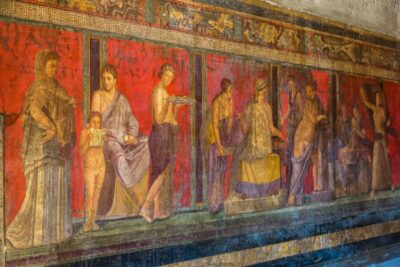
- Pompeii 3hours Villa of Mysteries tour with an Archaeologist★ 4.8 · 486 reviews
- From Pompeii: Bus Transfer to Vesuvius with Park Entry Fee★ 4.2 · 700 reviews
- Pompeii: Skip-the-Line Entry Ticket with Digital Guide App★ 4.1 · 770 reviews
- Pompeii: Guided Tour with Skip-the-Line Entry★ 4.9 · 812 reviews
Pompeii Archaeological Site, top to bottom.
 ★ 4.2Pompeii: Entry Ticket with Optional Audio GuideFrom $2612,360 reviews
 ★ 4.8Pompeii: Small Group Tour with an ArchaeologistFrom $4012,264 reviews
 ★ 4.3From Naples: Pompeii Ruins & Mount Vesuvius Day TourFrom $12011,459 reviews
 ★ 4.6From Rome: Pompeii, Amalfi Coast, and Sorrento Day TripFrom $797,031 reviews
 ★ 4.6From Rome: Pompeii, Amalfi Coast and Positano Day TripFrom $996,620 reviews
★ 5.0Pompeii Small Group Tour with an ArchaeologistFrom $356,593 reviews
★ 4.6From Rome: Pompeii, Amalfi Coast and Positano Day TripFrom $996,620 reviews
★ 5.0Pompeii Small Group Tour with an ArchaeologistFrom $356,593 reviews
 ★ 4.5Pompeii, Amalfi Coast and Positano Day Trip from RomeFrom $1016,250 reviews
 ★ 4.5Pompeii and Mount Vesuvius Day Trip from Rome with Pizza LunchFrom $906,151 reviews
Filed under