
Reviewed · ROME DAY TRIPS & THE CASTELLI ROMANI
From Rome: Ostia Antica Guided Half-Day Trip by Train
Roman ports are the best antidote to crowds. A half-day train trip from Rome makes Ostia Antica feel right at your fingertips, and the guide turns everyday Roman life into something you can picture as you walk the streets.
I especially liked the chance to see how a working city functioned, not just famous monuments, from markets and warehouses to public facilities. The tour also gives you the human details, like what people used the communal Forica for, which is weirdly memorable in the best way.
One consideration: this is mostly a long walk over archaeological ground, so you’ll want comfortable shoes, and the tour is not set up for wheelchair users.
In This Review
- Key points worth knowing
- Ostia Antica, Rome’s working port city (not just another ruin)
- Value check: is $58 worth a half-day?
- How to find the group at Cafe Piramide, line B on the right side
- Train time from Rome to Ostia Antica, and why the pacing works
- Decumanus Maximus: the main street where the city rhythm is visible
- Forica public washrooms: a surprisingly human stop
- Baths of Neptune: when mosaics teach you how Romans relaxed
- Amphitheater with room for 3,500: imagining the sound of the crowd
- Stopping for breaks, using the snack bar, and staying comfortable
- After the tour: return with the guide, stay in Ostia, or head to the beach
- Who should book this Ostia Antica guided half-day trip?
- The guides make the day: what to look for in this format
- Should you book this Ostia Antica from Rome train tour?
- FAQ
- How long is the trip from Rome, and how much of it is guided?
- Where do I meet for the tour?
- Is the train ticket included?
- Do I get help on the ride back to Rome?
- What sights are included during the guided part?
- What should I bring with me?
- Is this tour wheelchair accessible, and can I bring a stroller?
Key points worth knowing
- Decumanus Maximus lets you walk the main street layout like a Roman city guidebook made real
- Baths of Neptune features a standout mosaic of the sea god in a 4-horse chariot
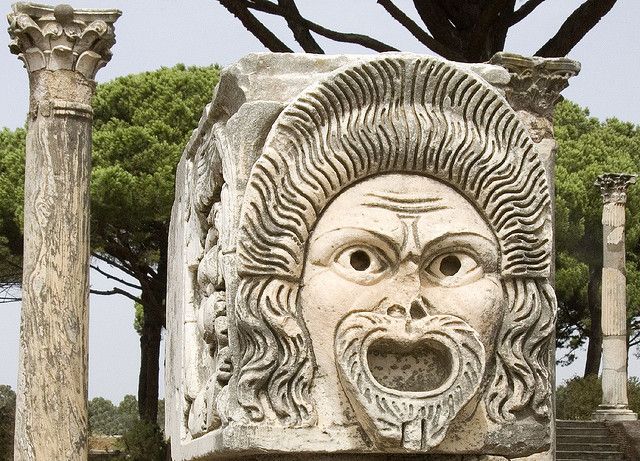
- Forica (public washrooms) is a hands-on moment, with a marble bench and 20 well-spaced holes
- Amphitheater seating helps you picture a crowd of about 3,500 spectators from the site’s early days
- Small group size (max 12) keeps the pace steady and makes questions actually easy
- Optional beach time works well if you want your day out to end with the sea instead of returning right away
Ostia Antica, Rome’s working port city (not just another ruin)
Ostia Antica sits close enough to Rome to feel like a day trip, yet far enough that it often feels calmer than the biggest name sites. That matters, because Ostia was built for commerce and movement. Once you understand that it served as a commercial and military seaport, the layout makes sense: streets for traffic, warehouses for goods, public buildings for city life, and entertainment for downtime.
Ostia was founded in the 4th century BC and at its peak supported more than 100,000 residents. As you walk, the ruins stop feeling random. You start spotting the logic of daily routines, from how people got around the main thoroughfare to where they bathed and where they handled basic hygiene in shared facilities.
What you gain most from a guided half-day is context. The guide helps connect the physical remains to how a Roman Republic-era port town likely worked, and that is the difference between seeing stones and understanding a living city.
Kept in the same folder as this one, Castelli Romani day trips in Rome.
- Pasta Making & Wine Tasting with Dinner in Frascati from Rome
★ 5.0 · 1,326 reviews - From Rome: Bagnoregio & Orvieto Day Trip with Wines & Lunch
★ 4.6 · 1,075 reviews - Rome: Pasta Making with Wine Tasting and Dinner in Frascati
★ 4.9 · 979 reviews - Castel Gandolfo Lake Kayak and Swim Tour
★ 5.0 · 661 reviews
Value check: is $58 worth a half-day?
For $58 per person, you are paying for three big pieces at once: return train tickets from Rome to Ostia Antica, entry to the archaeological site, and a live English guide. In practice, that combo is where this tour earns its keep.
If you plan to do Ostia on your own, you still have to solve the logistics and then figure out what each building is and why it mattered. A guide compresses that work into 3 hours on the ground. You also avoid the common problem of wandering for half a day, then leaving with only a vague sense of what you actually saw.
Small-group format matters too. With a maximum of 12 people, the guide can keep you together without turning it into a sprint. You get clearer explanations at the key stops, and you can actually ask questions when something clicks.
How to find the group at Cafe Piramide, line B on the right side
The meeting point is simple once you know what to look for. Meet at Cafe Piramide near Piazzale Ostiense, 9. If you are standing facing the Piramide metro station on Line B (the blue line), look to your right. The café is just in view of the train tracks.
You can spot it by the white umbrellas outside. The guides will hold a sign with City Wonders on it, so you can match the tour name quickly.
A practical tip: line B stations can get busy, so give yourself a little breathing room before the departure time. You do not want to be sprinting in Rome with a coffee you just dropped.
Train time from Rome to Ostia Antica, and why the pacing works
This trip is built around train simplicity. You ride out from central Rome to Ostia Antica by train, then spend about 3 hours touring the site with your guide. The train ride itself is about 15 minutes one way, then about 20 minutes back if you return with the group.
That timing keeps the day focused. You are not losing hours to transit or transfers, and you still get meaningful time on foot. Because the tour is short, the guide tends to focus on the highlights that explain the city, rather than trying to cover everything.
Once you reach Ostia Antica, the day becomes about walking. The site is large, and some paths can feel uneven. Your best friend is footwear that is comfortable for long stretches outdoors.
Decumanus Maximus: the main street where the city rhythm is visible
One of the best parts of this tour is walking the main street layout. The guide brings you along the Decumanus Maximus, the big north-south thoroughfare. Roman cities had a wayfinding system like that, and once you see how the street fits the buildings around it, the ruins start behaving like a map.
Along the walk, you can spot Roman statues lining the route. That detail matters. Statues are not just decoration. They communicate power, memory, and the city’s cultural identity. When you pair that with the guide’s explanation of what daily life looked like in a port town, the street feels less like a museum corridor and more like a place where people moved with purpose.
The downside of a main-street approach is that you might want more time in every side area. There is so much to see, and with a half-day you have to choose. The tour does a good job steering you to the most meaningful examples.
Forica public washrooms: a surprisingly human stop
Then you hit one of the most memorable features: the Forica, the communal washrooms. This is the kind of place that makes ancient life feel real, because it is not grand. It is practical. And it is shared.
Here is what you see: a marble bench lined with 20 well-spaced holes along four walls inside a large open room. The guide encourages you to take a seat so you can experience one of the most natural parts of Roman daily life.
Yes, it sounds odd, but that is exactly why it sticks. Your brain stops treating Rome as only temples and emperors, and starts thinking about ordinary bodies, routine, and social space.
If you are squeamish, you will still be fine. It is an outdoor archaeological exhibit, not a living facility. But emotionally, it can be a shock in the best way.
Other half-day outings in Rome that earned their own write-up.


Baths of Neptune: when mosaics teach you how Romans relaxed
The Baths of Neptune are a highlight for a reason. The building is crowned by a mosaic that is impressively intact. The sea god appears being drawn by a 4-horse chariot, which is classic Roman flair: mythology meets leisure.
Baths were not only about washing. In many Roman contexts, they were social hubs where people talked, rested, and built routines into their day. When you see the bath complex in a port city, you also get a sense of how people managed travel, work, and downtime. Someone might come in after a day tied to goods and ships, then shift gears into conversation and comfort.
A tour guide helps you connect the mosaics and room layouts to what a bath experience likely meant day to day. Without that, you can still admire the artwork, but you might miss why it mattered.
Amphitheater with room for 3,500: imagining the sound of the crowd
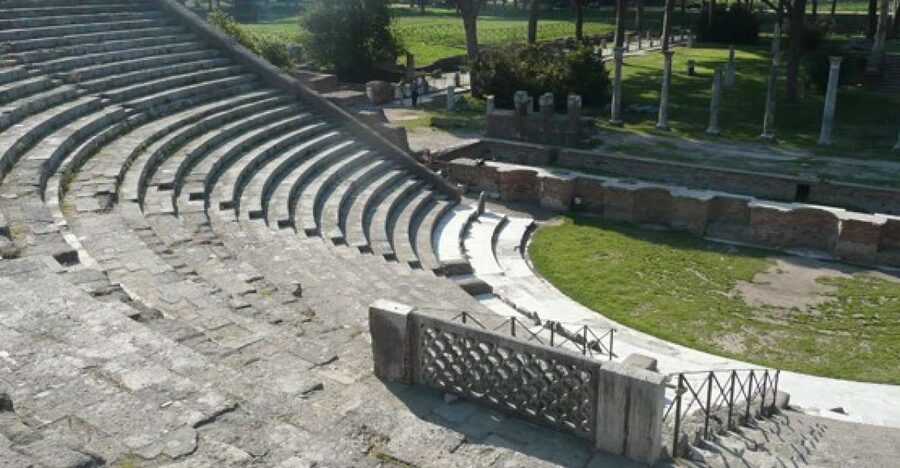
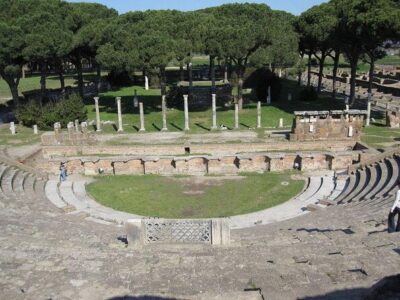
Next comes the amphitheater, where the scale tells a story. This site initially opened in 12 BC, and when it was first built it could hold around 3,500 spectators. Standing in the area where performances happened, you can almost hear the noise. The guide’s job is to help you picture what those crowds likely experienced in a port town setting.
Roman entertainment was part of social life, and that is the key takeaway. People did not just work, trade, and bathe. They watched shows. They gathered. They filled public spaces with energy.
If you like architectural clues, you will enjoy how the amphitheater’s shape directs sightlines. It is easy to imagine why the design was worth investing in.
Stopping for breaks, using the snack bar, and staying comfortable
This is a timed experience, so you get a toilet break during the tour, with time for a snack and/or drink at the snack bar. That detail sounds small, but it matters in summer or if you are sensitive to walking in the heat.
Bring what you need. The tour asks for comfortable shoes, and also suggests bringing a towel, beachwear, and sports shoes. That sounds like overkill until you factor in what happens after your guided portion.
If you plan to stay longer at Ostia, you may want to rinse off before going to the beach. A towel and beachwear make that smooth instead of stressful.
Also, baby strollers are not allowed, so plan accordingly if you are traveling with young kids.
After the tour: return with the guide, stay in Ostia, or head to the beach
When the guided part ends, you have choices. You can stay at Ostia Antica and continue exploring, or head into the modern town of Ostia at your leisure. There is also an option to go to a nearby beach if you want the day to end with sand instead of ruins.
If you prefer to keep it simple, you can join the guide on the train back to Rome. If you stay in Ostia on your own, the return train journey is unescorted, so you will want to keep track of the route and departure point.
One more logistical note: the tour service ends in Rome at the Piramide Metro Station at around 1:00 PM. That timing is great if you want to build a second plan for the afternoon.
Who should book this Ostia Antica guided half-day trip?
Book this tour if you want Roman life explained through a working port city, not just through big-name monuments. It is a strong fit for people who like architecture, mosaics, city layouts, and the everyday details that turn the ancient world into something understandable.
It also works well if you want a break from heavy crowds. Ostia can feel quieter than the most famous alternatives, and the small group size keeps the experience calm.
If you are traveling with mobility limitations, read the fine print carefully. The tour is not suitable for wheelchair users. The ground is archaeological and uneven, and the route is built for walking.
If you are traveling with a stroller, note that baby strollers are not allowed, so plan other options.
The guides make the day: what to look for in this format
The biggest advantage of this tour, in real terms, is the people running it. This is one of those experiences where the guide changes how much you get out of the ruins.
Across groups, guides like Rob, Cat, Alberto Terrasi, Angellina Militello, Laura, Catarina, Liv, and others have been described as energetic and effective at explaining how the port city worked. Many focus on pacing, choosing the most important features, and adding stories and even acting-like moments to help you picture daily life.
You can feel the difference between someone who lists facts and someone who helps you see patterns. Here, the best guides connect the archaeology to ordinary routines, like bathing, cleaning up in shared spaces, watching shows, and moving goods through a harbor economy.
Should you book this Ostia Antica from Rome train tour?
Yes, if you want a half-day that teaches you how a Roman port city actually functioned. The value is strong because the price bundles train access, entry, and a live English guide, and the small group size keeps the pace enjoyable.
You should skip it or pick a different plan if you cannot manage a walk over archaeological ground, or if you need wheelchair access. Also consider the unescorted return if you decide to stay in Ostia after the tour.
If your goal is to leave with more than “I saw ruins,” book it. Ostia is at its best when someone helps you connect the dots.
FAQ
How long is the trip from Rome, and how much of it is guided?
The full experience runs about 4 hours. The guided portion at Ostia Antica lasts about 3 hours, with train time before and after.
Where do I meet for the tour?
Meet at Cafe Piramide near Piazzale Ostiense, 9. If you face the Piramide metro (Line B, the blue line), the café is on your right, recognizable by the white umbrellas outside. Guides will have a City Wonders sign.
Is the train ticket included?
Yes. The package includes a return train ticket from Rome to Ostia Antica.
Do I get help on the ride back to Rome?
If you join the guide on the train back, you will return together. If you stay in Ostia after the tour, your return train journey will be unescorted.
What sights are included during the guided part?
The tour includes highlights such as the communal Forica (public washrooms), the Baths of Neptune (with the sea god mosaic), and the amphitheater, along with walking through the main street area.
What should I bring with me?
Bring comfortable shoes. The tour suggests bringing a towel, beachwear, and sports shoes.
Is this tour wheelchair accessible, and can I bring a stroller?
The tour is not suitable for wheelchair users. Baby strollers are not allowed.
Beside This One, Half-day Outings in Rome

Castelli Romani Day Trips in Rome That Made the Same Shortlist
Not quite the day you had in mind? The rest of our Rome write-ups sit below
- Rome: Guided Tour of St. Peter’s Dome Climb, Basilica & Vatacombs★ 5.0 · 167 reviews
- St. Peter’s Basilica Guided Tour with Reserved Entrance★ 4.0 · 168 reviews
- Golf Cart Driving Tour in Rome: 2.5 hrs Catacombs & Appian Way★ 5.0 · 168 reviews
- Rome: Trastevere Wine Tasting with Food Pairing and Gelato★ 4.9 · 168 reviews
- Guided Tour of the Colosseum Palatine Hill and Roman Forum★ 4.7 · 168 reviews
- Vatican Museums, Sistine Chapel & Saint Peter’s Semi-Private Tour★ 4.5 · 169 reviews
- Hidden Rome: Small Group E-Bike Tour with Street Food Stops★ 5.0 · 169 reviews
- Rome: Papal Audience with Pope Leo IV★ 3.9 · 169 reviews
- Rome Golf Cart Tour: Highlights & Must See★ 4.5 · 170 reviews
Rome Day Trips & the Castelli Romani, top to bottom.
 ★ 5.0Pasta Making & Wine Tasting with Dinner in Frascati from RomeFrom $451,326 reviews
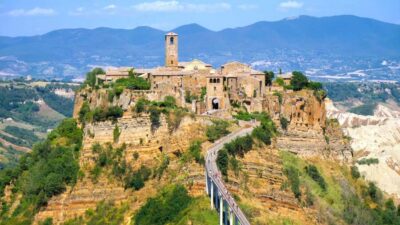 ★ 4.6From Rome: Bagnoregio & Orvieto Day Trip with Wines & LunchFrom $931,075 reviews
 ★ 4.9Rome: Pasta Making with Wine Tasting and Dinner in FrascatiFrom $35979 reviews
 ★ 5.0Castel Gandolfo Lake Kayak and Swim TourFrom $50661 reviews
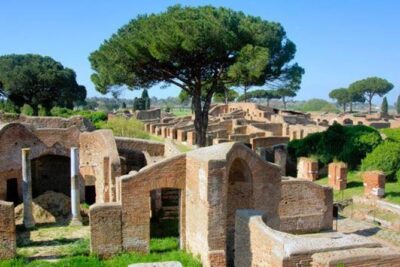 ★ 4.5Ancient Ostia Antica Semi-Private Day Trip from Rome by Train with GuideFrom $59579 reviews
 ★ 4.9From Rome: Half-Day Frascati Wine Tour with Farmhouse LunchFrom $99372 reviews
 ★ 4.2Castel Gandolfo: Papal Apartments and Secret Garden TicketFrom $30277 reviews
 ★ 4.5Horse Sanctuary & Trail Ride in Ostia AnticaFrom $106276 reviews