
Reviewed · TRASTEVERE & THE JEWISH GHETTO
Trastevere and Rome’s Jewish Ghetto Half-Day Walking Tour
Rome turns into a story at street level. Trastevere and the Jewish Ghetto show you the city in layers, from Caesar to today’s cafés, on an easy, guided walk that keeps moving without rushing. You start at Largo di Torre Argentina, where the ruins and the assassination site anchor the first part of the tour, then work your way across to Trastevere and end near Campo de’ Fiori.
I love the way this tour pairs quiet history with everyday Rome. Headsets help you catch every detail, and a great guide can make places you would normally pass feel personal and clear. I also like the church and neighborhood mix, because you get one notable interior stop plus the exterior look at the historic synagogue area.
One consideration: your schedule is guided by what is open. The Santa Maria in Trastevere interior visit depends on the church schedule, so plan for a little flexibility in what you actually get to step into.
In This Review
- Key highlights and why they matter
- Trastevere and the Jewish Ghetto, side by side
- Meeting at Largo di Torre Argentina, and why 6:00 PM helps
- Stop 1: Area Sacra di Largo Argentina and the approach through Piazza Mattei
- Stop 2: Isola Tiberina crossing, plus synagogue context from outside
- Stop 3: Trastevere walking, people-watching, and the Santa Maria plan
- Finishing with Ponte Sisto and a Campo de’ Fiori ending
- How the guide style shapes the experience
- Price and value: what $66.38 buys you
- What to wear and how to get the most out of the walk
- Who this tour suits best
- Should you book this Trastevere and Jewish Ghetto walking tour?
- FAQ
- Where does the tour start and end?
- What time does the tour begin?
- How long is the walking tour?
- How much does the tour cost?
- What language is the tour offered in?
- What is included in the price?
- Are we allowed inside the synagogue?
- Is Santa Maria in Trastevere visited inside?
- Is food or hotel pickup included?
- Can I cancel for a refund?
Key highlights and why they matter
- Small group size (max 15) keeps questions possible and the pace comfortable
- Largo di Torre Argentina start links ancient Rome to the Jewish Ghetto area fast
- Fontana delle Tartarughe and Piazza Mattei add beautiful, specific details you will remember
- Tiber Island crossing (Isola Tiberina) gives big Rome bridge views with less crowd pressure
- Santa Maria in Trastevere interior visit depends on opening times, but is worth aiming for
- End at Campo de’ Fiori puts you right where you can keep exploring after the tour
Trastevere and the Jewish Ghetto, side by side
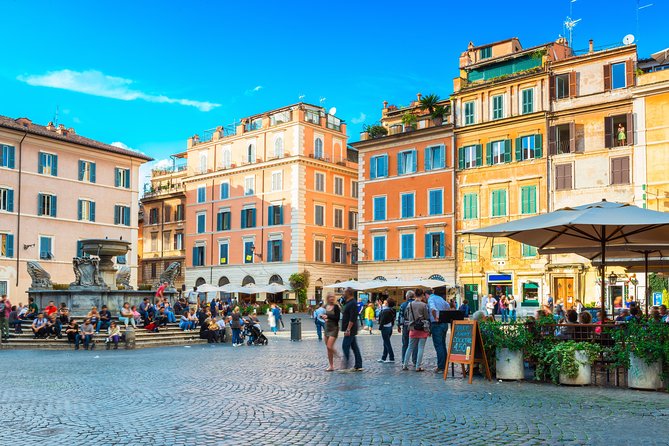
This is one of those Roman combinations that makes you see the map differently. Trastevere is often treated like a nightlife district, but it is also a place of faith, memory, and long-running neighborhoods. The Jewish Ghetto area adds a second storyline, one that stretches back through Roman, medieval, Renaissance, and later periods.
What makes the pairing work is how the tour moves between worlds without turning it into a lecture. You do not just stand and stare at monuments. You walk through the streets where locals still live and eat, then you layer in what those streets used to be. If you want Rome that feels specific, not generic, this format helps.
You also get a practical payoff. By the end, you are not only oriented, you know where you want to return for a meal, a longer church stop, or a slower wander at dusk.
Worth an aperitivo-hour scroll, our other Trastevere and Jewish Ghetto walks in Rome.
- Winner 2025 Rome Twilight Trastevere Food Tour by Eating Europe
★ 5.0 · 5,157 reviews - Rome: Trastevere or Jewish Quarter Street Food Tour
★ 4.8 · 3,839 reviews - Rome: Trastevere Food tour with Free-Flowing Fine Wine
★ 5.0 · 2,853 reviews - Rome: Trastevere & Campo de Fiori Street Food Walking Tour
★ 4.9 · 2,768 reviews
Meeting at Largo di Torre Argentina, and why 6:00 PM helps
You meet at Largo di Torre Argentina. It is a strong start for two reasons. First, the square is tied to the assassination of Julius Caesar, and the Area Sacra ruins make that history feel grounded, not abstract. Second, meeting here puts you right in the historic core, so the tour becomes efficient from minute one.
The start time is 6:00 PM, which matters more than you might think. Early evening is often a sweet spot in Rome for walking: the heat eases, streets are active, and lights can start to make façades and church exteriors look better. You can also build your own evening plan after the walk ends near Campo de’ Fiori.
Just give yourself a bit of time to find the exact meeting point. Largo di Torre Argentina is busy, and your guide may be waiting nearby rather than in a large obvious hub. If you arrive a little early, you will waste less energy and start the tour calmer.
Stop 1: Area Sacra di Largo Argentina and the approach through Piazza Mattei
The first segment centers on the heart of Roman remains, right where the ancient story begins. Expect your guide to explain why this spot matters and what you are looking at around you, even when ruins are not the first thing your eyes catch at street level.
From there, you continue via Piazza Mattei. This is a key transition point because it helps you move from the ancient Roman layer into the Jewish Ghetto story in a way that feels natural. You will also stop at Fontana delle Tartarughe, the famous fountain with three different kinds of colored marble and a romantic past tied to its legend.
What I like about starting here is that you get to learn how Rome’s street level works. Ancient structures can sit underneath what you see now, so the tour keeps pointing out how remnants from different eras can overlap. It is an education in how the city physically grew, not just a list of dates.
One practical note: the tour runs on walking time, so you will want to keep your pace steady. If you stop to take every photo for long stretches, you can slow the group down and cut into later viewpoints.
Stop 2: Isola Tiberina crossing, plus synagogue context from outside
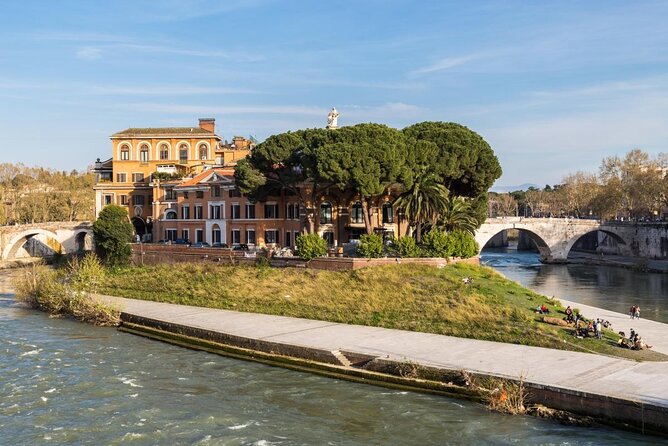
Next you move toward Isola Tiberina, crossing Tiber Island for views of Rome’s bridges. This is one of the easier stretches of the route to enjoy because the scenery does part of the work for you. From here, you can look outward and connect places you will visit later.
As you approach the synagogue area, you see the synagogue exterior. The guide frames it in context, including the fact that it was built in the early 1900s and that it is among the largest synagogues in Europe. Even without entering, this stop gives you a visual anchor so the Jewish Ghetto story has a real, specific landmark attached to it.
This is also where the tour helps you understand something many people miss. Jewish history in Rome is not just a set of museums and solemn plaques. It is tied to daily life, community space, and streets that still feel lived-in. Standing outside the synagogue area, you get that sense in a way that is hard to achieve if you only read about it later.
Stop 3: Trastevere walking, people-watching, and the Santa Maria plan
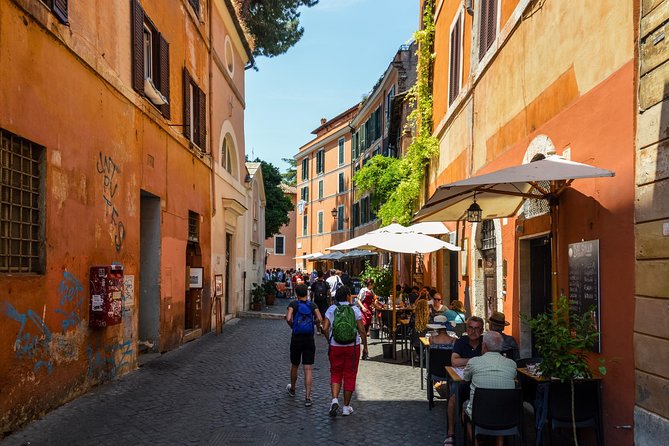
After the river crossing, you arrive in Trastevere, a neighborhood that many people come to for atmosphere. The tour treats that energy as part of the story. Artists, authors, and people out for an evening meal all add to the sense that this area is not frozen in time.
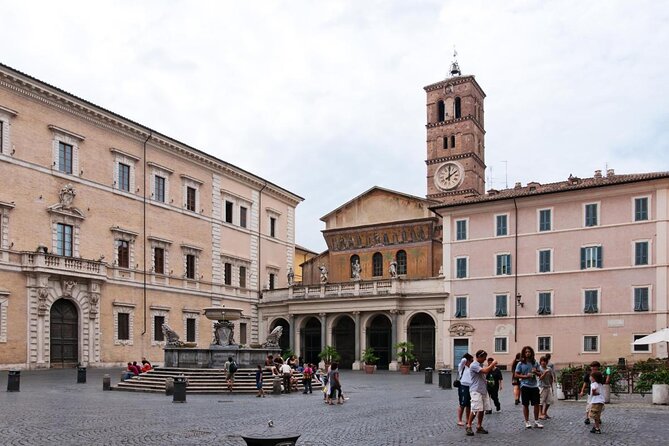
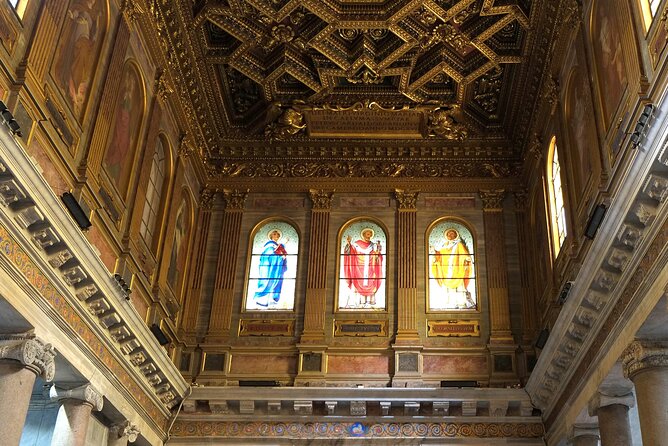
The highlight here is Santa Maria in Trastevere. You get an interior visit, but it is subject to church scheduling. So you should treat it like a “plan to enter” stop, not a guarantee.
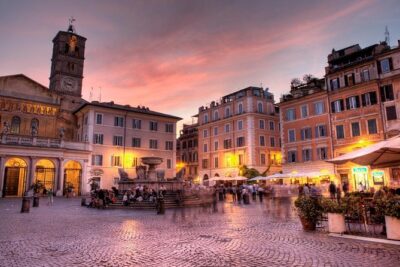
This church is famous because it is one of Rome’s oldest, with roots dating back to the 340s AD. Even if you have been inside older churches elsewhere in Italy, this one tends to feel different because it sits right inside a living neighborhood. You are not stepping into a museum zone. You are entering a church that is wrapped into daily street life.
If the interior is available, take a slow moment when you go in. The tour keeps things moving, but you will understand more if you let yourself look rather than just listen.
Finishing with Ponte Sisto and a Campo de’ Fiori ending
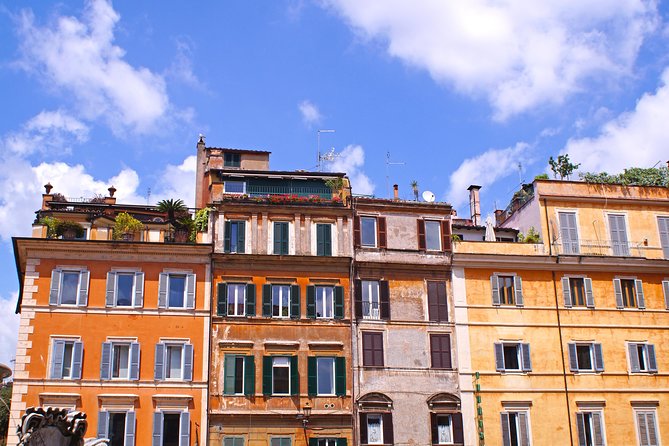
You cross back over the Tiber on Ponte Sisto, then the route passes by Piazza Farnese Palace before reaching Campo de’ Fiori, one of Rome’s busiest squares.
This ending is practical. Campo de’ Fiori is full of street energy, and it is an easy place to pivot into dinner or a last wander. The tour essentially gives you a guided runway: you learn what to look for along the way, then you land in a square where you can explore on your own with better confidence.
What you gain here is momentum. Instead of ending at a random transit spot, you end where you can actually do something. If you want to keep seeing Roman street details after the tour, this ending is a smart choice.
Other half-day outings in Rome that earned their own write-up.


How the guide style shapes the experience
This tour’s real strength is the guide. You can feel it in how the narration works with what you see. The format is built for questions too, so when something grabs your attention, you can ask and get a real answer instead of a quick slogan.
Names like Irene, Jeannette, Claudio, Paolo, and James come up in ways that matter: they are described as funny, engaging, and capable of explaining not just facts but why those facts matter. When a guide can connect archaeology to street-level daily life, the walk stops feeling like a standard “see these places” circuit.
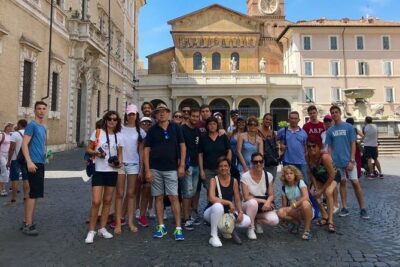
There is also a small-group feel. With a maximum of 15 travelers and headsets provided, it is easier to hear the guide without getting swallowed by the street noise. If you have ever taken a big walking tour where you struggle to hear over the group shuffle, you will appreciate how this one stays organized.
Price and value: what $66.38 buys you
At $66.38 per person for roughly three hours, you are paying for three things:
First, you get a professional guide who leads you through two neighborhoods that are tightly connected in time, but far apart in the way most people explore Rome. That saves you effort and guessing.
Second, you get headsets, which is not a small deal in Rome. It means you can stay present, listen, and keep your attention on street details rather than trying to keep up with the group and the noise.
Third, you get a structured route that includes an interior church visit when schedules allow, plus exterior synagogue viewing, and a walk with scenic river views. That adds up to more than a “look around” stroll.
One caution on value: some entrances may require separate tickets. The tour information notes that an admission ticket is not included for at least one area stop. I would treat this as a walking tour with a church interior stop subject to access, not a fully paid attraction bundle. Still, you are not locked into buying many add-ons just to enjoy the tour.
What to wear and how to get the most out of the walk
This tour expects moderate physical fitness. That usually translates to uneven Roman streets, steady walking, and a schedule that does not stop for long breaks.
Wear shoes you can trust on cobblestones and slight slopes. Bring sunglasses if you are sensitive to evening glare from street reflections. If you plan to take photos, keep the camera and phone handy so you can stop quickly without losing the group’s flow.
Also, keep an eye on the Santa Maria in Trastevere opening timing. If it is not available inside when you reach it, your guide will likely adjust around that moment. Having flexible expectations will make the experience smoother.
Who this tour suits best
You’ll like this tour if you want:
- Off-the-main-street Rome, not just the headline sights
- A guided explanation of how ancient remains coexist with newer neighborhoods
- A comfortable evening walk that ends in a lively square for dinner
It is also a good pick if you are curious about how Jewish community history appears in the physical city, from ancient references and later community life to the synagogue exterior built in the early 1900s.
If you prefer tours that are purely inside monuments, this might feel too street-focused. If you dislike walking or you need long rest breaks, you might be better with a shorter stop-and-go option.
Should you book this Trastevere and Jewish Ghetto walking tour?
I think it is a smart booking if you want Rome that feels like a real neighborhood, not a checklist. The starting point at Largo di Torre Argentina gives you immediate historical gravity. The river crossing and Trastevere section add atmosphere. The Santa Maria in Trastevere interior stop, when open, adds a strong spiritual and artistic payoff.
Book it if you enjoy walking with a guide who can explain what you are seeing in plain language. Aim for it on a day when your evening is flexible, so you can enjoy Campo de’ Fiori afterward without rushing.
If you hate the idea of schedule-dependent entrances, then consider that one factor when you plan. Otherwise, this is one of those tours that gives you both context and a sense of where to go next in Rome.
FAQ
Where does the tour start and end?
The tour starts at Largo di Torre Argentina, 00186 Roma RM, Italy. It ends at Campo de’ Fiori, 00186 Roma RM, Italy (the end point listed is Magia a Campo de’ Fiori).
What time does the tour begin?
The start time is 6:00 PM.
How long is the walking tour?
The duration is about 3 hours.
How much does the tour cost?
The price is $66.38 per person.
What language is the tour offered in?
The tour is offered in English.
What is included in the price?
The tour includes a professional guide and headsets.
Are we allowed inside the synagogue?
No. You get an exterior visit of the synagogue of Rome, and internal synagogue entry is not included.
Is Santa Maria in Trastevere visited inside?
Yes, there is an interior visit of Santa Maria in Trastevere, but it is subject to the church schedule.
Is food or hotel pickup included?
Food and drinks are not included, and hotel pickup and drop-off are not included.
Can I cancel for a refund?
Yes. You can cancel up to 24 hours in advance for a full refund.
Our Wider Tours File for Rome
Trastevere and Jewish Ghetto Walks in Rome, Written Up Separately
Not quite the day you had in mind? The rest of our Rome write-ups sit below
- Rome: Guided Tour of St. Peter’s Dome Climb, Basilica & Vatacombs★ 5.0 · 167 reviews
- St. Peter’s Basilica Guided Tour with Reserved Entrance★ 4.0 · 168 reviews
- Golf Cart Driving Tour in Rome: 2.5 hrs Catacombs & Appian Way★ 5.0 · 168 reviews
- Rome: Trastevere Wine Tasting with Food Pairing and Gelato★ 4.9 · 168 reviews
- Guided Tour of the Colosseum Palatine Hill and Roman Forum★ 4.7 · 168 reviews
- Vatican Museums, Sistine Chapel & Saint Peter’s Semi-Private Tour★ 4.5 · 169 reviews
- Hidden Rome: Small Group E-Bike Tour with Street Food Stops★ 5.0 · 169 reviews
- Rome: Papal Audience with Pope Leo IV★ 3.9 · 169 reviews
- Rome Golf Cart Tour: Highlights & Must See★ 4.5 · 170 reviews
Trastevere & the Jewish Ghetto, top to bottom.
 ★ 5.0Winner 2025 Rome Twilight Trastevere Food Tour by Eating EuropeFrom $1255,157 reviews
 ★ 4.8Rome: Trastevere or Jewish Quarter Street Food TourFrom $513,839 reviews
 ★ 5.0Rome: Trastevere Food tour with Free-Flowing Fine WineFrom $1022,853 reviews
 ★ 4.9Rome: Trastevere & Campo de Fiori Street Food Walking TourFrom $512,768 reviews
 ★ 5.0Rome: Award Winning Trastevere Group Food Tour with WineFrom $812,273 reviews
 ★ 4.8Rome: Guided Food Tour in TrastevereFrom $1122,266 reviews
 ★ 4.5Jewish Ghetto and Trastevere Tour RomeFrom $41,729 reviews
 ★ 5.0Taste of Testaccio: Special 15 Year Anniversary EditionFrom $1311,658 reviews