
Reviewed · PALERMO, MONREALE & CEFALù
Palermo No Mafia walking tour: discover the Anti-mafia culture in Sicily
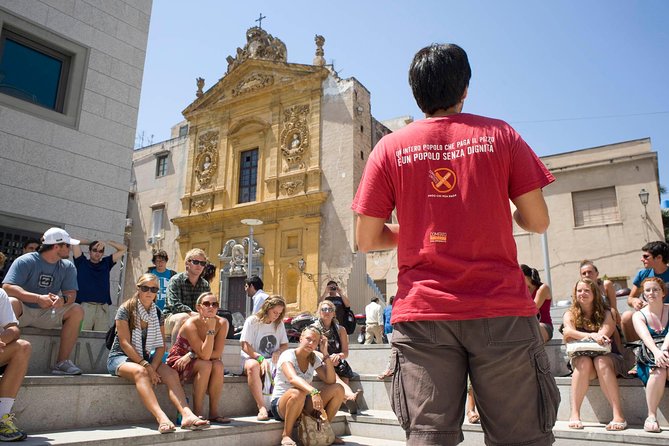
Palermo has a darker side, with hope attached. This walking tour turns major city landmarks into a clear story about anti-mafia resistance in Sicily, not just mafia myths. I love that you get close to the sights on foot, and I love the way the guide ties the past to everyday choices like refusing extortion, or pizzo.
One thing to consider: some stops involve standing and listening a bit more than you’d expect, so comfortable shoes matter, and you should be ready for serious themes delivered at a human pace.
In This Review
- Key highlights you will feel on the walk
- Anti-mafia Palermo, told street by street
- Price and value for a 3-hour anti-mafia walk
- Meeting point near Teatro Massimo, then ending in the old center
- Stop 1: Teatro Massimo and the idea of Palermo reborn
- Stop 2: Wall of Legality, 70 meters of faces
- The open-air market stop: why shopkeepers mattered
- Stop 3: Palazzo di Giustizia and Piazza della Memoria
- Stop 4: Cattedrale di Palermo and the Church-mob connection
- Stop 5: Cappadonia Gelati and the pizzo refusal sticker
- Stop 6: Palazzo Pretorio and Palermo City Hall’s double role
- The guides make or break it, and the pattern is clear
- What you learn here that movies never explain
- How to plan your day around it
- Is it family-friendly?
- Should you book Palermo No Mafia?
- FAQ
- How long is the Palermo No Mafia walking tour?
- How much does it cost?
- Is the tour in English?
- How big is the group?
- Where does the tour start and end?
- Are any admissions or tickets required at the stops?
- What is included in the price?
- Is lunch included?
- What should I wear or bring?
- Can I cancel for a full refund?
Key highlights you will feel on the walk
- Small group up to 15 keeps the tour conversational and easy to follow in English
- Free stops with real context, from Teatro Massimo to the memorial sites
- Wall of Legality spans 70 meters, making the victims impossible to ignore
- Market area stop explains how ordinary shopkeepers got pressured, and how some pushed back
- Cappadonia Gelati pizzo refusal sticker shows anti-extortion activism you can actually see
- Solidarity support via Addiopizzo adds purpose beyond sightseeing
Anti-mafia Palermo, told street by street
This is not a mafia greatest-hits tour. It is a Palermo tour built around resistance, courage, and the systems that helped loosen organized crime’s grip. The tone is serious, but it is also practical. Instead of glamorizing violence, the focus stays on how judges, prosecutors, ordinary people, the Catholic Church, and local politicians responded, often at a personal cost.
And you get something that matters when you are walking: you learn how to read the city. On these corners, history is not trapped in a museum. It is painted, memorialized, stamped into public buildings, and even marked on storefront windows.
If you want Palermo to make sense, start here. Then your later wandering through the old center feels less random and more connected.
Worth an aperitivo-hour scroll, our other Palermo, Monreale and Cefalu days in Palermo.
- Palermo: NO Mafia Walking Tour
★ 4.8 · 2,431 reviews - Palermo: Hop-on Hop-off Bus Tour 24-hour Ticket
★ 3.9 · 2,410 reviews - Palermo Original Street Food Walking Tour by Streaty
★ 5.0 · 2,105 reviews - Segesta, Erice and Salt Pans Full-Day Excursion from Palermo
★ 4.2 · 1,791 reviews
Price and value for a 3-hour anti-mafia walk
The price is $39.30 per person for about 3 hours. That sounds specific, and it is, which usually means you are paying for a focused local guide and a set route with multiple stops. The good part is that many key sights are free to view during the tour, so you are not paying extra admission hop by hop.
You also get a small solidarity contribution linked to Addiopizzo local NGO. It is not a huge add-on that tries to sell you guilt or bravery points. It is more like, you’re already here, so your ticket helps back the kind of community work connected to the tour message.
Where the value shows is in the structure. You cover major landmarks without needing to map them yourself, and you get explanations that connect the stories. If you’re short on time in Palermo, that is real money saved in frustration.
Meeting point near Teatro Massimo, then ending in the old center
The tour starts at P.za Giuseppe Verdi, 455. From there, you move through central Palermo and finish at Fontana Pretoria, Piazza Pretoria, in the heart of the old town. The format is walking with frequent stops, so you are not dealing with long transfers.
You will also have a mobile ticket, and it is offered in English. Confirmation comes at booking time, and you’ll be near public transportation, which helps if you need to adjust your day plan.
Plan for one practical thing: because the tour ends in the old center, you can tack on lunch or gelato right afterward without losing time. The tour wraps with tips on where to continue your visit and taste Sicilian specialties, which is handy when you are tired but still want to make progress.
Stop 1: Teatro Massimo and the idea of Palermo reborn
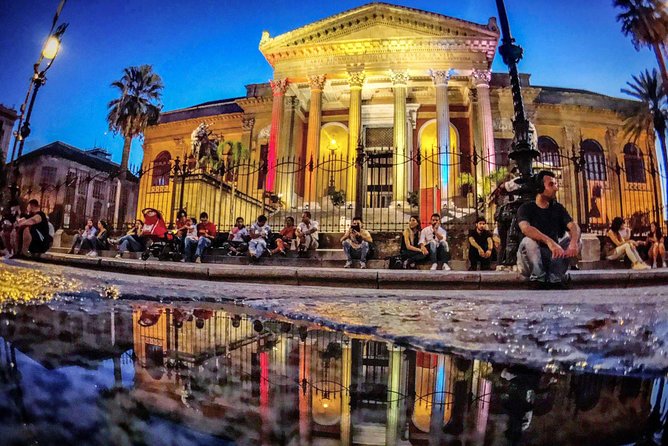
Teatro Massimo is hard to miss. It is one of Palermo’s major monuments, and it carries cultural weight even before the guide starts talking. This stop also connects to a pop-culture reference you may recognize from The Godfather III, but the point here is not the movie. The point is rebirth after decades of mafia violence.
You learn why this theater matters beyond architecture. It becomes a symbol of a city trying to return to civic pride, not fear. Standing outside a monumental building while someone explains the social context changes how you look at it. You stop seeing a pretty façade and start seeing a statement.
A small practical note: this is a classic photo spot, but also a place where people gather. If you want clean pictures, be ready to angle around the edges.
Stop 2: Wall of Legality, 70 meters of faces
Next comes the Wall of Legality. It is described as the longest wall painting in Italy, and the scale is real: 70 meters long. This is not just decoration. The wall represents well-known mafia victims as part of an urban renovation project.
What I like about this stop is how physical it is. You are walking along it, close enough to see names and faces, which makes the memorial feel personal instead of abstract. It also gives you something useful for your camera roll, because the design is meant for viewing, not hiding in the background.
One consideration: because it is a long wall, the stop can feel stretched if you get restless. But if you stay with it, the message lands harder the longer you look. It is one of those experiences where pausing is part of the respect.
The open-air market stop: why shopkeepers mattered
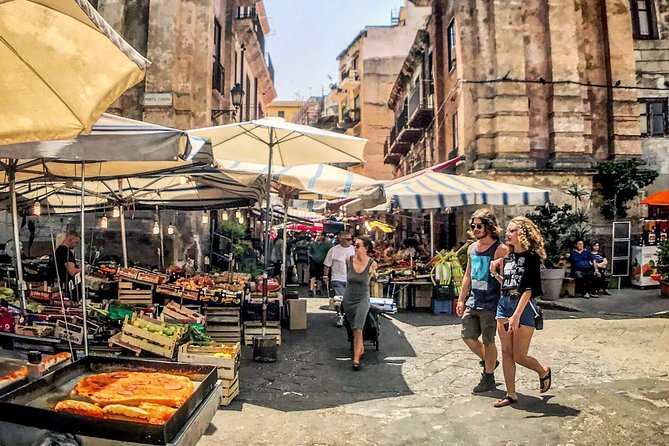
After the memorial wall, you move into an older, louder part of town: a colorful open-air market area. This stop helps you understand how mafia power showed up in daily life, especially through the relationship between organized crime and shopkeepers.
The takeaway is simple and unsettling: extortion works best when it blends into routine. When a guide connects that pressure to the market culture, you start noticing the human side of the story. It is not about big gunmen. It is about people making choices under threat, sometimes choosing compliance, sometimes choosing defiance.
If you like markets for the sensory experience, this stop delivers. If you hate crowds, take it slowly and keep your pace steady. The market is where the tour stops being “history class” and becomes social reality.
Filed beside this one, more walking tours in Palermo.

Stop 3: Palazzo di Giustizia and Piazza della Memoria
At Palazzo di Giustizia, you shift toward the legal side of the anti-mafia story. Near it is Piazza della Memoria, a memorial dedicated to judges and prosecutors killed by the Mafia.
This is a key pivot point in the tour. Up to here, you’ve seen art, public space, and social pressure. Now you see what enforcement and accountability cost. It also changes the way you think about justice. The guide’s explanations make clear that the fight was not only one battle. It was repeated, targeted, and aimed at people trying to uphold the law.
This stop tends to feel more quiet even in a busy area. If you are the type who likes a moment to collect yourself while touring, this is your window.
Stop 4: Cattedrale di Palermo and the Church-mob connection
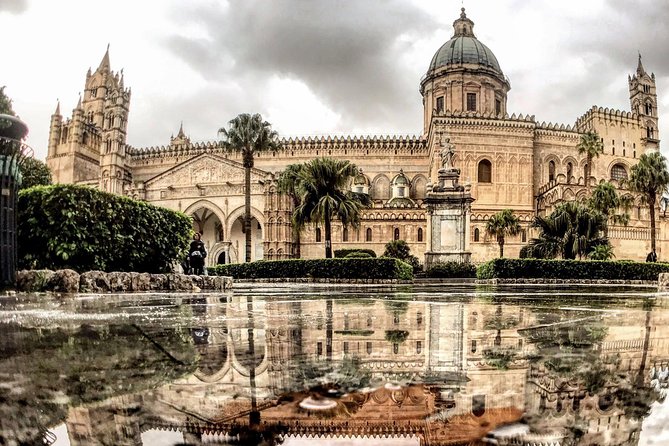
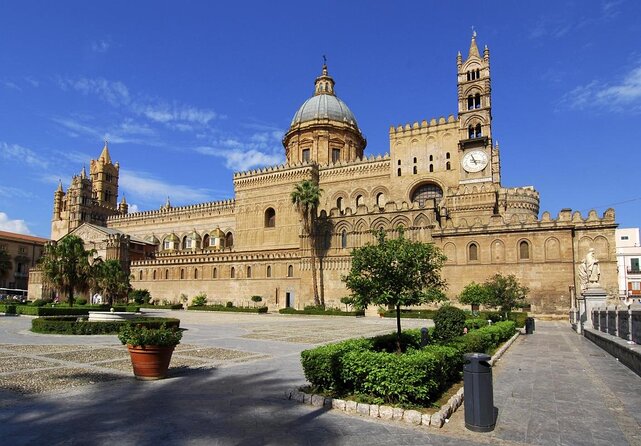
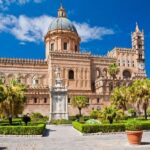
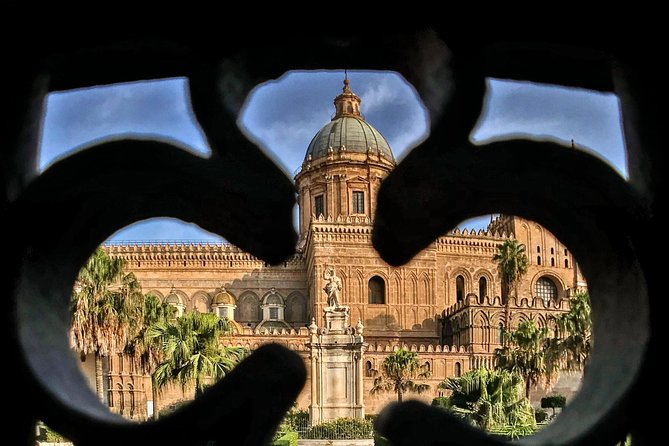
Next is Cattedrale di Palermo, the Arab-Norman cathedral. Outside or nearby, the guide talks about the relationship between the Catholic Church and the Mafia.
This is one of the most important themes on the walk because it complicates the easy story. Mafia power in Sicily did not operate in a vacuum. It intersected with authority, influence, and institutions. When you hear it connected to the cathedral, it helps you understand why anti-mafia resistance was not only physical. It was also moral, social, and political.
If you are expecting a lecture that ignores the city’s beauty, you might be surprised. The cathedral is spectacular, but the guide is not letting you treat it as scenery. You see it as part of how the city worked, for good and bad.
Stop 5: Cappadonia Gelati and the pizzo refusal sticker
Along the main street area, you come across Cappadonia Gelati. Look for the orange sticker on the window. The message is tied to a refusal of extortion, the pizzo, and to the grassroots anti-mafia consumption campaign linked to Addiopizzo, Addiopizzo. In other words, the shop is not just selling gelato. It is also signaling a stance.
This stop is why I like this tour for real life travelers. It is easy to learn about resistance as a concept. It is harder to see it in a storefront. Here you can do both.
Practical tip: if you want to support, you can stop for gelato. The tour encourages this kind of spending as a small act with a larger meaning.
Stop 6: Palazzo Pretorio and Palermo City Hall’s double role
The final landmark stop is Palazzo Pretorio, the Municipio di Palermo area, or city hall. The guide explains how it has served as a seat for corrupted politicians, but also for politicians who fought the Mafia.
That two-sided framing matters. It prevents the “good guys versus bad guys” shortcut. Institutions can be compromised and still contain change makers. Resistance also comes from inside systems, not only outside them.
When you hear that, you start understanding why the anti-mafia movement needed to be persistent and organized. It wasn’t a single crackdown. It was a long effort to weaken influence through governance, law, and public pressure.
The guides make or break it, and the pattern is clear
This tour has an excellent reputation, and one theme keeps showing up: the guides are passionate and clear, with a strong command of anti-mafia history and how it connects to the present. Names like Sylvia, Ermes, Frederico, Mariela, Salvador, and Francesco appear repeatedly in the feedback, and the common thread is delivery that feels personal rather than scripted.
That matters because the subject is heavy. You need a guide who can keep the story grounded and answer questions in plain language. Based on the consistent praise, this is what you should expect.
One caution based on real pacing feedback: you may spend some time standing while the guide explains key points. If you are hoping for nonstop walking and minimal stops, you might feel the tempo slows in a few places. Bring patience, and bring comfortable shoes.
What you learn here that movies never explain
A lot of mafia storytelling in pop culture does two things: it glamorizes power, and it flattens the complex social web that made the Mafia possible. This walk does the opposite. It focuses on how Palermo dismantled the Mafia’s grip through civil society, justice, and everyday refusal.
You come away with a clearer understanding of:
- why extortion took hold in everyday business settings
- how the justice system responded, at a terrible cost
- why institutions like church and government matter in understanding the power structure
- why the anti-mafia movement continues, not as a museum story, but as ongoing civic behavior
If you do this first, your later sightseeing works better. You start noticing symbols. You start seeing the story behind walls and plaques. Even the streets feel like they have context.
How to plan your day around it
This tour is best when you treat it as your “orientation with a backbone.” Because it covers a lot of the city center and key themes, you’ll want time afterward to process and keep walking without being rushed.
A simple plan:
- Do this early afternoon or first thing, so the rest of the day can feel like follow-through
- Pair it with more old-town wandering and Sicilian food nearby
- If you plan a museum visit later, having the story first can make the artifacts hit harder
Weather note: if it rains, bring an umbrella and a dry jacket. Comfortable shoes are not optional, because you are on foot and you will be standing at multiple stops.
Is it family-friendly?
It is not a light topic, but it can work for families. One piece of feedback mentions doing the tour with a 4-year-old and still having a pleasant, moving experience. That suggests the guide style can scale to different ages while keeping the message respectful.
Still, you know your kids best. If your child tends to get upset with serious stories, you may need breaks. The main thing is that the tour is about the anti-mafia movement, which some families find meaningful rather than frightening.
Should you book Palermo No Mafia?
Yes, I think you should book it if you want Palermo to feel real. This is one of the best ways to understand the city beyond monuments, because the tour turns public places into human stories about resistance and civic courage.
Skip it if your main goal is pure architecture sightseeing, or if you want a lighter, entertainment-first walk. The tour is message-driven, and parts of it involve standing while the guide explains key connections.
If you are in Palermo for the first time and you want your city walk to have direction, this is a smart choice. It gives you landmarks, sure. But more importantly, it gives you a way to read the city after the tour ends.
FAQ
How long is the Palermo No Mafia walking tour?
It runs for about 3 hours.
How much does it cost?
The price is $39.30 per person.
Is the tour in English?
Yes, it is offered in English.
How big is the group?
The tour has a maximum of 15 travelers.
Where does the tour start and end?
It starts at P.za Giuseppe Verdi, 455, and ends at Fontana Pretoria, Piazza Pretoria.
Are any admissions or tickets required at the stops?
The tour information lists each stop as having free admission for the tour time.
What is included in the price?
A local guide is included, plus a small contribution to an Addiopizzo local NGO.
Is lunch included?
No, lunch is not included.
What should I wear or bring?
Wear comfortable shoes. If rain is expected, bring an umbrella and a dry jacket.
Can I cancel for a full refund?
Yes. You can cancel up to 24 hours in advance for a full refund. Canceling less than 24 hours before the start time is not refunded.
Our Wider Tours File for Palermo
Palermo, Monreale and Cefalu Days in Palermo, Written Up Separately
Not quite the day you had in mind? The rest of our Palermo write-ups sit below
- Palermo: Anti-Mafia Heroes Evening Walking Tour★ 4.6 · 172 reviews
- From Palermo: Half-Day Corleone Excursion★ 3.8 · 182 reviews
- Tour Cappella Palatina e palazzo Reale: patrimonio Unesco★ 4.8 · 183 reviews
- Palermo: Full-Day Snorkeling Boat Tour with Lunch and Wine★ 5.0 · 196 reviews
- Wanna be Sicilian: Palermo Cooking Class and Market Tour★ 5.0 · 197 reviews
- Sicily: Etna Volcano & Taormina Tour★ 4.4 · 199 reviews
- From Palermo: Erice and Marsala Day Trip with Lunch★ 4.8 · 199 reviews
- Palermo: Cappella Palatina and Palazzo dei Normanni Tour★ 4.8 · 214 reviews
- Palermo Half Day Boat Tour with Palermo Experiences★ 5.0 · 224 reviews
Palermo, Monreale & Cefalù, top to bottom.
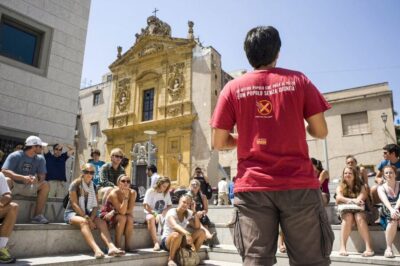 ★ 4.8Palermo: NO Mafia Walking TourFrom $402,431 reviews
 ★ 3.9Palermo: Hop-on Hop-off Bus Tour 24-hour TicketFrom $172,410 reviews
 ★ 5.0Palermo Original Street Food Walking Tour by StreatyFrom $832,105 reviews
 ★ 4.2Segesta, Erice and Salt Pans Full-Day Excursion from PalermoFrom $821,791 reviews
 ★ 4.5Palermo: Teatro Massimo Opera House Guided TourFrom $141,573 reviews
 ★ 4.2From Palermo: Monreale and Cefalù Half-Day TripFrom $711,354 reviews
 ★ 4.9Palermo: Street Food and History Walking TourFrom $541,294 reviews
 ★ 4.2Palermo: Agrigento and the Valley of the Temples Day TourFrom $771,240 reviews
Filed under