
Reviewed · THE LAST SUPPER & LEONARDO IN MILAN
Rome: Leonardo da Vinci Exhibition Entrance Ticket
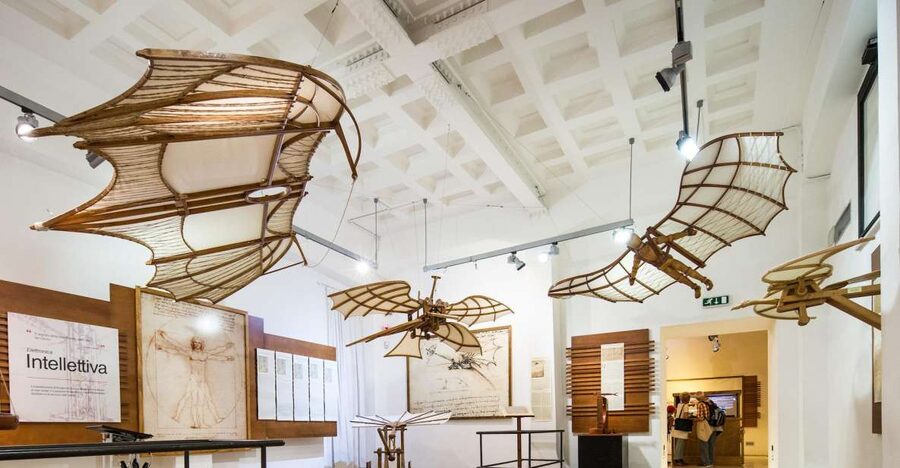
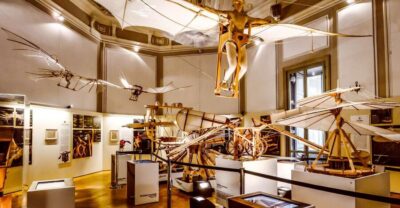
Leonardo turns sketches into working machines in Rome. At the Mostra Leonardo da Vinci in Palazzo della Cancelleria, you get 65 full-scale inventions plus 9 holograms that show how the ideas connect, not just how they look. I especially like the touch-and-try approach, plus the way the exhibition links art, engineering, and experiments into one clear story.
The one thing to plan around is the layout and the floor areas: it is very interactive, which means you should watch your step, and keep a close eye on kids around the touch zones and any trip-hazard spots.
In This Review
- Quick Reasons to Go
- Da Vinci in One Compact Stop at Palazzo della Cancelleria
- Skip the Line, Then Use the Gadget Like a Local
- Four Sections of Inventor Thinking, Not Just Art
- 65 Full-Scale Machines You Can Actually Try
- Nine 3D Holograms That Make Ideas Feel Present
- Hands-On Science Studies: Water, Air, Fire, Earth
- The 43 BC Tomb and the Underground Pond Setting
- The Interactive Installations With His Drawings
- Timing in Rome: How Long to Plan and When to Go
- Value at About $10, Plus the Gift Shop Bonus
- Who This Exhibition Is Best For, and Who Might Skip It
- Should You Book the Leonardo da Vinci Exhibition Ticket?
- FAQ
- Where is the Leonardo da Vinci exhibition located?
- How long does the experience last?
- Is a guide included with the ticket?
- What do I receive with the ticket?
- How late can I enter?
- Is the exhibition wheelchair accessible?
Quick Reasons to Go
- Skip-the-line entry at Piazza della Cancelleria 1, near Campo dei Fiori and Piazza Navona
- 65 full-scale machines built from Leonardo’s designs, with plenty of hands-on moments
- 9 holograms in 3D, including works based on his paintings and inventions
- Four themed sections, organized around engineering thinking rather than random displays
- Water, Air, Fire, Earth studies that show how he reasoned with natural forces
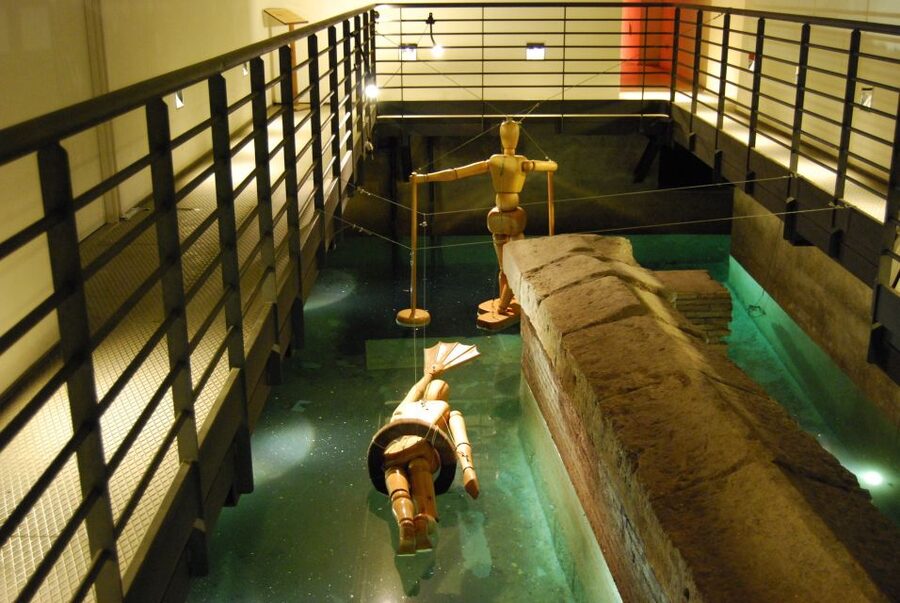
- Underground pond setting tied to a real 43 BC tomb in the same historic building
Da Vinci in One Compact Stop at Palazzo della Cancelleria
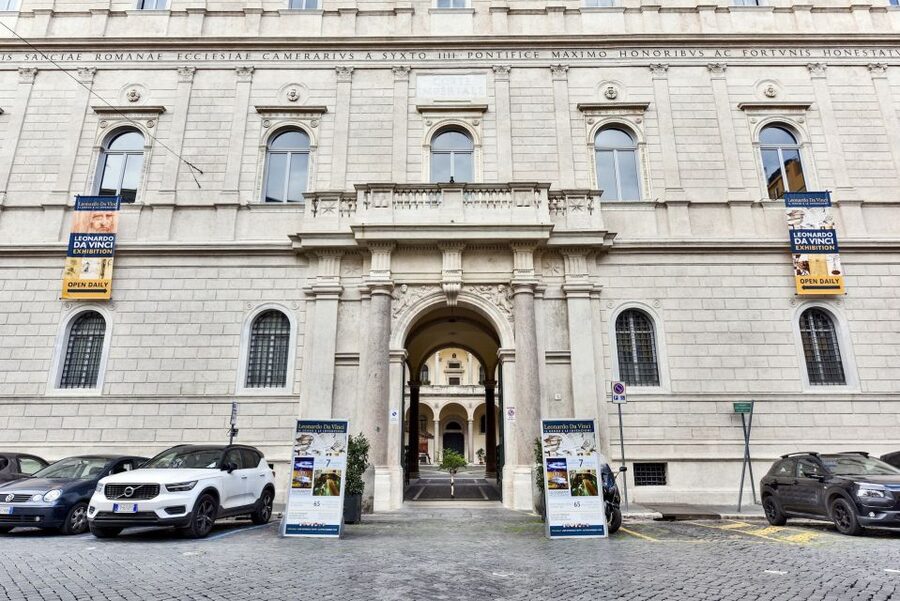
If you want Leonardo da Vinci without a big, exhausting museum day, this is a smart choice. The exhibition takes place inside the Palazzo della Cancelleria near Campo dei Fiori and Piazza Navona, and it gives you a focused look at the Renaissance mind that treated drawing like engineering.
What I like most is how the experience feels designed for people who learn by doing. You move through multiple sections, and the exhibition repeatedly turns paper ideas into machines you can watch and, in many cases, try. The second big win is the staging. It is not just a room of objects, it is a guided path through how Leonardo thought, from natural forces to transportation and military-related concepts.
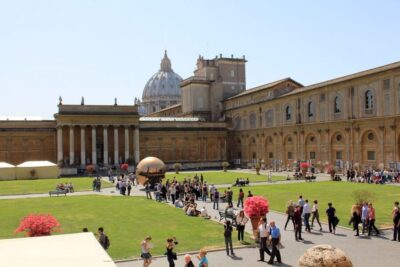
One extra bonus is the setting itself. The Palazzo is linked to the Vatican and is worth a glance even if you come only for the exhibition. Upstairs there is the Sacra Rota, tied to church processes, and the building is also known for the tomb of architect Auro Irzio from 43 BC, located in an underground pond. Even when you are focused on Leonardo, that backdrop makes the whole visit feel more like time travel.
Filed beside this one, more Last Supper and Leonardo tours in Rome.
- Rome: Leonardo da Vinci Exhibition Entrance Ticket
★ 4.4 · 2,885 reviews - Leonardo da Vinci Airport Plaza Premium Lounge, Terminal 3 Departures
★ 3.5 · 267 reviews
Skip the Line, Then Use the Gadget Like a Local
Your ticket gets you entrance fees plus a gadget. That gadget is your companion through the exhibit, helping you connect the “what you’re seeing” with “why it matters.” The exhibition staff are set up to make entry easy, and the ticket includes skip-the-ticket-line convenience so you can get inside without wasting time.
Two practical tips help a lot:
- Arrive with enough energy to walk and look closely, because many models reward slowing down.
- If you can, ask staff how to pair the gadget with any audio option that might be available on site. Several visitors praised the audio, saying it clarified details and explained pieces out of the room order. That means you can still enjoy it even if you follow the exhibit in your own pace.
You’ll also want to be mindful of timing. Entrance is available until 1 hour before closing, so don’t treat this like a “sometime tomorrow” stop. In practice, you will likely finish well within a couple of hours, but the last-hour cutoff is real.
Four Sections of Inventor Thinking, Not Just Art
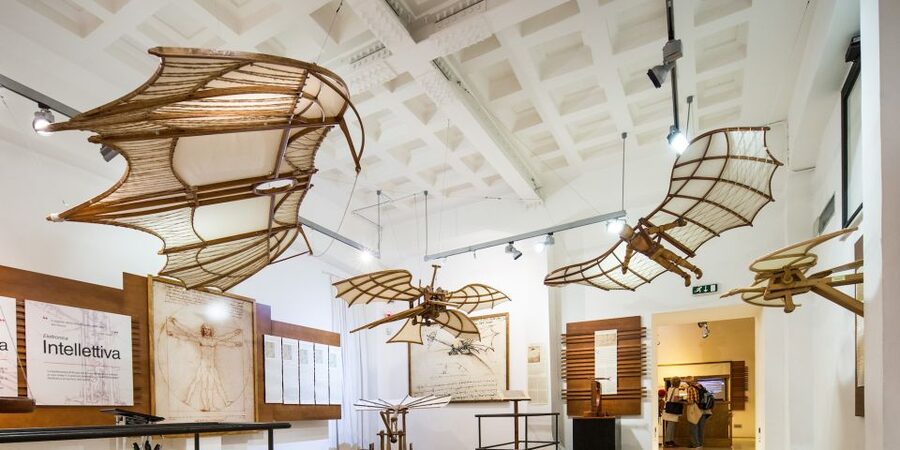
This exhibition is built around four sections, with full-size reproductions and interactive elements spread across them. The goal is not simply to show Leonardo’s inventions as finished trophies. Instead, you see how the same mind kept returning to the mechanics of the world: movement, materials, forces, and systems.
As you move section to section, the exhibits are grouped to help you form a mental map:
- One part leans into how his engineering principles work in practice.
- Another focuses on his studies of the natural elements.
- Another emphasizes hands-on models and interactive learning.
- And the full set includes the holographic experiences that connect images and mechanisms in a way static displays cannot.
If you like museums where you can “read” the story with your feet, this layout works. It also means you can tailor your visit. Want more engineering? Spend extra time around the machine areas. More into the creative side? Give the holograms and the drawing-linked installations extra attention.
65 Full-Scale Machines You Can Actually Try
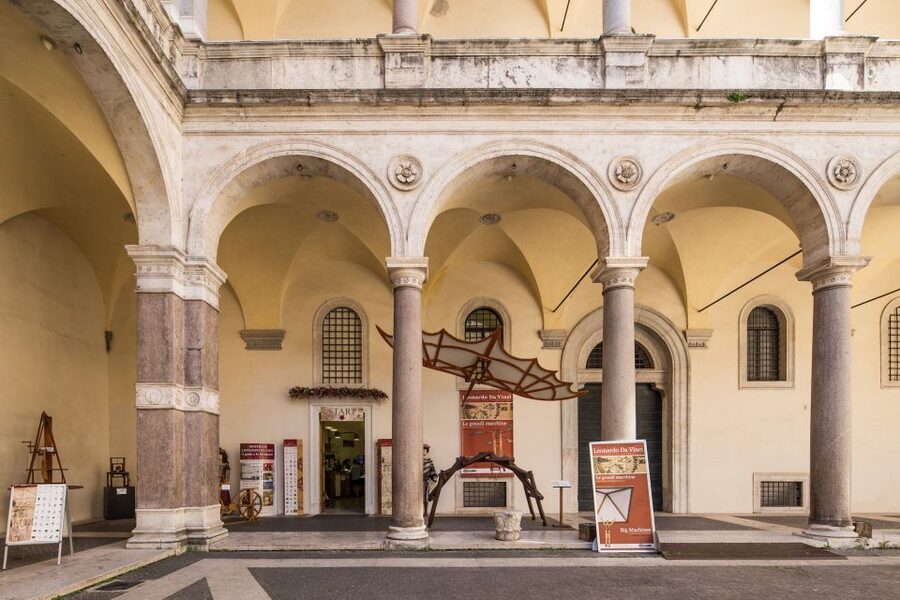
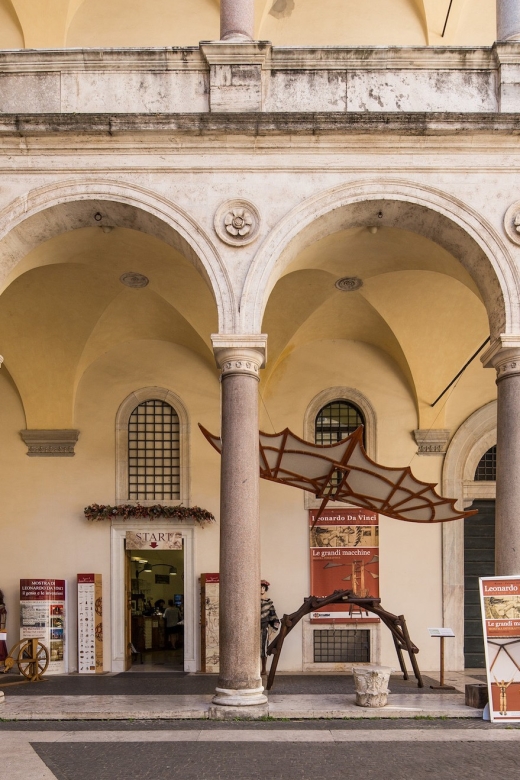
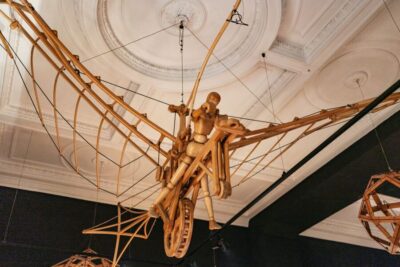
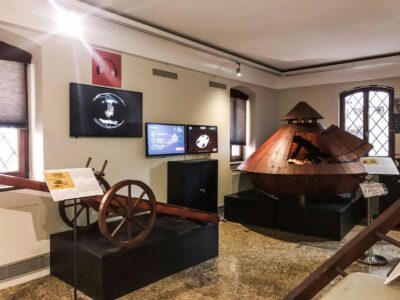
The headline here is the 65 full-scale machines made according to Leonardo’s designs. Seeing reproductions in life size does something important: it forces you to respect the scale of his thinking. You stop imagining sketches and start visualizing what it would mean to build the real thing.
Even better, the exhibition is designed to keep you from being a passive spectator. You can touch and play with almost all the machines on display, and there are interactive moments where you might test how components work. There is also a chance to build a bridge version based on a Da Vinci idea, which is the kind of activity that makes the exhibit memorable even after the rest of Rome has worn off your feet.
A small but meaningful consideration: because so many areas are interactive, the experience can be physically active. Good walking shoes help. If you travel with kids, expect them to want to try everything at once, and plan a bit of patience around the touch areas.
Nine 3D Holograms That Make Ideas Feel Present
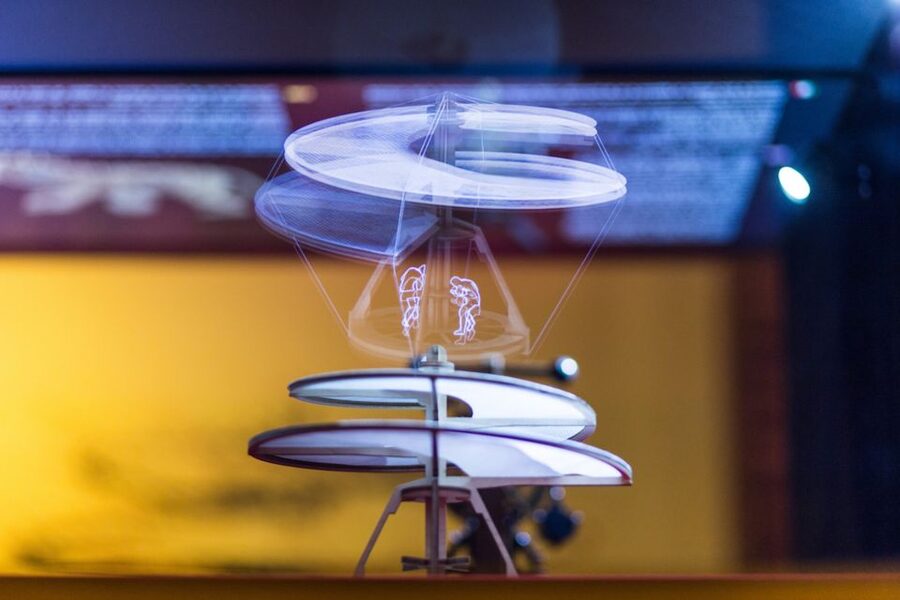
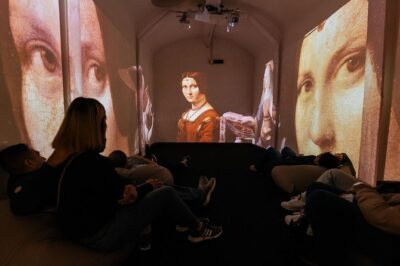
Leonardo’s world is mostly drawings and notes, which can feel distant unless something brings his concepts forward. That’s where the exhibition’s 9 holograms shine. They show Da Vinci paintings and inventions in 3D, and the effect is meant to help you understand the motion and logic behind his ideas.
Holograms are not just decoration here. They act like a bridge between what you see as a model and what you understand as a concept. In other words, they help you connect “this is what it looks like” with “this is how it functions or was meant to function.”
This is also a place where the pacing matters. If you rush through, you may miss the “aha” moments where the hologram clarifies what your eyes might not immediately interpret from a static display.
Hands-On Science Studies: Water, Air, Fire, Earth
One of the most effective parts of the exhibition is how it turns Leonardo’s curiosity toward the big forces of nature. You’ll see studies focused on Water, Air, Fire, and Earth, and the exhibit uses those themes to give you a better picture of his intellect.
What I like about this section is that it makes Leonardo feel less like a museum subject and more like a working scientist. These themes also help modern visitors. Even if you do not know anything about Renaissance engineering, the idea is familiar: understand the world, then design tools and systems that work within it.
This part also connects into his broader interests, including areas tied to science, aviation, and military-related concepts. The point is not to turn the exhibit into a weapons museum. The point is to show how he examined problems using the same mechanical logic again and again.
Kept in the same folder as this one, museum visits in Rome.





The 43 BC Tomb and the Underground Pond Setting
Even if you never leave the exhibition rooms, the building itself adds a layer you can feel. The Palazzo della Cancelleria includes a famous tomb from 43 BC, belonging to architect Auro Irzio, set within an underground natural pond.
This detail matters because it gives the visit contrast. You are looking at an inventor who never stopped asking questions, inside a historic space that already holds a deep sense of continuity and survival. It is a reminder that Rome keeps layering time on top of itself.
The visit also benefits from being partly underground. Several people noted it helps you escape heat, which is a real deal in summer or shoulder-season afternoons when you want something indoors but not overly formal.
The Interactive Installations With His Drawings
Leonardo is famous as an artist, but the exhibit treats him as the inventor-draughtsman he was. One of the best ways it does this is through interactive installations connected to his drawings. You’ll encounter 7 interactive installations tied to the sketches, where the drawings are not just explanatory text.
This is where you get to see the mindset behind the work. The exhibition encourages you to look at how Leonardo translated a concept into lines, proportions, and mechanisms. When the installations are working, you start to understand that his drawings were not only art. They were instructions, prototypes, and thinking tools.
Also, the exhibit is staged with a calm atmosphere. People mentioned a calming music background, and that matters because it keeps the experience from turning into sensory chaos. It helps you focus, especially if you are visiting after a busy Rome morning.
Timing in Rome: How Long to Plan and When to Go
Plan for this as a short, high-focus museum stop. Many visitors described it as around 45 to 60 minutes, while others said they lingered closer to 2 hours depending on how much they tried to interact and how closely they read. If you like to touch, build, and test, give yourself closer to 90 minutes.
The big advantage in the Rome calendar is flexibility. This is a great option if:
- You want an indoor break from the sun.
- You want something educational without committing to a full-day museum marathon.
- You are traveling with mixed interests, like an engineering fan plus a family member who wants something more visual.
Crowds also matter. Some visitors said it can feel quieter at certain times, including later in the day. If you want maximum room at the hands-on stations, that is when you go.
Value at About $10, Plus the Gift Shop Bonus
At $10 per person, this is one of the more cost-effective Leonardo experiences in Rome. The value is not only the price, it is the density of “real engagement.” You are paying for a compact exhibit with life-size machines, holograms, interactive installations, and the chance to touch. That makes the time feel worth it.
A lot of people also seemed happy with the gift shop, noting it offered choices that felt different from standard souvenir racks. That is a small thing, but it can matter if you are shopping for kids or for a Leonardo fan who will appreciate something specific rather than generic magnets.
If you are comparing this to pricier major attractions, the best argument is the experience type. This is a hands-on learning stop. It is not trying to be the biggest museum in town, and that is why it often feels satisfying.
Who This Exhibition Is Best For, and Who Might Skip It
This works especially well for:
- Families, because the hands-on stations keep kids engaged.
- Engineering and design fans, because seeing full-scale models makes the drawings feel real.
- Art lovers, because the holograms connect the artistic side with inventions and experiments.
- Anyone who wants an indoor activity that does not require a guided tour to make sense.
It might not be perfect if:
- You dislike interactive spaces or you have mobility concerns that make touching and moving around harder. The exhibition is wheelchair accessible, but any hands-on layout adds movement.
- You want a strictly quiet, gallery-style experience. This is more hands-on than contemplative.
Also, if you are bringing small kids, treat it like a “supervised adventure,” not a drop-off. Some visitors flagged trip hazards and unclear touch versus do not touch markings in certain areas, so watch carefully.
Should You Book the Leonardo da Vinci Exhibition Ticket?
I think you should book this if Leonardo is on your trip list and you want something that feels practical and alive. For the price, the combination of 65 full-scale machines, interactive stations, and 3D holograms creates a learning experience that sticks. It also works as a smart weather-proof plan, since the underground portions make it a nice break during hot afternoons.
I would skip or reconsider only if you prefer very large museums with long self-guided wanders, or if you strongly dislike interactive exhibits with touch zones. Otherwise, this is exactly the kind of Rome stop that adds something different without stealing an entire day.
If your schedule allows, aim to arrive with enough time to try the machines slowly. The exhibit is short, but it is not shallow.
FAQ
Where is the Leonardo da Vinci exhibition located?
It is at Piazza della Cancelleria 1 in Rome, near Campo dei Fiori and Piazza Navona.
How long does the experience last?
The ticket is valid for 1 day, and the visit itself is typically described as a shorter museum stop, often around 45 to 60 minutes, though you can spend more time.
Is a guide included with the ticket?
No. A guide is not included.
What do I receive with the ticket?
You receive an exhibition entrance and a gadget.
How late can I enter?
Entrance is available until 1 hour before closing time.
Is the exhibition wheelchair accessible?
Yes, it is wheelchair accessible.
Museum Visits in Rome That Made the Same Shortlist
Other Last Supper and Leonardo Tours in Rome From Our Notebook

Not quite the day you had in mind? The rest of our Rome write-ups sit below
- Rome: Guided Tour of St. Peter’s Dome Climb, Basilica & Vatacombs★ 5.0 · 167 reviews
- St. Peter’s Basilica Guided Tour with Reserved Entrance★ 4.0 · 168 reviews
- Golf Cart Driving Tour in Rome: 2.5 hrs Catacombs & Appian Way★ 5.0 · 168 reviews
- Rome: Trastevere Wine Tasting with Food Pairing and Gelato★ 4.9 · 168 reviews
- Guided Tour of the Colosseum Palatine Hill and Roman Forum★ 4.7 · 168 reviews
- Vatican Museums, Sistine Chapel & Saint Peter’s Semi-Private Tour★ 4.5 · 169 reviews
- Hidden Rome: Small Group E-Bike Tour with Street Food Stops★ 5.0 · 169 reviews
- Rome: Papal Audience with Pope Leo IV★ 3.9 · 169 reviews
- Rome Golf Cart Tour: Highlights & Must See★ 4.5 · 170 reviews
The Last Supper & Leonardo in Milan, top to bottom.
 ★ 4.5Florence: Leonardo Interactive Museum Entry TicketFrom $911,763 reviews
 ★ 4.7Milan: Da Vinci’s Last Supper Guided TourFrom $7510,143 reviews
 ★ 4.5Milan: Science and Technology Leonardo da Vinci Museum EntryFrom $157,169 reviews
 ★ 4.7Milan: Guided Walking Tour & Last Supper Visit with TicketFrom $1015,409 reviews
 ★ 4.0Milan’s Must See: Half-Day Tour of Last Supper, Duomo & La ScalaFrom $1304,193 reviews
 ★ 4.5Venice: Leonardo Da Vinci Museum Entrance TicketFrom $103,560 reviews
 ★ 4.4Milan: Leonardo3 The World of Leonardo Museum Entry TicketFrom $183,241 reviews
 ★ 4.7Milan: Last Supper Guided VisitFrom $752,854 reviews
Filed under