
Reviewed · TOURS
Venice: Sightseeing Tour with a Local expert
Venice becomes a lot clearer when someone ties the landmarks to real stories. This English-only sightseeing walk connects big sites with the neighborhoods around them, using canals, small bridges, and narrow lanes to keep the city feeling human.
I especially like the route from Dorsoduro into the historic core, starting at Campiello dei Squelini near Ca’ Foscari, instead of only the usual tourist drop-offs. And I like that you end in St Mark’s area with context for what you’re seeing, from Titian’s burial site at Frari to the Doge-related history near St Mark’s. One consideration: it’s an outdoor walk with no entrances included, so you should not expect to go inside any churches or palaces.
Key things you’ll notice on this tour
- English-only guide that keeps the stories clear and fast to follow
- Dorsoduro start at Campiello dei Squelini, a calmer Venice entry point
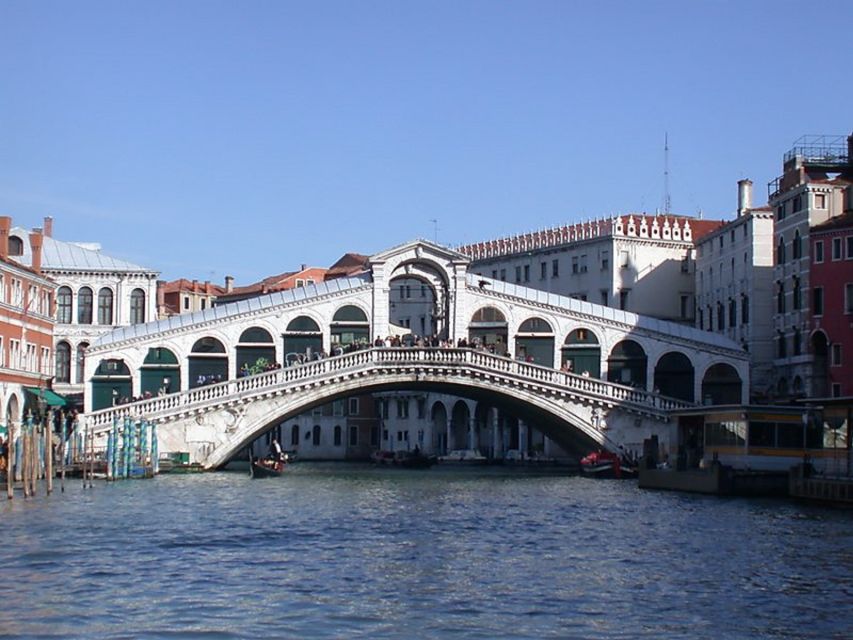
- Rialto Bridge crossing, the classic view with practical local context
- Frari basilica stop tied to Titian’s burial, even without entry
- San Giovanni e Paolo and the Doges story, adding meaning to the sites
- Small-group vibe, with frequent chances to ask questions
In This Review
- Meeting at Campiello dei Squelini, a calm start in Dorsoduro
- Quick orientation tip
- From small squares to big meaning in Rialto, San Marco, and Cannaregio
- What I like about the walking style
- Campo San Pantalon and Campo San Rocco: two quick stops that teach you how to read Venice
- The value of these short pauses
- San Polo: historic trade vibes and the feeling of Venice moving
- Practical note
- Basilica dei Frari and Titian’s burial: why art and power are linked here
- What to expect on-site
- Rialto Bridge crossing: the classic photo with the local explanation
- Why your guide’s commentary changes the experience
- San Giovanni e Paolo and the Doges story, where governance becomes stone
- A good moment to ask questions
- Finishing at Piazza San Marco: St Mark’s Basilica and Doge’s Palace from street level
- My practical advice for your remaining time in Venice
- Guide-led stories in English, and what past guests consistently praised
- Value check: is $41 for 2 hours a smart spend?
- Comfort, timing, and the reality of an outdoor walking tour
- Pacing and expectations
- Should you book this Venice sightseeing tour?
- FAQ
- Where does the tour meet?
- How long is the Venice sightseeing tour?
- Is the tour offered in English?
- Are entrances included for churches or palaces?
- Is hotel pickup included?
- Is the tour suitable for wheelchair users?
- What should I wear or bring?
- How early should I arrive at the meeting point?
- Can I get a refund if I cancel?
Meeting at Campiello dei Squelini, a calm start in Dorsoduro
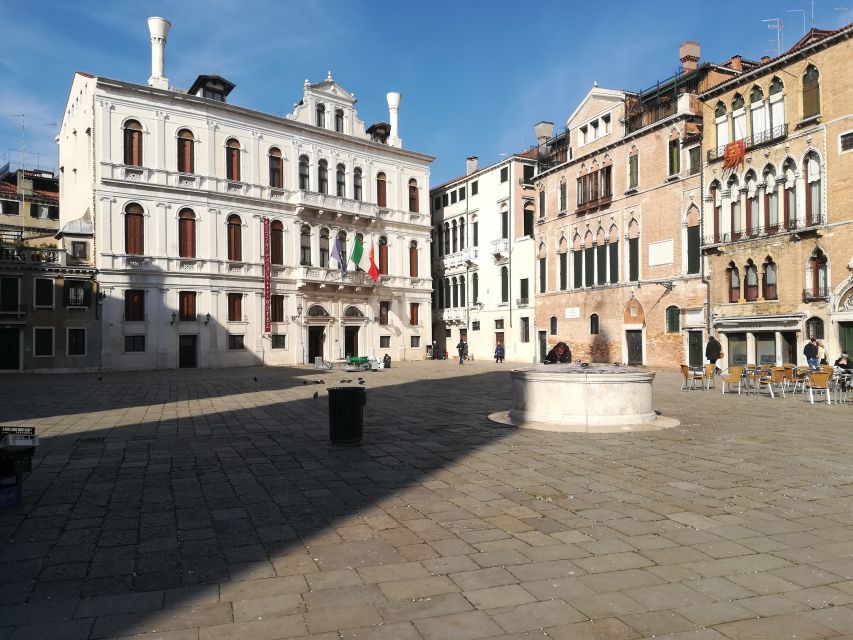
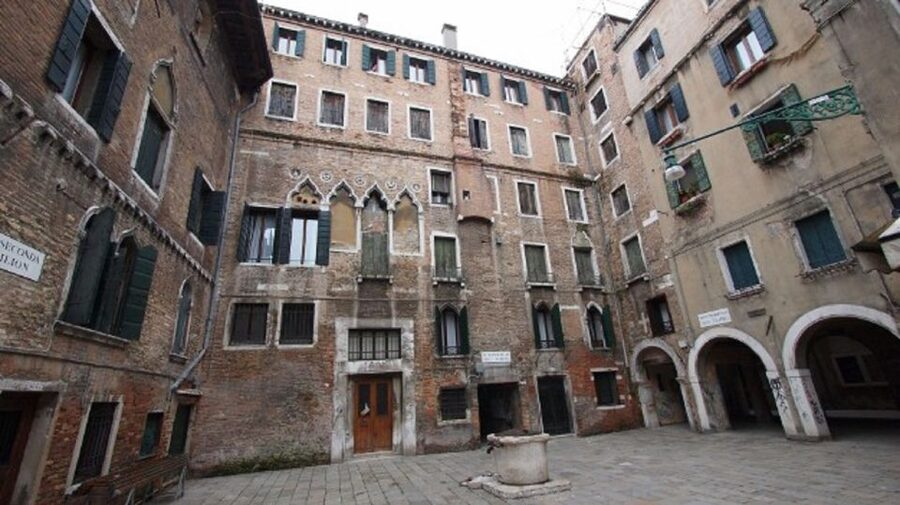
Your tour kicks off in Campiello dei Squelini, near Ca’ Foscari University in the Dorsoduro district. That matters more than you’d think. Venice is packed, and if you start right in the busiest square, you spend your first hour just dodging crowds and figuring out which way is which.
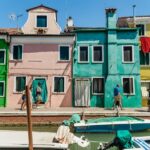
Starting here gives you an easier mental map of Venice. You begin in a place that feels like Venice lives here year-round, not just on postcards. Expect a straightforward rendezvous near the colorful wall, then a walk that quickly shifts from “looking around” to “I get how this city works.”
Quick orientation tip
Bring comfortable shoes and plan for plenty of uneven surfaces. Venice looks flat until you start walking it. Also, do yourself a favor and arrive early. The tour can’t wait past the short window for joining the group once it has started.
Still weighing it up? We have written up plenty of other tours and tickets across Venice.
- Venice: Doge’s Palace Reserved Entry Ticket
★ 4.6 · 42,716 reviews - Venice: Grand Canal Gondola Ride with App Commentary
★ 4.1 · 18,908 reviews - Boat Trip: Glimpse of Murano, Torcello & Burano Islands
★ 4.3 · 15,699 reviews - Venice: Grand Canal by Gondola with Live Commentary
★ 4.1 · 13,681 reviews
From small squares to big meaning in Rialto, San Marco, and Cannaregio
This tour’s approach is simple: you don’t just pass sights, you connect them to the geography and the power plays that shaped the city. The walk is designed to move through parts of Venice that help you understand how Venice grew, traded, and governed itself.
You’ll cover the historic districts around Rialto, San Marco, and Cannaregio. The neighborhoods aren’t just background. They explain why certain buildings face certain canals, why certain squares became gathering points, and why the city’s “center” shifted over time.
What I like about the walking style
It’s a guided path through small bridges and tight lanes, the kind of Venice you can’t accidentally stumble into if you only follow the biggest signs. That’s where the city starts to feel logical. You begin to recognize patterns: streets that funnel toward trade, squares that function like outdoor rooms, and canal turns that suddenly reveal a monument you didn’t know was there.
A lot of past guests praised the route for taking them off the most obvious tracks. The theme is consistent: you see the famous parts, but you also learn how locals experience the same spaces.
Campo San Pantalon and Campo San Rocco: two quick stops that teach you how to read Venice
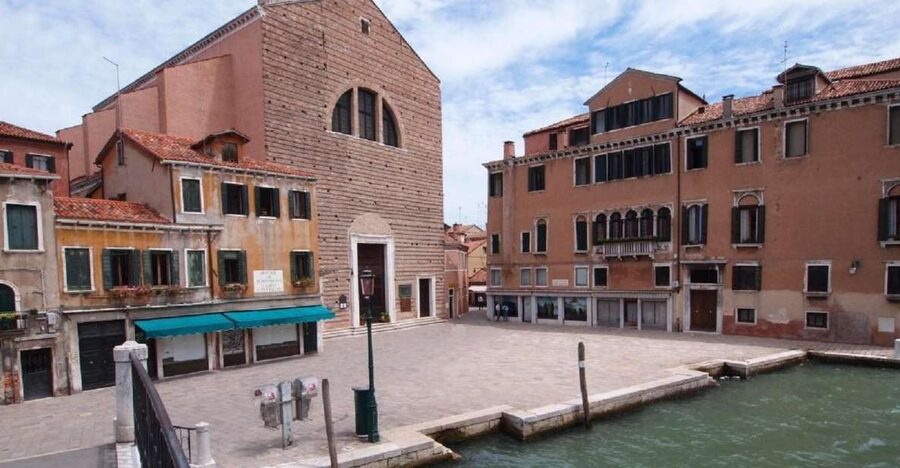
Right after the meeting point, the tour moves through a few small squares, including Campo San Pantalon and Campo San Rocco. These are short stops, but they’re not filler.
This is where the guide helps you notice the city’s building logic: how facades face canals, how campi work as living rooms, and how the scale of a street tells you whether it was designed for local life or for commerce. Even if you do not go inside any buildings, you leave with a better eye for what you’re seeing.
The value of these short pauses
You’re in Venice. You’ll want to take photos. But if you don’t know what you’re photographing, the photos feel random later. These stops help you attach meaning early, so when you reach larger landmarks, it feels earned.
San Polo: historic trade vibes and the feeling of Venice moving
The tour continues into San Polo, one of the districts tied closely to Venice’s older commercial energy. You’ll get a guided walk through the area that once acted as a central trade zone for the Venetian Empire.
This is the part of the tour where Venice stops being just pretty and starts being strategic. The canals, bridges, and tight street network show you why Venice could thrive as a trading power. You can almost picture goods moving from ship to canal to warehouse, all within a city designed for water traffic.



Practical note
San Polo and the surrounding lanes can feel compact. If you’re the kind of traveler who gets stressed in crowds, treat this as a “slow down and listen” segment. You move as a group, and the guide keeps you pointed in the right direction.
Basilica dei Frari and Titian’s burial: why art and power are linked here
A highlight is the stop at Basilica dei Frari. The big story here is that Titian is buried there. Even without entrance tickets included, the guide can explain why that matters: it connects one of Europe’s most famous painters to the religious and political prestige Venice held.
Here’s what you gain without paying museum-style prices: you understand the monument’s importance in the city’s identity. Frari isn’t just a church. It’s a marker of status and a place where Venice put its cultural pride.
What to expect on-site
You’ll get close enough to understand the role of the basilica in the district, plus the interpretive history that makes the building feel less like a stop on a checklist. If you’ve ever been disappointed by “we saw it from outside,” this tour still works because the storytelling is the main ticket.
Rialto Bridge crossing: the classic photo with the local explanation
Then comes the move that almost everyone wants to experience in person: the Rialto Bridge crossing.
Crossing Rialto matters because it forces you to view the Grand Canal from the perspective Venice intended. You see how the city presents itself, both to residents moving through the water network and to merchants passing through the commercial heart.
Why your guide’s commentary changes the experience
A bridge is just a bridge until you understand how it functioned in a city organized around canals. Past guests often highlight the guide’s ability to point out quirks, small details, and practical explanations you would not notice on your own. The bridge becomes a “why” moment, not only a “look up and smile” moment.
San Giovanni e Paolo and the Doges story, where governance becomes stone
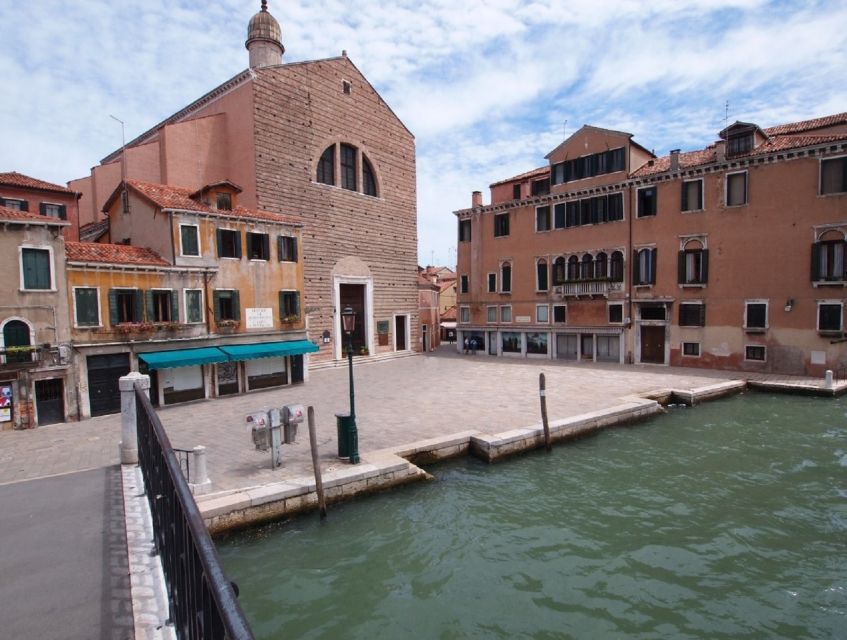
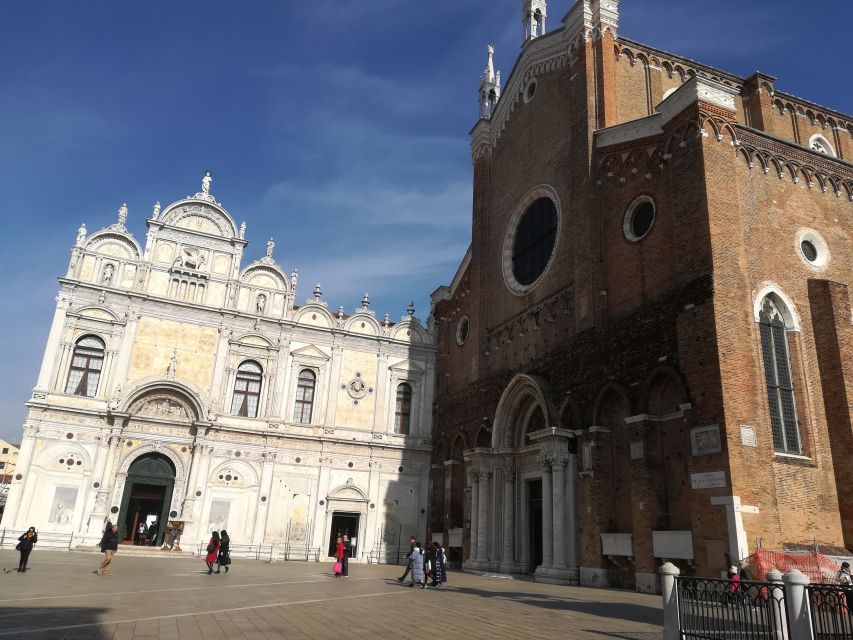
As the walk continues toward the St Mark’s end of the city, you’ll reach Basilica di San Giovanni e Paolo. This is a key interpretive stop because it’s where 25 of the doges are buried.
This is one of those Venice facts that sounds like trivia until you see it in context. Venice was a republic with a powerful ruling structure, and the city showed that power through architecture and burial spaces. When you understand that, you stop thinking of Venice as only canals and romance. You start seeing it as a political machine made of stone, rituals, and art.
A good moment to ask questions
This is the kind of stop where questions come naturally, like how the doges were connected to trade, or how Venice managed power while looking outward to the sea. Guides are said to answer questions smoothly, even with larger groups, so if something sparks your curiosity, this is a good time to speak up.
Finishing at Piazza San Marco: St Mark’s Basilica and Doge’s Palace from street level
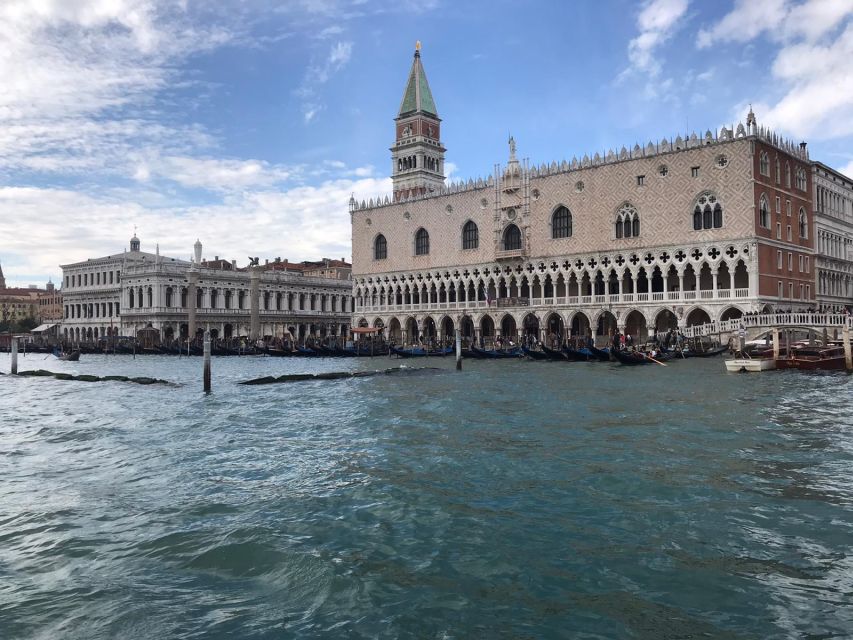
The tour ends in Piazza San Marco, at the address listed as Piazza San Marco, 30100 Venezia VE, Italia. This is the perfect landing zone because St Mark’s Square is where Venice crowds gather, and you need the right mental framework to enjoy it instead of just surviving it.
From here, you’ll admire the major landmarks tied to your earlier stories:
- St Mark’s Basilica, presented as part of Venice’s identity and cultural pride
- Doge’s Palace, tied to the power history you just learned around the doges
Since the tour is explicitly an outdoor walk with no entrances included, plan to enjoy this as a “see, understand, orient” finish. You’ll get the big-picture sense of where to go next if you want deeper ticketed visits later.
My practical advice for your remaining time in Venice
After this kind of orientation, you’ll move through St Mark’s area with much less aimless wandering. If you’re planning a return visit for photos or a longer look, you’ll already know what details to focus on.
Guide-led stories in English, and what past guests consistently praised
The tour is English-only, with local experts leading the way. Based on the guide names shared in guest feedback, you may be guided by locals such as Denise, Donata, Valentina, Jon Marco, Flavia, Irena, Olga, Daisy, Monika, or Julia. The common thread is energy plus clear, structured storytelling.
A few recurring praise points are worth your attention because they hint at the real quality:
- Guides handle route changes well if someone arrives late, including helping the group catch up
- The pacing balances walking with time to stop and absorb stories
- Many guides answer questions directly and keep the group engaged, even when it’s larger than a tiny private walk
- Some guests mention using small listening devices, which can help you follow the guide more easily in crowds
It’s a big advantage if you’re not a confident map reader. In Venice, losing the group for five minutes can turn into a 20-minute detour. The guide’s style helps prevent that.
Value check: is $41 for 2 hours a smart spend?
At about $41 per person for 2 hours, this tour sits in the “good value orientation” category. Here’s why I think it’s priced fairly for what you get.
You’re paying for:
- A local expert who can explain why the places matter
- An English-only format, so you don’t lose meaning
- A small-group structure, which generally makes it easier to ask questions
- A walking route that strings together multiple major areas without you having to plan each hop
What you should keep in mind is what’s not included: no entrances. So if your goal is to tour inside churches or see palace interiors, you’ll likely need additional tickets and a separate plan. But if your goal is to understand Venice quickly and get your bearings, this is a strong use of time.
The best “value test” is simple: if you’re visiting for the first time, the stories you learn here can make your later self-guided wandering feel twice as good. You pay once, then you benefit all day.
Comfort, timing, and the reality of an outdoor walking tour
This is an outdoor walking tour. That means you should dress and plan for walking. It is not listed as suitable for wheelchair users.
What to bring:
- Comfortable shoes
- Water, since there aren’t stops that let you add breaks easily
Timing is also strict in a good, Venice-realistic way. You’re told to reach the meeting point 10 minutes before, and they can’t wait more than about 5 minutes. If you’re coming from another part of town, give yourself extra buffer time. Venice connections can be slower than you expect.
Pacing and expectations
The tour lasts 2 hours, with short guided stops (for example around 15 minutes at several early points). You’ll be walking through tight spaces, so keep your patience handy. The upside is that the time feels efficient: you get a structured tour without spending your whole trip trapped in slow, long museum lines.
Should you book this Venice sightseeing tour?
Book it if:
- You want a first-day orientation that makes Rialto and St Mark’s Square feel understandable
- You prefer an English-only guide so nothing gets lost in translation
- You like learning how Venice grew, traded, and governed, not only what it looks like
- You want a route that includes major landmarks but still avoids starting in the most chaotic spot
Skip it or pair it differently if:
- You specifically want church or palace interior tickets included, because this tour is “see from outside” style
- You need an itinerary that is easy on mobility, since it’s a walking tour and not suitable for wheelchair users
If you’re deciding between wandering on your own and taking a guided orientation, I’d choose this type of walk first. It’s one of the fastest ways to turn Venice from a list of sights into a city with a story.
FAQ
Where does the tour meet?
The meeting point is Campiello dei Squelini, near Ca’ Foscari University in the Dorsoduro district, by the colored wall.
How long is the Venice sightseeing tour?
It lasts 2 hours.
Is the tour offered in English?
Yes, the tour is done only in English.
Are entrances included for churches or palaces?
No. The tour is an outdoor walking tour and no entrances are included.
Is hotel pickup included?
No. The tour includes pickup and drop-off from the designated meeting point, not hotel pickup.
Is the tour suitable for wheelchair users?
No. It is listed as not suitable for wheelchair users.
What should I wear or bring?
Wear comfortable shoes. It’s also recommended to bring a bottle of water, since you can’t add stops.
How early should I arrive at the meeting point?
Please arrive 10 minutes before the tour starts. The group can’t wait more than 5 minutes, and you won’t be able to join after it has started.
Can I get a refund if I cancel?
Yes. There is free cancellation up to 24 hours in advance for a full refund.
Our Wider Tours File for Venice
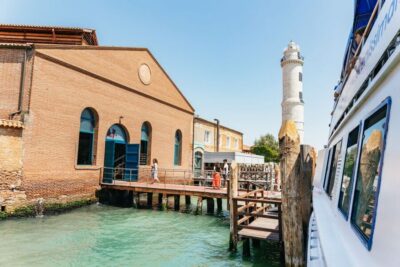

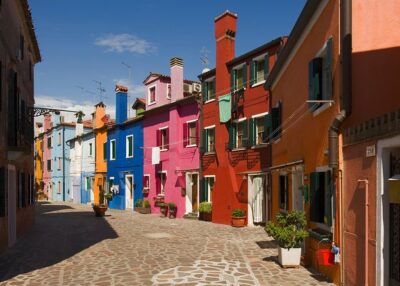
Not quite the day you had in mind? The rest of our Venice write-ups sit below
- Venice: Traveling Opera in a Historic Palace on Grand Canal
- Luxury Tour of Murano & Burano by Private Boat and Guide★ 5.0 · 167 reviews
- Da Vinci Interactive Museum Venice Scuola di San Rocco★ 4.0 · 168 reviews
- Venice Gondola Experience★ 3.5 · 169 reviews
- Venice: Religion Walking Tour with Doge’s Palace Tickets★ 4.6 · 171 reviews
- Venice: Doge’s Palace Guided Tour With Tickets & Optional Gondola★ 4.5 · 172 reviews
- Lords of the Night Prisons Palace: Cells & Torture Tools Visit★ 4.0 · 177 reviews
- Venice: Private Grand Canal Gondola Ride from Rialto★ 4.1 · 178 reviews
- Venice: St. Mark’s Basilica Tour with Doge’s Palace Option★ 4.2 · 178 reviews
Tours, top to bottom.
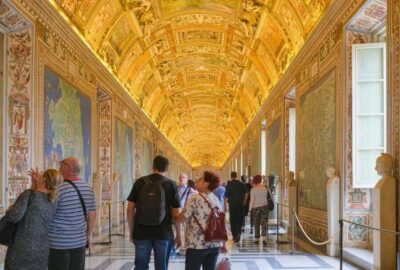 ★ 4.3Vatican Museums & Sistine Chapel Tour with Optional BasilicaFrom $7967,413 reviews
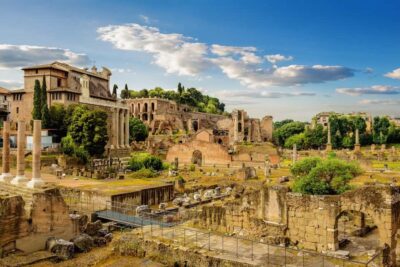 ★ 4.7Colosseum, Roman Forum & Palatine Guided TourFrom $7863,148 reviews
 ★ 4.5Vatican Museums, Sistine Chapel & St Peter’s Basilica Guided TourFrom $2239,149 reviews
 ★ 4.8Rome: Colosseum, Palatine Hill and Roman Forum Guided TourFrom $5232,814 reviews
 ★ 4.7Rome: Guided Tour of Colosseum, Roman Forum & Palatine HillFrom $5527,897 reviews
 ★ 4.5Rome: Colosseum, Roman Forum and Palatine Hill Guided TourFrom $5923,903 reviews
 ★ 4.4Naples: Naples Underground Entry Ticket and Guided TourFrom $2121,781 reviews
 ★ 4.8Pompeii: Entry Ticket and Guided Tour with an ArchaeologistFrom $3519,459 reviews