
Reviewed · VERONA & VALPOLICELLA
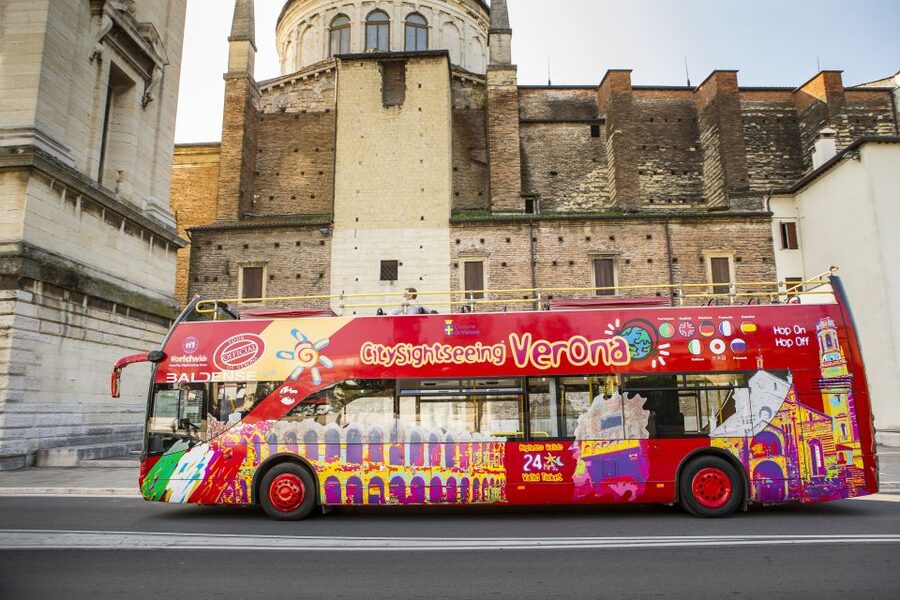
Verona: Hop-on Hop-off Tour 24 or 48-Hour Ticket
Hop on and see Verona fast. This hop-on hop-off bus tour lets you ride past the big sights with recorded audio, then jump off when something catches your eye. Two routes cover different angles of the old city, so you can build your own mini-itinerary without committing to a fixed guided tour.
I especially like the panoramic, open-top views from the red bus. And I like how the stops line up with Verona classics, from the Arena area to the Roman theater zone and the Juliet neighborhood, with just enough structure to keep you oriented. One catch to plan around: buses run about every hour, so quick hop-offs for photos can feel rushed if you want more than a couple minutes.
In This Review
- Key Stops That Make This Tour Worth Your Time
- How Verona Hop-On Hop-Off Works (Piazza Bra, Two Routes, Hourly Buses)
- Red Route: Arena Square, San Zeno, Roman Theater, and Juliet Area
- Piazza Brà to the Porta Nuova side
- Piazza Pozza and the medieval heart vibe
- Basilica S. Zeno and the medieval walls feeling
- Castelvecchio, then the shopping stretch on Via Diaz
- Teatro Romano and the Roman story you can actually see
- Porta Leoni and the Juliet area stops
- Blue Route: Smaller Streets, Juliet-related Stops, Duomo, and the Hill View
- Juliet tomb area and neighborhood streets
- S. Stefano / Teatro Romano area
- Castel S Pietro viewpoint
- Duomo and Piazza Erbe
- Porta Leoni and the Juliet House zone again
- 24 vs 48 Hours: What Actually Changes for Your Day
- Picking the Right Route Day Plan (Without Overthinking It)
- Timing and Crowds: How to Avoid Feeling Rushed
- What’s Actually Included, and Where You Still Pay Extra
- Audio Commentary: Multilingual, Recorded, and How to Get the Best Use
- Best For: Who This Tour Fits, and Who Might Want Something Else
- Service Notes You Should Know Before You Go
- Should You Book This Verona Bus Tour?
- FAQ
- Where do the hop-on hop-off buses start in Verona?
- How long can I use the ticket?
- How often do the buses run?
- What routes are included?
- What’s included with the ticket?
- Are attraction tickets included?
- What languages are available for the audio commentary?
- Do both routes visit Juliet-related areas?
- Is there any service interruption on specific dates?
- Can I cancel and what about pay later?
Key Stops That Make This Tour Worth Your Time
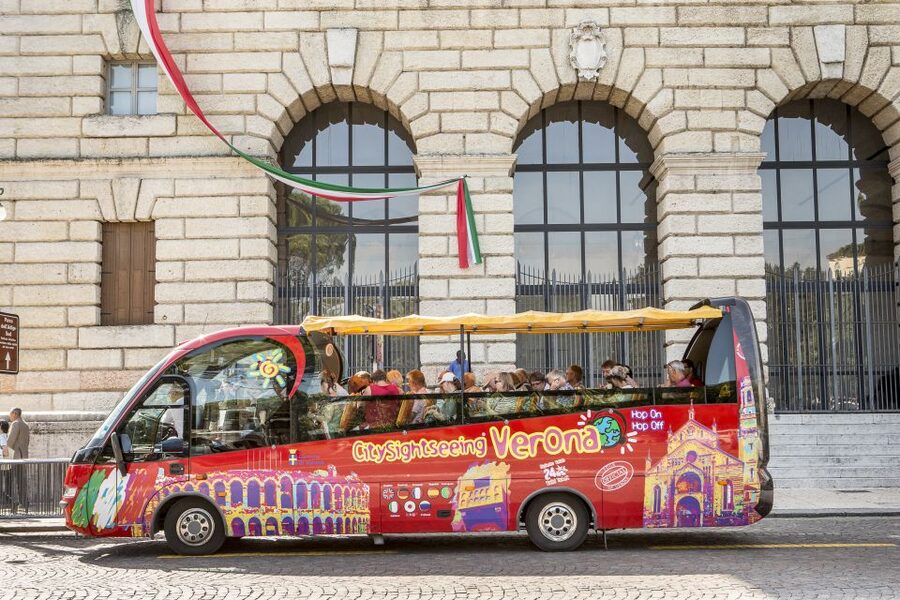
- Piazza Bra (Arena square): the natural starting hub, great even if you only ride part of a loop
- San Zeno quarter and its cathedral area: medieval walls, major church stop, big Verona identity
- Via Diaz and Porta Borsari: shopping stretch plus a Roman gateway feel right in the middle of it
- Teatro Romano zone: Roman-era Verona, close to other old-city sights
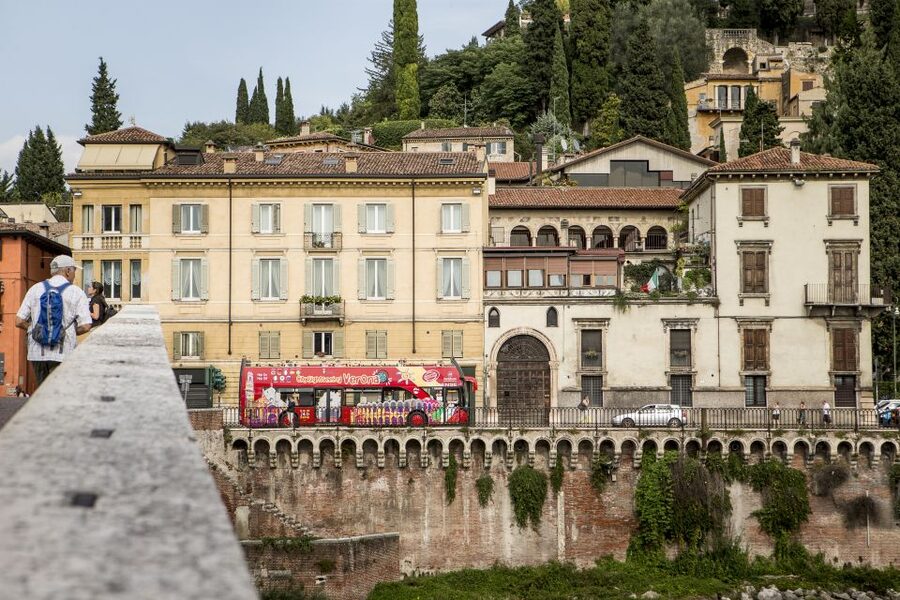
- Castel S Pietro viewpoint (Blue route): the hill look over the city, ideal for photos
- Juliet-area stops: Casa di Giulietta and nearby Juliet-related stops, easy to pair with your wandering
How Verona Hop-On Hop-Off Works (Piazza Bra, Two Routes, Hourly Buses)
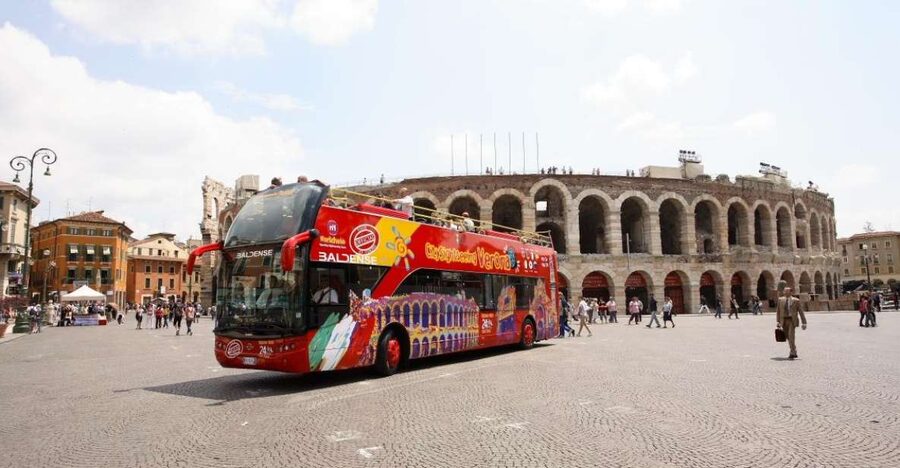
This is a simple system designed for flexible sightseeing. You start at Piazza Brà, the big Arena square. From there, you choose either the Red route or the Blue route, then hop off as often as you want. With a 24 or 48-hour ticket, you can re-board during your valid window and keep assembling your day.
The buses run on each route every hour, so think of the schedule as “steady,” not “frequent.” That hourly rhythm is usually fine for moving between major sights, but it means you should not plan on extremely short stops if you’re hoping for a longer photo break or a slow wander into a side street.
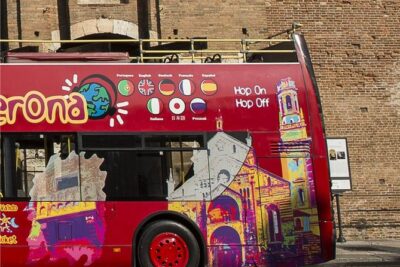
The onboard audio is recorded and offered in a long list of languages. You get English, Italian, Spanish, French, German, Portuguese, Japanese, Russian, Arabic, Chinese, Danish, and Dutch. That matters here because Verona’s sights reward context: why a gate is where it is, how the Roman-era pieces fit into the medieval city, and what you’re looking at when you spot the big church complex.
Other Verona and Valpolicella outings in Verona that earned their own write-up.
- Verona: Hop-on Hop-off Tour 24 or 48-Hour Ticket
★ 4.4 · 2,010 reviews - Verona: History and Hidden Gems Guided Walking Tour
★ 5.0 · 1,379 reviews - Verona: Priority Access Arena Guided Tour
★ 4.6 · 1,152 reviews - Verona: Juliet’s House Fast-Track Entry Ticket & Audio Guide
★ 4.2 · 1,121 reviews
Red Route: Arena Square, San Zeno, Roman Theater, and Juliet Area
The Red route is the one that feels most “classic loop,” hitting the major landmarks you probably pictured before you arrived. It also includes shopping time, and it covers key Roman and medieval stops without forcing you to constantly navigate streets on your own.
Piazza Brà to the Porta Nuova side
You begin at Piazza Bra and then head through the city toward the Porta Nuova area. Stops like Corso Porta Nuova Giardini Pradaval and Stazione FS Porta Nuova are useful because they give you options. If you want to start early, end near the station area, or avoid extra walking between neighborhoods, these stops can save your legs.
Piazza Pozza and the medieval heart vibe
Next up is Piazza Pozza, a central old-city square. Even if you only hop off briefly, squares like this are where Verona’s daily rhythm becomes visible. The bus narration helps you connect what you see on the street with what you’re about to visit next.
Basilica S. Zeno and the medieval walls feeling
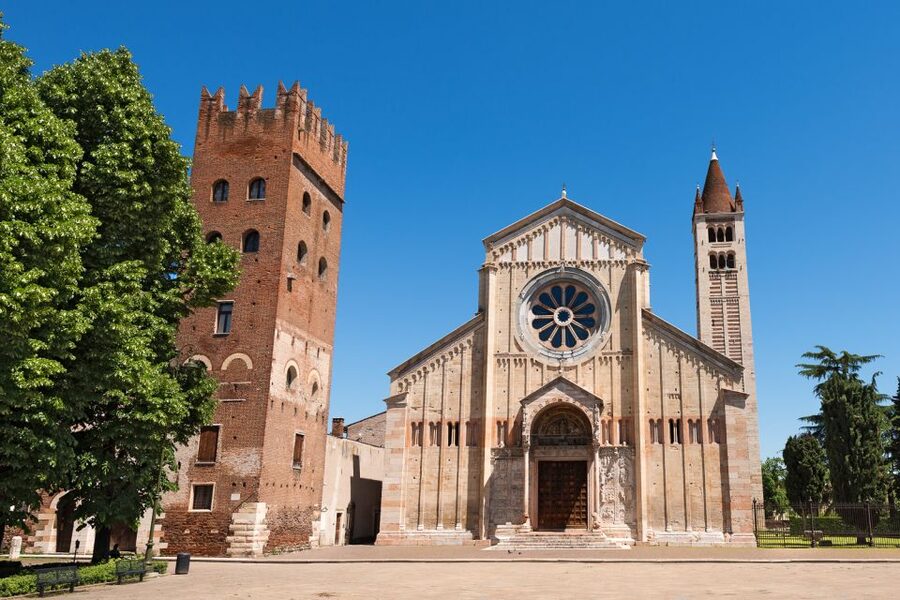
One of the big Red route draws is the San Zeno area, including Basilica S. Zeno and the surrounding medieval vibe. Verona’s old-city preservation is a big part of why this place is so loved, and this stop is a good way to feel that medieval identity in real space rather than just on a map. The cathedral stop is a natural “pause point,” especially if you want to step inside or at least take in the exterior scale.
Castelvecchio, then the shopping stretch on Via Diaz
After San Zeno, the Red route brings you to Castelvecchio, a major castle area that pairs well with a walk along the river-adjacent streets nearby. Then comes Via Diaz, a high-end shopping stop. This is a smart inclusion if you want the tour to do more than just sightseeing. You get a built-in moment to browse, cool off, or pick up a souvenir without detouring.
You’ll also see Porta Borsari, a Roman-era gateway. When you’re riding past these structures from street level, it clicks how layered Verona is, Roman-era bones under medieval streets.
Between an espresso and the next booking, compare these hop-on hop-off bus tickets in Verona.

Teatro Romano and the Roman story you can actually see
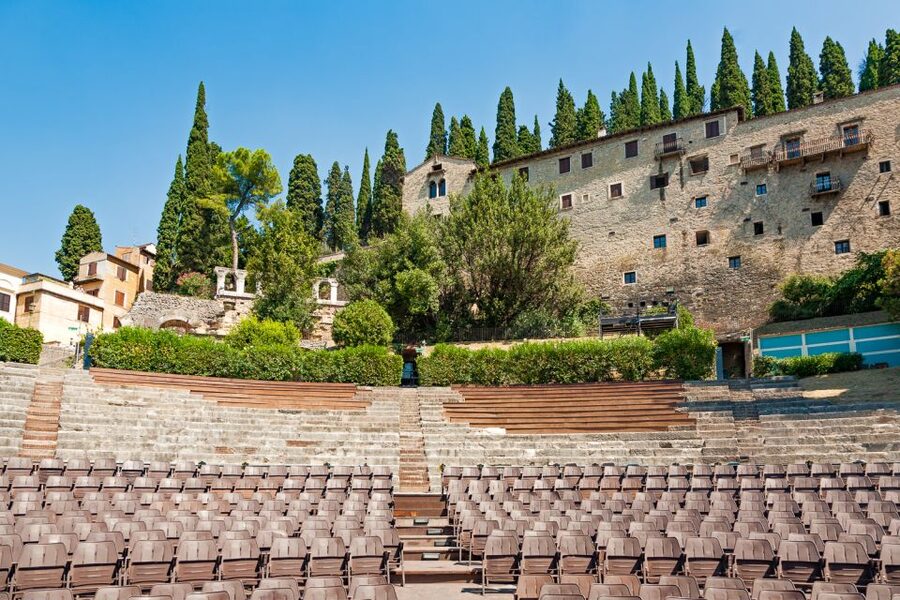
One of the headline stops is Teatro Romano. This is the Roman theater area, and it’s a great example of how the tour can turn “I read about this” into “I can point at it.” Even if you don’t buy separate attraction tickets, you still get the orientation that makes Verona feel less like a blur.
Porta Leoni and the Juliet area stops
The Red route then reaches the gate area (Porta Leoni) and finishes with stops in the Piazza Leoni / Juliet’s House zone. If Juliet is part of your itinerary, the Red route gives you an easy landing pad, and it’s convenient for mixing Juliet with other nearby sights you might choose to walk to.
Blue Route: Smaller Streets, Juliet-related Stops, Duomo, and the Hill View
The Blue route tends to feel more like the “photo and viewpoint” version, with different stops and a more varied old-city path. It’s also the route people often pick when they want to get a bit more into the compact, twisty feel of Verona.
Juliet tomb area and neighborhood streets
The Blue route starts again at Piazza Brà, then heads through stops like Via Pallone (Tomba Giulietta) and Via G. Giusti. These are not just random names. They connect you to Verona’s Romeo and Juliet landscape without forcing you to treat it like a single stop-and-run attraction.
S. Stefano / Teatro Romano area
You also get a S. Stefano Teatro Romano stop. This places you close to the Roman theater zone again, but through a different approach. If you’re the type who likes comparing viewpoints and seeing how one area looks from multiple angles, Blue is a good match.
Castel S Pietro viewpoint
Then comes Castel S Pietro, the hill stop that’s famous for city views. If you want that sweeping look over Verona, this is where you do it. The ride positions you for photos that feel like you’ve stepped above the messiness of street level.
Duomo and Piazza Erbe
Next are Duomo and Piazza Erbe (Casa Giulietta). Piazza Erbe is Verona’s lively-squares energy, and it’s an easy place to pause and people-watch or snack. If Juliet is on your list, the stop naming also signals you’ll be close to Juliet-related sights without needing extra navigation.
Porta Leoni and the Juliet House zone again
Finally, you circle back toward Porta Leoni, then reach Piazza Leoni (Juliet’s House). That overlap with the Red route is helpful. It means if you start one route and realize you want more Juliet area time, you can adjust without scrapping your day.
24 vs 48 Hours: What Actually Changes for Your Day
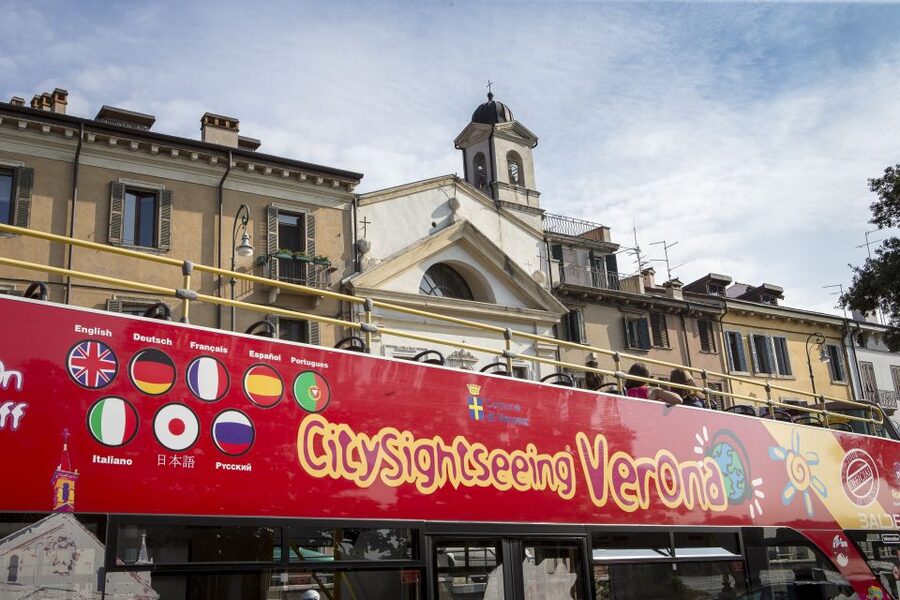
Both ticket options work because you’re not locked into one pass or one exact route time. The difference is how much freedom you have to do two routes, or to return to one area after you see what you truly care about.
With a 24-hour ticket, you can still do a lot, especially if you pick one route for the first day, then hop back for a second round of the same stops you liked. It’s a strong choice if Verona is a quick stop in your trip and you mainly want an orientation pass plus a few targeted walks.
A 48-hour ticket is best if you can slow down a bit. You can do both routes during your stay, not just the major landmarks but also the different ways each route approaches the same overall city story. It also helps if you want to return to places like the Roman theater area, or to give Castel S Pietro viewpoint time for photos in different light.
Value-wise, the price is relatively low for what you get: transport plus recorded commentary. What keeps it from being “too easy” is that attraction entry tickets are not included, so you still decide what’s worth paying to enter. For many people, the bus is the perfect cost-controlled way to decide what to explore more deeply later.
Picking the Right Route Day Plan (Without Overthinking It)
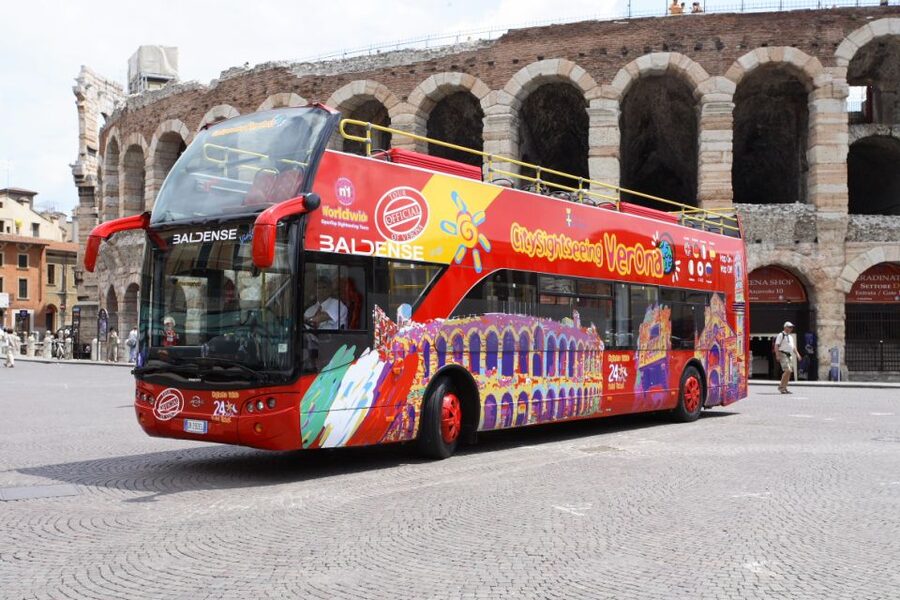
If you want a simple plan that usually works, here’s how I’d think about it:
- If you want the more straightforward highlights, start with the Red route. It’s built around big landmarks and includes the shopping stretch on Via Diaz.
- If you want more old-street feel and a major viewpoint, start with the Blue route. Castel S Pietro is the standout for that “Verona from above” photo moment.
If you have only one day and you must choose, I’d base it on your priorities. Want Roman theater plus classic squares plus shopping? Red leans that way. Want the hill viewpoint plus varied neighborhood stops? Blue tends to fit that better.
If you have two days, the sweet spot is doing one route each day. That avoids repeating the same scenes constantly and keeps you from feeling like you’re just riding in circles because you bought the pass.
Timing and Crowds: How to Avoid Feeling Rushed
The buses running every hour means you can plan without stress, but you should still be realistic about timing at peak moments. The most common frustration with hop-on hop-off systems is not the concept, it’s the “how long do I want to wait for the next vehicle” part.
On busier days, the stops can feel crowded, especially around the major boarding points and popular attraction zones. If you’re traveling at high season, expect that getting on can be slower than you’d like at the most popular times of day. The fix is simple: hop off for sightseeing, then re-board when your timing matches a less busy departure window.
Also, think about how long you actually want at each stop. For quick photo pauses, choose stops you can enjoy from street level. For church or interior time, give yourself enough time to actually do it, not just to stand there and hope you catch the next departure.
What’s Actually Included, and Where You Still Pay Extra
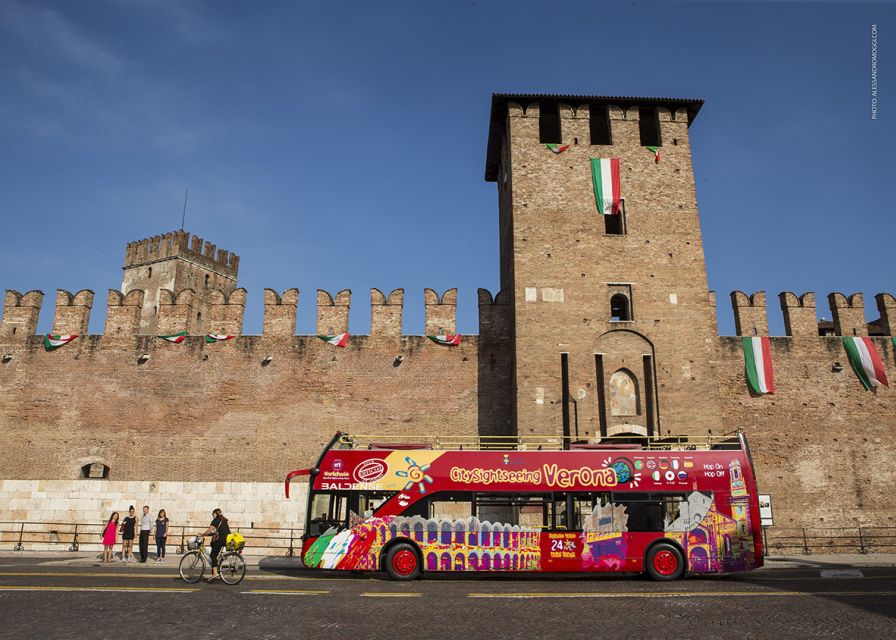
Your ticket includes two big things:
- The 24 or 48-hour bus ride (depending on option)
- Multilingual audio commentary
You do not get attraction tickets. That means if you want paid entries, you’ll need to handle those separately. This is why the bus is such good value. You get transportation and context, then you decide what deserves extra money.
A practical way to use this: ride first to learn the city logic. Then decide later if you want to spend your limited time and cash on the places that truly pulled you in.
Audio Commentary: Multilingual, Recorded, and How to Get the Best Use
The onboard audio covers a lot of Verona’s story. It’s multilingual across more than a dozen languages, which is a big win for mixed groups or international visitors.
A thing to keep in mind is that audio quality can vary by route. Some people report the Blue line audio isn’t as good as the Red line. Also, because the routes overlap in major themes, you may notice repeated facts depending on how much you listen.
My advice: don’t feel like you have to listen to every second. Instead, use the audio as a guide while you’re riding between stops. When you hop off, shift your attention to the street scene, the architecture, and the “why does this look like this” questions.
One more practical note. If the bus provides headphones, consider bringing your own. Some visitors found the included headphones not great, so a backup can help you enjoy the narration without fighting bad audio.
Best For: Who This Tour Fits, and Who Might Want Something Else
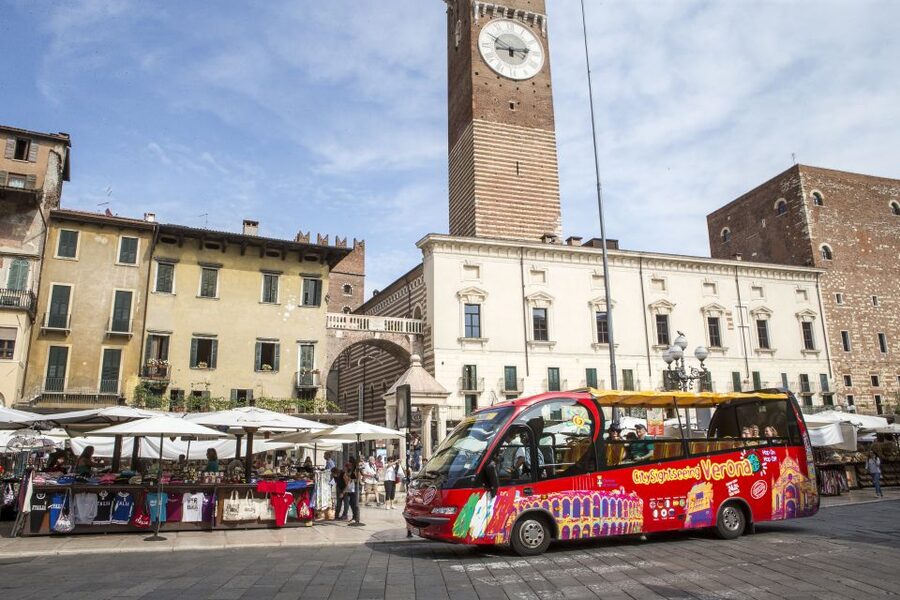
This tour is a strong match if you:
- have limited time in Verona and want a low-effort overview
- like guided context but don’t want to follow a strict schedule
- prefer riding to walking when the weather is hot or you’re tired
- want a simple way to visit the Arena area, Roman theater zone, and Juliet neighborhood without planning every route manually
It might be less ideal if you:
- hate waiting for scheduled vehicles when buses run hourly
- want a deep, spoken, live guide experience instead of recorded narration
- plan to spend long hours inside ticketed attractions and don’t need transportation help
Service Notes You Should Know Before You Go
Buses run every hour on each route, and both routes begin at Piazza Brà. There’s also a known suspension: on Wednesday 15 October, service is suspended due to a cycling race. If your dates fall near that, it’s worth checking the day-of situation so you don’t arrive to an empty stop.
Should You Book This Verona Bus Tour?
Yes, I’d book it if you want an efficient first pass through Verona. For the price, you’re buying movement plus story, which is what turns a short stay from random wandering into a connected experience. The two-route setup also gives you flexibility, especially if you can manage a second day to take in different approaches, including the hill viewpoints on the Blue route.
Skip it or consider another option if you’re the kind of traveler who prefers one fully guided, ticketed attraction after another with minimal “in-between.” For everyone else, this is a practical way to get your bearings, see the big Verona hits, and then spend the rest of your time on the parts that really grabbed you.
FAQ
Where do the hop-on hop-off buses start in Verona?
Both the Red and Blue routes start from Piazza Bra (the Arena Square).
How long can I use the ticket?
Your ticket is valid for 24 or 48 hours, depending on the option you choose.
How often do the buses run?
The buses run on each route every hour.
What routes are included?
You can ride two routes designed for the main attractions: the Red route and the Blue route, both starting from Piazza Brà.
What’s included with the ticket?
The ticket includes your hop-on hop-off bus ride for 24 or 48 hours, plus multilingual audio commentary.
Are attraction tickets included?
No. Attraction tickets are not included.
What languages are available for the audio commentary?
The audio commentary is available in English, Italian, Spanish, French, German, Portuguese, Japanese, Russian, Arabic, Chinese, Danish, and Dutch.
Do both routes visit Juliet-related areas?
Yes. Both routes include stops around the Juliet’s House / Casa Giulietta area, including Piazza Leoni stops.
Is there any service interruption on specific dates?
Yes. On Wednesday 15 October, the service is suspended due to a cycling race.
Can I cancel and what about pay later?
You can cancel up to 24 hours in advance for a full refund. You can also reserve now and pay later to keep plans flexible.
More Hop-on Hop-off Bus Tickets Pinned to Our Verona Map
Beside This One, Verona and Valpolicella Outings in Verona
Not quite the day you had in mind? The rest of our Verona write-ups sit below
- Verona: Highlights and Hidden Gems Walking Tour★ 4.7 · 179 reviews
- Verona Full Meal & Wine Tasting Walking Tour by Do Eat Better★ 5.0 · 197 reviews
- Verona: Highlights Walking Tour with Arena Priority Access★ 4.8 · 201 reviews
- Verona Arena Skip-the-line Tour★ 4.5 · 208 reviews
- Guided Food Tour with Wine Tasting in Verona★ 4.3 · 229 reviews
- Verona: Food and Wine Tasting Walking Tour★ 4.9 · 238 reviews
- Wine Tasting with Panoramic View of Verona★ 5.0 · 240 reviews
- City Sightseeing Verona Hop-On Hop-Off Bus Tour★ 4.0 · 247 reviews
- Verona: City Walking Tour with Cable Car & Wine Aperitif★ 4.8 · 267 reviews
Verona & Valpolicella, top to bottom.
 ★ 5.0Verona: History and Hidden Gems Guided Walking TourFrom $411,379 reviews
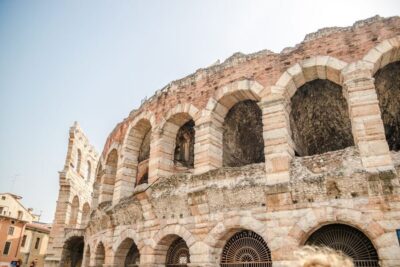 ★ 4.6Verona: Priority Access Arena Guided TourFrom $411,152 reviews
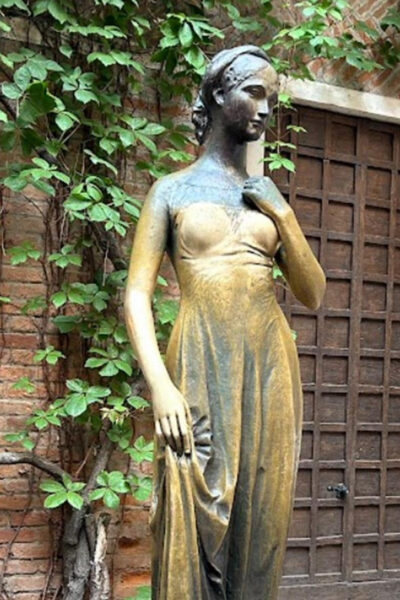 ★ 4.2Verona: Juliet’s House Fast-Track Entry Ticket & Audio GuideFrom $281,121 reviews
 ★ 4.9Verona: Small Group Guided Walking Tour with Arena TicketsFrom $81848 reviews
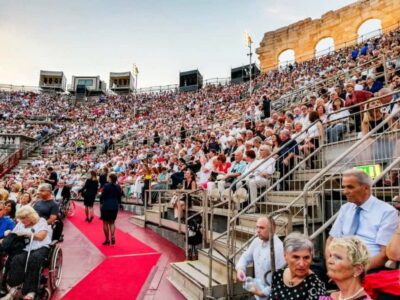 ★ 4.6Verona: Arena di Verona Opera TicketFrom $55721 reviews
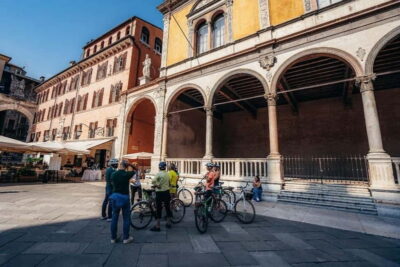 ★ 4.9Verona: Classic and Hidden Gems Bike TourFrom $33577 reviews
 ★ 5.0Verona: Pasta and Tiramisu Cooking Class With Free Flowing WineFrom $71575 reviews
 ★ 4.9From Verona: Valpolicella and Amarone Wine Tasting TourFrom $112560 reviews