
Reviewed · MOUNT ETNA TOURS
Etna: Craters of the 2002 Eruption Trekking Experience
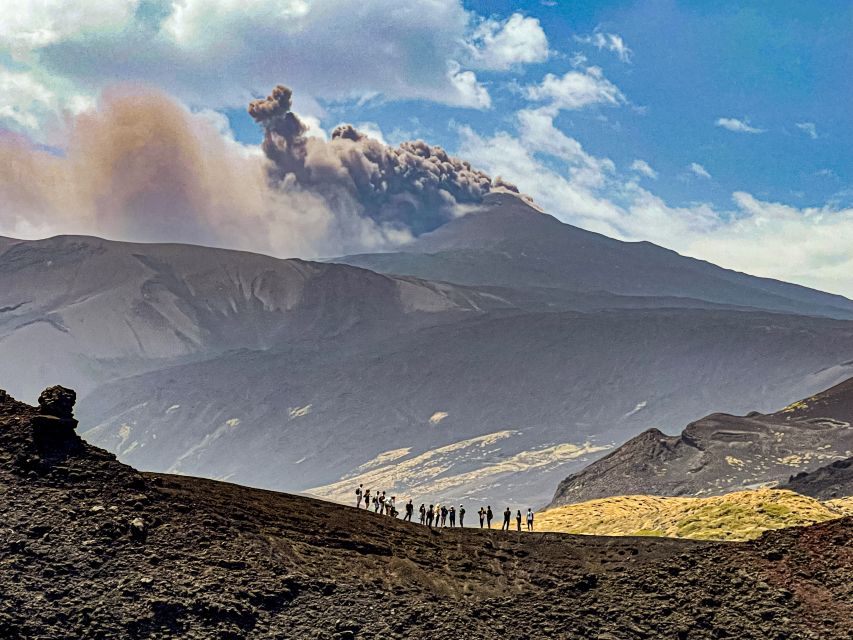
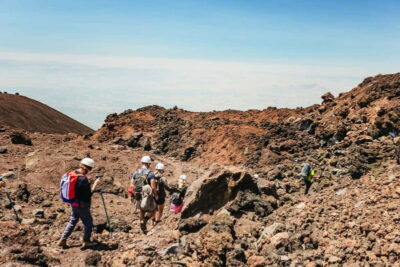
Craters, lava, and sea views in three hours. This guided trek on Etna’s north side takes you from Piano Provenzana toward summit craters linked to the 2002 eruption, with lava streams, eruptive fractures, and dramatic views toward the Calabrian Coast.
I love the mix of forest walking and sharp volcanic features in a single route. I also love the way the hike turns big scenery into clear cause-and-effect, including what the 2002 flow destroyed and the smaller cinder-cone features called Hornitos.
One drawback: it is not a casual stroll. The volcanic soil can be inconsistent, and walking near crater edges can cause dizziness, so it is a tough fit for people prone to vertigo or fear of heights.
In This Review
- Key highlights that make this Etna trek worth it
- Why the Etna north-side 2002 craters hike feels special
- Getting to Chiosco Bar Mareneve, and what to expect when you arrive
- The 3-hour route from Piano Provenzana toward the summit craters
- Hotel dell Betulle, lava evidence, and the Hornitos you climb toward
- At the crater edge: views that make the volcano feel close
- Guides like Daniele, Vincenzo, and Niko make the trek
- What to bring (and rent) so you are comfortable on volcanic ground
- Price and value: is $41 fair for this Etna experience?
- Who should book this trek, and who should skip it
- Should you book Etna craters from the 2002 eruption trek?
- FAQ
- Where is the meeting point for the Etna craters trek?
- How long is the trek?
- What extra costs should I plan for besides the tour price?
- Are trekking sticks included?
- What should I bring and what is not allowed?
- Is the trek suitable for kids?
Key highlights that make this Etna trek worth it
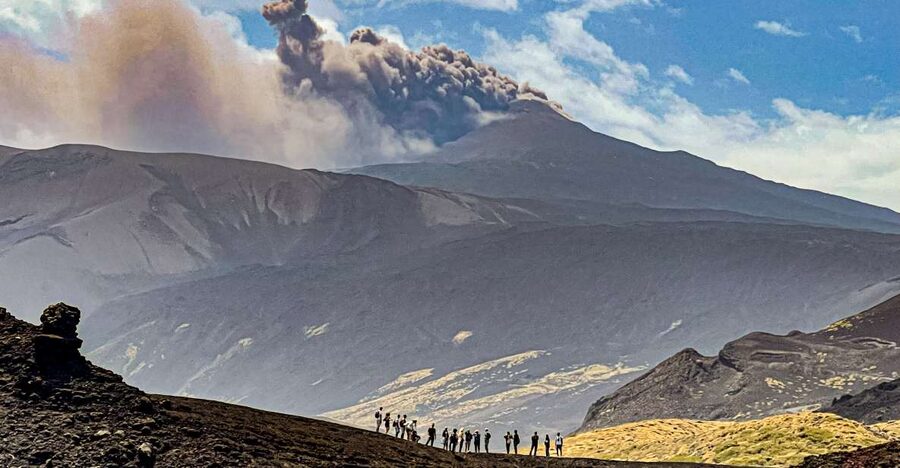
- 2002 eruption crater views from the summit area of the north side
- Hornitos and cinder cones that show how the volcano built land over time
- Stops tied to specific evidence, like the ruins of the Hotel dell Betulle
- Lava streams and eruptive fractures you can actually see up close
- Guides with a teaching style, often fun and story-driven, not just facts
- Smaller-feeling experience away from the busiest tourist clusters
Why the Etna north-side 2002 craters hike feels special
Etna is famous for big eruptions, but this trek focuses on the type of geology that makes the mountain feel personal. You are walking on the north side through places shaped by eruptions over time, not just admiring the volcano from far away. The route is designed to help you understand how the volcano breaks the surface, then how it changes again.
What makes it especially satisfying is that you get both scale and detail. You see massive crater areas and a view that connects inland smoke and rock to the distant sea. Then you step into quieter pockets where a single feature, like a fracture line or a cinder cone, tells a whole mini-story.
Also, the pacing is built for learning. You will have time to stop, look, and ask questions, and you do not just move from photo spot to photo spot. That matters because volcanic terrain is confusing if you only look briefly.
Other Mount Etna tours in Mount Etna that earned their own write-up.
- Mount Etna: Guided Volcano Summit Hiking Tour with Cable Car
★ 4.7 · 3,784 reviews - Catania: Mount Etna Trekking Trip off the Tourist Path
★ 4.9 · 1,351 reviews - Mount Etna: Summit Trek with Cable Car and snack included
★ 4.7 · 278 reviews - Mount Etna: Half-Day Guided Tour and Hike
★ 4.4 · 264 reviews
Getting to Chiosco Bar Mareneve, and what to expect when you arrive
Meet at Chiosco Bar Mareneve in the lower chairlift parking area. This is important: it is not Chiosco Bar Etna Nord, which sits in the lower parking lot too. You want the second building in that parking area.
Bring a little patience for the parking setup. You will pay a 3 euro parking ticket after the excursion, so you do not need to rush to handle it before the trek.
Timing-wise, the trek runs for about 3 hours, with starting times depending on availability. If you like to plan tightly, double-check your exact start time after booking.
One practical thing: you are responsible for getting yourself to the meeting point. There is no transport service from your accommodation included, so factor in a bus, car, taxi, or pre-arranged ride.
The 3-hour route from Piano Provenzana toward the summit craters
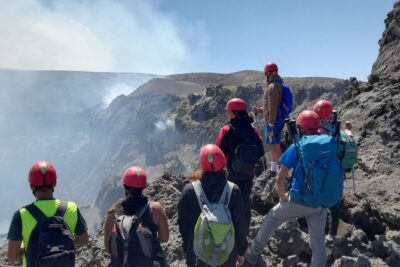
The trek starts along a dirt road that leads from Piano Provenzana up to the summit crater area. Expect a steady walking climb, plus stops for explanations. The walking time is short on paper, but the ground is volcanic, so you should still treat it like a real hike.
As you go up, the terrain shifts from more regular dirt paths into more fractured volcanic ground. That is part of the point. You will be able to connect what you see on the surface with how eruptions carve and rebuild the mountain.
You also get a key “big moment” early: a stop connected to the Hotel dell Betulle ruins, the only visible structure from the 2002 lava flow. It works as a landmark for the whole story of that eruption, because you can stand there and realize that this is not just rock you are seeing, it is an actual trace of destruction.
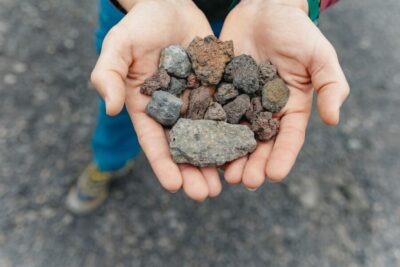
After that, the route keeps building the picture. You will visit and study multiple volcanic morphologies linked to eruptions on the north side, with the flank eruptions leaving some of the clearest evidence, including the last event that threatened the city of Linguaglossa.
Hotel dell Betulle, lava evidence, and the Hornitos you climb toward
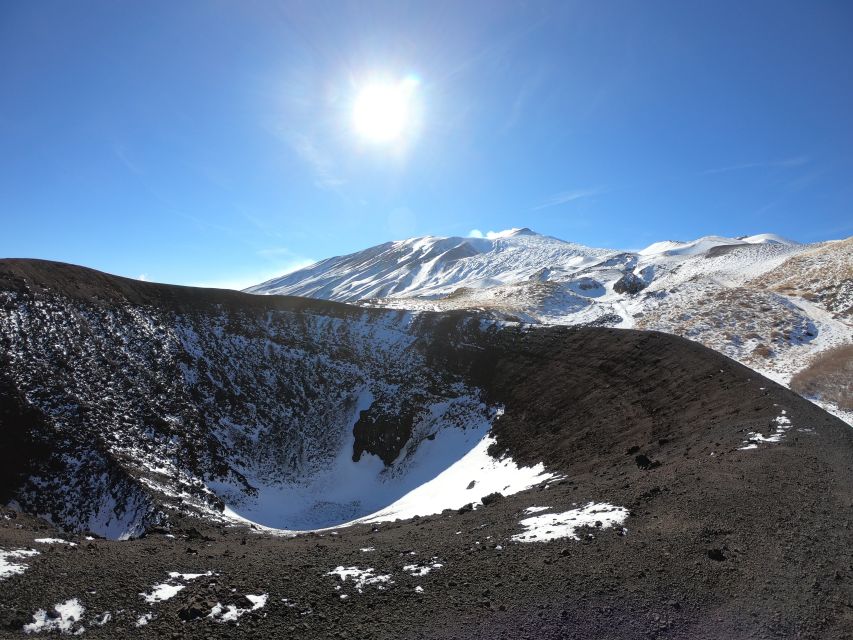
This is where the hike turns from view-based to science-based in a way that still feels outdoorsy. The stop at the Hotel dell Betulle ruins gives you a clear anchor point for the 2002 story, and the guide uses the surrounding features to explain how those flows and fractures formed.
Then you move into the “terrain detective” part of the trek. The route has you look at volcanic forms connected to eruptive activity over time on the north side. Instead of seeing a single eruption in isolation, you see layers of changes, which is what Etna does best.
A highlight is the structures called Hornitos, meaning small ovens. You will study them and then head up along the cinder cones. This part matters because it helps you grasp how volcanic materials build shape during an eruption. Hornitos are not just pretty, they are clues for how gas and lava moved and how the mountain deposited material.
You will also notice how the route weaves through areas that feel both wild and readable, like a living diagram. If you enjoy geology, it feels satisfying. If you do not, it still helps you connect the dots instead of just taking pictures.
At the crater edge: views that make the volcano feel close
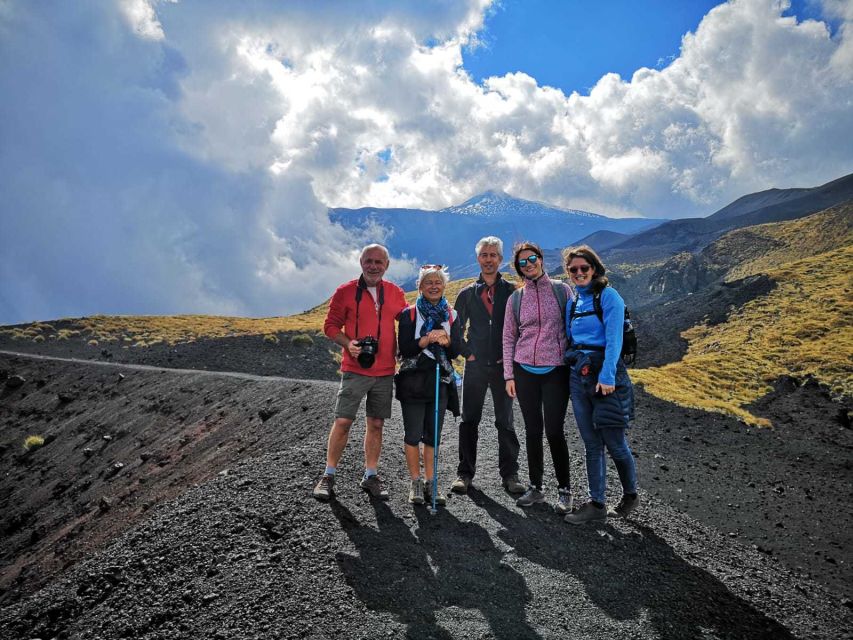
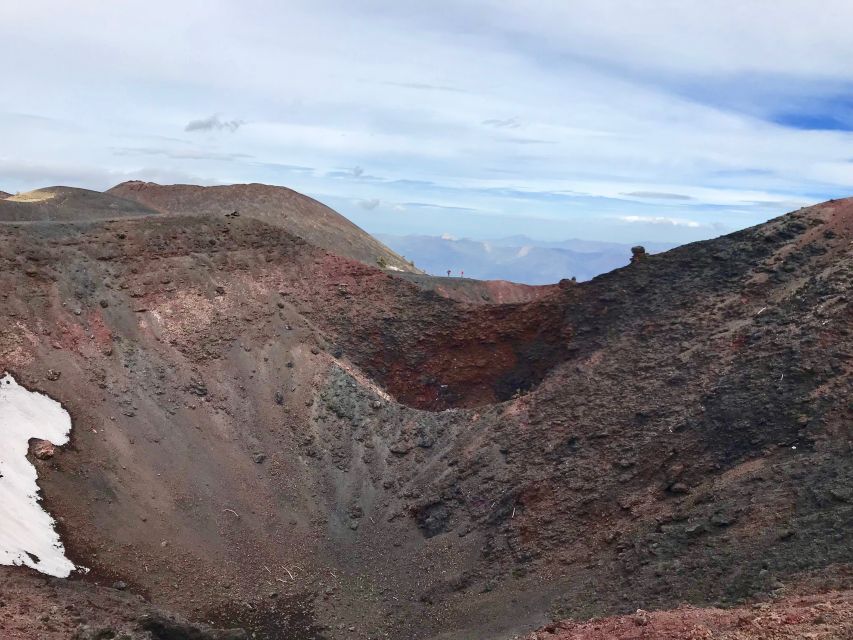
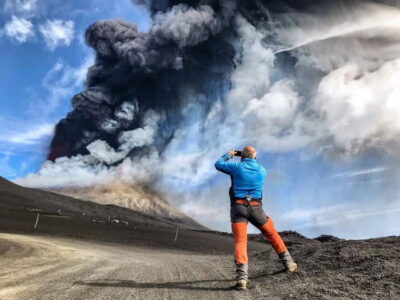
Once you reach the summit area, you get the payoff: looking over the edge of the craters. You will also experience that “up close” feeling that you cannot get from a roadside viewpoint. The sheer scale hits harder when you are at walking distance from the features.
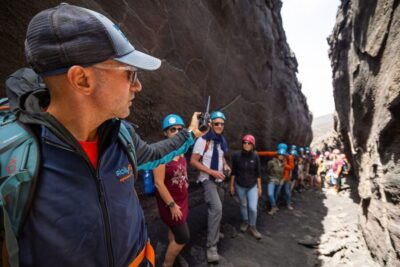
It is also the part that requires your attention. The route includes ascent, crater-edge walking, and a descent through a sandy channel on the way back. If you are susceptible to dizziness, this is not the time to push through discomfort.
After you look over the craters, you go down inside a sandy channel to return toward the starting point. That descent is usually the moment where you feel the ground under your feet the most, because volcanic sand and loose material can change footing quickly.
If you have balance issues, or you do not like exposure, you should seriously reconsider this specific route. The operator lists fear of heights, vertigo, and several medical conditions as not suitable, and crater edge walking is the reason why.
Guides like Daniele, Vincenzo, and Niko make the trek
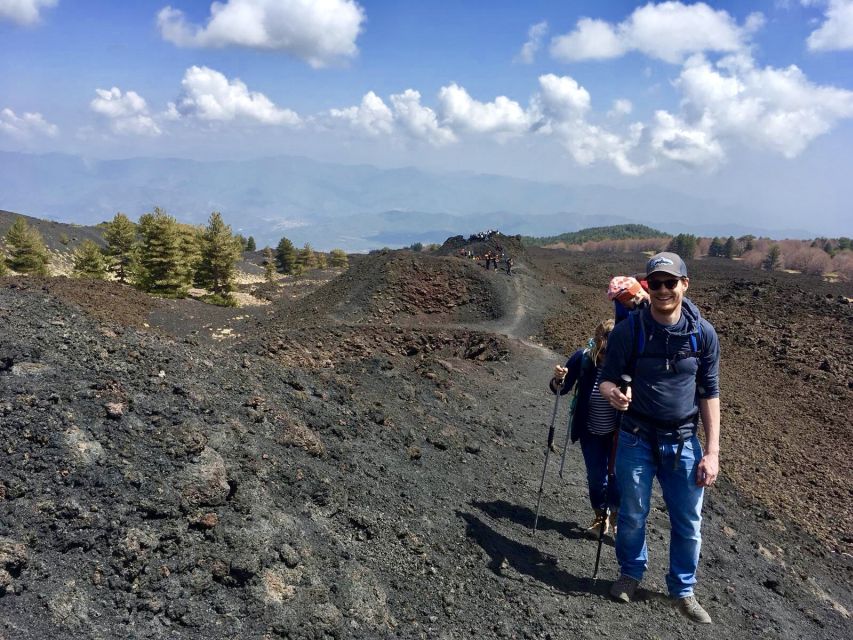
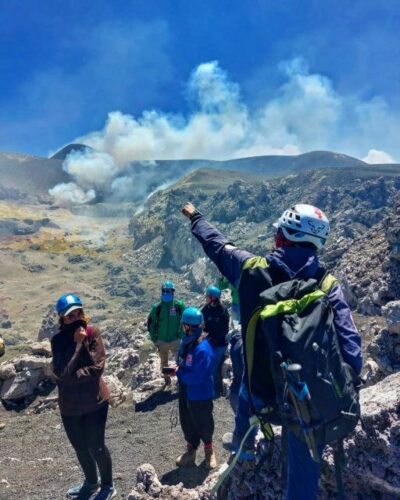
This hike lives or dies by the guide, and the best part here is how many guides seem to mix solid explanations with real energy. The names that show up in strong feedback include Daniele, Vincenzo, and Niko, and their common thread is clear teaching and a focus on safety.
You will likely notice how guides explain what you are seeing in the moment. Some guides also add personal elements, like photos or videos from the real 2002 event, which makes it easier to understand what caused the current terrain. It is a smart way to turn the crater features into a story you remember.
There is also a practical side to guide quality. One standout detail in past experiences is that guides show up prepared for minor problems, like forgetting a layer. That does not mean you should pack lightly, but it does hint at how seriously they take weather and comfort on the ground.
In short, the guide is doing two jobs at once: translating the volcano into understandable pieces, and keeping the group moving safely across uneven ground.
Pinned to the same map of Mount Etna, more hikes and treks.
What to bring (and rent) so you are comfortable on volcanic ground
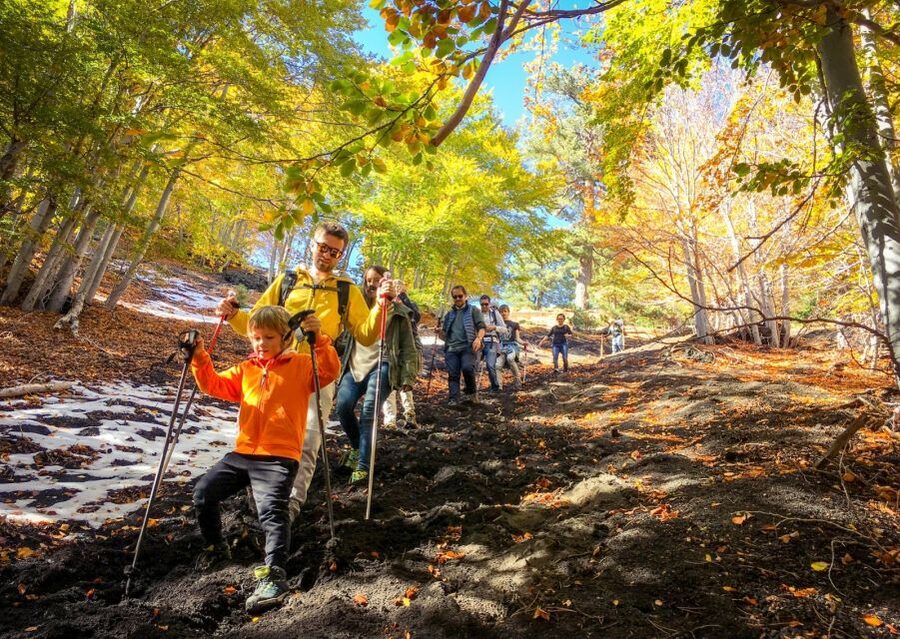
Start with footwear. Trekking shoes are not included, but you can rent them on site at authorized rentals for 5 euros per pair. This is not a small detail. The operator notes that without adequate shoes, you are not covered by insurance. So if you are tempted to wear worn sneakers, do not.
Bring a windbreaker even if the day looks calm. Etna can be breezy, and the hike includes exposed summit areas. Sunglasses and sunscreen are worth it because you are walking under strong sun in open terrain.
Pack water and snacks. Snacks and bottled water are not included, and you will want something simple for the pauses. A daypack helps you keep your hands free on the rougher parts.
Dress in comfortable layers. The tour lists a jacket, comfortable clothes, and weather-appropriate gear. Also note the rules: high-heeled shoes, sandals or flip flops are not allowed, and luggage or large bags are not allowed either.
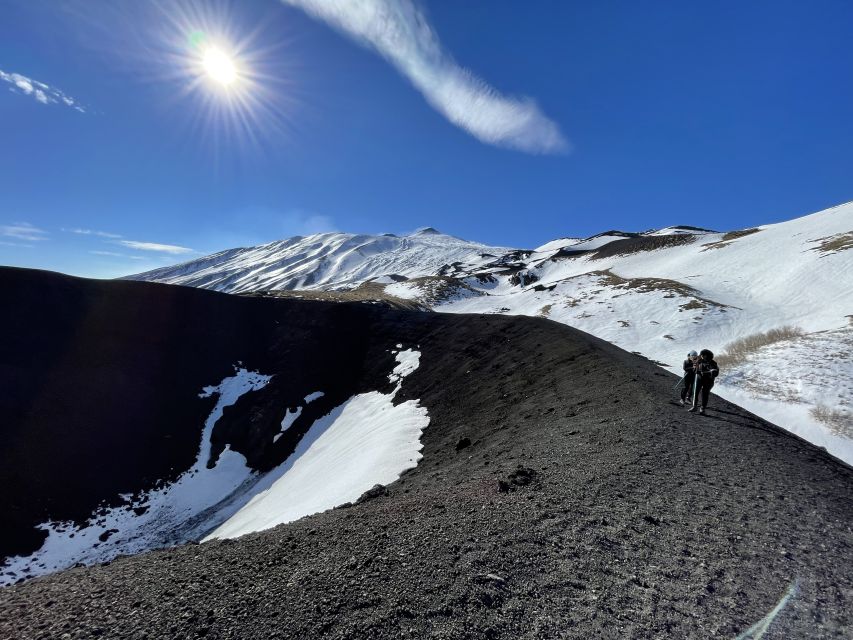
Cold-season hikers should plan for snow gear. During winter months (December, January, February, and March), snowshoes can be rented on site for 12 euros per person.
Gloves and hats are especially recommended in winter, spring, and autumn, and the tour says they are not included. Bring your own if you tend to get cold.
Price and value: is $41 fair for this Etna experience?
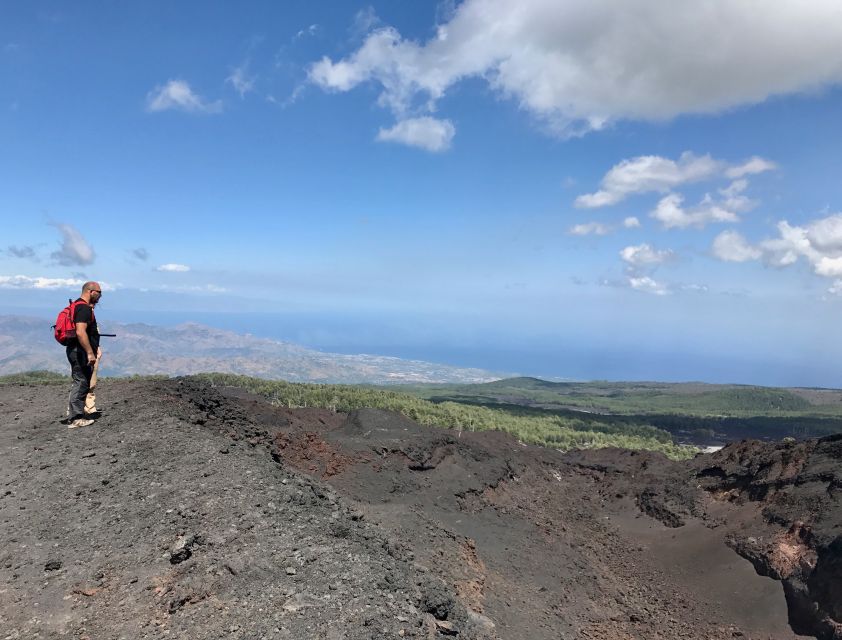
At $41 per person, this trek is priced like an activity you do for access plus interpretation, not just for a view. What you get for that cost is an official volcano guide and insurance in case of accidents.
What you do not get is the “extras that add up” on a hike. Transport to the starting point is not included, and you also need to budget for a few on-the-ground items if you do not already have them:
- Parking ticket: 3 euros for the whole day, paid after the excursion
- Footwear rental: 5 euros per pair if you need to rent trekking shoes
- Snowshoes in winter: 12 euros per person (when applicable)
If you show up already prepared with good shoes, layers, water, and snacks, the trip can feel like strong value for three hours with an official guide. If you have to rent shoes and you arrive without winter protection, your total will creep upward fast, and you should factor that in before you book.
One more value note: this trek is positioned as a way to see the eruption products on the north side while avoiding large groups. Even if your group size ends up moderate, the design and time on the ground can feel more personal than the quickest sightseeing options.
Who should book this trek, and who should skip it
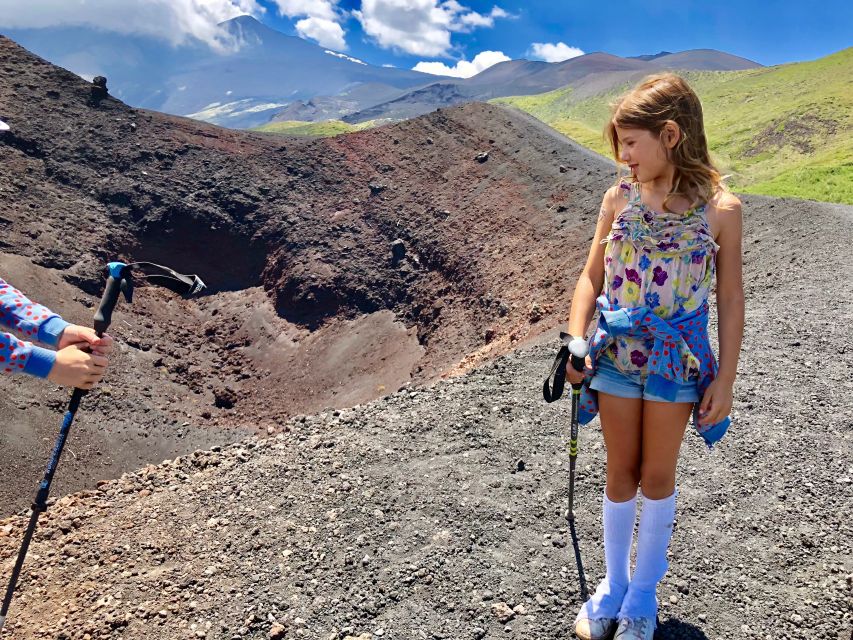
This is a good fit if you want an active, educational walk on Etna with real crater proximity and specific features tied to the 2002 eruption. If you enjoy geology, or you just like learning why mountains look the way they do, you will probably enjoy the stop-by-stop explanations.
It also suits people who can handle uneven surfaces and a moderate climb. The operator says the trek is for hikers with medium training. It is not recommended for people who do not do regular physical activity.
Skip it if any of these apply:
- You cannot manage walking on unstable volcanic soil
- You get dizzy easily at crater edges or hate heights
- You have medical conditions listed as not suitable (like heart problems, respiratory issues, epilepsy, or mobility limits)
- You are under 6 years old, pregnant, or have back problems
If you want a softer Etna outing, you might consider a different hike category. This one is short, but it is not flat.
Should you book Etna craters from the 2002 eruption trek?
Book it if you want a 3-hour Etna experience that mixes forest walking, lava evidence, and crater views, guided by an official volcano specialist with a teaching style that feels friendly. The price is reasonable, especially if you already have proper shoes and a windproof layer.
Skip it if you are not confident on uneven ground, if crater-edge walking makes you uneasy, or if your health limits match the tour’s not-suitable list. Also be realistic about weather: the route can vary based on environmental or volcanic conditions, and wind at higher points can make you feel colder than expected.
If you are a planner, do the smart prep: rent boots early if needed, pack a windbreaker, bring water and snacks, and arrive ready to walk. When you do that, this trek gives you something most Etna stops cannot, a sense of how the volcano shaped the terrain you are standing on.
FAQ
Where is the meeting point for the Etna craters trek?
Meet at Chiosco Bar Mareneve, not Chiosco Bar Etna Nord. It is in the lower chairlift parking area, and it is the second house among the four present.
How long is the trek?
The duration is about 3 hours. Starting times vary based on availability.
What extra costs should I plan for besides the tour price?
You will pay a 3 euro parking ticket for the whole day after the excursion. Trekking shoes can be rented on site for 5 euros per pair, and snowshoes can be rented in winter months for 12 euros per person.
Are trekking sticks included?
No. Trekking sticks are not included.
What should I bring and what is not allowed?
Bring a windbreaker, hiking shoes, sunscreen, sunglasses, water, snacks, and weather-appropriate layers. High-heeled shoes, sandals or flip flops, baby strollers, and luggage or large bags are not allowed.
Is the trek suitable for kids?
The trek is not suitable for children under 6 years old. It is also not recommended for certain groups listed by the operator, including pregnant women and people with specific medical conditions.
Keep Comparing Hikes and Treks in Mount Etna
Beside This One, Mount Etna Tours in Mount Etna
Not quite the day you had in mind? The rest of our Mount Etna write-ups sit below
- From Catania: Mount Etna Half-Day Tour and Wine Experience★ 4.5 · 214 reviews
- Etna: Craters of the 2002 Eruption Trekking Experience★ 4.8 · 218 reviews
- Mount Etna: Half-Day Guided Tour and Hike★ 4.4 · 264 reviews
- Mount Etna: Summit Trek with Cable Car and snack included★ 4.7 · 278 reviews
- Catania: Mount Etna Trekking Trip off the Tourist Path★ 4.9 · 1,351 reviews
- Mount Etna: Guided Volcano Summit Hiking Tour with Cable Car★ 4.7 · 3,784 reviews
Mount Etna Tours, top to bottom.
 ★ 4.8Catania: Mount Etna Morning or Sunset Day Trip with TastingFrom $704,028 reviews
 ★ 4.7Mount Etna: Guided Volcano Summit Hiking Tour with Cable CarFrom $1243,784 reviews
 ★ 4.8Catania: Sunset Jeep Tour of Mount Etna and Lava Flow CavesFrom $712,113 reviews
 ★ 4.7Mount Etna: Trek to 3000m with cable car and jeepFrom $621,978 reviews
 ★ 4.8Mount Etna: Summit Crater Trek with Cable CarFrom $771,875 reviews
 ★ 4.8Sicily: Etna and Alcantara Gorges Full-Day Tour with LunchFrom $1051,766 reviews
 ★ 4.3Mount Etna: Roundtrip Cable Car and 4×4 Bus TicketFrom $971,602 reviews
 ★ 4.7Etna Volcano: South Side Guided Summit HikeFrom $671,545 reviews
Filed under