
Reviewed · POMPEII ARCHAEOLOGICAL SITE
Pompeii: Guided Walking Tour with Entrance Ticket
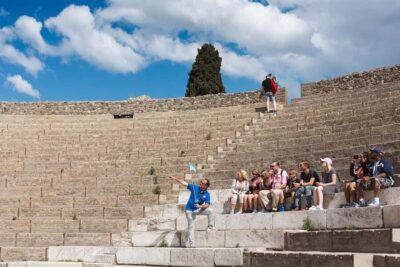
Pompeii hits you like a time machine. I like the skip-the-ticket-line setup because it protects your limited time inside the ruins, and I like having headsets so you actually catch the story while you walk. Add a real guide who can keep the pace moving, and Pompeii stops feeling like a museum you struggle to interpret.
One thing to plan for: the meeting spot can be confusing if you arrive late or hunt around without a clear sign. I’d treat the 10:50am start as firm and get there early, just in case your group has to wait a bit.
In This Review
- Key highlights worth centering your expectations
- Pompeii in 2 Hours, the route you can actually finish
- Meeting at Hotel Vittoria Garden at 10:50am, then into Pompeii
- Forum and everyday power, where Roman life made decisions
- Thermal Baths, Roman hygiene with social spillover
- Lupanare, the Pompeii site that tells you the whole story
- Streets and shop signs, commerce and routine in 79 AD
- How your multilingual guide explains the Vesuvius moment
- Headsets and group pace, can you actually hear the guide
- Price and value, why $50 can make sense
- Practical tips so the day stays comfortable
- Who should book this Pompeii walking tour
- Should you book this tour
- FAQ
- How long is the Pompeii guided walking tour?
- Does the tour include entrance tickets to Pompeii Archaeological Site?
- What time and where is the meeting point?
- What languages are the guides available in?
- Are headsets included?
- Is the tour suitable for wheelchair users or people with mobility impairments?
- What should I bring?
Key highlights worth centering your expectations
- Skip-the-ticket-line entry keeps your 2 hours focused on the site, not paperwork.
- Entrance ticket included (valued at €20) means you are not juggling purchases mid-day.
- Headsets included help you hear the guide clearly while moving through crowds.
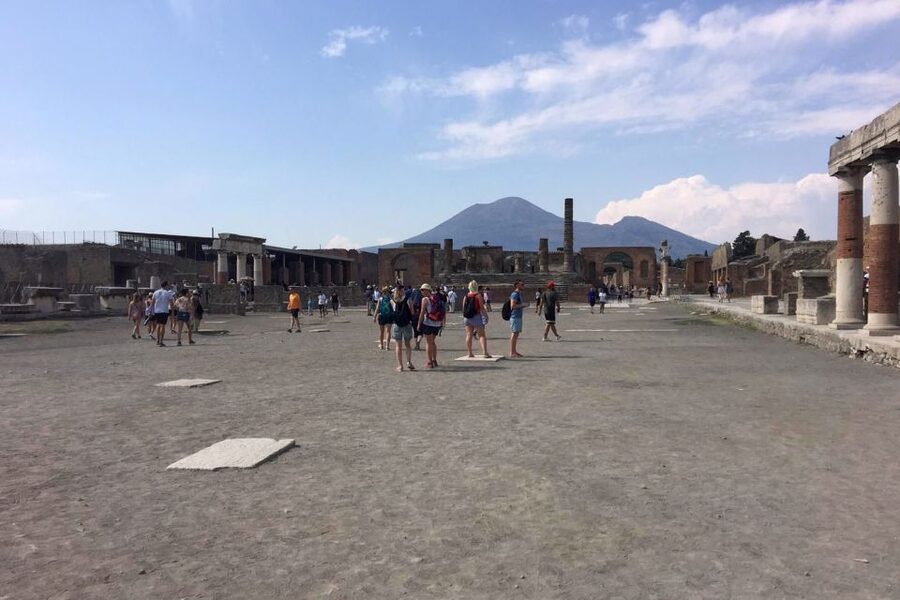
- Top Pompeii anchors like the Forum, Thermal Baths, and Lupanare give you a connected storyline.
- Multilingual live guide (English, French, Spanish, Italian) helps if you are traveling with mixed language needs.
- Short, targeted route works well for first timers who cannot spend a full day.
Pompeii in 2 Hours, the route you can actually finish
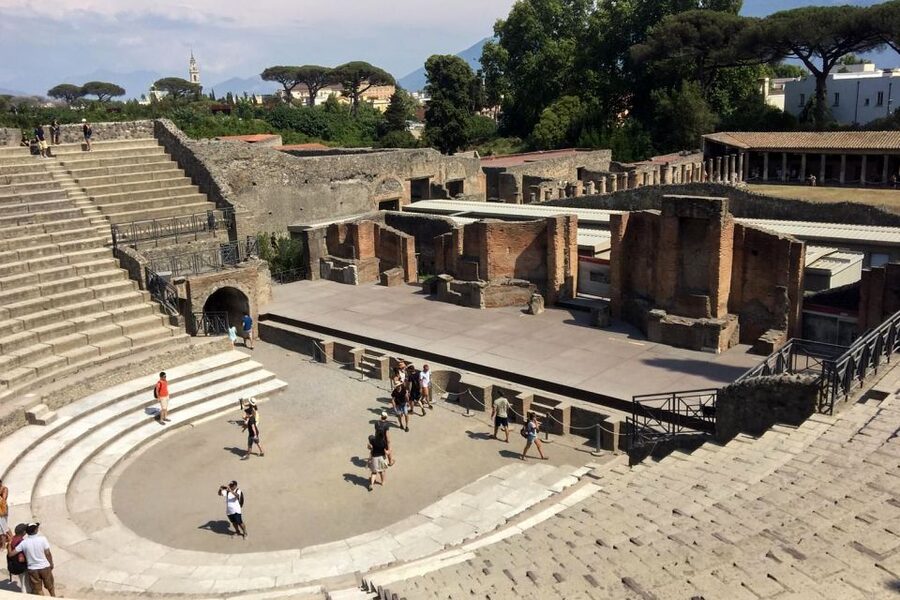
Pompeii is huge. Even though it is an open-air site, it still feels like a city with streets, blocks, and neighborhoods, not just a few dramatic columns. The nice part of this tour is that it gives you a tight route so you get the key buildings without losing your day.
A helpful detail here is how much has been uncovered. The excavation is about two-thirds complete, which is why your guide can explain what is visible now, and what still lies underfoot. In two hours, you are not trying to see everything. You are trying to understand how the town worked.
Meeting at Hotel Vittoria Garden at 10:50am, then into Pompeii
You meet at 10:50am in Pompeii, in the garden of Hotel Vittoria. It is right outside the coral shop called CELLINI, on Via Mare, 80045 Pompei. The guide will have a sign with your customers’ name, so you do not need to guess who to follow.
This matters because Pompeii entrances and nearby streets can feel crowded fast. More than once, people report trouble spotting the group, especially if they arrive near the departure time. I’d rather stand around for 5 to 10 minutes than sprint and risk missing the handoff.
Also note the tour can involve a multilingual guide. Language is listed as English, French, Spanish, Italian, but if only one participant in a specific language is booked, the language is not guaranteed. If this is a must-have for your group, I’d double-check before you go.
Forum and everyday power, where Roman life made decisions
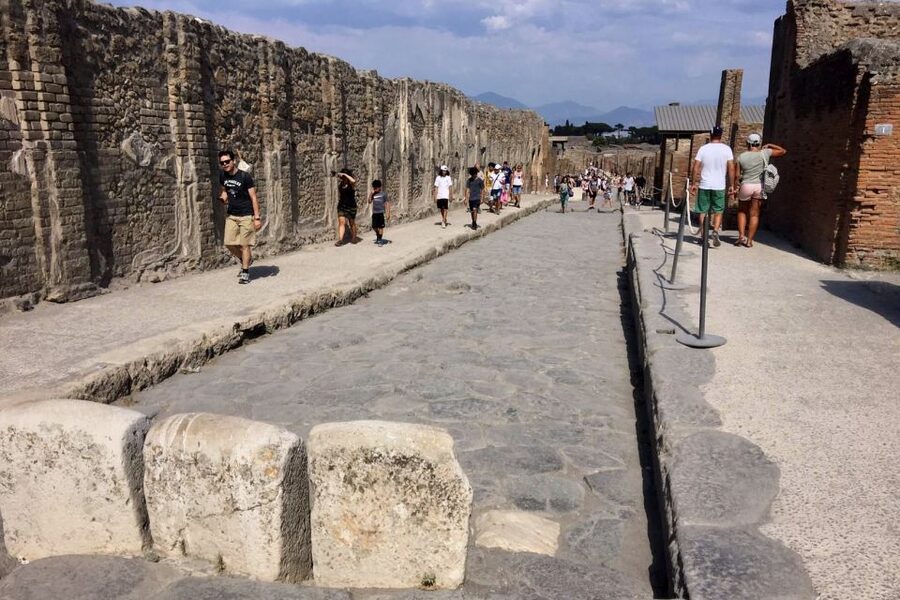
The Forum is one of the best places to start because it helps you read the city like a working community. This is where public life happens, where people gather, and where the tone of the town becomes clear. Your guide ties what you see to what people did there, not just what it looked like.
What I like about covering the Forum early is that it sets expectations. You see how public space connects to everyday life, and you stop treating Pompeii as isolated ruins. Instead, you start picturing a full routine, from commerce to politics to social life.
Thermal Baths, Roman hygiene with social spillover
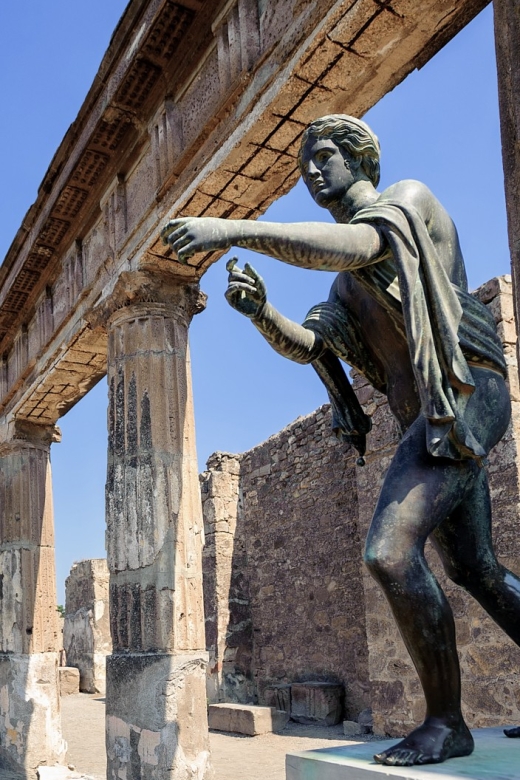
The Thermal Baths are a highlight for a reason. Bathing in Roman culture was not only about cleanliness, it was also about meeting people, chatting, and moving through a set of spaces with different roles. Seeing the layout helps you understand the flow.
With a guided walk, the baths become more than walls and tiled areas. Your guide can explain what the rooms likely meant, how locals used these spaces, and why baths were a social hub. This is one of the stops where the headsets really earn their keep, because you will be surrounded by other visitors and noise.
Lupanare, the Pompeii site that tells you the whole story
The Lupanare is one of those stops that turns Pompeii from pretty ruins into real human history. It is tied to adult entertainment, so it gives you a glimpse of the city’s darker, more complicated reality.
I appreciate this inclusion because it makes the tour feel balanced. Pompeii was a place with daily routines and public spaces, but it also had private needs and a market for them. Your guide can talk about the building’s purpose in a way that does not feel like gossip, it feels like interpretation of the evidence you are seeing.
Streets and shop signs, commerce and routine in 79 AD

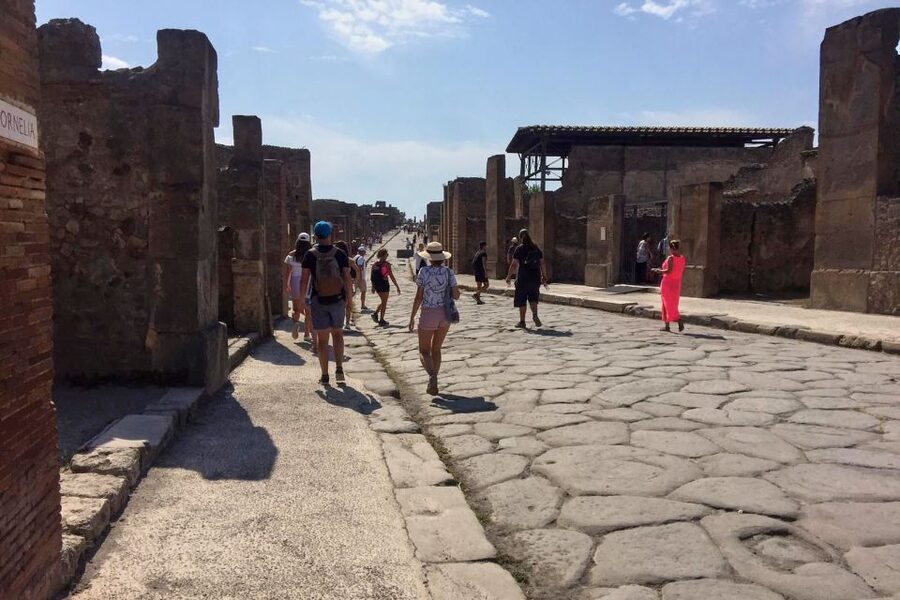
One of the most memorable moments in this tour is the section that focuses on daily life. You walk streets where you can still recognize the feel of a town center, including shop fronts with signs advertising produce. Wine is mentioned as one of the items sold.
This kind of stop works because it anchors you to the human scale. Instead of only looking at big-ticket structures, you see the everyday surfaces that shaped how people lived. It also helps you understand why the eruption was so devastating. When a city runs on routine, a sudden interruption becomes total.
Your guide’s job here is to connect those signs to what it means as a Roman town. That is where the tour becomes more than sightseeing and starts to feel like learning.
How your multilingual guide explains the Vesuvius moment
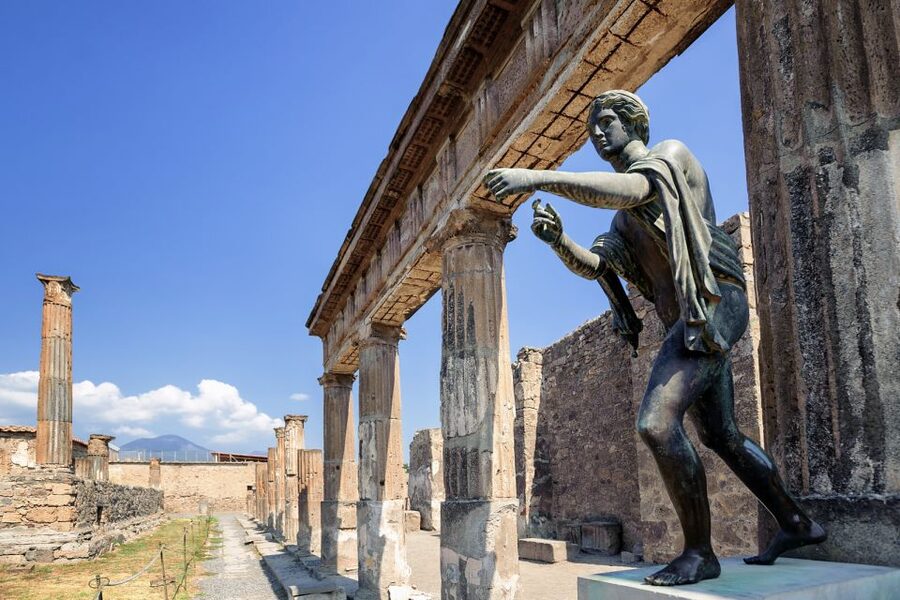
The eruption of Mount Vesuvius in 79 AD is the emotional center of Pompeii. A good guide helps you move beyond the headline and into the timeline, the town’s vulnerability, and what the ash preserved.
This is also where the tone of the tour shows. Many guides mentioned in the reviews and communications include Elisa, Salvatore, and Maria, and people often point out humor and storytelling style. It is not just facts, it is pacing and clarity. If you like guides who make you feel like you are walking with someone who loves the subject, this kind of tour tends to deliver.
If you are picking a day with weather changes, remember the tour operates in all weather conditions. That means you should dress for sun and for sudden chill, depending on what you hit.
Headsets and group pace, can you actually hear the guide
Headsets are included, and that is a big deal in Pompeii. The ruins are open-air, but noise still builds fast: tour groups, foot traffic, and people stopping for photos. Headsets help you stay synced to the guide without having to lean and lose your walking rhythm.
There is some nuance. One review notes the headsets were uncomfortable and did not sit well for their ears. Another person says the guide spoke clearly enough without needing headsets. Since the included package says headsets are part of the experience, I’d still expect them, but if you are picky about audio comfort, plan for the fact that fit can vary.
Group size and start timing can also affect the feel. Most feedback is positive, but a couple of reviews mention late starts or early confusion at the start. Once you are inside the route, the experience usually turns solid, especially if your guide keeps everyone together.
Price and value, why $50 can make sense
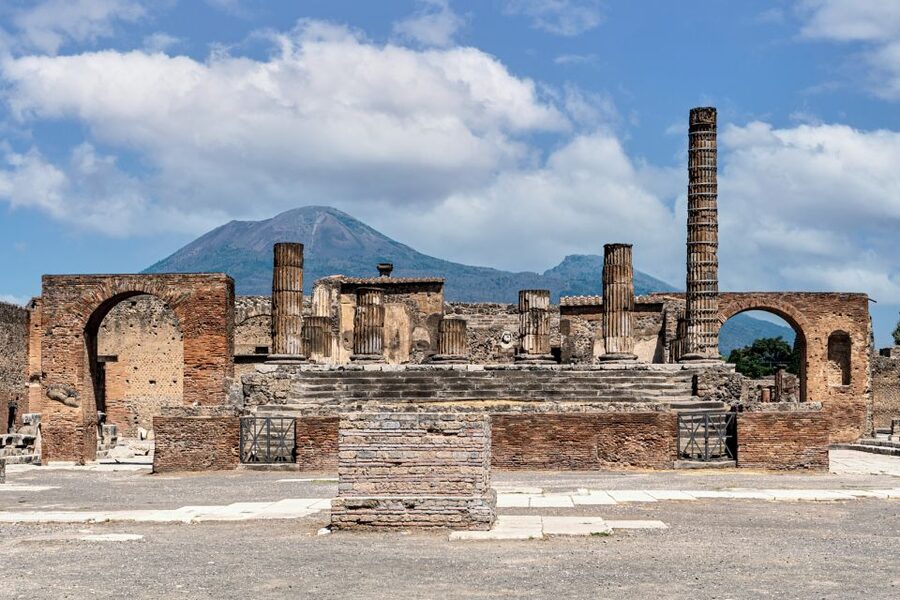
At $50 per person for a 2-hour guided walking tour, you might wonder if it is worth paying instead of doing the site on your own. Here is the simple math: the entrance ticket is included and is listed as €20. So part of your payment is the ticket, and part is the guide, plus headsets and the skip-the-ticket-line benefit.
The skip-the-ticket-line angle is not a luxury. Pompeii can be crowded, and waiting at the entrance burns your limited time. If you are doing Pompeii as part of a packed itinerary, paying to lose less time is usually the right move.
The value also comes from interpretation. Pompeii is not like a single monument where you can read everything from a brochure. The site works best with a guide who can connect building to purpose, and streets to daily habits. That is what helps you feel the “why” behind what you are seeing.
Practical tips so the day stays comfortable
Wear comfortable shoes. Pompeii walking is uneven, dusty, and full of small changes in grade. If your shoes are only good for museums, you will regret it here.
Also dress for weather. The tour runs in all conditions, so bring appropriate clothing for wind, sun, or rain. In hot months, the walk can feel intense because the ruins offer limited shade. That is not a reason to skip it, it is a reason to prepare.
If you are traveling with children, bring a passport or ID card. Reviews also note that child fare bookings require showing valid ID at the ticket office, otherwise it can lead to paying the full adult fare.
Finally, this tour is not suitable for people with mobility impairments or wheelchair users. The walking focus and site layout mean it is not set up for wheelchair access.
Who should book this Pompeii walking tour
This is a great fit if you want a fast orientation to Pompeii without turning it into a scavenger hunt. It is also a strong choice if you want the big anchors like the Forum, Thermal Baths, and Lupanare, plus a sense of daily life through shopfronts and street context.
It is also ideal if your group includes different languages. With live guidance available in English, French, Spanish, and Italian, you are more likely to all hear the core story.
If you are the type of visitor who wants a slower, more academic deep dive, you might feel a bit shortchanged by only two hours. One review points out that artifacts are mostly better explored through a museum in Naples, and that Pompeii’s “essence” is still on site even if some pieces are protected behind glass.
Should you book this tour
I’d book it if two things matter to you: time efficiency and a connected story. The included entrance ticket and the skip-the-ticket-line access are practical. The headsets and live guide support make it much easier to understand what you are seeing as a living town that stopped abruptly.
If you hate any risk of confusion at the meeting point, plan to arrive early and use the clear location description. If you need full accessibility support, skip this one since it is not suitable for mobility impairments or wheelchairs.
In short, if your goal is to get the big Pompeii highlights and understand the daily life behind them, this is a solid way to do it in two hours.
FAQ
How long is the Pompeii guided walking tour?
It lasts 2 hours.
Does the tour include entrance tickets to Pompeii Archaeological Site?
Yes. Entrance ticket to the Pompeii Archaeological Site is included, and it is listed as €20.
What time and where is the meeting point?
The meeting point is at 10:50am in Pompeii, in the garden of Hotel Vittoria, right outside the coral shop called CELLINI, Via Mare, 80045 Pompei.
What languages are the guides available in?
The tour offers live guiding in English, French, Spanish, and Italian.
Are headsets included?
Yes. Headsets are included to help you hear the guide clearly.
Is the tour suitable for wheelchair users or people with mobility impairments?
No. It is not suitable for people with mobility impairments or wheelchair users.
What should I bring?
Bring comfortable shoes and weather-appropriate clothing. Children should bring a passport or ID card.
Pompeii Archaeological Site, top to bottom.
 ★ 4.8Pompeii: Entry Ticket and Guided Tour with an ArchaeologistFrom $3519,459 reviews
 ★ 4.2Pompeii: Entry Ticket with Optional Audio GuideFrom $2612,360 reviews
 ★ 4.8Pompeii: Small Group Tour with an ArchaeologistFrom $4012,264 reviews
 ★ 4.3From Naples: Pompeii Ruins & Mount Vesuvius Day TourFrom $12011,459 reviews
 ★ 4.6From Rome: Pompeii, Amalfi Coast, and Sorrento Day TripFrom $797,031 reviews
 ★ 4.6From Rome: Pompeii, Amalfi Coast and Positano Day TripFrom $996,620 reviews
★ 5.0Pompeii Small Group Tour with an ArchaeologistFrom $356,593 reviews
★ 4.6From Rome: Pompeii, Amalfi Coast and Positano Day TripFrom $996,620 reviews
★ 5.0Pompeii Small Group Tour with an ArchaeologistFrom $356,593 reviews
 ★ 4.5Pompeii, Amalfi Coast and Positano Day Trip from RomeFrom $1016,250 reviews