

Reviewed · POMPEII ARCHAEOLOGICAL SITE
Pompeii Small Group Tour with an Archaeologist
Pompeii hits hardest with a real archaeologist. This Pompeii Small Group Tour with an Archaeologist by Askos Tours is a smart way to get inside the ruins and understand what you are looking at, not just where it is. I love that you are led by a licensed guide with an archaeological background, so the city feels human and specific.
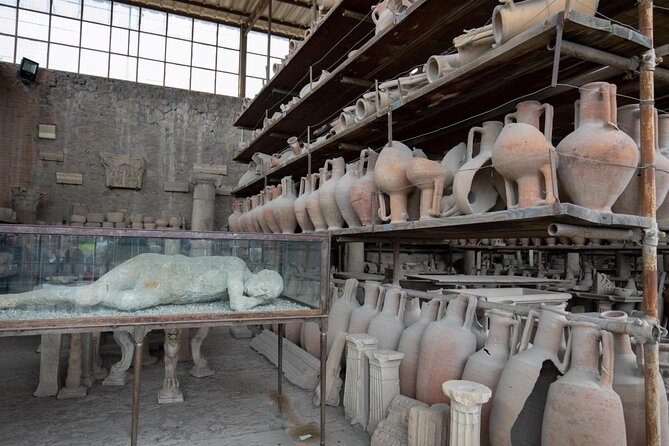
What I like most is the tight hit list. You get skip-the-line entry with the Pompeii Express ticket and you still cover major stops like the Basilica, Forum, Stabian Baths, the Lupanar, and the big theater, Teatro Grande, in about two hours. You also pause for the emotional stuff at the Granaries of the Forum, where you will see plaster casts, including details tied to the eruption such as a dog and even a tree.
The main drawback is simple: the route is active and Pompeii is rough on the feet. Expect uneven ground, steps, and ramps, and mobility scooters are not allowed, so this may not be the best plan if your walking is limited. Also, two hours means you will not see every street and corner of the park, just the strongest highlights.
In This Review
- Key Things You’ll Notice on This Pompeii Archaeologist Tour
- Enter Through Porta Marina Superiore With Skip-the-Line Momentum
- Basilica and Forum: Learn the Layout of Pompeii’s Everyday Power
- Granaries of the Forum: Plaster Casts, Marble Tables, and the Human Cost
- Walk the Main Street, Then Step Into House of Menander Luxury
- Stabian Baths and the Lupanar: Where Daily Life Gets Real
- House of the Faun and the Odeon: Pompeii’s Big-Name Homes and Public Spaces
- Teatro Grande Finale: See How Pompeii Performed for Its People
- Why the Archaeologist Guide Changes Everything
- Value Check: Is $35.67 Worth It?
- Practical Tips: Shoes, Sun, and Staying Comfortable on Uneven Ground
- Who Should Book This Pompeii Small Group Tour
- Should You Book Askos Tours for Pompeii’s Highlights?
- FAQ
- Where do I meet for the Pompeii Small Group Tour with an Archaeologist?
- How long is the tour, and is it in English?
- What’s included in the ticket price?
- Is the tour really skip-the-line?
- Is the tour suitable for people with mobility issues?
- Can I cancel and get a full refund?
Key Things You’ll Notice on This Pompeii Archaeologist Tour
- Pompeii Express skip-the-line ticket helps you start faster once you arrive
- Small group size (max 20) keeps the tour personal, with headsets for groups of 16 or more
- Granaries of the Forum includes plaster casts tied to the eruption, plus striking non-human details (like a dog and a tree)
- Stabian Baths and House of Menander show everyday life beyond the big monuments
- Lupanar brothel ruins give you a rare peek into Roman entertainment and social habits
- Teatro Grande is the finale, plus a quick look at Teatro Piccolo to frame how Pompeii staged public life
Enter Through Porta Marina Superiore With Skip-the-Line Momentum

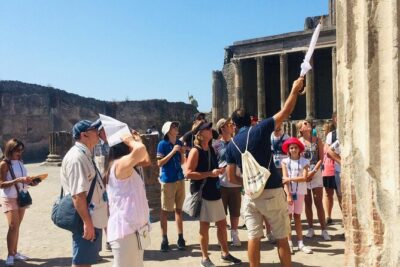
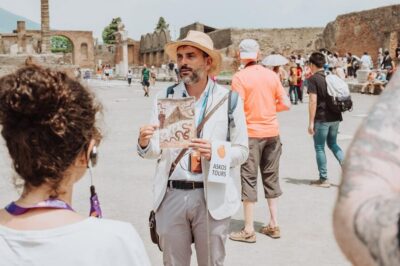
You meet your guide at Via Villa dei Misteri, 2, then head to the Pompeii Archaeological Park entrance called Porta Marina Superiore. Your guide holds an Askos Tours sign so you can spot them quickly, and you go straight into the site once you are checked in. That straight start matters, because Pompeii feels less like a museum and more like an active outdoor maze.
The tour includes the Pompeii Express entrance ticket, and that is the practical advantage here. When queues form, having your access sorted lets the guide focus on the story, not the wait. You also get guidance and assistance for the full duration, which means you are less likely to wander off track and lose time.
One small logistics note to keep in mind: the tour ends inside the ruins. That is convenient if you want to keep exploring on your own afterward, but it also means you should pay attention to where you finish. If you prefer a clean exit plan, ask your guide how to get out at the end before the tour wraps up.
Our reviewers also walked through other Pompeii site visits in Pompeii.
- Pompeii Small Group Tour with an Archaeologist
★ 5.0 · 6,593 reviews - Discover the Ancient Ruins of Pompeii: Day Trip from Rome
★ 3.5 · 2,247 reviews - Pompeii and Herculaneum Small Group Tour with an Archaeologist
★ 5.0 · 1,350 reviews - Skip the Line Guided Tour of Pompeii led by an Archaeologist
★ 5.0 · 703 reviews
Basilica and Forum: Learn the Layout of Pompeii’s Everyday Power
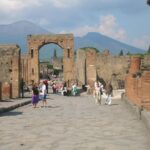
Your first real ruins moment is the Basilica. This was not just a church-like building. It worked as an open portico space where merchants and other business happened under shelter, which helps you picture how Pompeii functioned day to day. Standing there now, it is easier to understand why people would gather in that exact kind of sheltered public space.
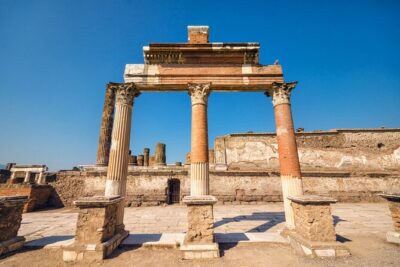
Next comes the Foro de Pompeya, the city’s ancient main square. This is where the city’s “center of gravity” was. The Forum is one of those places where a map helps, but a guide helps more, because you start seeing relationships between buildings and what activities likely took place.
If you like context, this is where it clicks. A guide with an archaeology background can explain why certain spaces were built the way they were and what that implies about wealth, jobs, and daily routines. In real Pompeii, the walls do not explain themselves, so having someone translate the architecture into daily life is the big win for your time.
Granaries of the Forum: Plaster Casts, Marble Tables, and the Human Cost
After the square, you move to the Granaries of the Forum. This stop is built for contrast. On the surface, it sounds like storage. In practice, it becomes one of the most powerful pauses of the tour because it is where you will see plaster casts of people affected by the eruption.
You also get other details here that make the scene feel specific rather than generic. The tour includes marble tables and fountain elements that once adorned entrances of houses. And yes, you will see casts that include a dog and a tree, which is a grim reminder that Pompeii did not affect only people. It also hit animals and the living world around them.
I think this is one of the best uses of a 2-hour slot. Pompeii can turn into a highlight reel if you rush. The Granaries give you a moment where the site becomes more than architecture and turns into a human tragedy with physical evidence you can actually stand near.
Walk the Main Street, Then Step Into House of Menander Luxury
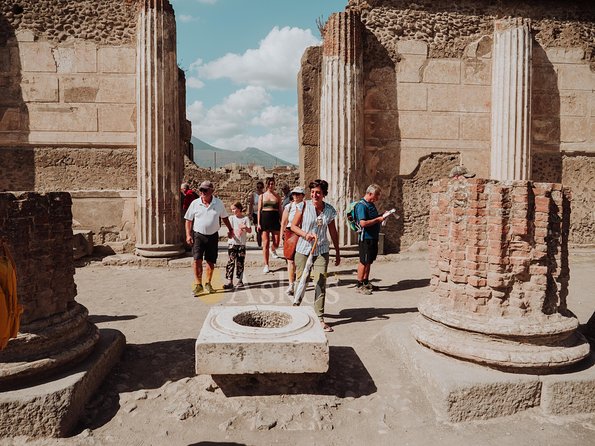
From the Granaries, the tour shifts into a walk along the main street of Pompeii. This is a useful move because it breaks up the heavy monument stops and helps you build a mental route through the city. You start noticing how the streets connect what you just saw at the Forum level to the wealth and daily life farther in.
Then you reach the House of Menander. This is one of Pompeii’s richest and most impressive private residences, especially for architecture, decoration, and the kind of contents that help you understand the taste and status of the owners. It also works well as a change of pace. Instead of big public spaces, you get a glimpse into rooms designed for display, comfort, and social standing.
Here is the practical value: when you see a well preserved house with decoration and layout, you stop thinking of Pompeii as a single “thing.” You start seeing it as a city made of many different lives, from public commerce and politics to private rooms and displays. A good guide will help you connect the dots so the house does not just feel like pretty ruins.
Stabian Baths and the Lupanar: Where Daily Life Gets Real

Next, you visit the Stabian Baths (Terme Stabiane). These cover a vast area and are described as the oldest thermal complex in the city. That matters because baths were not just about getting clean. They were social hubs, workout spaces, and public meeting points for people of different ranks.
If you have ever wondered what Romans did for fun besides politics, baths are a solid answer. The tour gives you a structured way to see why that mattered, and why bath architecture is worth attention even if you are not a “bath person” in real life.
Then comes the Lupanar, the famous brothel in Pompeii. This is likely the stop you either find fascinating, uncomfortable, or both. Either way, it is one of the most talked about sites for a reason: it shows Roman life in a way that you usually do not get in a quick highlights walk. You get to peek into the most famous brothel ruins in the city, which helps you understand that Pompeii was a full, messy human place with the same range of needs and behaviors you would see anywhere.
A guide helps here most when they keep it grounded. The point is not shock value. It is context for how public and private life blended, including commerce, entertainment, and social realities.
House of the Faun and the Odeon: Pompeii’s Big-Name Homes and Public Spaces
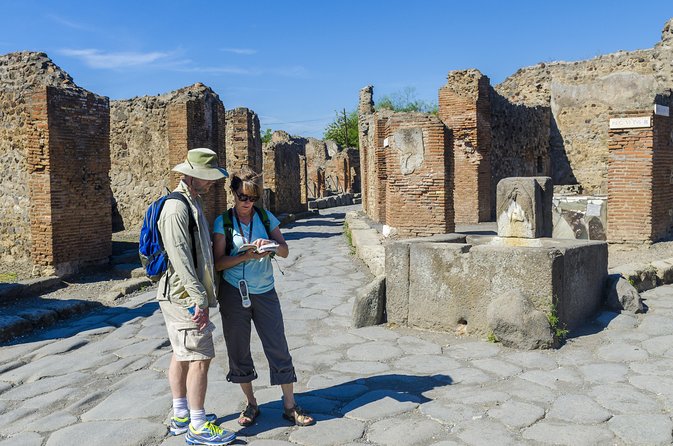
After the Lupanar, you head to the House of the Faun. This one is a top-tier residence, one of the largest and most impressive private homes in Pompeii. When you step in, the size alone helps you understand the difference between living for survival and living for status.
The tour then includes a brief stop at the Odeon. This is a smaller theater space compared to Pompeii’s giants, but it helps you see how entertainment and public gatherings were structured. Even a short pause here adds meaning because it gives you another reference point, so Teatro Grande does not feel like it appears out of nowhere.




Teatro Grande Finale: See How Pompeii Performed for Its People
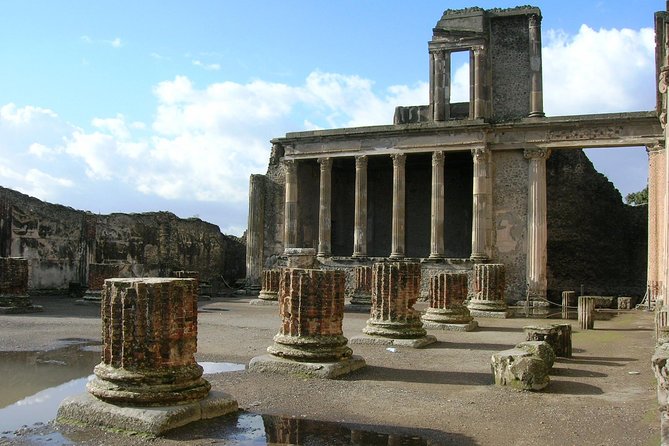
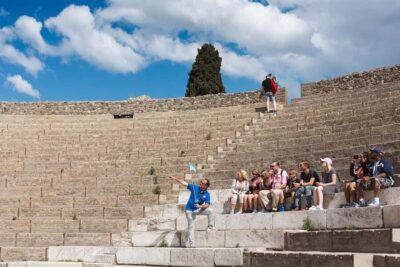
You end with the city’s largest theater, Teatro Grande. This is the payoff for your earlier city tour, because theaters explain how people gathered, how culture traveled, and how public life worked at scale. Pompeii was destroyed, but these structures still show how the city wanted to be seen and how it wanted to spend its free time.
You also get a brief look at Teatro Piccolo earlier in the wrap-up sequence. That quick contrast helps you understand that Pompeii had multiple performance spaces, not just one big stage. It also makes the final stop feel more earned, like you are moving from smaller rooms of entertainment to the main public theater moment.
If you like a clear end point, Teatro Grande does that well. It is easy to picture the noise of crowds and the energy of performances in a place that now feels eerily quiet.
Why the Archaeologist Guide Changes Everything
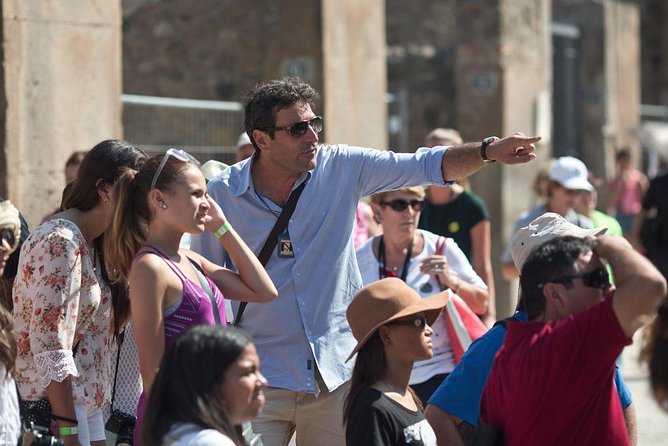
A guided Pompeii tour is not just about seeing more stops. It is about recognizing what you are looking at. Without context, many buildings look similar: doorways, stone bases, empty rooms, and partial walls. With an archaeologist guide, you learn what each space likely was used for and why it was built that way.
I also like that this tour is led by someone with an archaeological background, not just a fast patter of facts. You will hear stories about the people who lived in Pompeii and their fates, including the eruption evidence at the Granaries. That emotional layer matters because Pompeii is not only an ancient city, it is a site where time froze. The plaster casts are a strong reminder, and the guide helps you place them in the bigger picture.
The pacing is another big deal. Several guides named in the tour experiences you provided, like Teresa, Alfredo, Alessandra, Paolo, Vincenzo, Antonio, Julia, and Amadeo, are praised for storytelling, clarity, humor, and staying patient with questions. Not every guide will be exactly the same, but the common thread is that the best tours feel like a conversation with a person who cares about the site.
Value Check: Is $35.67 Worth It?
At about $35.67 per person for roughly two hours, this is not a budget bargain, but it is also not an inflated “pay for a brand” kind of price. Here is where the value comes from:
- The Pompeii Express skip-the-line ticket is included, which is often where tours win back time
- You get a licensed guide with archaeological background, which turns ruins into meaning
- Small group size (max 20) keeps you from getting lost in a crowd
- Headsets for groups of 16 or more help you follow without constant whisper shouting
- The route covers big named sites, including the Forum area, major houses, baths, the brothel ruins, and Teatro Grande
To me, this is a good buy if you want the strongest Pompeii highlights without trying to build your own plan from scratch. It is also a good pick if you are short on time, because it is designed to be efficient.
If you want to spend hours inside just one or two houses, or you have deep interest in a narrow theme, then a longer tour or private option might suit you better. But for a first visit, this price to coverage ratio looks fair.
Practical Tips: Shoes, Sun, and Staying Comfortable on Uneven Ground
Pompeii is outdoors. There is limited shade in many areas, and you will walk over uneven surfaces. The tour itself is built for a standard walking pace, so come ready.
I recommend you do three things before you even leave your hotel:
- Wear comfortable shoes you trust on uneven ground
- Bring sunscreen and sunglasses if you are visiting in summer
- Bring a small bottle of water, because the walk adds up
Also, service animals are allowed, and the tour accommodates many people, but mobility scooters are not allowed. The tour is not recommended if you have mobility issues or impairments because of steps and ramps and some steeper climbs. If that is you, it is worth asking for a more suitable private tour option before you buy.
If you are traveling with kids, they must be accompanied by an adult. For under 18 travelers, bring an ID card or passport as requested.
Who Should Book This Pompeii Small Group Tour
This tour is a great fit if you:
- Want a first-time Pompeii plan that hits the biggest sites
- Like learning from an archaeologist rather than only from signage
- Prefer a group tour that still feels human, with a max size of 20
- Want both public monuments and the more personal side of Pompeii, including the baths and the Lupanar
It may be less ideal if you:
- Need step-free access or avoid steep ramps
- Want lots of free roaming time, because the route is structured
- Are expecting the kind of slow museum visit where you linger for a long time in every room
If you plan to explore after the tour, this format works nicely because it gets your bearings fast. And since the tour ends inside the ruins, I suggest asking your guide what exit or next area makes the most sense based on what you still want to see.
Should You Book Askos Tours for Pompeii’s Highlights?
If you want Pompeii without the guesswork, I think this is a strong booking. You get skip-the-line entry, a small group atmosphere, and a real archaeologist guide who can explain why each stop matters. The itinerary is built to cover the Forum core, key homes like the House of Menander and House of the Faun, major baths, the Lupanar, and the big theater finale.
I would only hesitate if your mobility is limited, because the route involves steps, ramps, and uneven surfaces. If that is a concern, ask about a more tailored private tour instead.
FAQ
Where do I meet for the Pompeii Small Group Tour with an Archaeologist?
You meet at Via Villa dei Misteri, 2, 80045 Pompei NA, Italy. Your guide then takes you to the Pompeii Archaeological Park entrance called Porta Marina Superiore.
How long is the tour, and is it in English?
The tour lasts about 2 hours. It is offered in English.
What’s included in the ticket price?
The price includes guidance, assistance for the entire tour, a Pompeii Express entrance ticket, and a small group guided experience with a licensed guide with archaeological background. The tour also includes headsets for groups of 16 or more.
Is the tour really skip-the-line?
Yes. The tour includes skip-the-line access using the Pompeii Express entrance ticket.
Is the tour suitable for people with mobility issues?
It is not recommended for travelers with mobility issues or impairments because of steps, ramps, and some steep climbs. Mobility scooters are not allowed.
Can I cancel and get a full refund?
Yes. You can cancel up to 24 hours in advance for a full refund. If you cancel less than 24 hours before the start time, the amount paid is not refunded.
Our Wider Tours File for Pompeii


The Rest of Our Pompeii Site Visits in Pompeii

Not quite the day you had in mind? The rest of our Pompeii write-ups sit below
- Ancient Pompeii Private Tour: Skip the Line & Kid-Friendly Option★ 5.0 · 167 reviews
- Pompeii 2-hour Private Tour with an Archaeologist-Ticket included★ 5.0 · 181 reviews
- Pompeii Private Tour with an Archaeologist Guide★ 5.0 · 184 reviews
- Mount Vesuvius Tour from Pompeii Led by an Expert Guide★ 5.0 · 185 reviews
- Stories of Pompeii: Small Group tour with archeology expert guide★ 5.0 · 191 reviews
- Pompeii: 2 Hour Private Tour with an Archeologist Guide★ 5.0 · 214 reviews
- Pompeii and Mount Vesuvius Small Group Tour★ 4.5 · 233 reviews
- Pompeii Guided Group Tour with Entry Ticket and Archaeologist★ 4.5 · 269 reviews
- Pompeii: Guided Small Group Tour Max 6 People with Private Option★ 5.0 · 269 reviews
Pompeii Archaeological Site, top to bottom.
 ★ 4.8Pompeii: Entry Ticket and Guided Tour with an ArchaeologistFrom $3519,459 reviews
 ★ 4.2Pompeii: Entry Ticket with Optional Audio GuideFrom $2612,360 reviews
 ★ 4.8Pompeii: Small Group Tour with an ArchaeologistFrom $4012,264 reviews
 ★ 4.3From Naples: Pompeii Ruins & Mount Vesuvius Day TourFrom $12011,459 reviews
 ★ 4.6From Rome: Pompeii, Amalfi Coast, and Sorrento Day TripFrom $797,031 reviews
 ★ 4.6From Rome: Pompeii, Amalfi Coast and Positano Day TripFrom $996,620 reviews
 ★ 4.5Pompeii, Amalfi Coast and Positano Day Trip from RomeFrom $1016,250 reviews
 ★ 4.5Pompeii and Mount Vesuvius Day Trip from Rome with Pizza LunchFrom $906,151 reviews
Filed under