

Reviewed · POMPEII ARCHAEOLOGICAL SITE
Pompeii: Small Group Tour with an Archaeologist
Pompeii turns into a real place fast. This small-group, archaeologist-led visit helps you read the ruins like a story, not a pile of walls, and it includes Pompei Express entry plus headsets (for groups of 16+). I especially like that you focus on the big civic heartbeat of the city and then see art details up close. One thing to plan for: the site has steps, ramps, and uneven ground, so it is not a great fit for mobility limitations.
You also get a tight, useful route that starts at Porta Marina Superiore and moves through the Forum, temples, baths, shops, and major houses. I love hearing how guides explain daily life, from politics and business in the Basilica to what people ate and how neighborhoods worked. If you choose the 3-hour option, you’ll also get the extra punch of the Villa of the Mysteries and its frescoes. A practical drawback: the park is huge, so 2 or 3 hours is enough for highlights, but you still need to budget time to wander after.
If you are pairing Pompeii with a limited schedule, this tour gives you a strong start and a clear plan for what to chase next. Guides in recent groups have ranged from archaeologists and storytellers like Roxanne, Alexandra, Alessandra, Paulo (Pablo), and Dr. Nicoletta, and many of them push you to look for small clues you would otherwise miss. Your best move is to bring good walking shoes and be ready for an energetic walk.
In This Review
- Key Points That Make This Tour Worth Your Time
- Pompeii Reads Better When an Archaeologist Holds the Map
- 2 Hours vs 3 Hours: Choose the Right Depth Level
- Getting In at Porta Marina Superiore and Getting Oriented
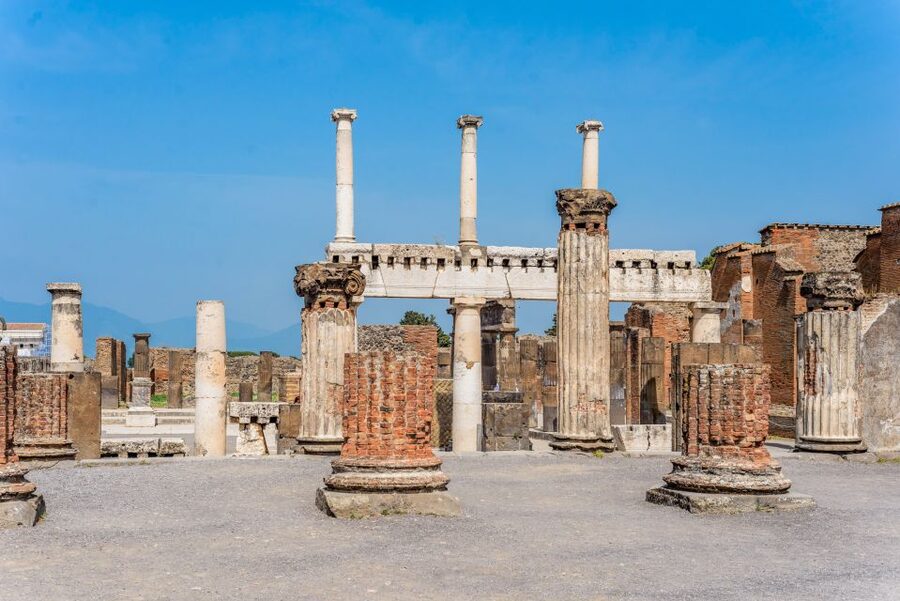
- The Forum and Civic Power: Where Pompeii Did Its Talking
- Temples, Baths, and the Great Theatre: Pompeii’s Daily Stage
- Houses, Frescoes, and Mosaics Up Close
- The Lupanar: A Reminder That Pompeii Had Real People
- Plaster Casts and the Human Cost of 79 AD
- Tips for After the Tour, So You Don’t Feel Rushed
- Price and Value: What $40 Gets You
- Language, Group Style, and Who This Tour Fits Best
- Should You Book Pompeii With an Archaeologist?
- FAQ
- How long is the Pompeii archaeologist tour?
- What is included in the price?
- Do I skip the ticket line?
- Does the tour include the Villa of the Mysteries?
- What languages are available?
- Do I need to bring my own headset?
- Is food or transportation included?
- Where is the meeting point?
- Is this tour wheelchair accessible?
- What should I bring or keep in mind?
Key Points That Make This Tour Worth Your Time
- Archaeologist-led Pompeii: you get context for what you see, including everyday life, not just dates.
- Skip-the-line entry with Pompei Express included in the price.
- Option for 2 hours or 3 hours, with the 3-hour tour adding the Villa of the Mysteries.
- You can explore on your own after the guided portion, so you control your pace.
- Headsets for larger groups help you hear the guide clearly while moving through crowds.
Pompeii Reads Better When an Archaeologist Holds the Map

Pompeii is one of those places where you could walk for hours and still feel like you are just seeing stone and faded color. The biggest value of this tour is that an archaeologist helps you connect the dots. You start at one of the city’s major gates, then you move through the streets and public spaces that shaped Roman daily life.
I like that the guide is not only pointing out famous spots. They also teach you what to notice: how different areas might have functioned, what details suggest about commerce versus home life, and how the city’s layout shaped routines. Guides in recent tours have been especially strong at telling stories with real interpretive care, including guides who have worked on excavations themselves.
There’s also a modern reality baked in: Pompeii is preserved because volcanic ash trapped it. That makes the ruins easier to understand, but it can also lull you into thinking everything is frozen. A good archaeologist guide brings back motion, sound, and routine.
Our reviewers also walked through other Pompeii site visits in Pompei Campania.
- Pompeii: Entry Ticket and Guided Tour with an Archaeologist
★ 4.8 · 19,459 reviews - Pompeii: Small Group Tour with an Archaeologist
★ 4.8 · 12,264 reviews - Pompeii: Skip-the-Line Entrance Ticket with Audio Guide
★ 4.0 · 2,509 reviews - Naples: Pompeii and Mt. Vesuvius with Lunch and Wine Tasting
★ 4.5 · 2,454 reviews
2 Hours vs 3 Hours: Choose the Right Depth Level
This experience comes in two main flavors. The shorter option is a 2-hour guided tour, built to cover major landmarks efficiently and leave you time to roam afterwards. The longer option adds about an extra hour and includes a visit to the Villa of the Mysteries, where the frescoes are the star.
If this is your first time at Pompeii, I’d lean toward the 3-hour version when you can. The Villa of the Mysteries adds a different kind of Pompeii experience, more focused on art and symbolism. It also gives you something visually memorable beyond the civic buildings and streets.
If your schedule is tight, the 2-hour tour still makes sense. You’ll see the key public sites, then you can stay inside the archaeological area after the official guide portion and aim for the neighborhoods that call your name.
Getting In at Porta Marina Superiore and Getting Oriented
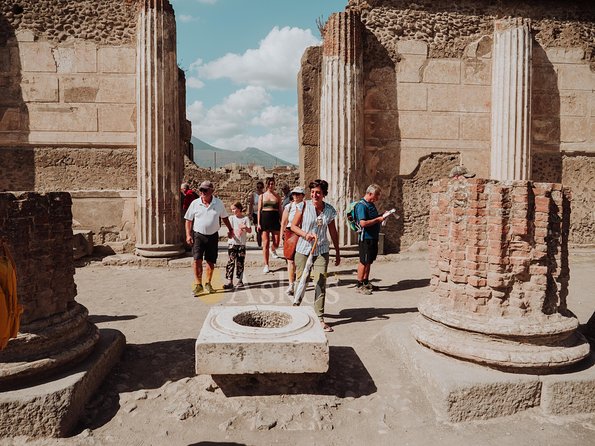
Your visit begins at Porta Marina Superiore, one of Pompeii’s gates. That matters more than you might think. Starting at a gate helps you understand where incoming traffic met city life, and it gives you a mental “entry point” for the rest of the route.
From there, you walk the main streets and head toward the Forum, the old heart of the city and a hub of public life. One practical bonus of this kind of guided start is that you learn how to orient yourself quickly. Pompeii is big, and without orientation it is easy to waste the first hour simply figuring out which direction you are going.
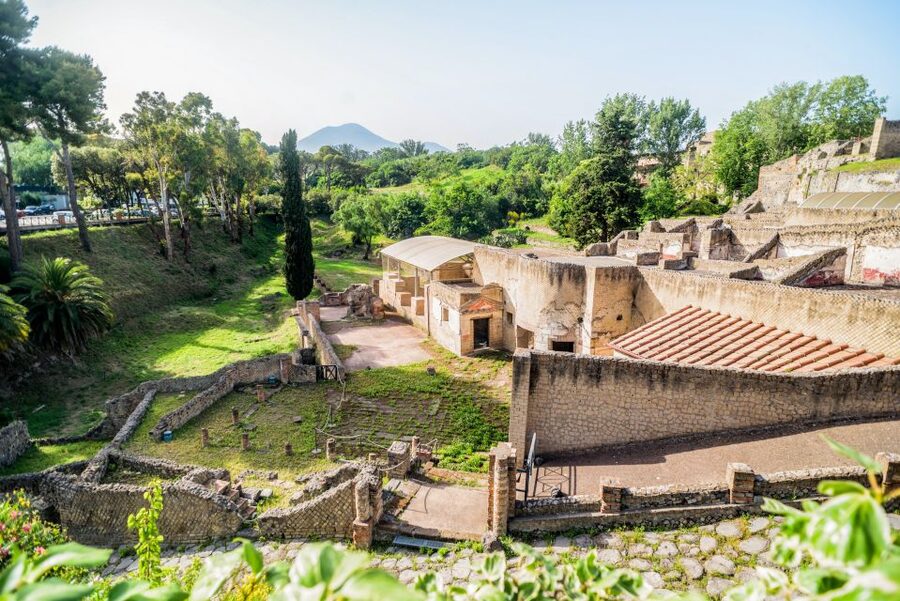
You’ll also get a view of Mount Vesuvius overlooking the city, a reminder that the dramatic ending is part of the setting you are standing in. This is one of those moments when the ruins stop feeling abstract.
The Forum and Civic Power: Where Pompeii Did Its Talking

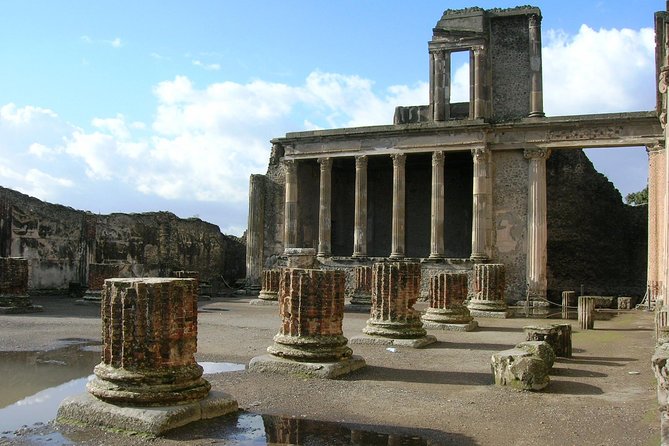
The tour spends time around the Forum, and that’s smart. This is where politics, commerce, and public announcements would have mattered day to day. Seeing the space with commentary helps you understand why it was such a magnet.
As you move through the civic area, you’ll visit highlights such as:
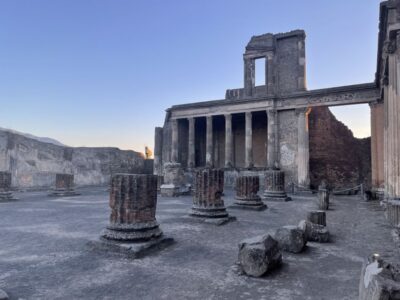
- The Basilica, a legal and business center
- Forum-related bath areas, where social life and daily routines mingled
- Major temples, including the Temple of Apollo and the Temple of Jupiter
These stops are not random. The idea is to show you how Romans organized public power and everyday movement. A guide will help you see connections between buildings, so it starts to feel like a working city rather than a museum of rooms.
One consideration: you’ll spend time walking through crowded areas depending on the day and season. The tour is designed to keep things manageable, and some guides are attentive about avoiding the worst pinch points. Still, wear shoes you can trust for uneven ground.
Temples, Baths, and the Great Theatre: Pompeii’s Daily Stage
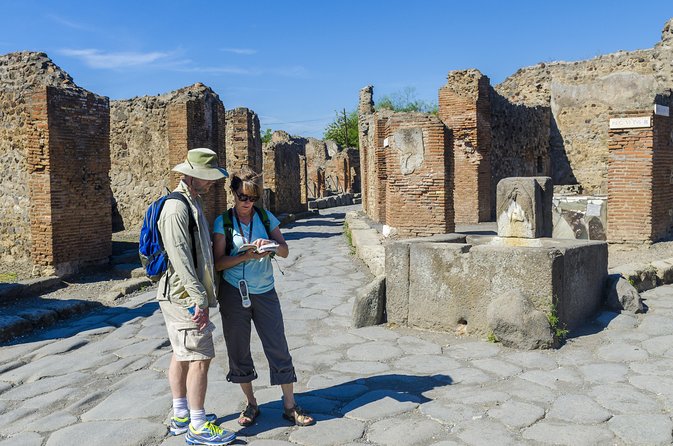
Pompeii was not only about politics and commerce. It was also about religion, recreation, and performance, and the tour reflects that. You’ll look at major religious spaces and then shift toward places where people relaxed, socialized, or gathered.
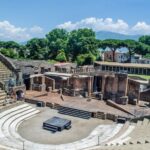
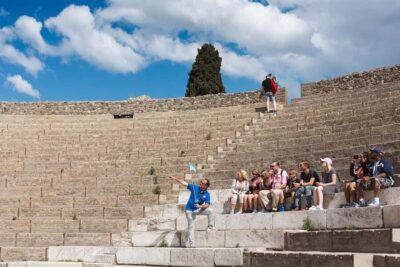
The Great Theatre is a standout. Walking into it (as part of the guided route) is a wow moment because you can feel the scale and understand why theatre mattered. A guide’s job here is to help you picture how the space would have worked for crowds, sightlines, and community events.
You also get time connected to the thermal baths and other communal zones. Bathing in Roman life was both practical and social. Seeing those areas with context helps you move past the “what is this room?” question and toward “what were people doing here?”
Houses, Frescoes, and Mosaics Up Close
One of the best reasons to take a guided Pompeii tour is that you learn what to look at in homes and decorated spaces. The tour includes key houses such as:
- House of the Faun
- House of Menander
- House of the Vettii (often spelled Vettii in signage)
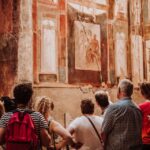
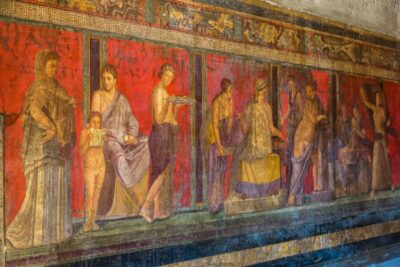
And it brings you face to face with preserved artwork: frescoes, mosaics, and wall details. These are not just pretty pictures. They reflect status, taste, and how families wanted visitors to feel. You’ll be guided toward the kinds of details you might otherwise overlook, like small visual clues embedded in decoration or layout.
For the 3-hour option, the Villa of the Mysteries is the art-focused payoff. The frescoes there are a memorable shift from rooms used for daily domestic life toward a more symbolic and designed visual world.





The Lupanar: A Reminder That Pompeii Had Real People
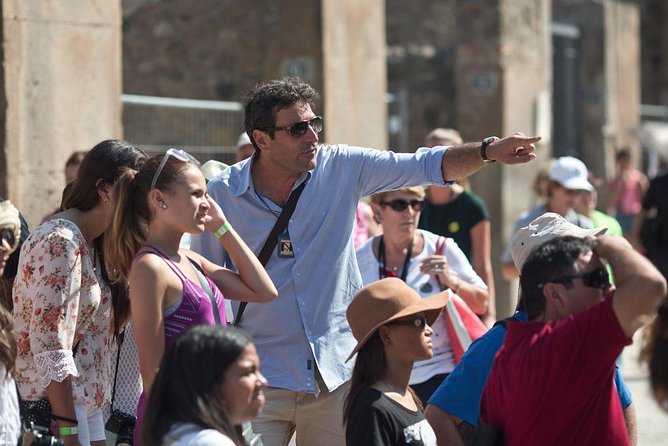
Pompeii includes sites that feel uncomfortable today, and the tour does not shy away from that reality. You’ll see the Lupanar, the famous brothel. The guide explains how it got its name and you can view preserved stone beds and frescoes.
This stop also helps you understand that Pompeii was a full city. It included ordinary businesses, entertainment, and adult culture, along with public institutions. The tone of the tour is handled in a sensitive way in practice, but you should still know the content involves adult themes and graffiti-related details tied to the places you visit.
If you are bringing kids, this is one of the places where you should pay attention to how the guide frames things. Some family groups have found it age-appropriate in tone, while others may prefer to assess based on your child’s comfort.
Plaster Casts and the Human Cost of 79 AD
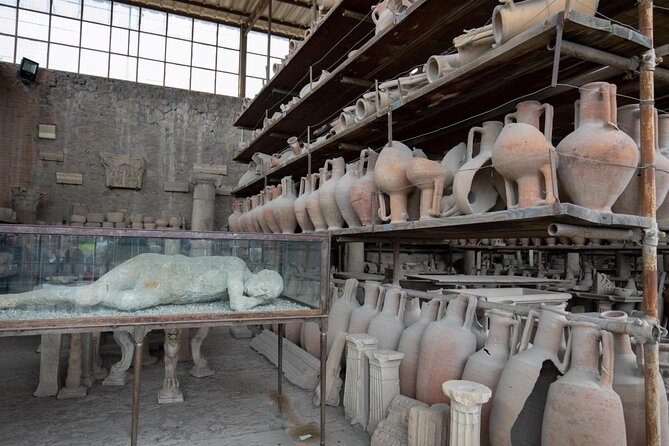
One of the most haunting parts of Pompeii is how the eruption preserved impressions and traces of victims. This tour includes a stop connected to plaster casts of people who were in the city at the time of the eruption.
A practical note from the way Pompeii is presented today: you may find these casts in display cases rather than in the exact locations where they were originally found. That doesn’t make them less powerful. It just means you should be ready to view them as interpretive exhibits within the park.
What you’ll take away is not just tragedy. You’ll also understand how volcanic ash turned daily movement into accidental preservation, giving archaeology a rare snapshot of the city.
Tips for After the Tour, So You Don’t Feel Rushed
You get freedom to explore on your own after the guided portion. That is where you can make Pompeii personal, by going back to the spots that grabbed you.
Here’s how I suggest you use that time:
- Pick 2 to 3 areas you want to linger in, not 10
- Return to any house sections or fresco zones your guide pointed out
- Look for the small details you learned to notice during the tour
Also, be smart about closing time. One recent group experience mentioned the park shuts at 5, and if your tour finishes close to that you might only have a short window left. If you have the option, choose a time earlier in the day so your self-guided wandering has breathing room.
For pacing, consider the guide’s recommendation. Guides often steer people toward less congested areas and suggest what is worth extra time based on what you liked during the walk.
Price and Value: What $40 Gets You
At $40 per person, this tour can feel like a bargain because you’re not paying for a guide alone. Your price includes:
- Pompei Express entry ticket
- A 2- or 3-hour guided tour by an archaeologist
- Headsets for groups of 16 or more
- Time to explore the site on your own after
On top of that, you typically get help with the ticket line so you can spend more minutes inside Pompeii and fewer minutes waiting at the entrance.
Food and drinks are not included, and transportation is not included either. So if you are budgeting, plan for a snack and water on your own, and build in time for travel from your lodging to the meeting point area.
Language, Group Style, and Who This Tour Fits Best
You can choose a small-group shared tour or a private group available option. One detail that matters for comfort is that shared and private tours may not offer the same languages, so check the language options you care about before you commit.
In terms of the people it tends to work well for, this is a strong pick for:
- First-time Pompeii visitors who want a structured route
- Art lovers who want frescoes and mosaics explained
- People who like real stories about how Romans lived, not only big monuments
It is not recommended for travelers with mobility issues or impairments, and it is listed as not suitable for wheelchair users, due to steps, ramps, and some steep climbing. If that might apply to you, you’ll likely have a better day with a plan that avoids the toughest routes.
Should You Book Pompeii With an Archaeologist?
If you want your first look at Pompeii to feel organized, human, and understandable, book it. The mix of expert guidance, skip-the-line entry, and time to explore afterwards makes it good value at $40, especially when you consider that Pompeii is too large to sort out well on your own.
I’d also book it if you care about details. This is not only about walking to famous places, it’s about learning how to see things, like fresco themes, house functions, and what the civic layout meant.
Skip or reconsider if mobility is a concern, or if you prefer a pure self-paced stroll with no structured interpretation. For everyone else, this is one of the cleanest ways to start Pompeii on the right foot and end with a shortlist of what you want to see again.
FAQ
How long is the Pompeii archaeologist tour?
The tour runs for 2 hours or about 3 hours, depending on the option you choose. The 3-hour version adds a visit to the Villa of the Mysteries.
What is included in the price?
The price includes the Pompei Express entry ticket, a 2- or 3-hour guided tour by an archaeologist, and headsets for groups of 16 or more. You can also explore the park on your own after.
Do I skip the ticket line?
Yes. The tour includes skip-the-ticket-line entry.
Does the tour include the Villa of the Mysteries?
Only the 3-hour option includes the Villa of the Mysteries visit.
What languages are available?
The live guide can be in French, Spanish, German, Portuguese, English, or Italian. Language availability can vary between shared group and private tours.
Do I need to bring my own headset?
No. Headsets are provided for listening to the guide for groups of 16 or more.
Is food or transportation included?
No. Food and drinks are not included, and transportation to the meeting point is not included either.
Where is the meeting point?
The meeting point may vary depending on the option booked. You can be directed to one of several nearby starting locations around the Porta Marina area.
Is this tour wheelchair accessible?
No. It is not recommended for travelers with mobility issues and is marked as not suitable for wheelchair users, due to steps, ramps, and uneven ground.
What should I bring or keep in mind?
Bring a passport or ID card (a copy is accepted). You should also expect restrictions like no smoking and no luggage or large bags. Mobility scooters are not allowed.
Our Wider Tours File for Pompei Campania


The Rest of Our Pompeii Site Visits in Pompei Campania


Not quite the day you had in mind? The rest of our Pompei Campania write-ups sit below
- Pompeii: Skip-the-Line Entry & Audioguide★ 3.8 · 225 reviews
- Pompeii: Day Tour of Pompeii and Vesuvius with Bus Transfer★ 4.2 · 250 reviews
- From Naples/Salerno: Pompeii, Sorrento, and Positano Tour★ 4.5 · 250 reviews
- Pompeii: Tour with Archaeologist Guide & Skip-the-Line Entry★ 4.5 · 478 reviews
- Pompeii: Afternoon to Sunset Guided Tour with Ticket★ 4.9 · 484 reviews
- Pompeii 3hours Villa of Mysteries tour with an Archaeologist★ 4.8 · 486 reviews
- From Pompeii: Bus Transfer to Vesuvius with Park Entry Fee★ 4.2 · 700 reviews
- Pompeii: Skip-the-Line Entry Ticket with Digital Guide App★ 4.1 · 770 reviews
- Pompeii: Guided Tour with Skip-the-Line Entry★ 4.9 · 812 reviews
Pompeii Archaeological Site, top to bottom.
 ★ 4.8Pompeii: Entry Ticket and Guided Tour with an ArchaeologistFrom $3519,459 reviews
 ★ 4.2Pompeii: Entry Ticket with Optional Audio GuideFrom $2612,360 reviews
 ★ 4.3From Naples: Pompeii Ruins & Mount Vesuvius Day TourFrom $12011,459 reviews
 ★ 4.6From Rome: Pompeii, Amalfi Coast, and Sorrento Day TripFrom $797,031 reviews
 ★ 4.6From Rome: Pompeii, Amalfi Coast and Positano Day TripFrom $996,620 reviews
 ★ 5.0Pompeii Small Group Tour with an ArchaeologistFrom $356,593 reviews
 ★ 4.5Pompeii, Amalfi Coast and Positano Day Trip from RomeFrom $1016,250 reviews
 ★ 4.5Pompeii and Mount Vesuvius Day Trip from Rome with Pizza LunchFrom $906,151 reviews
Filed under