

Reviewed · VERONA & VALPOLICELLA
Verona Highlights Walking Tour in Small-group
Verona makes sense when you walk it. This small-group, English tour strings together Roman to medieval landmarks at a calm pace, with guides like Frank, Isabella, Priscilla, and Maria bringing the stories to life. I especially love the relaxed 2-hour flow that avoids rushing and the fact you can ask questions while you’re standing in front of the details. One drawback to plan for, though, is that it’s a lot of walking in historic streets, and some sections may be tough if mobility is limited.
You’ll start in Piazza Bra and work through some of Verona’s biggest highlights, from Castelvecchio and the rebuilt bridge to the Arena di Verona and the Juliet area, plus major squares like Piazza delle Erbe and Piazza dei Signori. Tickets for the Arena and some other sights are not included, so you’ll want a little budget set aside if you plan to go inside.
In This Review
- Key highlights to know before you go
- Getting Oriented at Piazza Bra and Keeping a Small-Group Pace
- Castelvecchio and the Bridge Rebuilt After Bombing
- Arch of Gavi and Roman Threads You Can Actually Spot
- The Arena di Verona: Built in AD 30 and Still Dominating the City
- Juliet’s House, Juliet’s Balcony Access, and Romeo’s House Outside Views
- Piazza Bra, Piazza delle Erbe, and Piazza dei Signori: Where the City’s Power Shows
- Arche Scaligere and the Shape of Scaliger Power
- Why the Whole Route Works in About Two Hours
- Price, Tickets, and What You’re Really Paying For
- Who Should Book This Verona Highlights Walk
- Should You Book This Tour?
- FAQ
- How long is the Verona Highlights walking tour, and where does it start?
- What’s included in the price?
- Is this a small-group tour?
- Does the tour run in bad weather?
- Is Juliet’s Balcony access always included?
- What’s the cancellation window for a full refund?
Key highlights to know before you go
- Small-group cap of 16 keeps the pace friendly and question-friendly
- Roman, medieval, and Renaissance stops in one logical loop
- Guides who tell stories with humor and clarity, like Frank and Isabella
- The Arena di Verona is the centerpiece with context you can actually use
- Juliet’s balcony access can change in winter (Dec 6, 2025 to Jan 6, 2026)
- Rain or shine means you won’t be left hanging
Getting Oriented at Piazza Bra and Keeping a Small-Group Pace
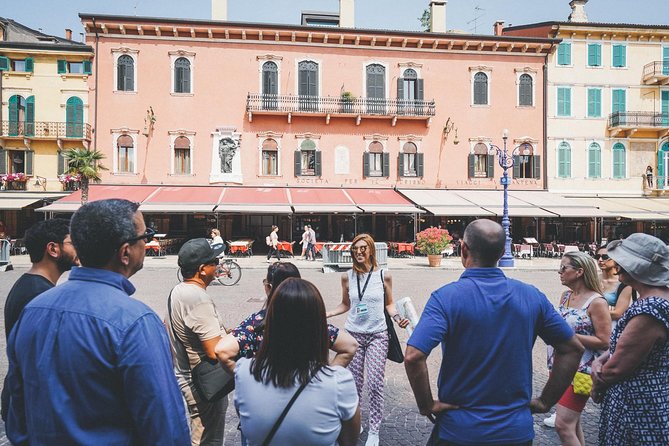
I like that the tour starts right where Verona feels busiest and most walkable: Piazza Bra. It’s a smart choice, because once you’re oriented here, the rest of the old center connects fast, even if you’ve never been to Verona before.
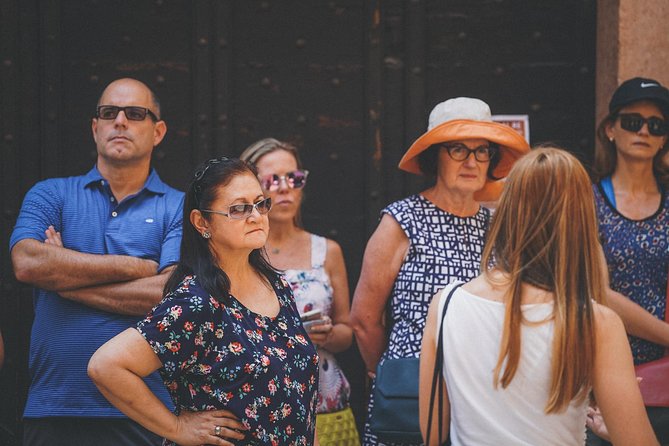
This is sold as a small-group walking experience, with a maximum of 16 people, which changes the vibe. You are less likely to get swallowed by the crowd, and your guide can pause for questions without the whole group falling behind. The tour also runs in rain or shine, so you’re not stuck hoping the weather plays along.
In practice, you’ll get an organized route without that high-pressure feeling. The timing is built around multiple stops where you can look, listen, and move at a human speed. It’s about getting your bearings and understanding what you’re seeing, not sprinting from photo spot to photo spot.
Other Verona and Valpolicella outings in Verona that earned their own write-up.
- Verona: Hop-on Hop-off Tour 24 or 48-Hour Ticket
★ 4.4 · 2,010 reviews - Verona: History and Hidden Gems Guided Walking Tour
★ 5.0 · 1,379 reviews - Verona: Priority Access Arena Guided Tour
★ 4.6 · 1,152 reviews - Verona: Juliet’s House Fast-Track Entry Ticket & Audio Guide
★ 4.2 · 1,121 reviews
Castelvecchio and the Bridge Rebuilt After Bombing
One of the most interesting parts of the walk is how it ties Verona’s medieval power to real 20th-century history. You’ll connect with Castelvecchio first, a late-medieval castle that serves as a major landmark in the center of town.
Then comes the bridge element: the crossing that links the castle to the Adige’s left bank. This bridge suffered serious damage during bombing, and later it was rebuilt to match the original as closely as possible. That detail matters because it turns a “pretty viewpoint” into something you can read as a symbol of survival and restoration.
If you enjoy architecture and war-scarred history, this section is where you’ll feel the city’s layers most clearly. You’re not just looking at old stone, you’re seeing how Verona keeps rebuilding itself while trying to honor what came before.
It’s also a good reminder that the city you’re visiting today is not frozen. The guide helps you understand the street-level reasons the castle and bridge matter, and what they were built to control.
Arch of Gavi and Roman Threads You Can Actually Spot
After Castelvecchio, the tour shifts you toward Roman Verona. A standout stop is the Arch of Gavi, a first-century AD construction associated with the Roman architect Vitruvio and the gens Gavia, an important Roman family tied to the city.
What I like here is the way this stop sets up the big finale later. Instead of treating the Roman era like a separate chapter, the guide gives you a thread you can follow. You start noticing how Verona’s layout and monumental points keep reappearing in different forms.
A useful detail you may hear is how the arch was affected by Napoleon, then later reconstructed and moved to its current position in the early 20th century. That’s the kind of context that makes stone monuments feel less static and more like an ongoing story.
Along the route, you also get hints of Roman remnants in everyday places. You might see bits of ancient structure around modern storefronts or in unexpected spots, which makes the city feel closer and more personal.
The Arena di Verona: Built in AD 30 and Still Dominating the City
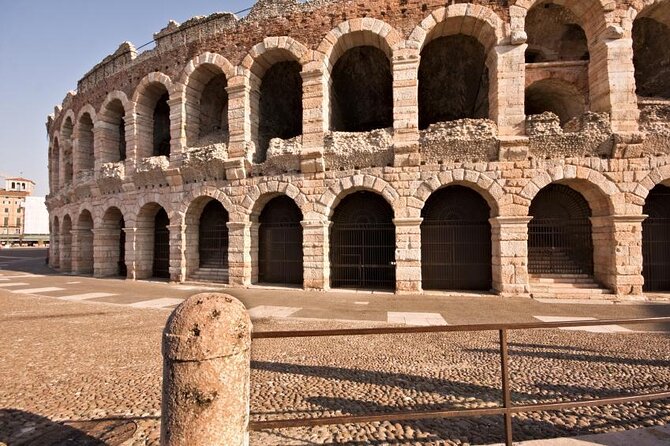
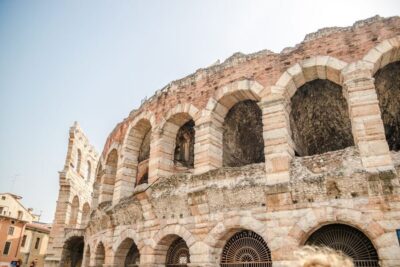
The Arena di Verona is the emotional high point for most people, and it deserves that status. You’re taken to the ancient amphitheater built in the first century AD, in the Augustan period, and the guide explains what’s so impressive about its survival.
Here’s what you’ll learn that helps you see it differently: it was once capable of holding up to around 30,000 people, and it remains remarkably well preserved for its age. The guide also touches on the actions taken over the centuries that kept the structure usable enough to matter today.
One practical note: the Arena itself is not free. The tour includes time at the site, but admission is not included. If you want to enter, you’ll need to plan for tickets separately.
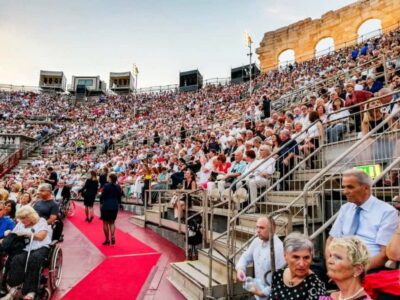
Another reason this stop feels worth it is the living culture around it. The Arena doesn’t only exist as a museum piece. It hosts major concerts and, in summer, it’s also home to the Verona Arena Festival, a popular opera celebration that draws classical music lovers from around the world. Seeing a Roman arena that still stages performance is one of those moments where Verona stops feeling like history and starts feeling like the present.
Juliet’s House, Juliet’s Balcony Access, and Romeo’s House Outside Views
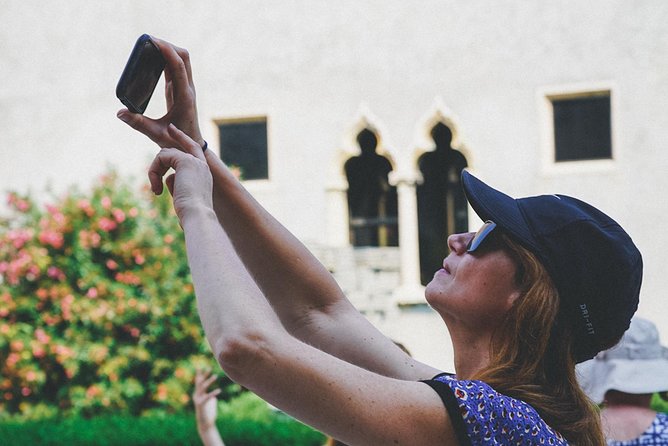
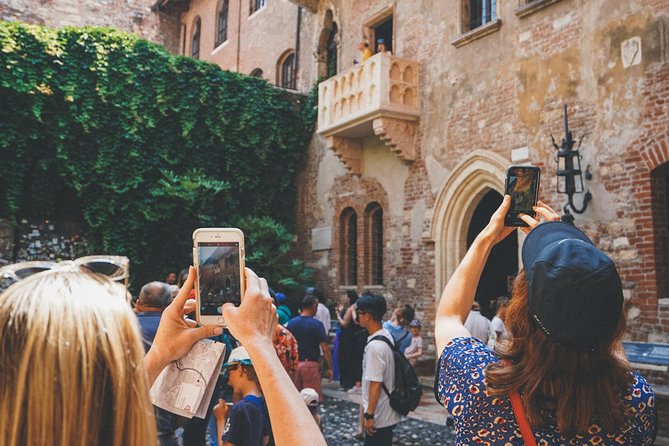
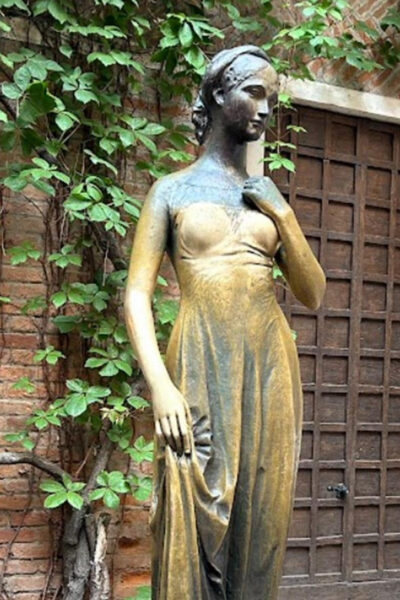
Next, the tour turns to the mythology that made Verona famous worldwide: Romeo and Juliet. You’ll visit the Casa di Giulietta area and see the courtyard connected to the Capuleti’s house.
This is where you should calibrate expectations. The balcony attention is the headline, but your experience will depend on the rules in place for that time of year. From Dec 6, 2025 to Jan 6, 2026, access to Juliet’s Balcony is not included as usual because the city administration requires a ticket due to high visitor numbers. The guide can provide information about how to purchase it, but they won’t purchase it for you. If that balcony view is a must for you, plan your dates and ticket strategy ahead of time.
The guide’s value here is interpretation. Instead of just pointing at famous spots, they help connect the storytelling to what Verona was like and how legends get attached to physical places. That makes it more satisfying than treating it like a theme-park stop.
You’ll also see Romeo’s house from the outside. It’s described as a medieval palace and it’s private, so you only get exterior views. For some people, that’s disappointing. For others, it’s a relief because the tour doesn’t overpromise access.
Either way, this section is about balancing emotional payoff with realistic access, and the guide keeps the pace moving so you’re not stuck waiting around.
Piazza Bra, Piazza delle Erbe, and Piazza dei Signori: Where the City’s Power Shows
After the big monuments, the tour moves into the squares, and this is where Verona starts to feel like a city you can live in.
Piazza Bra is the largest piazza in Verona. It’s lined with cafés and restaurants, and the buildings around it frame the view of the Arena area. If you’re the type who likes a quick break, this stop works well because you can take in the atmosphere while the guide explains the significance of where you are.
Then you’ll head to Piazza delle Erbe. The guide explains that it was the forum, the center of city life during Roman times. In the middle of the square, you’ll see monuments that reflect different rulers of Verona, including a fountain built during Scaligeri rule. This is one of those places where looking closely pays off, because each corner seems to tell you who controlled the city at different moments.
From there, Piazza dei Signori brings you into the former center of power. A major landmark here is the large statue by the Italian poet Dante Alighieri, which has dominated the square since 1865. That’s why the area is also called Piazza Dante. The guide makes it easier to understand why this isn’t just a pretty square. It was a stage for politics, influence, and public identity.
If you’ve ever felt overwhelmed by European cities that seem to have 50 “main squares,” this part helps. You start seeing the squares as a map of authority and public life, not just open spaces.
Filed beside this one, more walking tours in Verona.




Arche Scaligere and the Shape of Scaliger Power
Before you wrap this loop of highlights, you’ll stop at the Arche Scaligere, the Scaliger cemetery. This is a short visit but it carries a lot of meaning because it’s tied directly to the medieval ruling family and their legacy.
You’ll see sarcophagi and, most notably, the three arches built for Cangrande I, Mastino II, and Cansignorio. Even if you don’t consider yourself an architecture expert, you can still appreciate the visual language here. The design communicates rank, memory, and political permanence.
Admission is not included for this stop, so if you want the full effect inside, plan accordingly. If you only have limited time or you prefer to keep costs down, even the exterior impressions can still help you connect back to what you saw in Piazza delle Erbe and Piazza dei Signori.
Why the Whole Route Works in About Two Hours
What makes this tour feel like good value is how it connects the dots between eras. You start in the medieval castle zone, move through Roman markers, hit the Arena as the emotional anchor, then finish with the legend sites and the power squares.
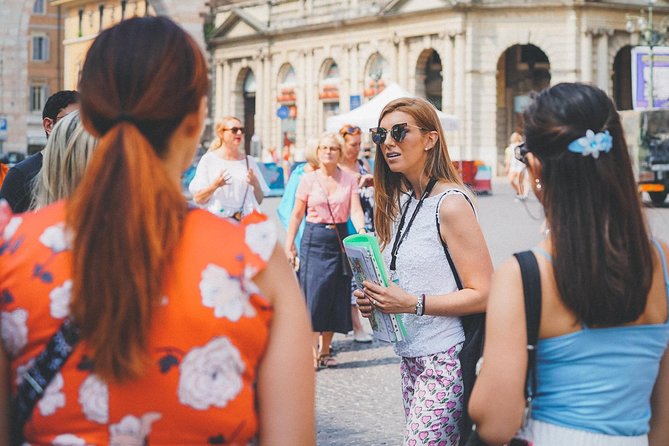
You’ll also notice a pattern in how the guide teaches: they point out what to look for and then explain why it matters. That turns the walk into a short, usable orientation to Verona, not just a list of landmarks.
The best praise you’ll see reflected in the experience is the guide style. Many people highlight guides who are funny, energetic, and easy to follow in English, with a pace that doesn’t feel rushed. On a tight trip, that balance is what you want.
At about two hours, it’s a strong fit if you are arriving in Verona for a day or you’re trying to make the rest of your self-guided time smarter. You’ll know which neighborhoods to return to, and you’ll recognize monuments without needing to re-study everything in your guidebook.
Price, Tickets, and What You’re Really Paying For
At $42.33 per person for roughly two hours with a local guide, I think the value comes from three things.
First, you get a guided route through multiple major highlights without spending time figuring out logistics between them. Second, you’re paying for context, which is what makes the Arena and the squares more than just photo stops. Third, the small-group size helps the guide manage the pace and keep the experience interactive.
The main cost you should expect on top of this is admission to certain sites. The Arena di Verona is explicitly listed as not included in the tour price, and the Casa di Giulietta and Arche Scaligere also note that admission tickets are not included. Piazza Bra, Piazza delle Erbe, and Piazza dei Signori are free areas where you can enjoy the viewpoints and street-level history.
So, do a quick mental budget check: if you plan to enter the Arena and spend time in the Juliet and Scaliger areas, this is still a reasonable price for guided access to multiple big hitters.
Who Should Book This Verona Highlights Walk
I’d point you to this tour if you:
- want a fast orientation to Verona’s layout and timeline
- enjoy history with practical explanations and room for questions
- prefer small groups over loud, crowded mass tours
- want the Arena and Juliet area covered in one outing
I’d think twice if you:
- struggle with longer walking times on uneven historic streets
- need fully step-free access at every stop, since some parts may not be easy for reduced mobility
If you’re traveling with teens, this can also work well because the tour mixes legend, Roman engineering, and real medieval power without being overly academic.
Should You Book This Tour?
If you want a clear first pass through Verona, I’d book it. It’s one of the best ways to connect the city’s Roman bones to its medieval power centers, then end at the Arena and Juliet sites where the emotion is strongest.
Just be smart about your add-on tickets and your dates. If you’re visiting in that Dec 6, 2025 to Jan 6, 2026 window, confirm your plan for Juliet’s Balcony since access rules change then.
For most people, the small-group size, the fast but not frantic pace, and the guide-led stories make the $42.33 feel fair.
FAQ
How long is the Verona Highlights walking tour, and where does it start?
It’s about 2 hours. The tour starts and ends at Piazza Bra in Verona, Italy.
What’s included in the price?
The tour includes a local tour guide. Admission tickets for some stops are not included.
Is this a small-group tour?
Yes. The experience has a maximum of 16 travelers.
Does the tour run in bad weather?
Yes, it runs rain or shine.
Is Juliet’s Balcony access always included?
No. From Dec 6, 2025 to Jan 6, 2026, the tour does not include access to Juliet’s Balcony as usual. A ticket is required, and the guide will not purchase it for you.
What’s the cancellation window for a full refund?
You can cancel up to 24 hours in advance for a full refund. If you cancel less than 24 hours before the start time, the amount paid is not refunded.
Our Wider Tours File for Verona
Beside This One, Verona and Valpolicella Outings in Verona
Not quite the day you had in mind? The rest of our Verona write-ups sit below
- Verona: Highlights and Hidden Gems Walking Tour★ 4.7 · 179 reviews
- Verona Full Meal & Wine Tasting Walking Tour by Do Eat Better★ 5.0 · 197 reviews
- Verona: Highlights Walking Tour with Arena Priority Access★ 4.8 · 201 reviews
- Verona Arena Skip-the-line Tour★ 4.5 · 208 reviews
- Guided Food Tour with Wine Tasting in Verona★ 4.3 · 229 reviews
- Verona: Food and Wine Tasting Walking Tour★ 4.9 · 238 reviews
- Wine Tasting with Panoramic View of Verona★ 5.0 · 240 reviews
- City Sightseeing Verona Hop-On Hop-Off Bus Tour★ 4.0 · 247 reviews
- Verona: City Walking Tour with Cable Car & Wine Aperitif★ 4.8 · 267 reviews
Verona & Valpolicella, top to bottom.
 ★ 4.4Verona: Hop-on Hop-off Tour 24 or 48-Hour TicketFrom $292,010 reviews
 ★ 5.0Verona: History and Hidden Gems Guided Walking TourFrom $411,379 reviews
 ★ 4.6Verona: Priority Access Arena Guided TourFrom $411,152 reviews
 ★ 4.2Verona: Juliet’s House Fast-Track Entry Ticket & Audio GuideFrom $281,121 reviews
 ★ 4.9Verona: Small Group Guided Walking Tour with Arena TicketsFrom $81848 reviews
 ★ 4.6Verona: Arena di Verona Opera TicketFrom $55721 reviews
 ★ 4.9Verona: Classic and Hidden Gems Bike TourFrom $33577 reviews
 ★ 5.0Verona: Pasta and Tiramisu Cooking Class With Free Flowing WineFrom $71575 reviews
Filed under