
Reviewed · POMPEII ARCHAEOLOGICAL SITE
Naples: Pompeii Self Guided Audio Tour
Pompeii gets easier when your guide travels with you. This self-guided smartphone audio tour uses an app with 60+ geolocated points of interest, so you can move through the ruins at your own speed and keep your place as you bounce from mosaics to major rooms.
Two things I really like: the audio is built for the exact spots you want to see, and you can revisit it later because the guide stays with you for future visits. One consideration, though, is that the experience depends on you downloading the contents before you start, since cell service can be unreliable inside the archaeological site.
If your plan is to cover the biggest hits, but still wander, this format can work better than a rigid group tour. Still, it is worth knowing that the app experience is not always perfect, like when the map behavior gets a bit annoying after you listen to a stop.
In This Review
- Key takeaways before you go
- What you get from ITGUIDES on your phone
- How the 4-hour window shapes your Pompeii plan
- Amphitheater: Roman spectacle, told right where it happens
- House of the Vettii and the joy of frescoes and mosaics
- Lupanare: gritty details with a learning payoff
- Roman baths and how ancient hygiene worked
- Food, bread, and urine for wool processing
- Navigation tips for a smoother self-guided walk
- Price and value: $4.70 that can beat an on-site audioguide
- Who this Pompeii audio tour suits best
- Should you book this Pompeii self-guided audio tour?
- FAQ
- Is the Pompeii entrance ticket included?
- Do I need to meet anyone at a specific location?
- How long is the guide valid once I start it?
- Will the guide work inside Pompeii if I do not have internet?
- How do I get the audio guide on my phone?
- What languages are available for the guide?
- Is the tour wheelchair accessible?
Key takeaways before you go
- Geolocated audio points: The app ties stops to where you are, so you are not flipping through a paper map.
- More than 60 POIs: You get stops for major sights plus smaller rooms and details like frescoes and mosaics.
- Offline-forward plan: Download files with decent signal or wifi so you are not stuck at the wrong moment.
- Save over 50%: The pricing is meant to beat on-site audioguides by a wide margin.
- One app, many languages: Italian, English, French, German, Spanish are included.
What you get from ITGUIDES on your phone
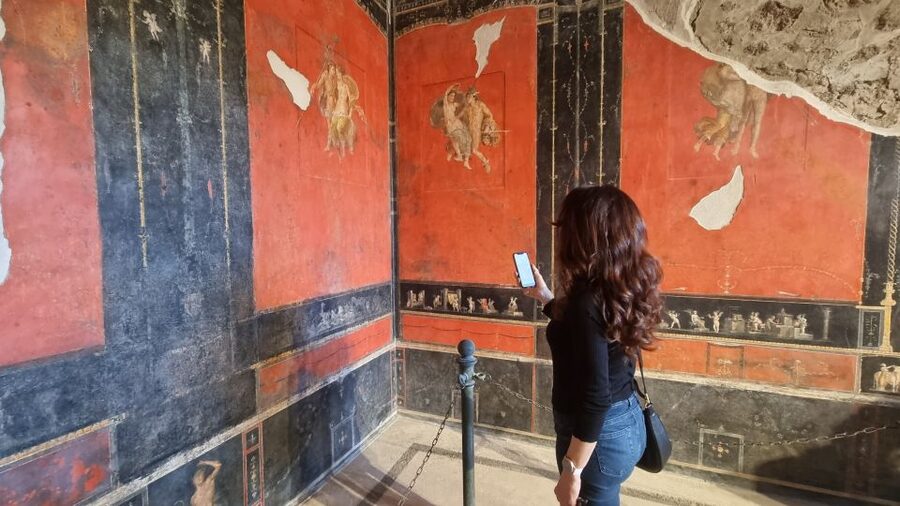
This tour is basically an ITGUIDES audio guide delivered inside the ITGUIDES app. After you buy, you download the app, then follow the steps in your voucher to activate the Pompeii guide using your app user ID and your GetYourGuide order number. Once it is active, you can navigate using an interactive map with check marks for the points you have visited.
Each point of interest comes with more than just audio. You also get written descriptions (including hypertext links) and visual content like photos, and the guide is geolocated. If you see a technical term or a name in the text, you can tap for extra background. That is useful in Pompeii, where walls can look pretty but you still want to understand what you are looking at.
A practical note that matters in Pompeii: the app lets you download content locally before you arrive, and the guidance specifically warns that internet connection is not good inside the ruins. So the smart move is to treat this like an offline museum app, not something you rely on live.
Languages included are Italian, English, French, German, and Spanish. That makes it a good option if you are traveling with friends who want a shared experience without splitting up.
Our reviewers also walked through other Pompeii site visits in Naples.
- From Naples: Pompeii Ruins & Mount Vesuvius Day Tour
★ 4.3 · 11,459 reviews - Naples or Sorrento: Full-Day Pompeii and Mount Vesuvius Tour
★ 4.6 · 4,235 reviews - Pompeii & Mt.Vesuvius Day Tour from Naples with Pizza Lunch
★ 4.0 · 2,901 reviews - Naples: Pompeii & Mt Vesuvius All-Inclusive Small Group w/ Lunch
★ 4.5 · 2,748 reviews
How the 4-hour window shapes your Pompeii plan
The guide is valid for 4 hours from first activation, and it is self guided. There is no meeting point because you start wherever you want, based on the ruins open time. That sounds simple, and it usually is, but it changes how you plan your day.
Instead of thinking of Pompeii as one straight line, you should think of it as several “clusters” you can connect. You can focus on the Amphitheater area, then move to the big domus stops, then loop through other highlights like the lupanare and Roman baths. The guide includes more than 60 points, so you can spend a little time per stop or spend longer on just a few.
In real life, Pompeii is not static. You may run into closed areas because of restoration, which can change which rooms are accessible. The upside of a geolocated guide is that you can still get context for the sights even when some details are temporarily off limits, and it helps you keep moving without wasting time searching.
If you like doing your best work in bursts, this fits well. You can listen to one stop, look around for a few minutes, then move on when your feet want the next section.
Amphitheater: Roman spectacle, told right where it happens
One of the guide’s strengths is how it frames the big, recognizable structures. The Amphitheater is a prime example. You do not just get a generic description from far away. The audio focuses on what the site is for and what made Roman public entertainment tick, with stories and curiosities built around the amphitheater itself.
This is where the geolocation feature earns its keep. When you are standing in the actual space, the audio makes more sense. You can connect seating, access points, and layout to the way events were staged. Even if you are not a classics person, you can follow along and start to see the system behind the spectacle.
If you end up doing the Amphitheater early in your visit, you will likely get more value from the rest of the day. It gives you a mental frame for how Pompeii worked as a city that hosted crowds, rituals, and daily life all in the same urban footprint.
House of the Vettii and the joy of frescoes and mosaics

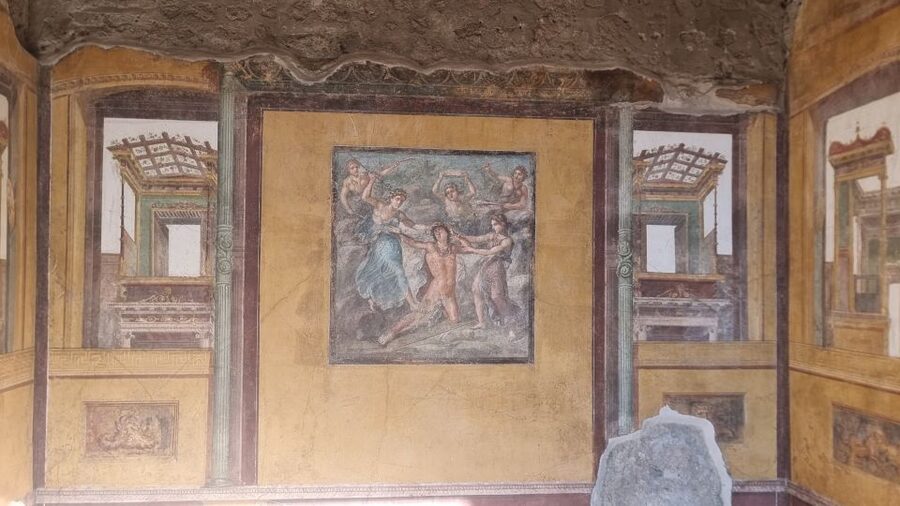
Pompeii’s houses can feel like art galleries, but without context they can also feel like scenes with no meaning. The guide helps by pointing you toward the places with best preserved frescoes and mosaics, and by describing what you are looking at where you are looking.
The House of the Vettii is one of the named highlights, and the audio treats it like a living space rather than a stop on a checklist. You learn what to notice: the way rooms functioned, how decoration worked, and how the home reflects social identity in Roman life.
This is also a good time to use the guide’s text links. If a symbol, god, hero, or technical term pops up in your reading, you can tap for extra explanation. That means you spend less time guessing and more time actually seeing.
There is one small practical warning. Some people report that after playing an audio clip, the app can bounce you back to the map and zoom you out, which means you might have to re-find your location. It is not the end of the world, but it can slow you down if you are trying to rush between closely spaced rooms.
Lupanare: gritty details with a learning payoff
The guide includes the lupanare, described as a brothel in Pompeii. This is the kind of subject that can feel uncomfortable at first, but it is also part of what makes Pompeii so revealing. The audio treats it as a real piece of the city, tied to how people lived and how services worked.
If you are the type who wants Pompeii to be more than prettiness, the lupanare section is a strong stop. You get a better sense of the full range of daily activity, including aspects of life that polite museum labels usually skip over.
Also, being self guided helps here. You can take the pace that feels right for you, spending more time when you are ready to understand the details or skipping ahead if the topic is not your thing. No one is herding you toward the next room.
Roman baths and how ancient hygiene worked
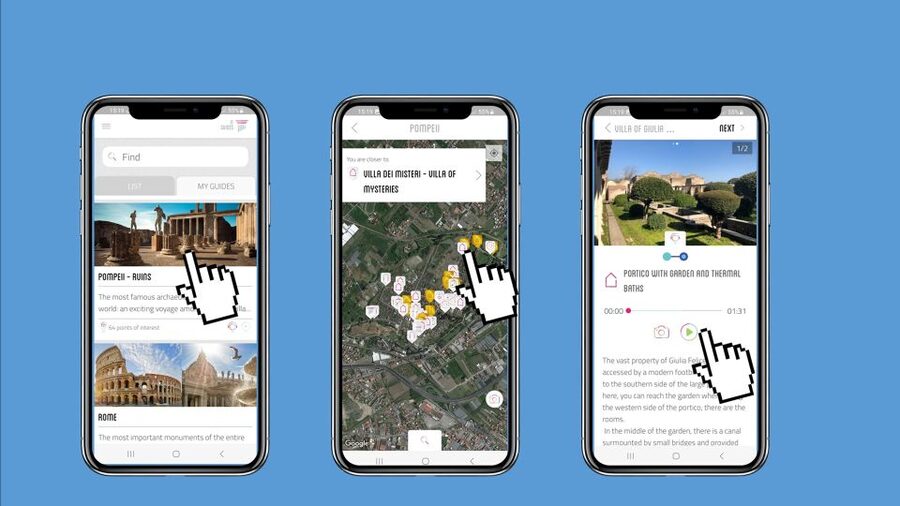
Not all of Pompeii is about houses and art. The guide also covers how Roman baths worked, and it does so in a way that supports learning while you stand amid the ruins. Baths were practical spaces, but they were also social and sensory.
This stop is valuable because the bath layout can be confusing if you only look at stones. With audio plus descriptions, you start to connect rooms and circulation, and you can understand the system rather than just recognizing it as a building.
If you tend to enjoy the “how did they do that” side of history, the bath section will likely feel like one of the most satisfying parts of the loop. You are not just looking, you are getting an explanation you can apply immediately to the remains in front of you.
Pinned to the same map of Naples, more Naples city and underground tours.


Food, bread, and urine for wool processing
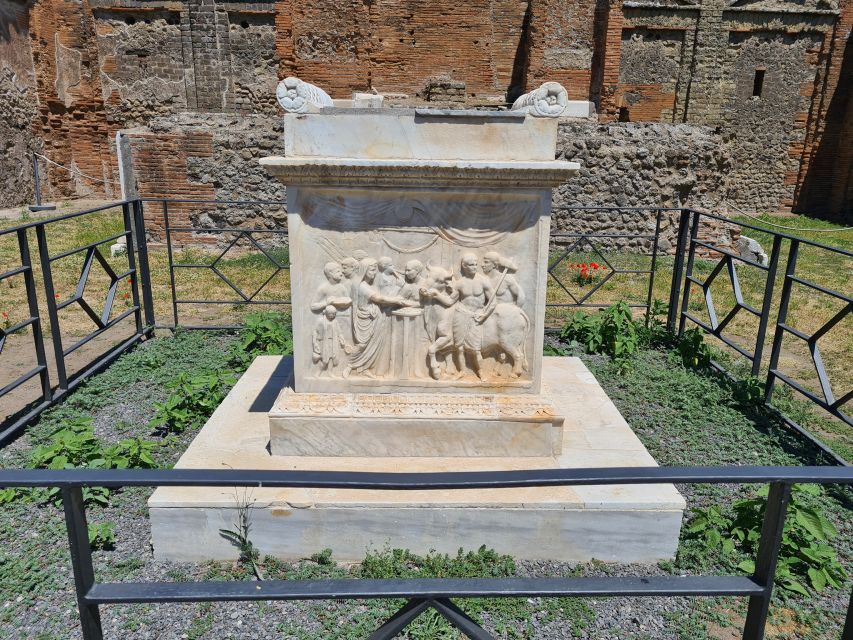
This guide goes beyond architecture and into daily life, including what people ate in ancient Roman taverns and how bread was made. It also includes a surprisingly specific topic: how urine was used for wool processing.
That last detail sounds wild, but it is exactly the kind of concrete information that helps Pompeii feel real. When you learn how something was produced, you stop thinking of Pompeii as a frozen snapshot and start imagining the industry and routines that supported the city.
This is where the guide’s mix of audio and written hypertext can matter. If you want more context on food, production, or technical terms, you can follow the links and keep your brain engaged instead of passively listening.
This section is also a good reminder that Pompeii is not only famous for art. It is famous because it captures ordinary life and the messy realities of running a city.
Navigation tips for a smoother self-guided walk
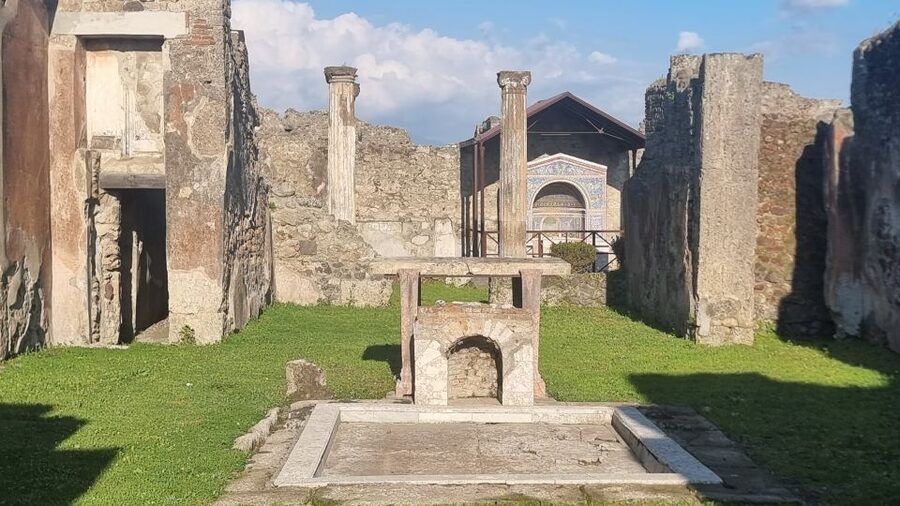
The app is designed for geolocated movement, and the interactive map plus check marks can be really helpful when you are walking long distances between clusters. One of the best practical features is that you can see what you have already listened to, which reduces the stress of missing something important.
Still, you should plan for a few app quirks:
- If there are multiple audio clips at a point of interest, the map check mark might not appear even when you listened to both clips.
- Some people report the app does not show a clear dot for their location, so you might rely more on the map view than expected.
- When you leave the app for anything like taking a photo, the audio can restart when you come back.
So here is my “make it painless” strategy:
- Download ahead with decent signal or wifi.
- Keep the app running when possible while you look around.
- Listen to a stop, then take a few photos before jumping to the next one, so you are not constantly switching contexts.
If you do that, you should spend more time in the ruins and less time fighting an interface.
Price and value: $4.70 that can beat an on-site audioguide

At $4.70 per person for a 4-hour guide, this is priced for value. The highlight claims you save more than 50% compared to the ticket office audioguide, and that matches the general logic here: you are paying for the content and map, not for a guide’s time.
The big catch is that the Pompeii site entrance ticket is not included. So you still need to budget for admission separately. Once you factor that in, this option still tends to pencil out for budget travelers who want a lot of interpretation without paying for a live tour.
Another important value point: the audio guide is yours for the long term, so you can reuse it on later visits. That makes a big difference if you plan to return to Campania or if you might share it with family members who go back again.
If you are comparing it to hiring a private guide, this approach wins on cost and flexibility. If you are comparing it to buying something on site, it wins on savings. The trade-off is that you are the manager of your own time.
Who this Pompeii audio tour suits best
I think this works best for:
- People who like exploring at their own rhythm, with no pressure to keep up.
- Travelers who want interpretation for major sights like the Amphitheater, House of the Vettii, lupanare, and Roman baths.
- Budget-minded visitors who still want good navigation and context.
- Anyone comfortable using their phone as a guide, especially in spots with weak internet.
If you want constant human interaction, Q and A, and dynamic rerouting on the spot, you might prefer a live guide option. Pompeii is too big to fix every surprise instantly without a person.
But if your goal is to cover the highlights, understand what you are seeing, and keep costs down, this phone-based tour can be a very practical choice.
Should you book this Pompeii self-guided audio tour?
Yes, if you want a smart, self-paced way to hit the big stops without paying for a full guided tour. The price is low enough to feel low-risk, and the mix of geolocated audio plus photos and text makes it easier to understand Pompeii rather than just walk past it.
Book it with a single mindset: download everything first, then let the app run your route. If you are the type who hates app setups or you know you will not be able to download offline files reliably, you may find it frustrating.
If you are careful with the offline plan and you are okay managing small app quirks, this is an excellent value way to experience Pompeii.
FAQ
Is the Pompeii entrance ticket included?
No. The audio guide is included, but the Pompeii site entrance ticket is not included.
Do I need to meet anyone at a specific location?
No. This is an autonomous, self-guided activity with no meeting point.
How long is the guide valid once I start it?
It is valid for 4 hours from first activation.
Will the guide work inside Pompeii if I do not have internet?
The instructions say the internet connection may not be good in the archaeological site, so you should download the content locally before going.
How do I get the audio guide on my phone?
After purchasing, download the ITGUIDES app, then use your voucher instructions to send your app user ID and GetYourGuide order number so the Pompeii guide can be activated in the app.
What languages are available for the guide?
The guide is available in Italian, English, French, German, and Spanish.
Is the tour wheelchair accessible?
Yes, the activity is listed as wheelchair accessible.
Keep Comparing Naples City and Underground Tours in Naples


The Rest of Our Pompeii Site Visits in Naples



Not quite the day you had in mind? The rest of our Naples write-ups sit below
- From Naples: Pompeii and Vesuvius Guided Day Trip with Lunch
- From Naples: Mount Vesuvius and Pompeii Ruins Combo Day Trip
- Pompeii: Private Tour with an Archaeologist★ 4.9 · 168 reviews
- Herculaneum Guided Group Tour from Naples★ 4.5 · 169 reviews
- Semi Private Amalfi Coast Shore Excursion with Pick Up★ 4.5 · 174 reviews
- Private Transfer from Multiple Locations in Naples to Sorrento★ 5.0 · 175 reviews
- Naples: Capri Transfer with Island Boat Tour and Free Time★ 4.3 · 176 reviews
- Naples Shore Excursion: Sorrento and Amalfi Coast Independent Day Trip from Naples★ 4.0 · 177 reviews
- Naples: National Archaeological Museum Tour & Digital Guide★ 4.2 · 177 reviews
Pompeii Archaeological Site, top to bottom.
 ★ 4.8Pompeii: Entry Ticket and Guided Tour with an ArchaeologistFrom $3519,459 reviews
 ★ 4.2Pompeii: Entry Ticket with Optional Audio GuideFrom $2612,360 reviews
 ★ 4.8Pompeii: Small Group Tour with an ArchaeologistFrom $4012,264 reviews
 ★ 4.3From Naples: Pompeii Ruins & Mount Vesuvius Day TourFrom $12011,459 reviews
 ★ 4.6From Rome: Pompeii, Amalfi Coast, and Sorrento Day TripFrom $797,031 reviews
 ★ 4.6From Rome: Pompeii, Amalfi Coast and Positano Day TripFrom $996,620 reviews
★ 5.0Pompeii Small Group Tour with an ArchaeologistFrom $356,593 reviews
 ★ 4.5Pompeii, Amalfi Coast and Positano Day Trip from RomeFrom $1016,250 reviews