
Reviewed · GENOA & THE LIGURIAN RIVIERA
2 Hours Private Historical Tour in Genoa
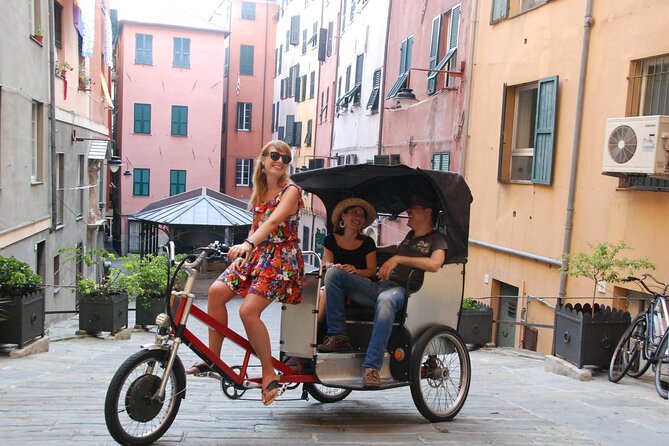
Genoa is easier when someone else drives. This private 2-hour historical tour keeps you out of the traffic and off the steep walking grind while a local driver-guide handles the route. I like the small-street access that lets you see corners you would likely miss, and I like the guided pacing that fits a lot into a short visit. The main thing to consider is that the tour needs good weather, and like any street-based transport, occasional mechanical hiccups can happen.
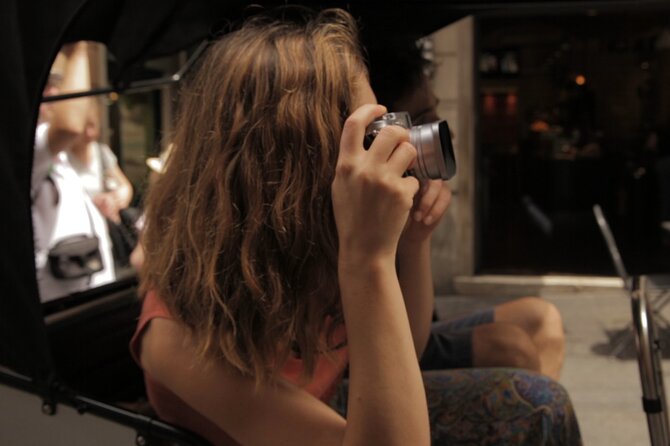
You also get the best part of a private tour: your group stays together and the guide can slow down for photos. On real tours, I’ve seen guides like Eleonora, Yusuf, and Sophie pause often, talk through what matters, and make the whole thing feel relaxed rather than rushed.
One more practical note: you are covering a tight slice of Genoa in about two hours, so it helps to wear comfortable clothes and be ready for narrow lanes and little surprises between stops.
In This Review
- Key takeaways before you go
- Getting oriented fast: how this private Genoa tour feels
- Meeting at Galata Museo del Mare and the route setup
- Piazza Sarzano: starting from Genoa’s original nucleus
- Santi Cosma e Damiano: a short church stop with a punch
- Via Garibaldi: the Golden Street and why it matters
- La Casa di Colombo near Porta Soprana: a family home with big consequences
- Piazza Banchi: money-changers, grain, and port life
- Il Cittadino and San Lorenzo area: the cathedral zone that shaped public life
- Giardini Luzzati: a quick stop that changes your mood
- Piazza Raffaele De Ferrari: Genoa’s main square and architectural theatre
- Palazzo di San Giorgio: another palace moment, without the overstay
- Old Port finale by Renzo Piano: the view and the atmosphere
- Price and value: is $114.93 per group a good deal?
- Best fit: who should book this private historical tour?
- Small considerations: hills, weather, and vehicle issues
- Should you book this private historical tour in Genoa?
- FAQ
- How long is the 2 Hours Private Historical Tour in Genoa?
- Where is the meeting point for the tour?
- Is pickup available?
- What language is the tour in?
- Are there admission tickets you need to pay for during the stops?
- What is the cancellation policy and what if the weather is bad?
Key takeaways before you go
- A central launch point at Galata Museo del Mare, with the driver waiting near the terminal exit.
- Stop-light sightseeing, where each location gets a quick, meaningful moment without turning into a lecture.
- Traffic-free sightseeing approach, because you are not the one navigating Genoa’s tight streets.
- Classic Genoa highlights in one loop, from Sarzano and Via Garibaldi to Piazza De Ferrari and the Old Port.
- Guide-led storytelling that feels personal, with names like Eleonora, Yusuf, and Gavino showing up again and again.
- Weather-dependent experience, so it is smart to check forecasts, especially on rainy or windy days.
Getting oriented fast: how this private Genoa tour feels
If Genoa is on your list, you usually face the same problem. The city is beautiful, but it is also easy to get turned around. This tour solves that by starting you in a straightforward, central place, then moving you through historic streets without you needing to fight for directions, parking, or the right bus route.
You are in a private group (just your party), and the guide drives while you look. That changes the whole vibe. Instead of spending your energy on hills and cobblestones, you can focus on landmarks, views down side alleys, and the small architectural tells that make Genoa feel like a layered city rather than one big monument.
The two-hour length is also a sweet spot. It is long enough to connect ideas between neighborhoods, but short enough that you are not exhausted before the rest of your day in Liguria.
If the dates do not line up, these Genoa and Ligurian Riviera outings in Genoa are reviewed too.
- Genoa: Aquarium of Genoa Entry Ticket
★ 4.5 · 10,075 reviews - Genoa: Hop-on Hop-off Tour Ticket
★ 4.0 · 1,524 reviews - Genoa: Half-Day Tour to Portofino
★ 4.2 · 1,123 reviews - Genoa: Pelagos Sanctuary Whale Watching Cruise
★ 4.2 · 806 reviews
Meeting at Galata Museo del Mare and the route setup
Your meeting point is Galata Museo del Mare, Calata Ansaldo De Mari 1, 16126 Genova GE, Italy. Pickup is offered, and the driver is found in the square in front of the terminal exit.
That matters more than you might think if you are arriving by cruise. Genoa can be full of little transport bottlenecks, and a setup with a clear starting point and a waiting driver helps your day run on time. You also get a mobile ticket, which keeps things simple when you are doing multiple activities in one port stop.
Also keep in mind that this is designed for narrow streets. That is great for access, but it also means you should expect a bit of movement and turns. Wear comfortable footwear even if you are not walking much.
Piazza Sarzano: starting from Genoa’s original nucleus
The tour begins at Piazza Sarzano, in the area often described as the original nucleus of Genoa, known as Ianua. This is an early “feel the city” stop, not a high-ticket attraction. You get to reset your bearings here, then roll forward into deeper medieval and Renaissance layers.
You’ll look at the bell tower of the Sant’ Agostino church and at a small temple nearby. From there, the Ravecca street backdrop gives you a sense of how Genoa’s main stories play out in alleyways and side streets, not just big plazas.
Best value of this stop: it gives you context quickly. Even if some details blur in the moment, you start understanding why the city grew where it did. It also sets you up to recognize streets later, because you have already seen their “starting point energy.”
Santi Cosma e Damiano: a short church stop with a punch
Next comes Chiesa Santi Cosma e Damiano. The tour keeps this one brief, but it is placed where it works: between two heavier sightseeing segments. You are getting a taste of the medieval historic center architecture without turning the whole tour into a checklist of churches.
One thing I like about this pacing is that you do not overload yourself early. Genoa’s churches can be dense with artwork and detail. A shorter stop helps you actually notice what matters, then move on while everything is still fresh.
This is a good stop if you want that “wait, this is in the middle of the city?” effect. Even when a tour is short, a church can change how you see the whole street.
Via Garibaldi: the Golden Street and why it matters
Then you hit Via Garibaldi. This stretch is the standout for many people because it connects power, wealth, and architecture in a way you can feel immediately while you ride past palaces and gardens.
The tour frames it as one of Genoa’s main streets in the historic center, originally called Strada Maggiore, then Strada Nuova, and even known until the 19th century as Via Aurea, the Golden Street. In 1882, it was renamed for Giuseppe Garibaldi.
So what is the practical meaning of that? You’re not just seeing pretty buildings. You are walking through Genoa’s shift in identity over centuries, from medieval trade life to later civic and political naming.
This is also where a strong guide makes the difference. Reviews point to guides who handle frequent photo pauses and clear explanations, and Via Garibaldi is the kind of place where you will want time to look upward. If you take pictures, this is one of your best stretches.
La Casa di Colombo near Porta Soprana: a family home with big consequences
Next is La Casa di Colombo, sometimes called Columbus’ House. It is not far from the gate of Porta Soprana, just outside the medieval walls.
Here’s where the story gets interesting fast. The building is likely an 18th-century reconstruction of an earlier medieval structure, and written sources suggest the navigator lived here between 1455 and 1470. The house was likely destroyed during the bombing by the French fleet of King Louis XIV in 1684.
The tour also explains the building layout in a way that helps you picture daily life: the ground floor used as a workshop by Domenico Columbus, who worked in wool weaving and trade, with the family living upstairs.
What makes this stop valuable for a short tour is that it connects Genoa to world history without pretending this is a museum day. You are learning why the site matters, then moving on.
Our reviewers also walked through other two-hour experiences in Genoa.
Piazza Banchi: money-changers, grain, and port life
After Colombo’s House, the tour heads to Piazza Banchi, located just off one of Genoa’s important docks.
In the 12th century, the square was known as piazza dei banchi because of money-changers’ stalls under the porticoes of surrounding buildings. It was also tied to the old grain market, so it sits right in the practical heart of trade.
This stop is a good reminder that Genoa’s grandeur was never just for decoration. It grew through commerce: the port, the markets, the people who handled the money, and the supply chain that kept ships moving.
When you glance at the port area during this segment, you can start noticing how the city’s power centers connect back to the waterfront.
Il Cittadino and San Lorenzo area: the cathedral zone that shaped public life
Then you reach Il Cittadino – Arcidiocesi di Genova. The tour connects this area to the nearby Cattedrale di San Lorenzo, explaining how the cathedral and the artistic work on its walls gave rise to legends and curiosities.
More importantly, the tour frames the parvis of San Lorenzo as a key public stage in the Middle Ages. In a city without many squares, this space helped drive social and political life.
So even if you do not spend long inside, you leave with a clearer idea of how Genoa functioned day to day. This is not just a pretty historic center. It is a city shaped by gatherings, announcements, decisions, and the flow of people around the cathedral area.
Giardini Luzzati: a quick stop that changes your mood
Next is Giardini Luzzati, another medieval historic center area stop presented as something of a surprise. The tour keeps it short, and that works. This kind of garden pause is a reset after the density of streets and architecture.
You get a breath of space, and you start to notice the city’s texture in a different way. In a two-hour tour, these mood changes matter because they help you remember the route, not just the facts.
Piazza Raffaele De Ferrari: Genoa’s main square and architectural theatre
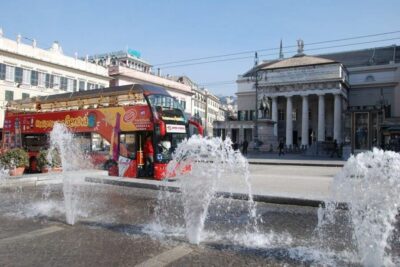
Now you arrive at Piazza Raffaele De Ferrari, Genoa’s main square and a gathering place for major city events.
The square is dedicated to Raffaele De Ferrari, a Duke of Galliera who donated a large sum in 1875 to support projects to expand the port. In other words, this is a civic monument tied directly to Genoa’s economic engine.
In the center sits a monumental bronze fountain crafted by Cesare Crosa of Vergagni in 1936. Facing the square, you’ll notice buildings linked to Carlo Barabino, including the Teatro Carlo Felice and the Accademia Ligustica di Belle Arti.
You also see nearby facades like Palazzo Ducale, with its main entrance on the adjacent Piazza Matteotti. Other prominent edges include Palazzo della Regione Liguria (offices built in 1920) and Palazzo della Nuova Borsa, an Art Nouveau example from 1912.
This is where you stop for a moment and just look. The square is basically a stage. Even if you only spend ten minutes here, you can understand why Genoa needed a major public center rather than living only in lanes and church steps.
If you travel on a clear day, this is often the segment where the photos look best because you have open space and strong framing.
Palazzo di San Giorgio: another palace moment, without the overstay
The tour then makes a quick visit to Palazzo Di San Giorgio. It is presented as one of Genoa’s beautiful palaces in the medieval historic center.
This stop stays brief by design. In a compact two-hour tour, the goal is to point you toward the city’s grand buildings and teach you how to read their scale and placement, not to turn every palace into a long museum session.
Old Port finale by Renzo Piano: the view and the atmosphere
The final stop is the Old Port of Genoa, with a waterfront plaza designed by Renzo Piano.
This is your payoff. You get open air and panoramic views of the city and harbor. The tour also frames the Old Port as a place for cultural and recreational events, plus a gateway to some of the city’s best-known attractions.
Why this ending works: it matches the way Genoa feels at the end of a busy day. Old Port is where the city loosens up after the tight medieval lanes. You can stand back, check where you are on a map, and decide what you want to explore next on your own.
Price and value: is $114.93 per group a good deal?
The price is $114.93 per group (up to 2), for about two hours. Since it is per group, this tends to be most cost-effective when you are traveling with one other person.
Value-wise, you are not paying for ticketed museum entries during the tour. Each listed stop shows free admission tickets. So what you are really funding is the guide time and the transportation element that gets you around without you steering through traffic or walking between every point.
That tradeoff is the heart of the experience. If your legs want a break, and you want a guided route that helps you connect Genoa’s places in sequence, the price starts to make sense quickly.
If you prefer to roam slowly with long stops inside each building, you might want a longer day on foot instead. But if your time window is short, this is a smart way to get your bearings and pick favorites for later.
Best fit: who should book this private historical tour?
This tour is a strong match if you:
- Have a limited time window in Genoa, especially during a port day
- Want to see multiple key landmarks without doing full-on walking between them
- Like a guide who pauses for photos and keeps the route flowing
- Want a fun, low-stress orientation so you can return later for a deeper self-guided visit
It also works well for people who value comfort. Reviews repeatedly mention a relaxing approach, and the transport means you can focus on street-level details instead of getting exhausted early. Some reviews even stress that it is an easy way to see the historic center without pedaling yourself.
Small considerations: hills, weather, and vehicle issues
A few honest points to keep your expectations aligned:
First, the experience requires good weather. If conditions are poor, it can be canceled and rescheduled or refunded.
Second, the route is designed around narrow streets, turns, and tight city geometry. That usually feels great, but you should still plan for some movement and be ready to look and listen while you ride.
Third, based on real-world experiences, mechanical problems can interrupt timing. On one occasion a vehicle needed a replacement after it stopped, and another time a flat tire shortened the trip and required additional walking back to reach the next schedule point. These are not guaranteed outcomes, but it is smart to build a little buffer into your day if you are catching a ship or a strict follow-on plan.
Should you book this private historical tour in Genoa?
Yes, if you want a fast, well-paced introduction that connects Genoa’s most meaningful locations without the stress of navigating. It is especially good for first-timers who need a route that makes the city easier to understand.
I would book it early in your day rather than after lunch, because it sets you up to explore the rest of Genoa with better instincts for where to go next. And if you care about comfort, this tour format is one of the easiest ways to sample the historic center in one shot.
If your trip is centered on long interior visits, you might want to mix this with separate time for churches, palaces, or neighborhoods that you choose after the tour helps you decide what to revisit.
FAQ
How long is the 2 Hours Private Historical Tour in Genoa?
It lasts about 2 hours.
Where is the meeting point for the tour?
The meeting point is Galata Museo del Mare, Calata Ansaldo De Mari 1, 16126 Genova GE, Italy. The driver is in the square in front of the terminal exit.
Is pickup available?
Pickup is offered.
What language is the tour in?
The tour is offered in English.
Are there admission tickets you need to pay for during the stops?
The listed stops show admission tickets as free.
What is the cancellation policy and what if the weather is bad?
You can cancel for a full refund up to 24 hours in advance. The tour requires good weather, and if it is canceled due to poor weather, you will be offered a different date or a full refund.
Our Wider Tours File for Genoa
Our Wider Genoa and Ligurian Riviera Outings File for Genoa
Not quite the day you had in mind? The rest of our Genoa write-ups sit below
- Aquarium of Genoa Ticket and Whale Watching Cruise★ 4.2 · 170 reviews
- Genoa: Historic Guided Tour of Christopher Columbus’ House★ 4.4 · 186 reviews
- Genoese cooking lesson in the with lunch in the terrace★ 5.0 · 189 reviews
- Genoa: Aquarium, Galata Museum and Submarine Entry Tickets★ 4.6 · 190 reviews
- Genoa Food, Wine Tasting & History Walking Tour★ 5.0 · 212 reviews
- Genoa: Food and Wine Tasting Walking Tour★ 4.9 · 215 reviews
- Genova: Homemade Pasta & Pesto Local Chef Class with Wine★ 5.0 · 217 reviews
- Genoa: Impossible Museum Entry Ticket★ 4.2 · 226 reviews
- 2 Hours Private Historical Tour in Genoa★ 5.0 · 248 reviews
Genoa & the Ligurian Riviera, top to bottom.
 ★ 4.5Genoa: Aquarium of Genoa Entry TicketFrom $3510,075 reviews
 ★ 4.4Genoa: Full-Day Tour to Camogli, San Fruttuoso & PortofinoFrom $243,295 reviews
 ★ 4.0Genoa: Hop-on Hop-off Tour TicketFrom $261,524 reviews
 ★ 4.3Genoa: Aquarium of Genoa with LunchFrom $421,449 reviews
 ★ 4.2Genoa: Half-Day Tour to PortofinoFrom $301,123 reviews
 ★ 4.2Genoa: Pelagos Sanctuary Whale Watching CruiseFrom $51806 reviews
 ★ 4.3Genoa: Cetacean Watching Cruise with Marine Biologist GuideFrom $53745 reviews
 ★ 4.2Genoa: 2-Hour Guided Walking Tour of the Historical CenterFrom $16605 reviews