
Reviewed · GENOA & THE LIGURIAN RIVIERA
Genoa: Historic Guided Tour of Christopher Columbus’ House
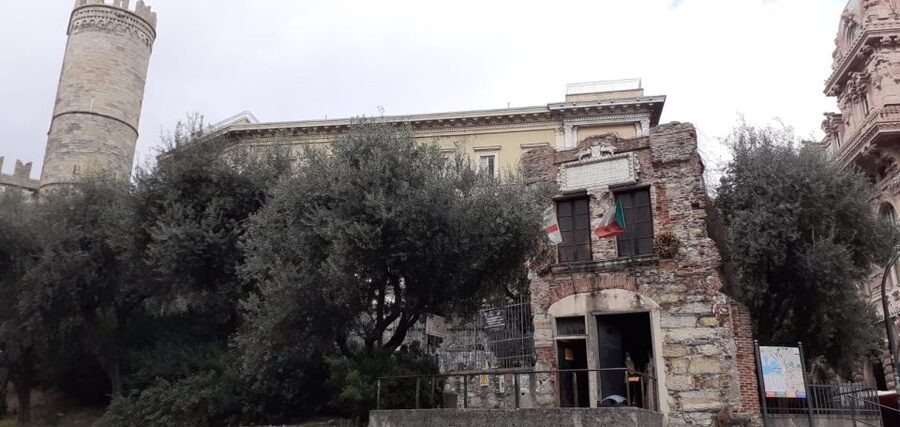
Columbus started here, quietly. This short guided stop at Casa di Colombo turns an ordinary street in Genoa into a story about the explorer’s childhood home, then carries you into the medieval spine of the city. I especially like the small group size (limited to 6), because you can actually hear the guide without craning your neck or shouting over other people.
The other thing I really like is how the tour ties the house to the surrounding area, including the Chiostro di Sant’Andrea and Porta Soprana, so you leave with context instead of just trivia. The main drawback is practical: it’s not suitable for mobility impairments or wheelchair users, and you’ll want to pay attention to the meeting point inside the venue.
In This Review
- Key takeaways before you go
- Why Casa di Colombo and Sant’Andrea feel more meaningful than a quick photo stop
- Finding the meeting point near Porta Soprana without getting stressed
- What you actually learn inside Casa di Colombo in about 20 minutes
- The cloister of Sant’Andrea and the medieval heart of Genoa
- Porta Soprana: why the boundary matters for understanding the story
- Small group touring: the real value at $12
- Who this guided tour suits best, and who should reconsider
- Should you book Casa di Colombo with a guide?
- FAQ
- Where is the meeting point for the Casa di Colombo tour?
- How long is the guided tour?
- Is the tour in English and Italian?
- What stops are included in the guided experience?
- Does the ticket help you avoid waiting in line?
- What is the group size?
- Is the tour suitable for wheelchair users or mobility impairments?
- Is the ticket valid only on the booked date?
- Can I cancel and get a refund?
- Is there a reserve and pay later option?
Key takeaways before you go
- Small group, limited to 6: you get clearer explanations and more back-and-forth with the guide.
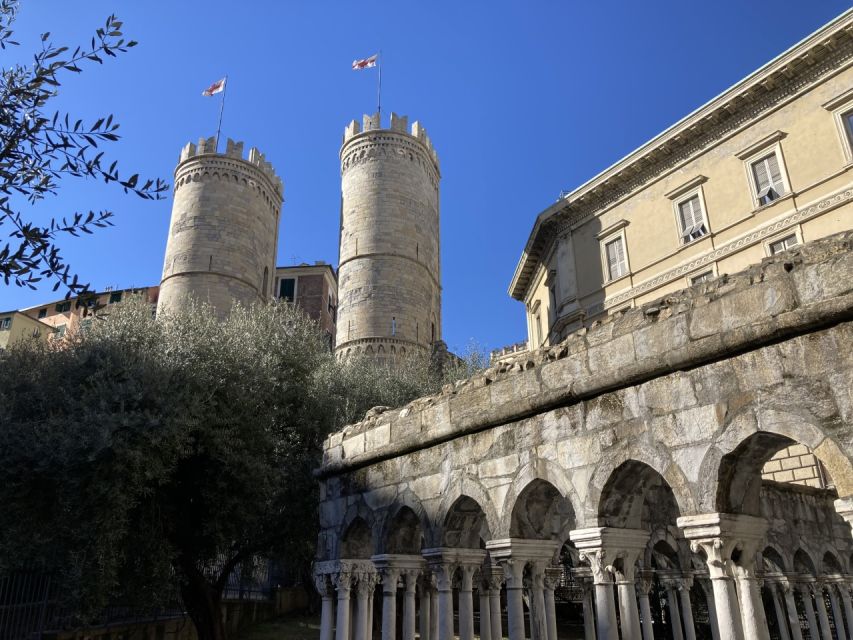
- Two layers of space: the visit covers Casa di Colombo plus the Cloister of Sant’Andrea.
- You’ll see how the house worked: the ground floor was used as a workshop, not just rooms for living.
- Medieval Genoa in one sweep: Porta Soprana helps you place the site at the city’s old edge.
- Guides with serious research: some guides, like Luisa or Georgia, focus on evidence-based interpretation of buildings and history.
- Short ticket time can feel packed: it’s designed for about 20 minutes, but you may spend longer depending on questions.
Why Casa di Colombo and Sant’Andrea feel more meaningful than a quick photo stop
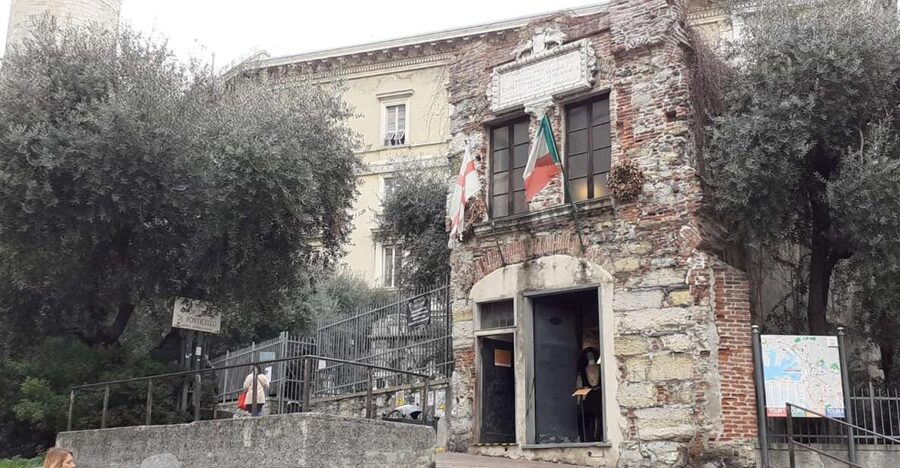
Casa di Colombo is one of those Genoa spots that can look modest from the outside, then surprise you once you learn what you’re actually standing in front of. The key is that this tour does not treat the building like a museum display. It treats it like a lived-in structure, with clues in the layout, the materials, and the way spaces were used.
You start in the early-life setting for Christopher Columbus, tied to a family move recorded in archival documents. Domenico Colombo, his father, moved to this area in 1455, when Christopher was four. That single detail gives the building weight. You’re not just hearing a famous name, you’re seeing how youth and daily life were shaped by where the family ended up.
What I find smart is the pairing with the cloister of Sant’Andrea and the nearby medieval zone. Genoa can be a maze of streets and layered eras. Here, the guide helps you connect the dots fast: the house links to the city’s older fabric, and Porta Soprana gives you a real sense of boundary and movement in medieval times.
If the dates do not line up, these Genoa and Ligurian Riviera outings in Genoa are reviewed too.
- Genoa: Aquarium of Genoa Entry Ticket
★ 4.5 · 10,075 reviews - Genoa: Hop-on Hop-off Tour Ticket
★ 4.0 · 1,524 reviews - Genoa: Half-Day Tour to Portofino
★ 4.2 · 1,123 reviews - Genoa: Pelagos Sanctuary Whale Watching Cruise
★ 4.2 · 806 reviews
Finding the meeting point near Porta Soprana without getting stressed
Logistics matter more than you think for a tour this short. The meeting instruction is simple but easy to miss: meet the guide inside the venue. Do not wait outside, and do not try to track people from the street like you’re playing tourist hide-and-seek.
The good news is that the location is close to Porta Soprana and just outside the medieval walls. That means once you’re in the right neighborhood, you can orient yourself on foot and plan the rest of your Genoa time.
Still, I’d treat the start like a meeting, not a sightseeing suggestion. Arrive a few minutes early, then step inside where you’re directed. If you’re tempted to browse storefronts nearby first, save it for after the tour. Casa di Colombo is quick, so a delay can squeeze the experience.
One more practical note: the tour is live, and it’s offered in Italian and English. If you have language preferences, pick your start time carefully when you book.
What you actually learn inside Casa di Colombo in about 20 minutes
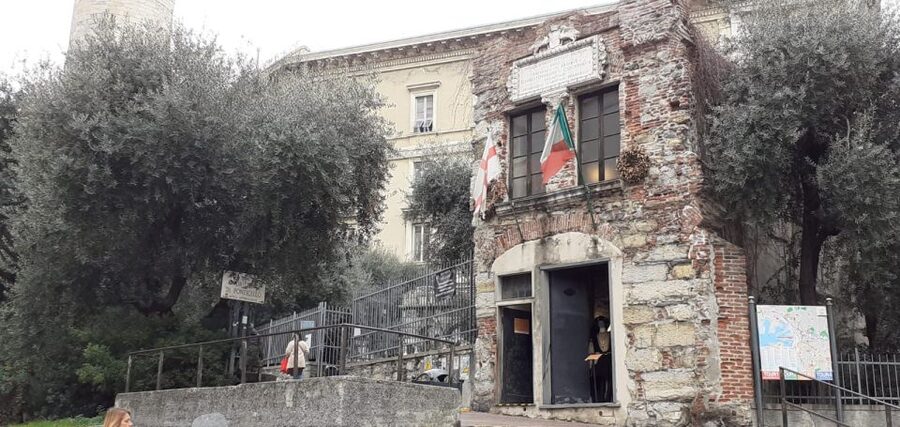
This is a compact tour, and it focuses on what makes the house historically interesting. You’re not wandering alone. You’re escorted through the house with an explanation that centers on the structure and how it was used.
The tour spotlights the building’s layout in a way that helps you picture daily life:
- The ground floor functioned as a workshop, which reframes the space from “home” into “home plus work.”
- An attic with wooden beams creates a division between levels, and that structural detail becomes part of the story.
- The upper floor rooms were for private use, so the design hints at how the family separated labor and living.
Even with a short time window, the guide’s job is to translate those physical features into understandable context. That’s where the best guides make the biggest difference. In the feedback, I noticed appreciation for guides who can explain the building’s reconstruction and the logic behind what you’re seeing.
You may also encounter the way the area has been rebuilt or interpreted, especially as the tour connects to the cloister behind and around the site. Guides who bring an archaeological approach tend to be especially careful about what can be inferred and what can’t.
The cloister of Sant’Andrea and the medieval heart of Genoa
The Chiostro di Sant’Andrea is what turns this from a “Columbus house visit” into a “Genoa context” experience. The cloister sits behind the house and near Porta Soprana, and it was rebuilt in the area to give visitors a more complete view of this medieval zone.
So what does that mean for you on the ground?
First, it helps you understand that Genoa’s old core was not just streets and churches. It was built around religious and communal spaces where architecture shaped movement and social life. Second, the cloister gives your eyes a different kind of reference point. Instead of only looking at the house interior, you get a sense of rhythm, enclosure, and how the site fits into a wider historic environment.
I also like that the tour doesn’t treat the cloister like a final stop photo prop. The guide points out details you’d likely miss if you walked in on your own, like how the rebuilding helps you “read” the area around the original site.
Some guides also take a moment to point out nearby defensive or boundary elements in the wider area, including the Barbarossa Wall, which can be a helpful visual anchor if you like connecting architecture to the city’s old structure.
Porta Soprana: why the boundary matters for understanding the story
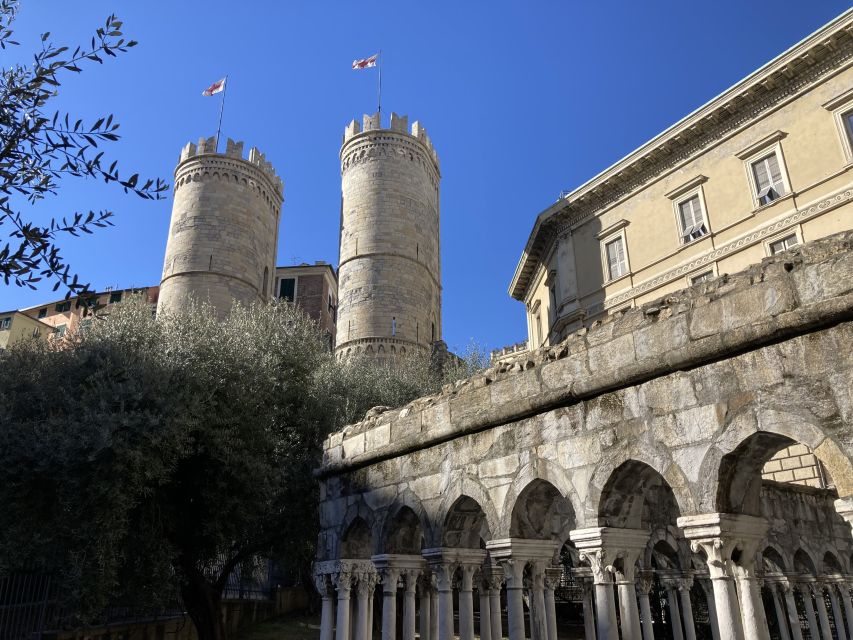
Porta Soprana is more than a landmark. It’s a reminder that this neighborhood sat outside the ancient medieval walls. For a site connected to someone’s childhood, that boundary helps you picture movement in everyday terms: where people lived, where people traveled, and what changed once you crossed into different zones of the city.
From a traveler perspective, Porta Soprana also gives you a practical win. After the tour, you can use it as a reference point to keep your bearings. You’ll know which way you came from, which streets tend to lead deeper into the old core, and where the medieval area starts to feel like a distinct neighborhood rather than random alleys.
Because this tour is short, you need the guide to give you one or two strong orientation points. Porta Soprana fills that role.
Small group touring: the real value at $12
At around $12 per person, this is priced like a quick add-on, but it doesn’t feel like a rushed “stamp-and-go” stop. The value comes from a combination of things:
- Skip the ticket line, so you spend time on the explanations instead of waiting.
- Small group, up to 6, so the guide can explain without repeating everything ten times.
- A focused route that covers Casa di Colombo plus Sant’Andrea and Porta Soprana, so you leave with a sense of place.
Even though the duration is listed as about 20 minutes, it’s smart to assume you may spend a touch longer if the guide pauses for questions or if the group engages with details about the building. In fact, some tours naturally run longer when a guide wants you to notice specific features.
For me, the best part is that the guide work is concentrated. A longer city tour can feel slow if it’s trying to cover too much. Here, the time is tight, but the interpretation is targeted, which is why it can feel worth every minute.
If you’re visiting Genoa and want one short guided segment that anchors multiple stops, this is a strong option. It also fits well if you’re mixing indoor and outdoor time and want something that doesn’t swallow half your day.
Our reviewers also walked through other history tours in Genoa.


Who this guided tour suits best, and who should reconsider
This tour is a good fit if you like structure and explanations, not just famous names. It suits you if you want to understand why the house matters, how the space was used (workshop below, private rooms above), and how the cloister and Porta Soprana connect that story to medieval Genoa.
It’s also a good choice for first-timers because the route helps you orient quickly. And if you’re the kind of person who enjoys small scale history, this is perfect. You’re not dealing with huge crowds inside a massive monument. You’re in a tight group with a guide.
But reconsider if you have mobility challenges. The tour is not suitable for people with mobility impairments or wheelchair users, and that affects comfort and access.
Also, if you hate meetings and prefer to wander on your own with no structure, this may feel too guided. The timing is part of the point here, so you’ll want to follow the guide’s pace.
Should you book Casa di Colombo with a guide?
Yes, if you want a short, guided way to connect Christopher Columbus’ childhood home to Genoa’s medieval setting. The small group size and the fact that the route includes both the house and the Cloister of Sant’Andrea make it more valuable than doing the stops separately without context.
If you’re tight on time, the short duration and line skipping help. If you’re bringing accessibility needs, plan differently because this one is not suited for wheelchair users or mobility impairments.
If you do book it, show up a few minutes early and meet the guide inside. That one choice alone makes the whole experience smoother.
FAQ
Where is the meeting point for the Casa di Colombo tour?
Meet the guide inside the venue. Do not wait outside or in the venue’s nearby area.
How long is the guided tour?
The duration is listed as 20 minutes. Availability can affect starting times, and the tour is short by design.
Is the tour in English and Italian?
Yes. The live tour guide offers Italian and English.
What stops are included in the guided experience?
The guided tour covers Casa di Colombo, the Chiostro di Sant’Andrea (Cloister of Sant’Andrea), and the area including Porta Soprana.
Does the ticket help you avoid waiting in line?
Yes. The ticket includes skip the ticket line.
What is the group size?
The group is small, limited to up to 6 participants.
Is the tour suitable for wheelchair users or mobility impairments?
No. It is listed as not suitable for people with mobility impairments and wheelchair users.
Is the ticket valid only on the booked date?
Yes. The ticket is valid only on the date booked.
Can I cancel and get a refund?
Yes. There is free cancellation up to 24 hours in advance for a full refund.
Is there a reserve and pay later option?
Yes. You can reserve now & pay later, keeping your plans flexible.
Our Wider Tours File for Genoa
Our Wider Genoa and Ligurian Riviera Outings File for Genoa
Not quite the day you had in mind? The rest of our Genoa write-ups sit below
- Aquarium of Genoa Ticket and Whale Watching Cruise★ 4.2 · 170 reviews
- Genoa: Historic Guided Tour of Christopher Columbus’ House★ 4.4 · 186 reviews
- Genoese cooking lesson in the with lunch in the terrace★ 5.0 · 189 reviews
- Genoa: Aquarium, Galata Museum and Submarine Entry Tickets★ 4.6 · 190 reviews
- Genoa Food, Wine Tasting & History Walking Tour★ 5.0 · 212 reviews
- Genoa: Food and Wine Tasting Walking Tour★ 4.9 · 215 reviews
- Genova: Homemade Pasta & Pesto Local Chef Class with Wine★ 5.0 · 217 reviews
- Genoa: Impossible Museum Entry Ticket★ 4.2 · 226 reviews
- 2 Hours Private Historical Tour in Genoa★ 5.0 · 248 reviews
Genoa & the Ligurian Riviera, top to bottom.
 ★ 4.5Genoa: Aquarium of Genoa Entry TicketFrom $3510,075 reviews
 ★ 4.4Genoa: Full-Day Tour to Camogli, San Fruttuoso & PortofinoFrom $243,295 reviews
 ★ 4.0Genoa: Hop-on Hop-off Tour TicketFrom $261,524 reviews
 ★ 4.3Genoa: Aquarium of Genoa with LunchFrom $421,449 reviews
 ★ 4.2Genoa: Half-Day Tour to PortofinoFrom $301,123 reviews
 ★ 4.2Genoa: Pelagos Sanctuary Whale Watching CruiseFrom $51806 reviews
 ★ 4.3Genoa: Cetacean Watching Cruise with Marine Biologist GuideFrom $53745 reviews
 ★ 4.2Genoa: 2-Hour Guided Walking Tour of the Historical CenterFrom $16605 reviews