

Reviewed · POMPEII ARCHAEOLOGICAL SITE
Pompeii: Skip-the-Line Entrance Ticket with Audio Guide
Pompeii hits you fast, once you’re inside. This skip-the-line ticket helps you start exploring quickly, and the audio guide keeps you oriented without forcing you into a fixed group schedule.
My two favorite parts are simple: you avoid the worst ticket-office delays, and you get a map plus audio so you can pick your own route through the ruins. That combo matters here, because Pompeii is big, and the streets can feel like a maze.
One thing to plan for: even with self-guided freedom, you’ll walk a lot in sun and heat, with limited shade. Go early, bring water, and don’t rely on the ruins themselves to slow you down.
In This Review
- Key highlights worth the hype
- Skip-the-Line Pompeii: Why This Format Works
- Price, Value, and What’s Really Included for $39.97
- Where You Exchange Your Voucher Near Circumvesuviana
- First Steps at Pompeii: Getting Oriented Fast
- The Audio Guide: How to Use It Without Getting Lost
- Pompeii’s Big Stops You’ll Want to Prioritize
- Roman amphitheater, small theater, and the public gym
- Frescoes and rooms that show daily life
- Houses, streets, and the feeling of a city frozen mid-day
- Heat, Water, and Timing: The Real Secret to Enjoying Pompeii
- Picking Between Self-Guided Audio and a Live Tour Upgrade
- What to Bring (and What Will Trip You Up)
- Who This Pompeii Ticket Suits Best
- Should You Book This Pompeii Skip-the-Line Audio Ticket?
- FAQ
- Where do I exchange my voucher for the Pompeii ticket?
- What languages are available for the audio guide?
- Are headsets included?
- What identification do I need to bring?
- Is luggage allowed?
- How long is the visit?
- Is free cancellation offered?
- Do children pay?
Key highlights worth the hype

- Skip-the-line entry that saves time at the busiest moment
- Audio guide in multiple languages so you can understand what you’re seeing
- Map included, useful for navigating a sprawling site
- Pompeii’s major public spaces like the amphitheater, small theater, and gym
- Frescoes and everyday life details, from houses to banquet-style rooms
Skip-the-Line Pompeii: Why This Format Works

Pompeii is one of those places where timing makes a huge difference. If you lose an hour to ticket lines or unclear pickup points, the afternoon heat starts to win. That’s why I like this setup: you get skip-the-line entry after exchanging your voucher, and then you spend your time inside where it counts.
The other smart piece is the “choose your own pace” design. Pompeii has major sights, but it also rewards curiosity. The audio guide and map let you pause, backtrack, or focus on frescoes one minute and public buildings the next, without waiting for a group to move on.
This isn’t a hands-on workshop. It’s a self-guided ruins visit, supported by audio. So the experience works best when you’re comfortable reading signs lightly, using a map, and trusting your own route.
Our reviewers also walked through other Pompeii site visits in Pompei Campania.
- Pompeii: Entry Ticket and Guided Tour with an Archaeologist
★ 4.8 · 19,459 reviews - Pompeii: Small Group Tour with an Archaeologist
★ 4.8 · 12,264 reviews - Pompeii: Skip-the-Line Entrance Ticket with Audio Guide
★ 4.0 · 2,509 reviews - Naples: Pompeii and Mt. Vesuvius with Lunch and Wine Tasting
★ 4.5 · 2,454 reviews
Price, Value, and What’s Really Included for $39.97
At $39.97 per person, you’re paying for three things: entry without heavy ticketing friction, an audio guide, and a map. That’s good value for Pompeii because two of those items are what often slow people down.
If you go without audio, you risk wandering past important details, like how rooms were used or what certain frescoes signaled to Roman life. If you go without a map, you spend time figuring out where you are instead of what’s in front of you. Here, both supports are included.
A quick reality check on added costs: the data you provided mentions people sometimes upgrade to a live guided tour for extra money. That suggests there’s an option if you decide you want a more structured walkthrough. If you like learning by listening while walking, that upgrade can feel worth it. If you’re happy to explore independently with audio, you can skip the extra step.
Also note what’s not included: headset/headphones are not provided. Plan to bring your own, because you’ll need something to listen comfortably.
Where You Exchange Your Voucher Near Circumvesuviana

This is where many day trips get frustrating, and it’s also where this one is fairly direct if you know the exact location.
Start at the activity provider office on the first floor of Circumvesuviana train station. The address is:
Via Villa dei Misteri, 1, 80045 Pompei NA, Italia.
You’ll exchange your voucher there for your entry and audio guide materials. This is a major advantage if you’re coming from Naples by train. You don’t have to hunt for the right desk hours later at the ruins gate.
There’s also a helpful extra detail: if it’s open and space is available, you might find free parking at Osteria Nonna Cherubina, Via Andolfi 46, 80045 Pompei.
The practical takeaway: give yourself a little buffer time to exchange your voucher calmly, not at the last possible minute.
First Steps at Pompeii: Getting Oriented Fast
Once you’re inside, your biggest challenge is not knowing that Pompeii is famous. It’s knowing what you’re looking at and where to go next.
The map helps you do three key things quickly:
- identify the major zones you want to cover
- avoid walking back and forth as your route changes
- spot where public buildings and houses connect
Pompeii’s scale surprises people. Some areas feel compact until you realize how much city you still haven’t seen. That’s why I like the self-guided structure here. You can start with “big public spaces” and then branch into residential areas and frescoes based on energy levels.
Also keep expectations realistic: even with skip-the-line entry, there can still be some queuing when you first access the site. Think of skip-the-line as a reduction, not a magic invisibility spell.
The Audio Guide: How to Use It Without Getting Lost

You’re given an audio guide plus a map. Audio does two jobs at once: it explains what you’re seeing and it helps you understand why it matters.
From the information you shared, the audio guide is available in French, German, Italian, English, and Spanish. That’s a big deal in Pompeii because many people are confronting Roman life for the first time. A quick explanation can turn a visual into a story.
One practical tip I’d follow: treat the audio like a menu. Don’t feel obligated to listen continuously. Instead, listen as you approach a stop, then tune it out while you absorb the frescoes or street layout visually.
A word of caution from the provided details: some people found the audio guide pickup confusing in the moment. So before you walk too far, pause near the start and make sure you’ve got the audio guide working, and you know how to access the right tracks. This saves you from later frustration.
Also remember the headset detail: headphones are not included. Bring what you already own, wired or wireless, as long as it works with your device.
Pompeii’s Big Stops You’ll Want to Prioritize
With self-guided time, you should focus first on what gives you the “framework” of the city. Once you understand the framework, the smaller details click.
Here are the major Pompeii highlights explicitly mentioned in your details, plus how they tend to feel in real life:
We wrote up further entry tickets in Pompei Campania on the same pass through the archive.


Roman amphitheater, small theater, and the public gym
These places show you Pompeii’s public rhythm. The Roman amphitheater is where spectacle happened, and seeing it helps you understand the city as a social machine, not just a collection of ruined walls.
The small theater adds variety. It helps you compare performance spaces and how entertainment fit daily life.
The public gym is a great “daily life” anchor. Even if you skip some residential buildings, you can still picture how people spent time, trained, and gathered around public facilities.
Frescoes and rooms that show daily life
Pompeii is famous for frescoes for a reason. When you see them up close, you feel the difference between “old stuff” and “people’s real interiors.” The frescoes, plus the preserved wall art style, make Roman domestic life feel immediate.
The details you shared also mention you’ll see places where Romans held banquets and lived their daily life. That’s exactly what helps audio add value: it explains what a room’s layout likely meant, how people moved through it, and why certain spaces mattered.
Houses, streets, and the feeling of a city frozen mid-day
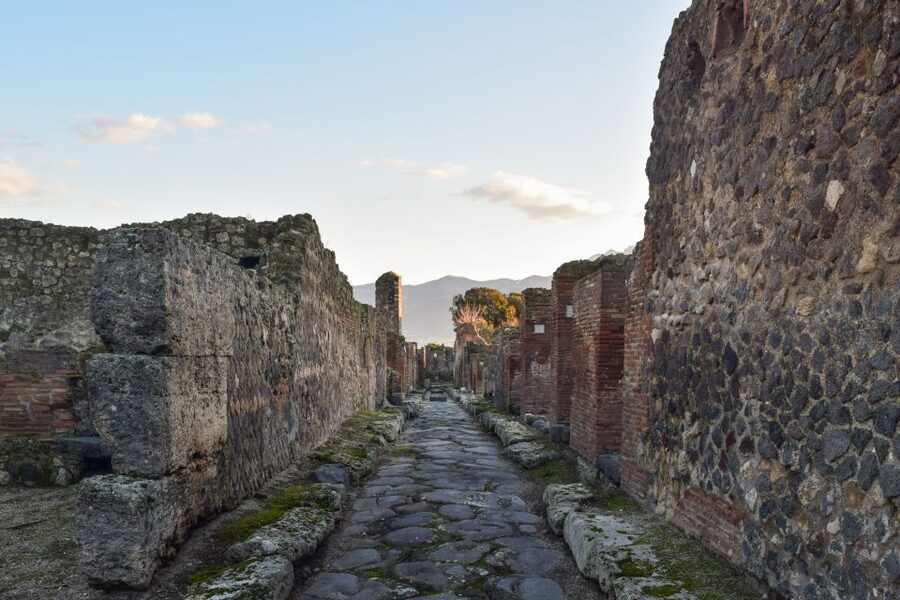
You’re walking in a city plan, not just sightseeing sculptures. Pompeii’s scale is why the map and audio matter. If you let the route guide you, you get the best mix of public buildings and residential details instead of only chasing the biggest headline stops.
And yes, there are moments that stop you. Even without a live guide, there’s something powerful about seeing a preserved scene and realizing how normal it must have once felt.
Heat, Water, and Timing: The Real Secret to Enjoying Pompeii
Pompeii is outdoors, and the sun can be relentless. The information you provided includes reminders about limited shade and the need to bring water.
My advice is boring but effective:
- start earlier when you can
- carry water from the moment you enter
- plan quick breaks, especially if you listen to audio while walking
You can explore at your own pace, but pace doesn’t change the weather. So treat timing like part of your ticket value. Earlier entry often means fewer crowds at the moment you want to see details, and it usually means less discomfort while you navigate.
Also, know that there’s limited on-site food availability mentioned in the details. So don’t plan your day around refueling inside the ruins.
Picking Between Self-Guided Audio and a Live Tour Upgrade
One thread in the details is that some people chose an added guided tour and said it was worth it, with specific guide names mentioned like Alfonso, Alfonso-Marie, Astrid, and Julià. That tells you something important: audio is helpful, but a live guide can add extra meaning and help you move efficiently.
So how do you decide?
- If you like context, storytelling, and a streamlined route, consider a live option if it’s offered during your visit.
- If you like freedom, slower looking, and time to linger on frescoes and doorways, the included audio is usually a good match.
Also, a live guide can help with the “maze problem.” Pompeii can feel confusing, especially when you’re tired. Self-guided is great when you want independence, but a guide can reduce wasted steps.
What to Bring (and What Will Trip You Up)
Here’s what the details say you should plan for:
Bring:
- Passport or ID card
- Headphones (a headset is not included)
Not allowed:
- luggage or large bags
The “no large bags” rule is more than a housekeeping note. It affects what you carry and how you move. I’d travel light, especially if you’re coming by train.
If you’re the kind of traveler who always has a little emergency kit, this is a good place for it: sun protection and water matter. One of the strongest practical reminders tied to this experience is simply to come ready for heat.
Who This Pompeii Ticket Suits Best
This experience is built for people who want control. You’re not locked into a specific path, and you can spend extra time where you’re interested.
It works particularly well if:
- you want a DIY route but still want explanations
- you’re comfortable navigating a large site with a map
- you want to learn without spending extra time joining a long group tour
If you’re someone who strongly prefers guided pacing, you might still do well here, but you may feel the need for extra help at the start, especially in a place as sprawling as Pompeii. The audio guide is the compromise, and it can be excellent when you actually use it as you walk.
If you’re traveling with kids, note the pricing rule provided: children aged 0 to 17 go for free. That can make this format especially attractive for families, though you’ll still be dealing with heat and long walking.
Should You Book This Pompeii Skip-the-Line Audio Ticket?
I’d book it if you want value through convenience and independence. The skip-the-line part helps you start sooner, and the included audio plus map gives you the support most first-timers need in a huge site.
Skip it if you know you dislike self-guided ruins visits. Pompeii is large, and listening to audio while walking requires a little buy-in. Also, if you show up unprepared for headphones, heat, and water, you’ll feel the downside fast.
If you want my simple call: this ticket is a solid, low-stress way to get inside Pompeii and make the ruins understandable. Add a live guide only if you feel you need more structure than audio provides.
FAQ
Where do I exchange my voucher for the Pompeii ticket?
You exchange your voucher at the activity provider office on the first floor of Circumvesuviana train station, Via Villa dei Misteri, 1, 80045 Pompei NA, Italia.
What languages are available for the audio guide?
The audio guide is available in French, German, Italian, English, and Spanish.
Are headsets included?
No. Headphones are not included, so you should bring your own.
What identification do I need to bring?
You should bring a passport or ID card.
Is luggage allowed?
No. Luggage or large bags are not allowed.
How long is the visit?
This activity is listed as 1 day, with starting times to check availability.
Is free cancellation offered?
Yes. You can cancel up to 24 hours in advance for a full refund.
Do children pay?
Children aged 0 to 17 years go for free. People aged 18 to 24 from the European community with an identification document pay €2.
Entry Tickets in Pompei Campania We Also Walked



The Rest of Our Pompeii Site Visits in Pompei Campania

Not quite the day you had in mind? The rest of our Pompei Campania write-ups sit below
- Pompeii: Skip-the-Line Entry & Audioguide★ 3.8 · 225 reviews
- Pompeii: Day Tour of Pompeii and Vesuvius with Bus Transfer★ 4.2 · 250 reviews
- From Naples/Salerno: Pompeii, Sorrento, and Positano Tour★ 4.5 · 250 reviews
- Pompeii: Tour with Archaeologist Guide & Skip-the-Line Entry★ 4.5 · 478 reviews
- Pompeii: Afternoon to Sunset Guided Tour with Ticket★ 4.9 · 484 reviews
- Pompeii 3hours Villa of Mysteries tour with an Archaeologist★ 4.8 · 486 reviews
- From Pompeii: Bus Transfer to Vesuvius with Park Entry Fee★ 4.2 · 700 reviews
- Pompeii: Skip-the-Line Entry Ticket with Digital Guide App★ 4.1 · 770 reviews
- Pompeii: Guided Tour with Skip-the-Line Entry★ 4.9 · 812 reviews
Pompeii Archaeological Site, top to bottom.
 ★ 4.8Pompeii: Entry Ticket and Guided Tour with an ArchaeologistFrom $3519,459 reviews
 ★ 4.2Pompeii: Entry Ticket with Optional Audio GuideFrom $2612,360 reviews
 ★ 4.8Pompeii: Small Group Tour with an ArchaeologistFrom $4012,264 reviews
 ★ 4.3From Naples: Pompeii Ruins & Mount Vesuvius Day TourFrom $12011,459 reviews
 ★ 4.6From Rome: Pompeii, Amalfi Coast, and Sorrento Day TripFrom $797,031 reviews
 ★ 4.6From Rome: Pompeii, Amalfi Coast and Positano Day TripFrom $996,620 reviews
★ 5.0Pompeii Small Group Tour with an ArchaeologistFrom $356,593 reviews
★ 4.6From Rome: Pompeii, Amalfi Coast and Positano Day TripFrom $996,620 reviews
★ 5.0Pompeii Small Group Tour with an ArchaeologistFrom $356,593 reviews
 ★ 4.5Pompeii, Amalfi Coast and Positano Day Trip from RomeFrom $1016,250 reviews