
Reviewed · POMPEII ARCHAEOLOGICAL SITE
Pompeii: Afternoon to Sunset Guided Tour with Ticket
Pompeii looks different at golden hour. This afternoon-to-sunset guided walk is built for seeing the big civic sights and then letting the ruins calm down in the evening. I love the archaeologist-style explanations (guides like Angelo, Anna, Sasa, and Francesco often shine here) and I love that you cover key places like the Forum, Thermal Baths, and Theater instead of wandering randomly. The main consideration is the walking, Pompeii is not the best fit if you have mobility issues, heart problems, respiratory issues, or if you are over 95.
You get to feel the city’s layout in a short time. This tour guides you through the places that shaped daily life, including the Basilica and neighborhoods with a bakery and housing blocks, then ties it back to the eruption that buried Pompeii in 79 AD. The sunset timing helps you keep your stamina up, but it can also mean you’ll want to arrive early to avoid any last-minute rushing at the meeting spot.
Below the surface, the value is in direction and focus. You get a skip-the-line ticket plus a live guide, so you spend your energy looking at stones and streets, not fighting queues. Still, this is a highlights-focused 2.5-hour route, so you might not see everything if you’re a slow, everything-at-once explorer.
In This Review
- Key points to know before you go
- Why the Pompeii afternoon to sunset timing is the smart move
- Meeting at Ristorante Bar Sgambati, and how to not waste time
- Skip-the-line ticket value: what you gain in real time
- The Forum stop: seeing civic life, not just ruins
- Basilica and Antiquarium: learning to read the site faster
- Thermal Baths and Theater: public spaces that feel human
- Neighborhood streets, bakeries, and housing blocks
- Vesuvius in 79 AD: the story that ties everything together
- Pacing, shade, and the walking reality
- What you can realistically see in 2.5 hours
- Price and value: is $58 worth it?
- Who should book this Pompeii sunset guided tour
- Should you book this Pompeii afternoon-to-sunset tour?
- FAQ
- Where do I meet the guide for this Pompeii tour?
- How long is the guided tour?
- What is included in the tour price?
- What should I bring?
- What languages are available for the live guide?
- Is the tour refundable if I change plans?
Key points to know before you go
- Afternoon-to-sunset timing helps with heat and crowd pressure while you still see major sites
- Skip-the-line entry means less waiting and more time inside the archaeological area
- Live archaeologist guide with multiple languages (Italian, English, French)
- High-demand highlights covered in one compact walk: Forum, Basilica, Thermal Baths, Theater
- Neighborhood-level stops including a bakery and typical housing blocks for day-to-day context
- Small group feel (often described as intimate), making it easier to ask questions and keep pace
Why the Pompeii afternoon to sunset timing is the smart move
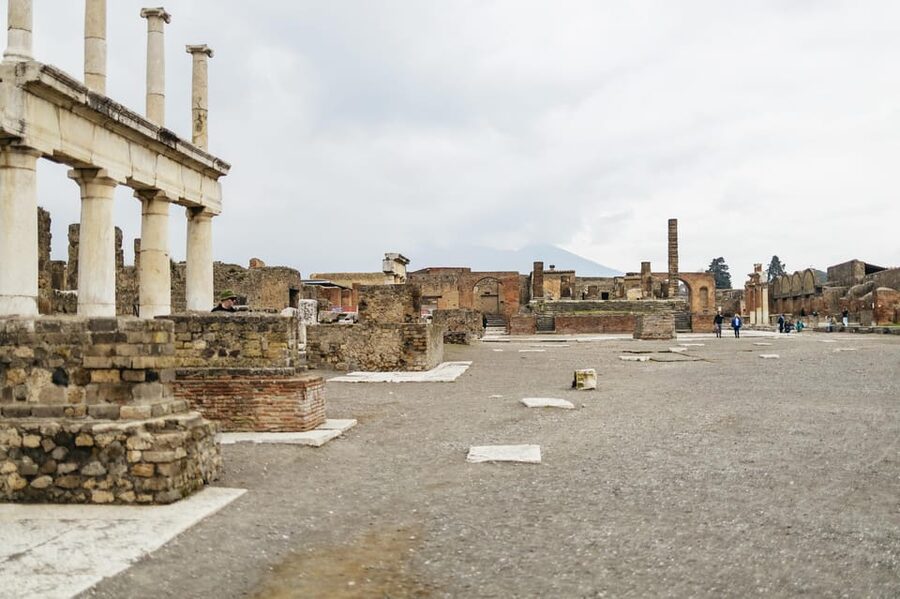
Pompeii is huge. If you show up mid-day, you can end up doing the museum-speed shuffle: look, photograph, squint, repeat. The main benefit of this tour is that it’s scheduled for the afternoon and into sunset, so the light gets kinder and the ruins feel less intense.
That timing matters because Pompeii is a walking site. You’re moving through streets and open spaces where the sun can feel strong. Multiple guide-led descriptions mention finding shade breaks and pacing the group, and that’s exactly what you want on a compact 2.5-hour experience.
It also changes the mood. As the sun drops, the atmosphere turns quieter, and you can look longer at the same spot without feeling like you’re in a rush. Even if you’ve seen Pompeii photos before, the late-day visit helps you connect the dots between streets, buildings, and civic spaces.
Our reviewers also walked through other Pompeii site visits in Pompei Campania.
- Pompeii: Entry Ticket and Guided Tour with an Archaeologist
★ 4.8 · 19,459 reviews - Pompeii: Small Group Tour with an Archaeologist
★ 4.8 · 12,264 reviews - Pompeii: Skip-the-Line Entrance Ticket with Audio Guide
★ 4.0 · 2,509 reviews - Naples: Pompeii and Mt. Vesuvius with Lunch and Wine Tasting
★ 4.5 · 2,454 reviews
Meeting at Ristorante Bar Sgambati, and how to not waste time
Your meeting point is Ristorante Bar Sgambati. You meet your guide at the entrance with a red sign that says Enjoy Pompeii. This is one of those small details that saves your day. Pompeii tours live and die by meeting accuracy, because once you’re late, you can lose the whole rhythm of the walk.
Aim to arrive with a bit of buffer so you can spot the sign calmly. Then you can start the tour with the orientation you actually need: where you’re going first, what you should notice as you walk, and what to expect from the route.
A practical tip: bring your ID (a copy is accepted) and a sun hat. Even with the sunset timing, you’re outside for the whole duration, and those small comforts help you stay focused on the ruins rather than the weather.
Skip-the-line ticket value: what you gain in real time
The ticket is included, and it’s a skip-the-line entry ticket to Pompeii through a separate entrance. On a site this popular, skipping the queue is not a tiny perk. It’s the difference between spending your most useful energy walking and spending it standing in line.
This tour also pairs that ticket with a live guide, which boosts the value. Without a guide, Pompeii can be overwhelming fast. With a guide, you’re given a route that makes sense, plus explanations that help you interpret what you’re seeing.
Because the tour is only 2.5 hours, the time you save at the gate matters even more. You’re not just buying entry. You’re buying a structured visit where the guide helps you hit the most important areas without burning your day getting oriented.
The Forum stop: seeing civic life, not just ruins
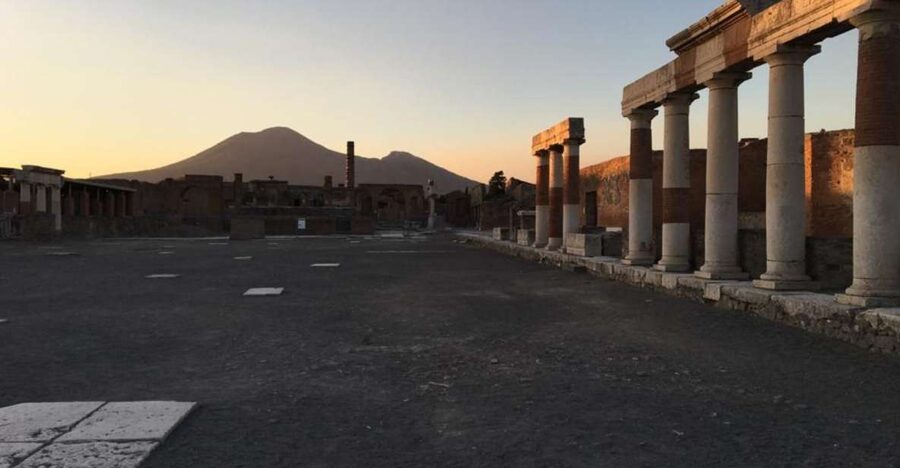
A big reason people love guided Pompeii tours is that they turn random stone into a living city plan. On this route, the Forum is one of the core stops, and it’s a great first “read” of Pompeii’s layout.
The Forum is where civic life happened, and the tour’s structure pushes you to look beyond the obvious walls. You’ll hear how the buildings around this space connected to everyday routines and public activity. That’s what makes the Forum special on a short tour: it gives you a framework for the rest of the walk.
One practical advantage: the Forum area helps you understand what’s “central” versus what’s “neighborhood.” Later, when you move into residential blocks and commercial spaces like bakeries, you’ll notice how the scale shifts and how the city’s functions repeat in smaller pockets.
Basilica and Antiquarium: learning to read the site faster
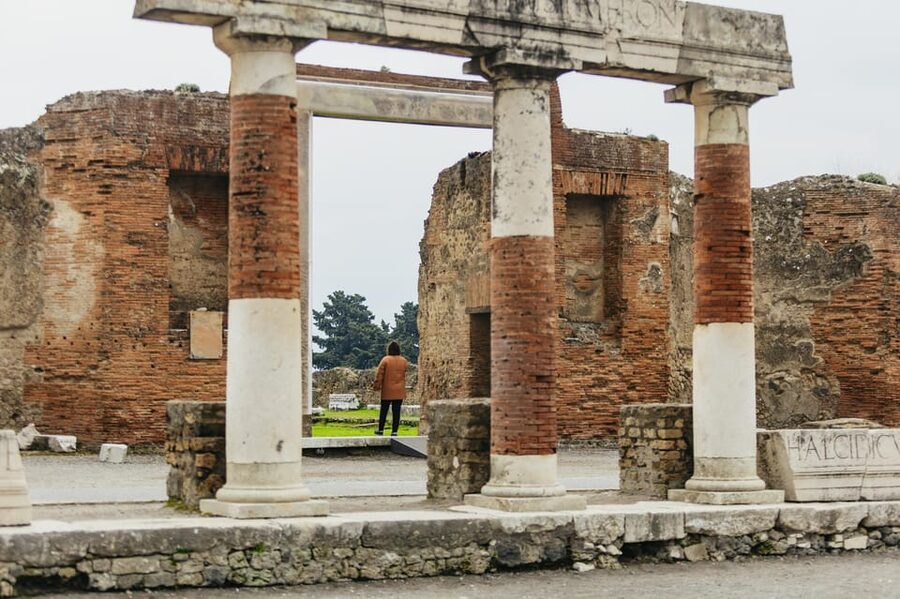
Next up are major civic buildings including the Basilica and time at the new Antiquarium. These stops are valuable because they help you interpret what you’re seeing when the buildings start to blend together visually.
The Basilica is part of Pompeii’s civic identity, and the tour context helps you connect it to the broader story of public life. You’re not just walking past a big structure. You’re learning why it mattered and how it fits into the city’s design.
The Antiquarium adds another layer. A guided explanation here helps you understand the ruins as evidence, not just scenery. That’s especially helpful if you’re visiting for the first time and want to avoid the feeling of seeing everything but understanding little.
A minor consideration: if you prefer pure wandering time with no structure, you might feel like some stops get a bit of “classroom energy.” The upside is that you’ll leave with better clarity, which usually makes it easier to explore on your own afterward.
Thermal Baths and Theater: public spaces that feel human
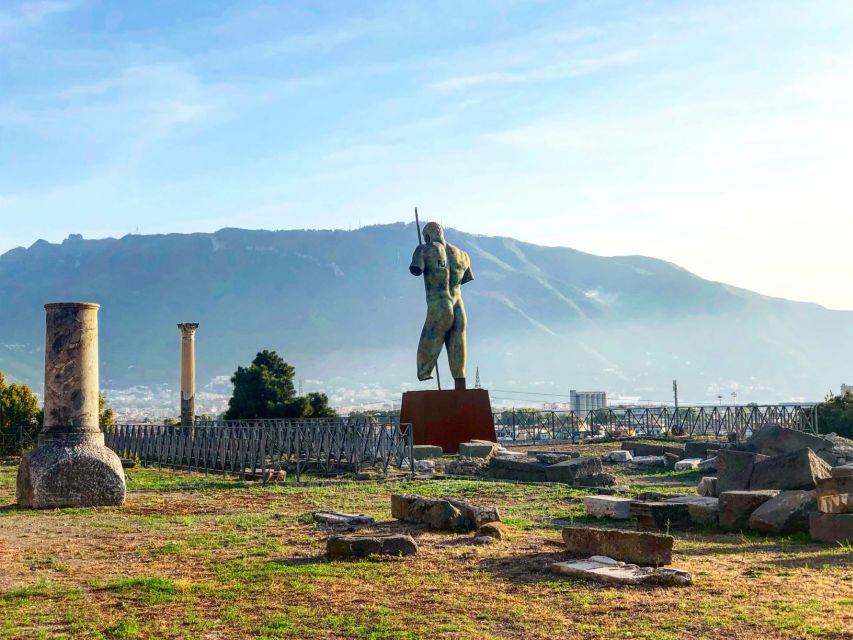
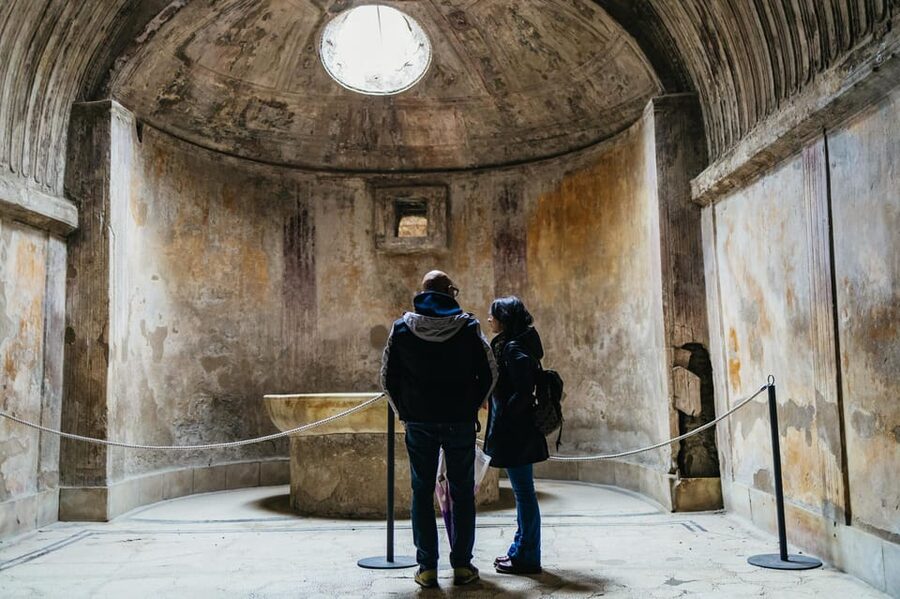
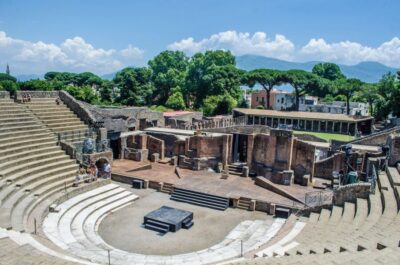
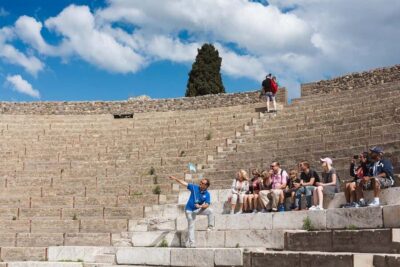
The Thermal Baths and Theater are among the most memorable stops on the tour, and for a good reason. These aren’t private rooms. They’re public gathering spaces, built for routine and entertainment.
The Baths help you understand how public hygiene, relaxation, and social life fit into Pompeii day-to-day. The Theater adds a different kind of public energy, giving you a way to picture how people spent their free time.
Guides tend to use these stops to tell stories that connect architecture to human behavior. In particular, guides like Francesco and Frankie are described as humorous and engaging, and that style helps these buildings stop feeling like lecture material and start feeling like settings.
If you love architecture and engineering details, this is where you’ll likely feel the biggest payoff. Multiple guides are praised for explaining Roman design and the practical meaning behind what you see.
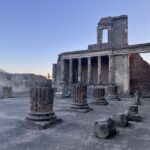




Neighborhood streets, bakeries, and housing blocks
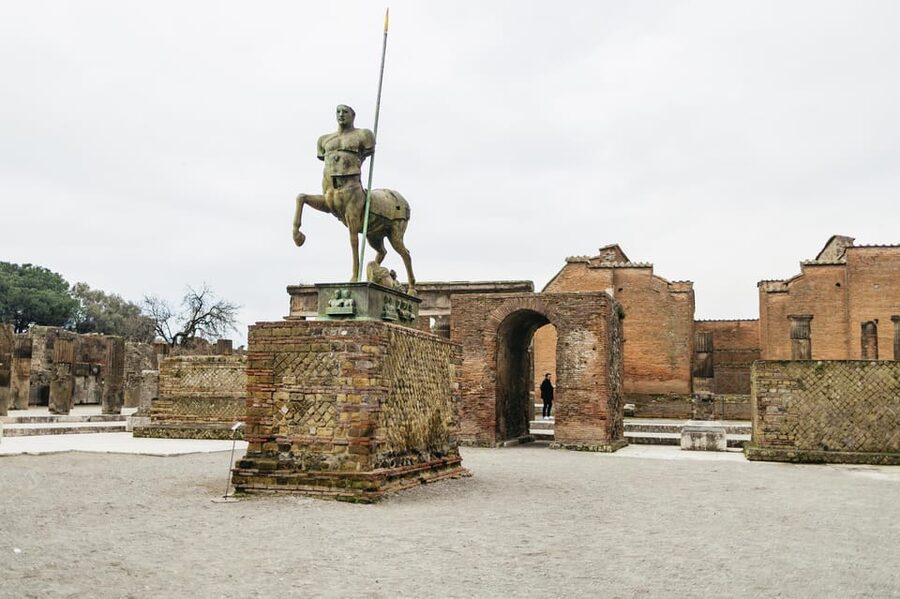
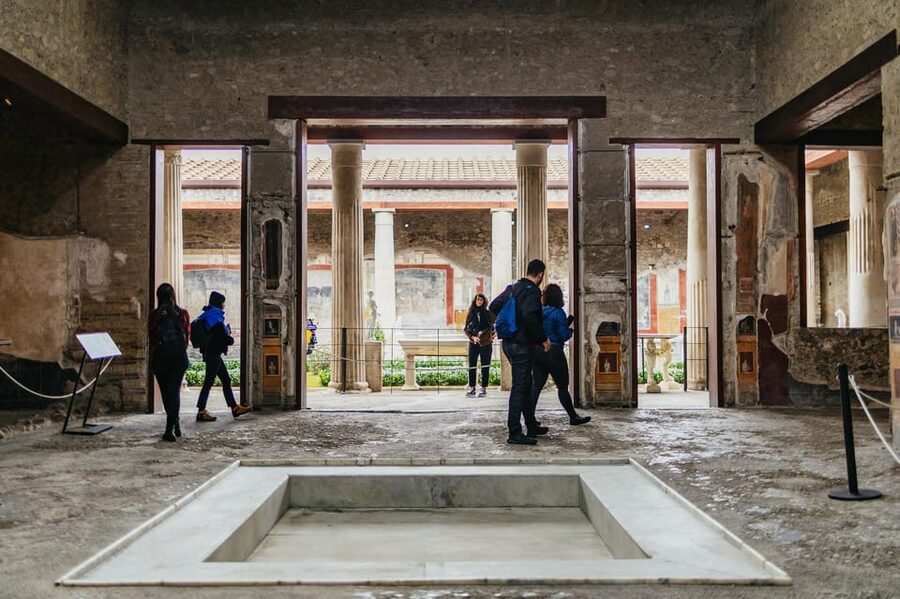
One reason this route feels more complete than some “top monuments only” tours is the inclusion of everyday places. You’ll explore different neighborhoods and you’ll see evidence of commercial and residential life, including a bakery and typical housing blocks.
This is where Pompeii becomes relatable. The big civic sites can be impressive, but they can also stay abstract if that’s all you see. Neighborhood streets add scale, rhythm, and repetition. Bakeries help you picture food production and daily commerce, and housing blocks help you understand how ordinary life fit into a dense city.
This part of the tour also helps you move through Pompeii with better mental organization. You start remembering not just where famous buildings are, but how the city “works” as a whole. That becomes especially useful if you plan to continue exploring after the tour.
Vesuvius in 79 AD: the story that ties everything together
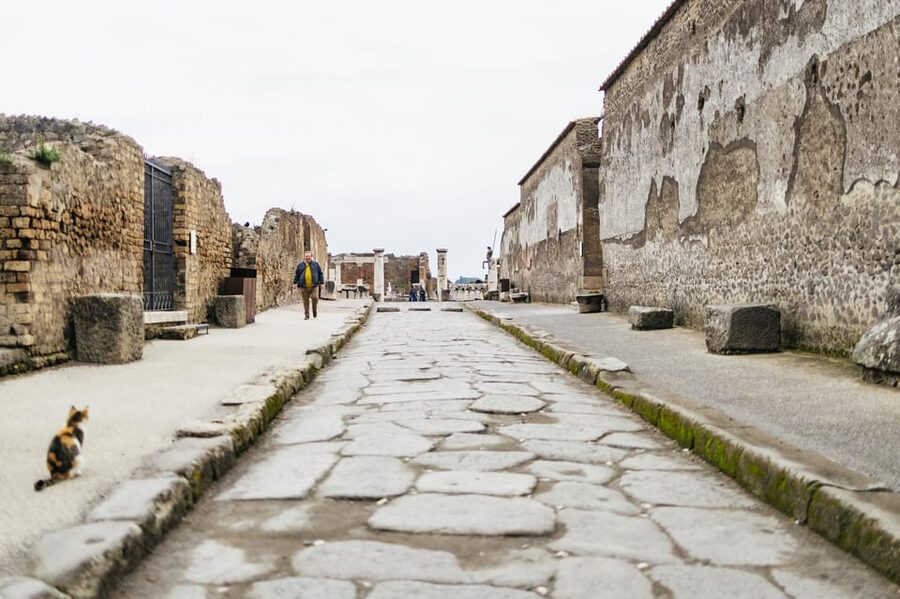
A good Pompeii guide doesn’t treat the eruption as a quick trivia line. Here, the tour connects what you see to the catastrophic event that buried Pompeii in 79 AD and explains its impact on the city and broader society.
That connection is what turns an archaeological site into a historical experience. Without it, you can end up looking at buildings and thinking, so what. With it, the guide gives you a narrative reason for why these walls, streets, and spaces are frozen in time.
You’ll also hear about daily life in ancient Pompeii before the eruption. That’s a key difference between a highlights tour and a truly meaningful one: the guide helps you imagine people doing ordinary things, not just living inside a textbook.
Pacing, shade, and the walking reality
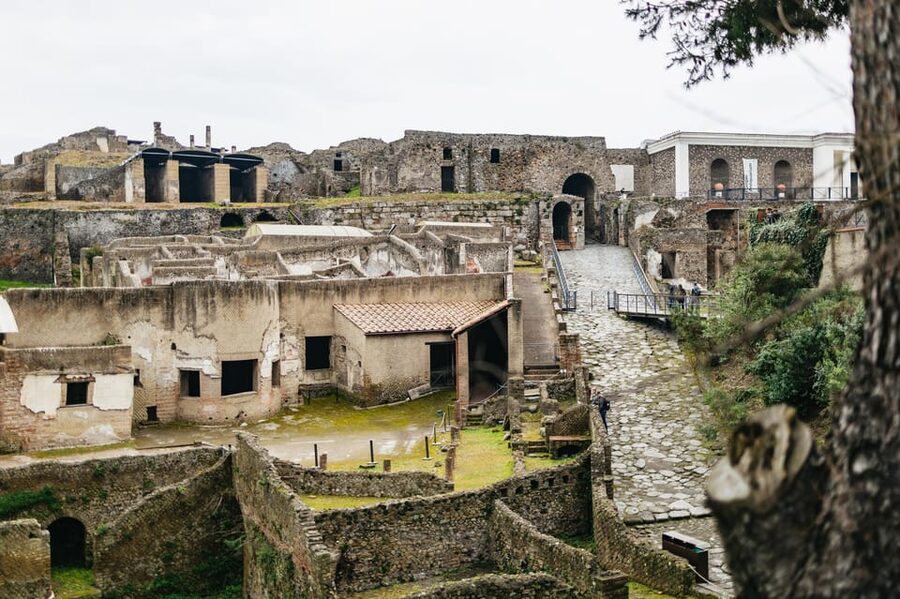
This is a walking tour of 2.5 hours, and Pompeii involves uneven surfaces and long stretches outdoors. Even if the group size stays small, you should expect real walking.
The tour format seems built for manageable stamina. Many guide descriptions mention checking pace and finding shaded spots during explanations. That’s a big deal at Pompeii, because stopping to learn is only fun if you’re comfortable.
That said, Pompeii is not a good match for everyone. This activity is not suitable for people with mobility impairments, people with heart problems, people with respiratory issues, and people over 95. If any of these apply, you’ll want to choose an alternative that reduces walking time and avoids strenuous routes.
If you’re generally healthy and used to walking, this tour is a smart way to see a lot without spending an entire day. Still, bring your water strategy. The tour data doesn’t spell out refreshment stops, so you should plan for the basics yourself.
What you can realistically see in 2.5 hours
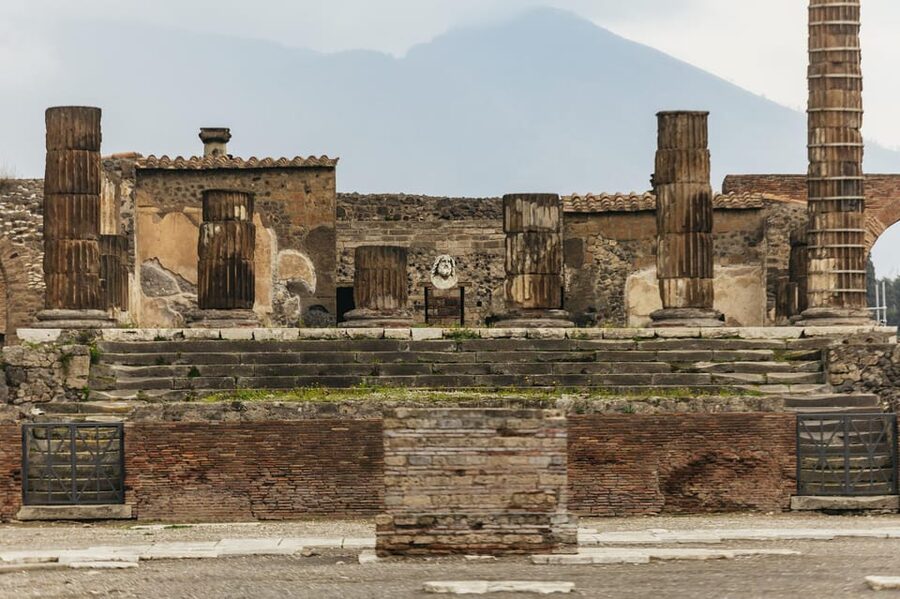
Because the tour is timed from afternoon into sunset, it’s designed for high-impact sightseeing. You’ll hit major civic and cultural sites, plus neighborhood-level glimpses, without trying to cover the whole park.
Here’s what the route prioritizes:
- Civic landmarks: Forum, Basilica, and new Antiquarium
- Public life: Thermal Baths and Theater
- Everyday context: bakeries and typical housing blocks
- Historical framing: the eruption of Vesuvius in 79 AD and its impact
What you might not get is total coverage. Pompeii rewards slow exploration, but this tour is not trying to replace a full-day visit. It’s built to help you see the core highlights, learn what matters, and then use your remaining time to explore with better judgment.
If you have limited time in the area, that’s a strong reason to choose this option rather than a self-guided scramble.
Price and value: is $58 worth it?
At $58 per person, the value depends on what you’re buying. You’re getting:
- A skip-the-line Pompeii entry ticket (with a separate entrance)
- A live archaeologist guide
So you’re paying for two things that are hard to replicate on your own: time savings at entry and expert interpretation while you walk.
If you’ve ever tried to “DIY” Pompeii with a map, you know the problem. The ruins are impressive, but understanding the city layout takes effort. An archaeologist guide can save you that guesswork, especially on a short visit where every minute counts.
You’ll also likely benefit from the small group nature. Some experiences describe groups around five people, and others mention around ten. Smaller groups mean more chances to ask questions and less time waiting for the slowest pace.
Not included: transportation. So if you’re factoring in train or bus costs from Naples or Sorrento, that’s on you. But for the site time itself, $58 looks like solid value given the guide and ticket combination.
Who should book this Pompeii sunset guided tour
This tour is best for you if:
- You want the highlights without spending the whole day in the park
- You care about understanding what you’re seeing, not just taking pictures
- You like a guided route that helps you navigate Pompeii’s size
- You’re traveling with mixed ages and want a guide who can handle different paces (many guide descriptions highlight that kind of group flexibility)
It might not be the right fit if:
- You need minimal walking
- You have significant respiratory or heart concerns
- You are looking for a full, museum-style coverage of every corner
If your goal is a focused, meaningful Pompeii experience that ends with the ruins at sunset, this style of tour is a great match.
Should you book this Pompeii afternoon-to-sunset tour?
If your time is limited and you want Pompeii to make sense, I think this is an easy yes. The combination of skip-the-line entry, an archaeologist guide, and a smart afternoon-to-sunset schedule is built for real-world touring.
Book it when you want to see the Forum, Basilica, Thermal Baths, and Theater, plus everyday glimpses like the bakery and housing blocks, and when you want explanations that connect to the eruption of 79 AD. Just be honest about walking comfort, because Pompeii is still Pompeii, you’ll be outside and on uneven ground.
If you match those priorities, you’ll likely leave with a stronger sense of the city, not just a stack of photos.
FAQ
Where do I meet the guide for this Pompeii tour?
Meet your guide at Ristorante Bar Sgambati. Look for a red Enjoy Pompeii sign.
How long is the guided tour?
The duration is 2.5 hours.
What is included in the tour price?
It includes a skip-the-line entry ticket to Pompeii and a live archaeologist guide.
What should I bring?
Bring a sun hat and your ID card (a copy is accepted).
What languages are available for the live guide?
The guide is available in Italian, English, and French.
Is the tour refundable if I change plans?
Free cancellation is available up to 24 hours in advance for a full refund.
Our Wider Tours File for Pompei Campania
The Rest of Our Pompeii Site Visits in Pompei Campania


Not quite the day you had in mind? The rest of our Pompei Campania write-ups sit below
- Pompeii: Skip-the-Line Entry & Audioguide★ 3.8 · 225 reviews
- Pompeii: Day Tour of Pompeii and Vesuvius with Bus Transfer★ 4.2 · 250 reviews
- From Naples/Salerno: Pompeii, Sorrento, and Positano Tour★ 4.5 · 250 reviews
- Pompeii: Tour with Archaeologist Guide & Skip-the-Line Entry★ 4.5 · 478 reviews
- Pompeii: Afternoon to Sunset Guided Tour with Ticket★ 4.9 · 484 reviews
- Pompeii 3hours Villa of Mysteries tour with an Archaeologist★ 4.8 · 486 reviews
- From Pompeii: Bus Transfer to Vesuvius with Park Entry Fee★ 4.2 · 700 reviews
- Pompeii: Skip-the-Line Entry Ticket with Digital Guide App★ 4.1 · 770 reviews
- Pompeii: Guided Tour with Skip-the-Line Entry★ 4.9 · 812 reviews
Pompeii Archaeological Site, top to bottom.
 ★ 4.8Pompeii: Entry Ticket and Guided Tour with an ArchaeologistFrom $3519,459 reviews
 ★ 4.2Pompeii: Entry Ticket with Optional Audio GuideFrom $2612,360 reviews
 ★ 4.8Pompeii: Small Group Tour with an ArchaeologistFrom $4012,264 reviews
 ★ 4.3From Naples: Pompeii Ruins & Mount Vesuvius Day TourFrom $12011,459 reviews
 ★ 4.6From Rome: Pompeii, Amalfi Coast, and Sorrento Day TripFrom $797,031 reviews
 ★ 4.6From Rome: Pompeii, Amalfi Coast and Positano Day TripFrom $996,620 reviews
★ 5.0Pompeii Small Group Tour with an ArchaeologistFrom $356,593 reviews
 ★ 4.5Pompeii, Amalfi Coast and Positano Day Trip from RomeFrom $1016,250 reviews