

Reviewed · POMPEII ARCHAEOLOGICAL SITE
Pompeii: Tour with Archaeologist Guide & Skip-the-Line Entry
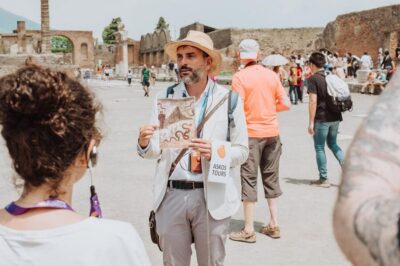
Pompeii gets real when someone explains it. This 2-hour Pompeii tour uses an archaeologist guide plus skip-the-line entry, so you spend your time looking at Roman details instead of standing in ticket queues.
I like two things a lot: first, the skip-the-line priority access really cuts the wait, and second, the archaeology expert guide helps you read buildings, art, and daily life in context. I also like the stop-by-stop route that targets the places most people miss when they wander on their own.
One thing to consider: it is not set up for everyone. The tour is not suitable for wheelchair users or people with mobility impairments, and it involves walking around a busy archaeological site.
In This Review
- Key takeaways before you go
- Pompeii, without the “ticket line tax”
- Meeting at the Welcome box, then straight into the site
- Stop 1, Porta Marina: the city’s entrance energy
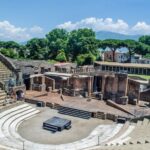
- Stop 2, Teatro Piccolo: tiny theater, big clues
- Stop 3, House of Menander: reading daily life in art and layout
- Stop 4, Thermopolium: where quick meals meet street life
- Stop 5, Terme Stabiane: the social machine of the baths
- Stop 6, Lupanare: learning from Pompeii’s uncomfortable details
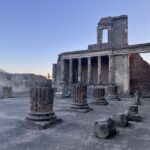
- Stop 7, Foro Civile di Pompei: public life in the center
- How the tour design helps you actually see Pompeii
- Price, value, and what you are really paying for
- What to bring (and what to leave behind)
- Who should book this Pompeii archaeologist tour
- Should you book it?
- FAQ
- How long is the Pompeii tour?
- Does this tour include skip-the-line entry?
- Where do I meet the guide?
- What languages are available?
- Is the tour suitable for people using wheelchairs?
- Is there any free time during the tour?
Key takeaways before you go
- Skip-the-line Pompeii Express entrance saves time at the gates.
- Archaeologist guide turns ruins into stories you can actually follow.
- Radioguide system can be included for larger groups, and ear pieces may feel loud in crowded sections.
- A tight 2-hour itinerary hits the big interpretations, from Porta Marina to the Lupanare and the Foro Civile.
- Clear meeting point at the Welcome box, with the tour ending back there.
- You get a short free time break inside the site to reset and look around.
Pompeii, without the “ticket line tax”
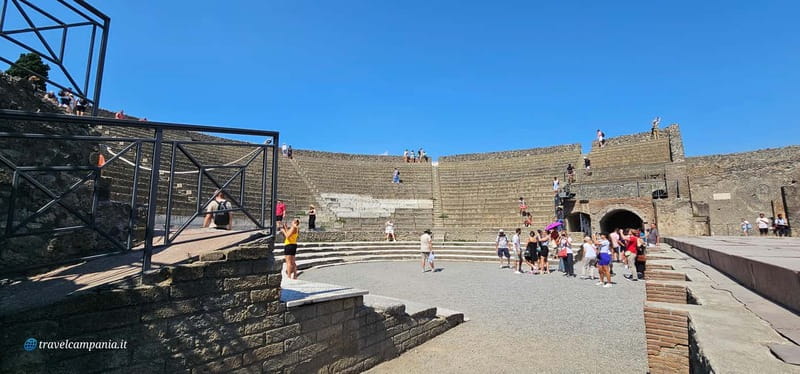
Pompeii is famous for one reason that matters to your visit: it is one of the only places where you can walk through an ancient Roman city that was nearly frozen in time after the eruption of Vesuvius in 79 AD. You are looking at plastered walls, worn stone thresholds, and buildings laid out like a functioning town, not just a pile of rocks.
What makes this tour a smarter way to do Pompeii is the focus. You are not trying to cover everything. Instead, you get a guided route that makes you notice what you would otherwise gloss over, and you do it with priority entry so you do not waste your morning or afternoon in line.
At the start, you meet at the Welcome box and your guide takes you in from there. The whole visit inside the excavations lasts about 2 hours, which is a good length for staying sharp in the heat and still leaving you time to explore more on your own after.
Our reviewers also walked through other Pompeii site visits in Pompei Campania.
- Pompeii: Entry Ticket and Guided Tour with an Archaeologist
★ 4.8 · 19,459 reviews - Pompeii: Small Group Tour with an Archaeologist
★ 4.8 · 12,264 reviews - Pompeii: Skip-the-Line Entrance Ticket with Audio Guide
★ 4.0 · 2,509 reviews - Naples: Pompeii and Mt. Vesuvius with Lunch and Wine Tasting
★ 4.5 · 2,454 reviews
Meeting at the Welcome box, then straight into the site
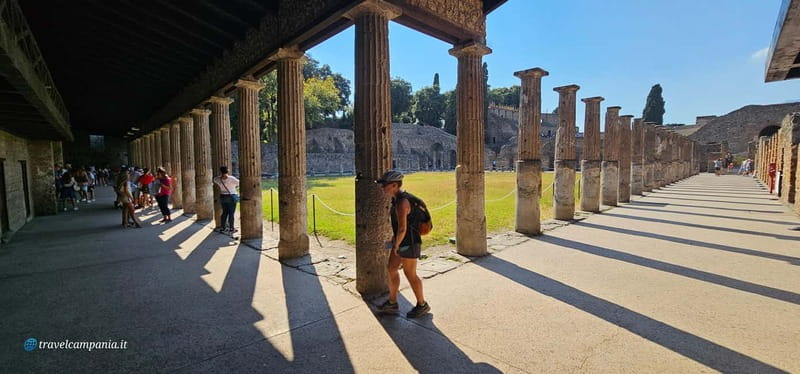
Your tour begins back at the same place it ends: the Welcome box. That sounds simple, but it matters when Pompeii is packed and signage can be confusing. Multiple guides listed for this experience include Angelo, Teresa, Lilian, Paolo, Imme, Roberta, and Mario, and the common theme is that they help you find the right rhythm once you are inside.
Expect a quick start and a group pace that keeps the tour efficient. In one tip shared from past visits, people noted the check-in process could be tricky to locate, so I suggest arriving a few minutes early and keeping an eye out for your group as soon as you get there.
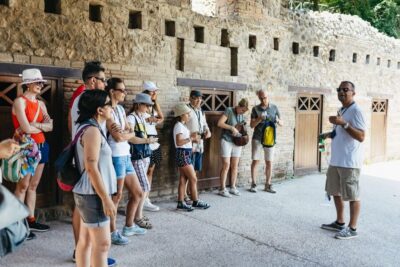
Your tour is offered in multiple languages: Italian, Spanish, French, English, and German. If the group size is smaller for a given language, you may hear an audio guide plus an English-speaking guide. For larger groups, the tour uses a radioguide when you pass eight participants. In practice, that means you should be able to hear explanations without constantly craning your neck.
Stop 1, Porta Marina: the city’s entrance energy
You start with a short guided introduction at Porta Marina, about 10 minutes. This is a good first stop because it sets the scene right away. You are not just seeing architecture, you are learning how Pompeii moved people in and out.
One practical benefit of starting here: it gives you reference points for the rest of the walk. When you later reach the forum spaces and public buildings, you can mentally connect the dots between where people arrived and where they lived, worked, and spent time.
If the site feels crowded, this early segment is still manageable because you have context before the walking ramps up.
Stop 2, Teatro Piccolo: tiny theater, big clues
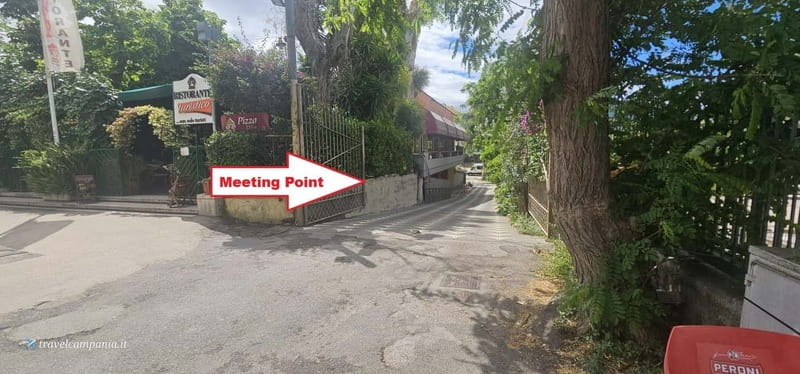
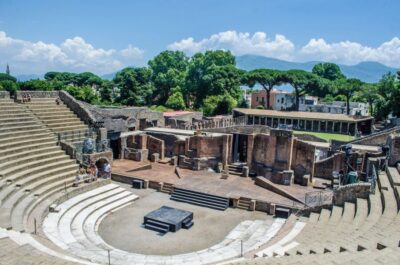
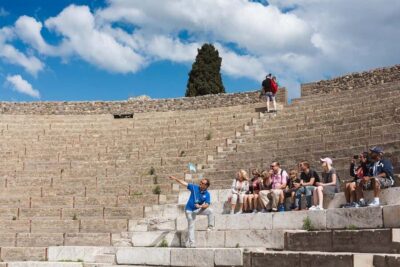
Next you visit Teatro Piccolo with another brief guided stop, around 10 minutes. The name signals the scale, but do not underestimate the value. Small theater spaces often show how communities organized entertainment, social time, and public gatherings.
A theater like this also helps you spot how Pompeians thought about design. Even when details are incomplete, you can still see how the space worked and why it mattered. If you have ever walked through ruins wondering what people actually did there, this is the kind of stop that answers that question fast.
Stop 3, House of Menander: reading daily life in art and layout
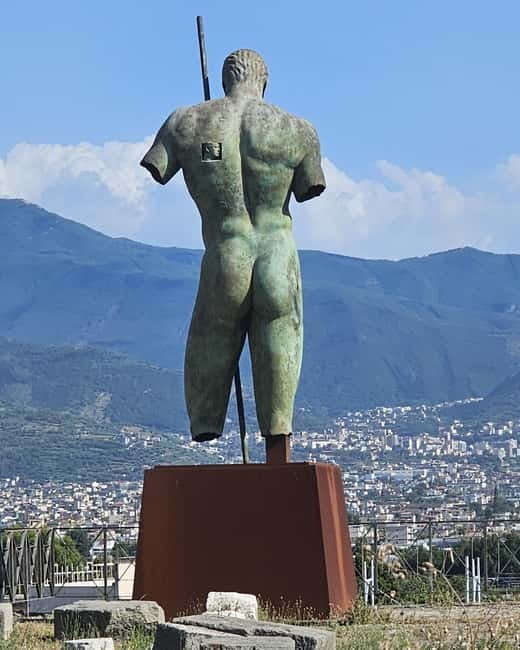
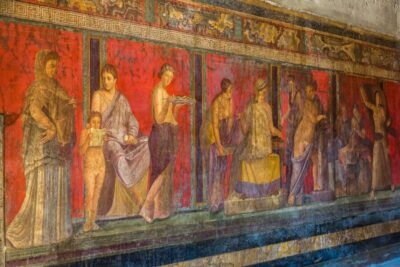
At the House of Menander, you get about 15 minutes. This is the kind of location where the guided approach really pays off. A preserved residence is not just pretty walls. It is clues about wealth, taste, and the way households displayed themselves.
The guide helps you look at building choices and decorative elements with more purpose. Even if you do not catch every detail, you come away with a stronger sense of how people used rooms, corridors, and entrances as part of their everyday routine.
Drawback here: residences can feel visually similar if you are rushing. That is why the guided time box helps you stay focused, rather than bouncing between rooms and missing what the guide is pointing out.
Stop 4, Thermopolium: where quick meals meet street life

Then you hit a Thermopolium, about 15 minutes. This is one of my favorite kinds of Pompeii stops because it is practical. Thermopolia were like ancient snack counters, places to grab hot food and drinks without dining at home.
When an archaeologist guide explains how these spaces functioned, the city starts to feel less like a museum and more like a place that was alive. You start to understand daily routines, not just big monuments.
If you are pairing this tour with your own time later, this is a great stop to remember. It helps you know what to look for when you see similar commercial spaces around the site.
If the dates do not line up, these skip-the-line tickets in Pompei Campania are reviewed too.


Stop 5, Terme Stabiane: the social machine of the baths

Next comes Terme Stabiane, again about 15 minutes. Public baths were a major part of Roman social life, and this stop is a strong reminder that Pompeii was not just about temples and houses. It was about community routines.
The bath complex also gives you a sense of engineering and movement. You can often see how people entered, how spaces transitioned, and how the layout supported different functions. Even in a brief time slot, a good guide helps you connect the dots quickly.
One caution: bath areas can get crowded depending on your time of day. If you find it packed, use your guided pacing and do not fight the flow. You will get better views by standing where the group is directed.
Stop 6, Lupanare: learning from Pompeii’s uncomfortable details
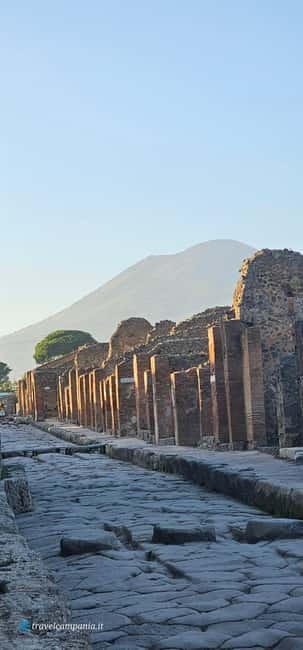
The Lupanare gets about 20 minutes, making it one of the longer stops. This is where Pompeii’s preserved street-level reality shows. The site includes frank, sometimes uncomfortable evidence of daily life, and an expert guide helps keep it in historical context.
I appreciate this length because it gives the time needed to avoid turning it into a quick shock stop. Instead, it becomes part of the bigger picture: how commerce, entertainment, and public behavior shaped the city.
If you prefer a more gentle tour tone, you should know this stop exists and takes real time. That said, it is part of what makes Pompeii unusual, because you are not only seeing what people wanted to show. You are also seeing what the city looked like when you peel back the idealized version.
Stop 7, Foro Civile di Pompei: public life in the center
Now you move into the heart of political and public space at the Foro Civile di Pompei, about 15 minutes. This is where Pompeii starts to feel like a real city you could navigate, not a set of isolated stops.
The forum is also where you can better understand social structure. When the guide points out how buildings relate to one another and how people likely used the area, it helps you picture civic life beyond the stone.
Then there is a short built-in breather: about 10 minutes of free time back in the same forum area. Use this break wisely. Look for signage, take photos without rushing, and decide if you want to return to any nearby spot after the tour ends.
How the tour design helps you actually see Pompeii
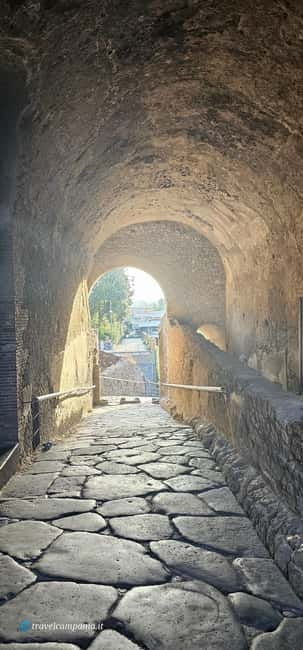
This experience is built around a tight loop of key areas: an entrance point, an entertainment space, a residential house, a street food stop, public baths, a commercial district example, and finally the forum. That structure matters because Pompeii can be overwhelming if you arrive with only general expectations.
I also like that the explanations aim at the “why.” You go beyond walls and ruins to understand what each building tells you about art, customs, crafts, and everyday life. That is the difference between walking through preserved stone and walking through a story you can follow.
The best tours also manage crowd pressure. In some accounts, guides were able to lead groups to less busy spots. You should still expect crowds, but you are more likely to catch good sightlines because the guide is steering you to smart positions.
Price, value, and what you are really paying for
The price is listed at about $57 per person, and it lasts about 2 hours. On paper, it can sound like “just a guided walk,” but the value comes from three things you actually get:
- Skip-the-line entry through a Pompeii Express entrance ticket
- An archaeologist expert guide who explains what you are seeing
- A time-efficient route that hits major interpretive stops
If you planned to visit on your own, you would still need entry tickets and you would still have to figure out context. This tour shifts your effort from figuring out to observing. For many people, that is the bargain.
Not included are transport, lunch, and tips. If you are visiting Pompeii as part of a day trip, this matters: build time for travel and meals outside the tour block.
What to bring (and what to leave behind)
You should bring a passport or ID card. Copies are accepted, and there is a reminder that you may need to provide participant names and ages for the tour group.
The site rules included here say no bikes, and no alcohol or drugs. Bags are also not allowed, so plan for what you will carry. If you show up with bulky items, you might need a place to store them. One useful tip from past visitors was that there are free lockers at the gates, plus a few water fountains on-site that may be unmarked.
My practical advice is simple: bring only what you need for two hours, wear comfortable shoes, and keep your bag situation under control so you do not lose time right when you should be starting.
Who should book this Pompeii archaeologist tour
This tour is a strong match if you want Pompeii with context, not just photos. It is ideal for people who like short explanations and a structured route that prevents decision fatigue.
It also works well for first-timers. Pompeii is too big to “figure out” on your own in a single short visit without missing the meaning of key places. With this guide-led approach, you get a map in your head while you are walking.
That said, it is not suitable for wheelchair users or people with mobility impairments, and it is not suitable for people over 95. If any of those apply, you will likely have a better experience choosing a different format.
Should you book it?
Yes, I think you should book this tour if your goal is to understand Pompeii in 2 hours, and you do not want to spend that time waiting at the gates. The combination of skip-the-line entry and an archaeology guide makes the ticket feel like it pays you back in attention and insight.
I would skip this specific tour only if you need maximum flexibility to wander at your own pace, or if the walking demands are a problem for you. Otherwise, it is one of the most straightforward ways to turn Pompeii from a list of ruins into a real city you can picture.
FAQ
How long is the Pompeii tour?
The tour lasts about 2 hours inside the excavations.
Does this tour include skip-the-line entry?
Yes. It includes a Pompeii Express entrance ticket and priority access to skip the long ticket lines.
Where do I meet the guide?
You meet at the Welcome box. The activity ends back at the meeting point.
What languages are available?
The live tour guide is offered in Italian, Spanish, French, English, and German.
Is the tour suitable for people using wheelchairs?
No. It is not suitable for wheelchair users, and it is also not suitable for people with mobility impairments.
Is there any free time during the tour?
Yes. There is about 10 minutes of free time at the Foro Civile di Pompei.
Our Wider Tours File for Pompei Campania

The Rest of Our Pompeii Site Visits in Pompei Campania


Not quite the day you had in mind? The rest of our Pompei Campania write-ups sit below
- Pompeii: Skip-the-Line Entry & Audioguide★ 3.8 · 225 reviews
- Pompeii: Day Tour of Pompeii and Vesuvius with Bus Transfer★ 4.2 · 250 reviews
- From Naples/Salerno: Pompeii, Sorrento, and Positano Tour★ 4.5 · 250 reviews
- Pompeii: Tour with Archaeologist Guide & Skip-the-Line Entry★ 4.5 · 478 reviews
- Pompeii: Afternoon to Sunset Guided Tour with Ticket★ 4.9 · 484 reviews
- Pompeii 3hours Villa of Mysteries tour with an Archaeologist★ 4.8 · 486 reviews
- From Pompeii: Bus Transfer to Vesuvius with Park Entry Fee★ 4.2 · 700 reviews
- Pompeii: Skip-the-Line Entry Ticket with Digital Guide App★ 4.1 · 770 reviews
- Pompeii: Guided Tour with Skip-the-Line Entry★ 4.9 · 812 reviews
Pompeii Archaeological Site, top to bottom.
 ★ 4.8Pompeii: Entry Ticket and Guided Tour with an ArchaeologistFrom $3519,459 reviews
 ★ 4.2Pompeii: Entry Ticket with Optional Audio GuideFrom $2612,360 reviews
 ★ 4.8Pompeii: Small Group Tour with an ArchaeologistFrom $4012,264 reviews
 ★ 4.3From Naples: Pompeii Ruins & Mount Vesuvius Day TourFrom $12011,459 reviews
 ★ 4.6From Rome: Pompeii, Amalfi Coast, and Sorrento Day TripFrom $797,031 reviews
 ★ 4.6From Rome: Pompeii, Amalfi Coast and Positano Day TripFrom $996,620 reviews
★ 5.0Pompeii Small Group Tour with an ArchaeologistFrom $356,593 reviews
 ★ 4.5Pompeii, Amalfi Coast and Positano Day Trip from RomeFrom $1016,250 reviews
Filed under