
Reviewed · POMPEII ARCHAEOLOGICAL SITE
Ancient Pompeii Private Tour: Skip the Line & Kid-Friendly Option
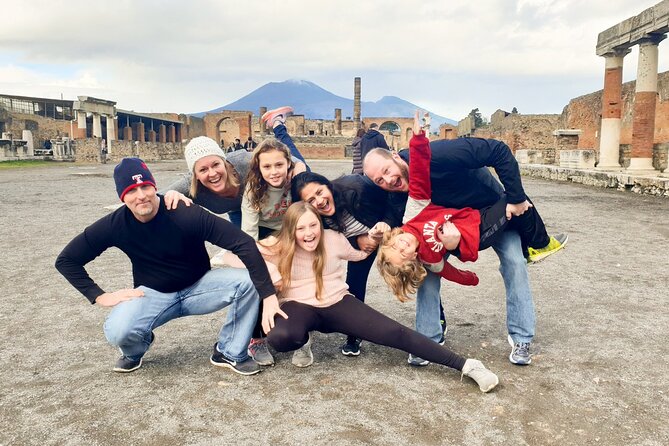
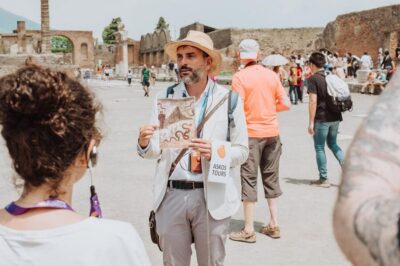
Pompeii hits different with a private guide. You get skip-the-line entry plus a smart route through the city frozen by Vesuvius in AD 79, with highlights like the Forum, bath complex, and Casa dei Vettii in about 2 hours. And if you travel as a family, the kids option turns the ruins into a game. Guides like Francesca and Anna show up in the feedback again and again for a reason: they make Pompeii readable, not just impressive.
What I like most is the private, flexible pace, so you can linger at mosaics or photos without everyone waiting on you. I also like that the tour is built around the places that tell real everyday stories, not just big monuments. The focus on places like the Forum baths sequence and the victim casts gives you context fast.
One consideration: Pompeii is still outdoors walking, often hot, often crowded, and the ruins cover a lot of ground. Even with skip-the-line help, you will want moderate fitness and good shoes.
In This Review
- Key things to know before you go
- A smart way to see Pompeii in 2 hours
- Meeting at Via Villa dei Misteri, then getting your bearings fast
- The Archaeological Park and Vesuvius backstory you can actually use
- Forum of Pompeii: where politics, religion, and commerce overlapped
- Via dell’Abbondanza: Pompeii’s main street for real-life details
- Terme del Foro (Forum Baths): the daily routine behind the marble
- Temple of Apollo and the Forum landmarks that anchor the story
- Casa dei Vettii: the restored luxury home that feels personal
- Teatro Grande: architecture carved into a lava hillside
- Antiquarium di Pompei: the victim casts that make the story real
- Family tour option: turning Pompeii into a kid game
- Price and value for a private Pompeii walk at about $165
- What to wear and how to time your Pompeii day
- Should you book this private Pompeii tour?
- FAQ
- How long is the Pompeii private tour?
- Where does the tour start and end?
- Is this tour offered in English, and is it private?
- Is there a kid-friendly option, and what age range is it for?
- Are skip-the-line tickets included?
- Do we need a passport for children?
Key things to know before you go
- Fast-track style entry: tickets are handled quickly so you spend less time stuck at the gate
- Private guide attention: route can shift based on what you care about
- Forum and baths in context: you see political life and daily routines, not isolated ruins
- Casa dei Vettii is the luxury moment: reopened after major restoration
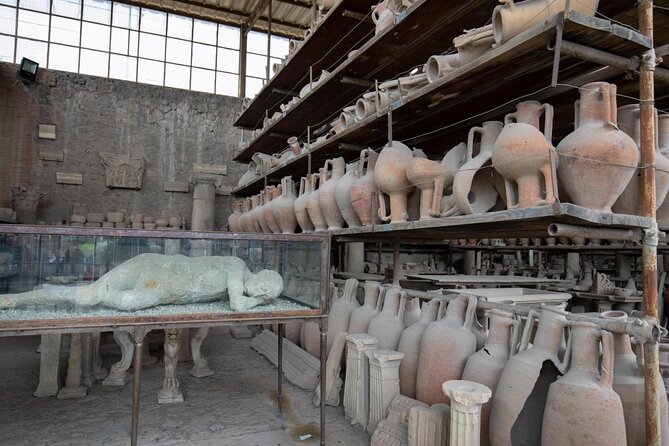
- Antiquarium victim casts add human scale: the story becomes personal, not abstract
- Family kit for ages 6 to 11: map, stickers, activities, games, and clues keep kids engaged
A smart way to see Pompeii in 2 hours
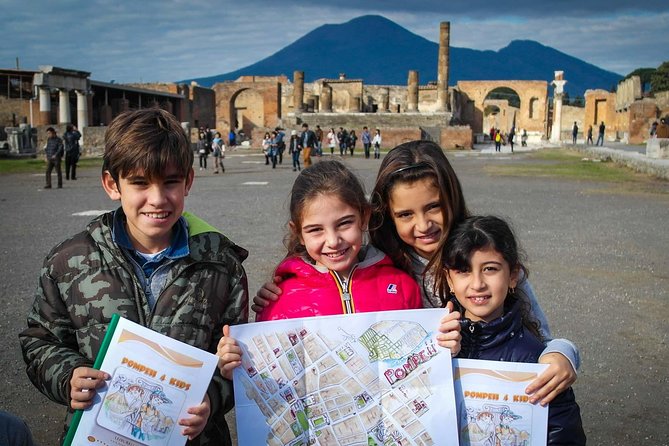
Pompeii is enormous. Even if you love Roman ruins, walking it solo can turn into a blur of stones and signage. This private format solves that problem. You start at Via Villa dei Misteri, 2 and finish back at the same point, so you are not trying to stitch together transfers while you are already tired.
The biggest value is the way the guide connects the sites. You get a clear story arc for the city, from how people lived and worked to how the eruption preserved those daily details. In the feedback, guides such as Francesca and Fabrizio are praised for turning Pompeii into something you can picture, including the tough parts like managing hot, grumpy kids without making everyone else wait.
You do need to be ready for the reality of Pompeii: it is a walking experience on uneven ground, with sun exposure. The route is paced for around 2 hours, which is long enough to feel like you saw something meaningful, but short enough to avoid the full-day grind if you have a family or limited time.
Our reviewers also walked through other Pompeii site visits in Pompeii.
- Pompeii Small Group Tour with an Archaeologist
★ 5.0 · 6,593 reviews - Discover the Ancient Ruins of Pompeii: Day Trip from Rome
★ 3.5 · 2,247 reviews - Pompeii and Herculaneum Small Group Tour with an Archaeologist
★ 5.0 · 1,350 reviews - Skip the Line Guided Tour of Pompeii led by an Archaeologist
★ 5.0 · 703 reviews
Meeting at Via Villa dei Misteri, then getting your bearings fast
You begin at Via Villa dei Misteri, 2, Pompei. From there, the guide directs you into the main flow of the archaeological park. Pompeii is not laid out for easy wandering. Having a person in front of you matters, because you need quick orientation: where you are, why it mattered, and what you should notice before you move on.
One small detail I appreciate is that the route often takes advantage of how buildings shape the airflow. In the reviews, people mention the main street can feel cooler thanks to the way the streets and structures channel breezes. That is not something you can count on day to day, but it is a nice reminder that planning can improve comfort.
If you are traveling with kids, this is also where the family option starts paying off. You are not just pointing at ruins, you are using a kids map, stickers, and activities that turn observation into play. That structure keeps the walk from turning into a long history lecture.
The Archaeological Park and Vesuvius backstory you can actually use
The tour begins inside the Archaeological Park of Pompeii, where your guide sets the stage for what you are about to see. You are given the eruption context: in AD 79, Mt. Vesuvius erupts and the ash and molten material preserves the city. That means you are not looking at a generic Roman site. You are looking at a city that froze mid-life.
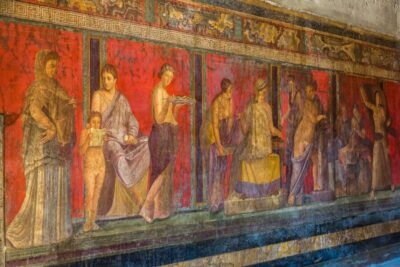
Your guide then guides you through the kinds of scenes Pompeii is famous for: wall paintings and floor mosaics, homes that show status, and the everyday rhythm of a Roman town. The tour description also notes additional highlights the guide may weave in when time allows, like city walls and the Porta Marina gate, the ancient theater, and even places tied to daily food and commerce.
The practical win: a guide makes you look at the right thing. A cracked wall is just a wall until someone explains what it likely represented, how the room was used, or how people moved through the space. That is the difference between seeing Pompeii and understanding it.
Forum of Pompeii: where politics, religion, and commerce overlapped
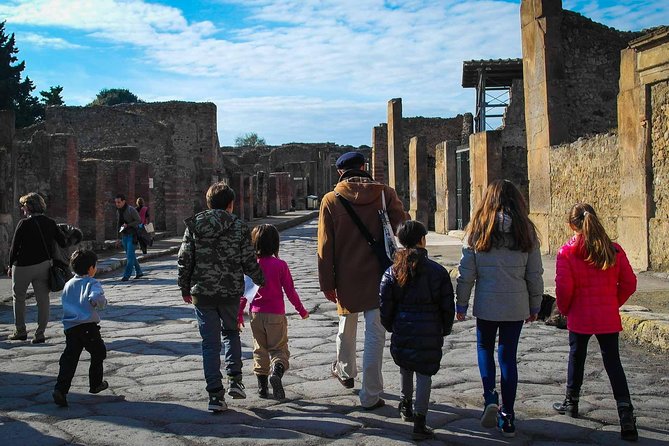
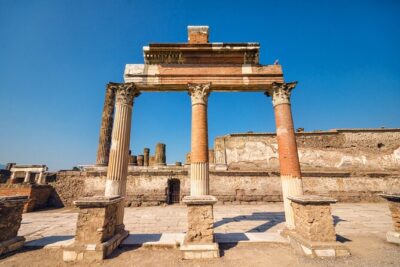
The first major anchor stop is the Forum of Pompeii. This is the city’s heart, a large rectangular pedestrian plaza with a size noted around 157 by 38 meters. One reason guides love this stop is that it is easy to grasp physically, because the space reads as a gathering place.
You learn the political system in Pompeii and what the Forum meant for daily life. The Forum also sits right at the center of the city’s religious and commercial activity, so your guide can connect power, worship, and trade without you jumping from topic to topic.
A possible drawback here is crowd density. The Forum is a magnet for tour groups and it can feel busy. Skip-the-line entry helps you get in sooner, but it does not remove crowd pressure completely. If you want photos, I suggest asking the guide where to stand for fewer people in frame.
Via dell’Abbondanza: Pompeii’s main street for real-life details
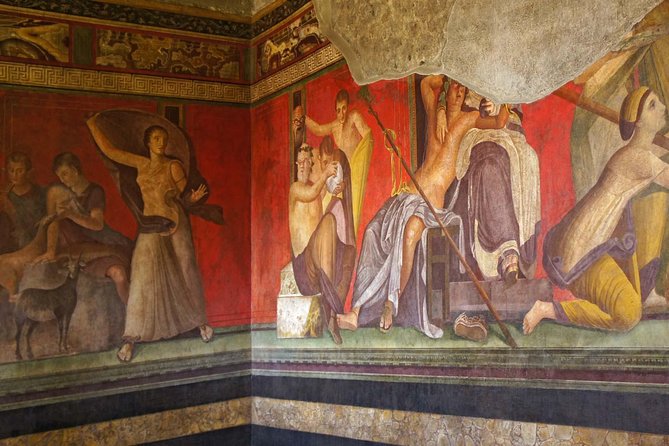
Next comes Via dell’Abbondanza, described as the city’s longest and important street, serving as the main commercial and social artery. This stretch helps you shift from civic life into everyday life. You see how a city functions when people are moving, buying, selling, eating, and working.
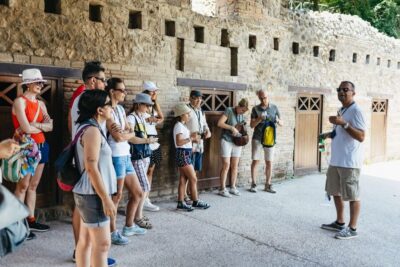
This is also where your guide’s pacing matters. Without guidance, it is easy to walk past doorways and storefront ruins and miss the story they tell. With a guide, you get a pattern: what this street connected, what types of activities likely clustered here, and why the street matters within Pompeii’s overall layout.
If you have kids, this is a sweet spot for using the family map and stickers. They get to look for specific characters tied to work and life, which turns the walk into a scavenger hunt instead of a march.
Terme del Foro (Forum Baths): the daily routine behind the marble
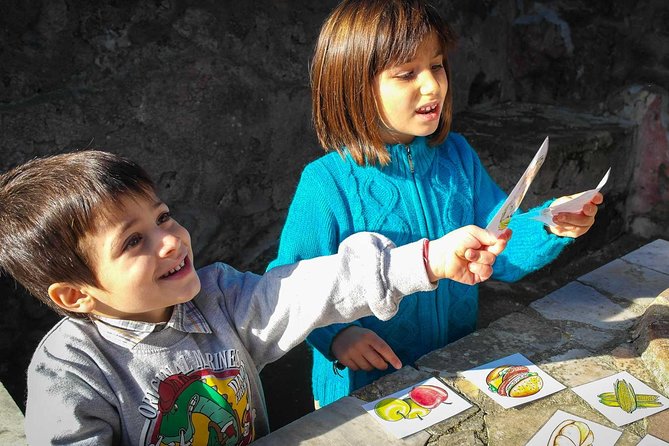
Then you move into Terme del Foro, the Forum Baths. This is a standout stop because it preserves the logic of Roman bathing in a way that feels almost step-by-step. The baths date to around 80 BC, and they were still in use when the eruption froze Pompeii in AD 79.
You walk through the bathing sequence your guide describes, including:
- Apodyterium (changing room)
- Frigidarium (cold bath)
- Tepidarium (warm room)
- Calidarium (hot room)
The ceilings and decorative elements are also part of the experience, including barrel-vaulted shapes, stucco reliefs, and terracotta figures called telamones. The visual impact is strong, but the better value is learning how routine works when you can map it onto real rooms.
Consideration: baths areas can be busier than you expect because they are indoor-like spaces that still hold people’s attention. Go slow. Let the guide point out the sequence. That is what turns a pretty ruin into a daily-life story.
If the dates do not line up, these skip-the-line tickets in Pompeii are reviewed too.



Temple of Apollo and the Forum landmarks that anchor the story
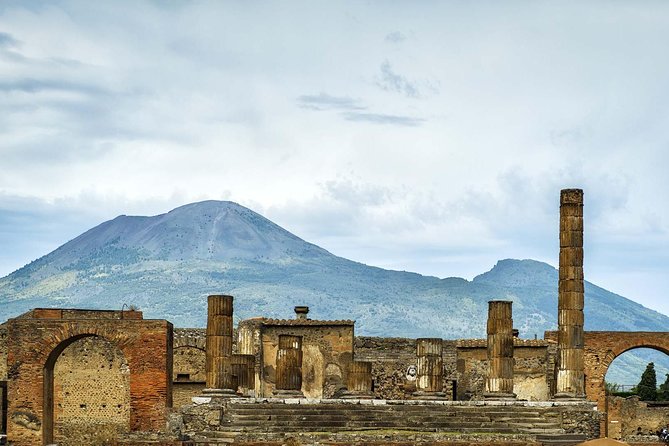
Your route continues through key Forum-area landmarks, especially the Temple of Apollo. It is one of Pompeii’s oldest religious sites, dating back to the 6th century BC, and it sits close to the Forum area so it naturally ties civic life to worship.
What makes this stop especially useful is the architectural mix your guide explains: Greek and Italic styles, an elevated podium reached by stairs, and a portico with 48 columns. Your guide may also mention that bronzes associated with Apollo and Diana exist as replicas here, while the original Hellenistic bronzes are preserved at the National Archaeological Museum in Naples.
You also see other big Forum structures such as the Basilica. This building is described as the most imposing public structure in the Forum, dating to the 2nd century BC, with significance as an early Roman example.
Possible drawback: religious and political sites can blur together if you skip the guide’s explanations. If you feel that happening, ask your guide one simple question on the spot: how did people use this space day to day? That forces the story back into focus.
Casa dei Vettii: the restored luxury home that feels personal
The most talked-about architectural stop on this kind of route is often Casa dei Vettii. It is known as the Sistine Chapel of Pompeii because the interior is so well preserved and so visually dramatic. Importantly, the information you are given notes that it reopened in 2023 after a meticulous 20-year restoration, which matters because you are not just seeing ruins, you are seeing a careful recovery.
This home belonged to Aulus Vettius Conviva and Aulus Vettius Restitutus, described as former slaves (freedmen) who became wealthy wine merchants. Your guide can explain how the house was designed to display their status. That gives you a human hook: you are not only seeing wealth in a general sense, you are seeing ambition and social mobility carved into architecture and decoration.
A consideration: smaller interior spaces can involve a bit of crowding. The best move is to ask your guide when to pause for photos and where to look first. If you do that, Casa dei Vettii becomes a highlight instead of a rushed stop.
Teatro Grande: architecture carved into a lava hillside
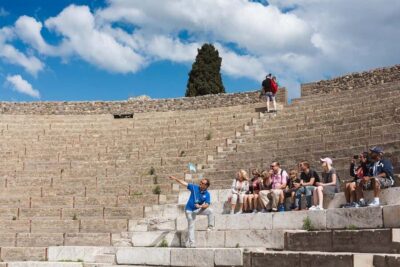
Then you get a change of pace with the Teatro Grande. The Large Theatre is described as one of the world’s oldest surviving masonry theaters, originally built in the 2nd century BC. It is carved into a natural lava hillside, which makes it a great example of how Romans adapted Greek ideas to local geography.
Your guide can help you spot the transition between Greek and Roman styles. That is a useful mental framework for Pompeii because you start seeing how each site fits into broader Roman culture, not just the moment of AD 79.
Possible drawback: theatre areas can involve uneven ground and sun exposure. If you are traveling in summer, bring water and plan for a bit of heat management. In the reviews, people appreciated guides who found shade and adjusted pacing when the weather turned.
Antiquarium di Pompei: the victim casts that make the story real
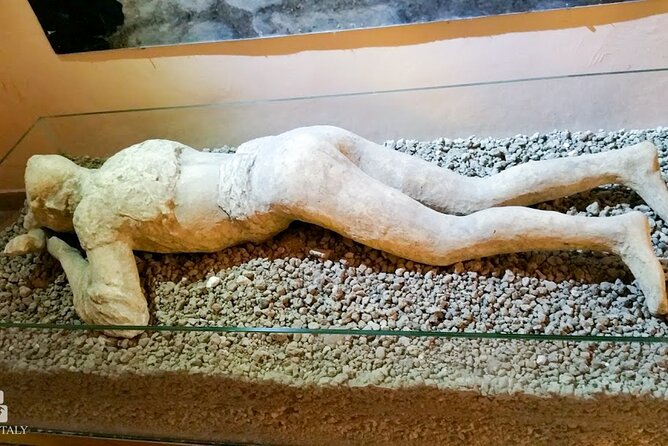
Finally, the tour ends with a stop at the Antiquarium di Pompei, Pompeii’s main museum space for more fragile artifacts. The big reason this stop matters is the victim casts. The site description notes that some casts remain in situ, but the Antiquarium displays precious plaster casts, including children preserved in their final moments.
This is where the story shifts from impressive ruins to real human tragedy. It can be emotionally heavy, but it also gives meaning to everything you saw outside. Roman walls and streets suddenly feel like a real place where real people lived, worked, argued, ate, and slept.
A practical tip: museums can cool you down a bit, so if you get overheated, this can feel like a reset. Still, it helps to prepare mentally. If you are sensitive to strong visual history, talk it through as a family before you arrive.
Family tour option: turning Pompeii into a kid game
If you have children, this is where the tour becomes especially attractive. The family option is designed for kids 6 to 11 and includes the Pompeii4kids kit. That kit includes a map with stickers, activities, and an activity-book. The tour also notes games, puzzles, and clues, plus a guide trained to tailor the route for youngsters.
In real terms, this changes the day. Instead of asking kids to endure stop after stop, the guide gives them a job: spot certain characters, match stories to places, and play small games that reinforce what they just learned.
The feedback on this part is very strong, with names like Sabrina Cancello and Viviana showing up for patient, energetic engagement. There are accounts of kids using maps and stickers right along the route, then answering questions about which character lived or worked in a building. That kind of structure is what keeps attention from drifting, especially when the weather is hot.
If your kids are younger than 6, the standard family kit guidance may not apply. The provided details specifically recommend the family option for 6 to 11, so it is worth checking what will work best for your age range.
Price and value for a private Pompeii walk at about $165
At $165.05 per person for a 2-hour private tour, you are paying for more than access. You are paying for time saved, plus interpretation delivered by a guide who can steer you around typical frustrations.
Here is where value shows up:
- Skip-the-line tickets reduce wasted waiting
- Private format lets you go at the right pace for your group
- The focus on major stops like the Forum, baths, and Casa dei Vettii saves you from random wandering
- The family option adds tools for kids, not just a generic script
There is one detail to double-check before you commit: the tour information includes admission fee language that can read two ways. One section lists an admission fee as included, and another note says admission fees are not included, while the guide can use a fast-track line to buy tickets quickly on the spot. Your confirmation details should clarify what is covered for your specific booking. Either way, the promise of fast on-site ticket handling is a big help.
If you are a couple or a small family, private tours can be cost-competitive when you factor in admission, guide time, and the savings of not getting lost or bored. If you are solo and price-sensitive, you might compare with group tours, but you will likely feel the difference in pacing and attention.
What to wear and how to time your Pompeii day
Pompeii is a sun and stone combo. The tour notes good walking shoes and moderate physical fitness. I agree. Even if the route is short, you need soles that handle uneven ground and steps without slipping.
Also plan for heat. The feedback includes a real-world observation that going at 11 am can turn hot fast, and one person would choose a 9:30 start next time. That lines up with common sense for Pompeii. If you can, start earlier and use the baths and museum stop as cooling breaks.
If you are traveling with kids, note the documentation requirement: a current valid passport is required on the day of travel for children under 18. Bring it even if you think you will not need it.
Should you book this private Pompeii tour?
Book it if you want Pompeii to feel like a story you understand, not a list of sights. The combination of skip-the-line entry, a private Blue Badge guide, and a route centered on the Forum, baths, and Casa dei Vettii is a strong match for limited time. If you are traveling with kids in the 6 to 11 range, the family option kit turns the day into something they can participate in, not just watch.
I would hesitate if you want a fully self-guided museum day or you cannot handle basic walking in heat. Also, before booking, confirm how admission fee coverage works for your particular reservation.
If you do book, go in with one mindset: ask your guide to explain what you are looking at, not just where you are standing. That one habit will make every stop feel ten times more worth it.
FAQ
How long is the Pompeii private tour?
It’s about 2 hours.
Where does the tour start and end?
The meeting point is Via Villa dei Misteri, 2, 80045 Pompei NA, Italy, and the tour ends back at the same starting point.
Is this tour offered in English, and is it private?
Yes, it’s offered in English. It’s a private tour/activity, meaning only your group participates.
Is there a kid-friendly option, and what age range is it for?
Yes. The family option is recommended for children 6 to 11 years old and includes a kid-focused map, stickers, activities, games, and clues.
Are skip-the-line tickets included?
The highlights say skip-the-line tickets are included. There is also a note that guides can use a fast-track line to purchase tickets quickly on the spot, so it’s worth checking what your confirmation states for admission fees.
Do we need a passport for children?
The additional info says a current valid passport is required on the day of travel for children under 18.
Our Wider Tours File for Pompeii
The Rest of Our Pompeii Site Visits in Pompeii

Not quite the day you had in mind? The rest of our Pompeii write-ups sit below
- Ancient Pompeii Private Tour: Skip the Line & Kid-Friendly Option★ 5.0 · 167 reviews
- Pompeii 2-hour Private Tour with an Archaeologist-Ticket included★ 5.0 · 181 reviews
- Pompeii Private Tour with an Archaeologist Guide★ 5.0 · 184 reviews
- Mount Vesuvius Tour from Pompeii Led by an Expert Guide★ 5.0 · 185 reviews
- Stories of Pompeii: Small Group tour with archeology expert guide★ 5.0 · 191 reviews
- Pompeii: 2 Hour Private Tour with an Archeologist Guide★ 5.0 · 214 reviews
- Pompeii and Mount Vesuvius Small Group Tour★ 4.5 · 233 reviews
- Pompeii Guided Group Tour with Entry Ticket and Archaeologist★ 4.5 · 269 reviews
- Pompeii: Guided Small Group Tour Max 6 People with Private Option★ 5.0 · 269 reviews
Pompeii Archaeological Site, top to bottom.
 ★ 4.8Pompeii: Entry Ticket and Guided Tour with an ArchaeologistFrom $3519,459 reviews
 ★ 4.2Pompeii: Entry Ticket with Optional Audio GuideFrom $2612,360 reviews
 ★ 4.8Pompeii: Small Group Tour with an ArchaeologistFrom $4012,264 reviews
 ★ 4.3From Naples: Pompeii Ruins & Mount Vesuvius Day TourFrom $12011,459 reviews
 ★ 4.6From Rome: Pompeii, Amalfi Coast, and Sorrento Day TripFrom $797,031 reviews
 ★ 4.6From Rome: Pompeii, Amalfi Coast and Positano Day TripFrom $996,620 reviews
★ 5.0Pompeii Small Group Tour with an ArchaeologistFrom $356,593 reviews
 ★ 4.5Pompeii, Amalfi Coast and Positano Day Trip from RomeFrom $1016,250 reviews
Filed under