

Reviewed · POMPEII ARCHAEOLOGICAL SITE
Pompeii: Exclusive Tour with Archaeologist and Entry Tickets
Pompeii feels close when you walk with a pro. This Pompei VIP experience pairs skip-the-line entry with a licensed archaeologist guide who leads you through the Forum, temples, baths, and the spots that bring the eruption story into focus.
What I like most is how clearly you can follow along, thanks to provided headsets, even when the site is crowded. I also love the mix of major sights and human-scale details, like the Macellum area with plaster casts and the homes known for their frescoes and mosaics, where guides such as Livio, Antonio, and Ricardo tend to make daily life feel real.
One drawback to plan for: Pompeii is huge, and this is a 2-hour route. If you move slowly, hate stairs and uneven paving, or you want to linger for museum-length time, you may feel a bit rushed.
In This Review
- Key things you’ll notice on this Pompeii tour
- Pompeii is a different place with a licensed archaeologist
- Starting at Porta Marina Superiore, right by Pompei Scavi
- The Roman Forum and Basilica stops that explain how the city worked
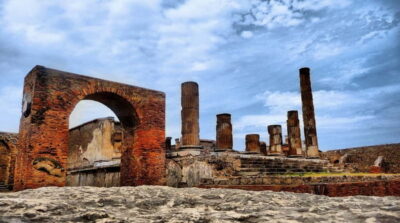
- Temples of Jupiter and Apollo, plus what worship spaces tell you
- Forum Baths and the Macellum, where everyday life turns into evidence
- Houses of the Tragic Poet, Vettii, and the Faun: art with context
- Lupanare and the Large Theatre, plus how spectacle shows up in the layout
- Price and value: what $50 gets you in real terms
- Practical tips: ID rules, what to bring, and how to enjoy the pace
- Should you book this Pompeii archaeologist tour?
- FAQ
- How long is the Pompeii VIP tour?
- Where do I meet the guide?
- What’s included in the price?
- Which languages are offered?
- Do I get a private group option?
- What should I bring with me?
- Is this tour suitable for wheelchair users or pets?
Key things you’ll notice on this Pompeii tour
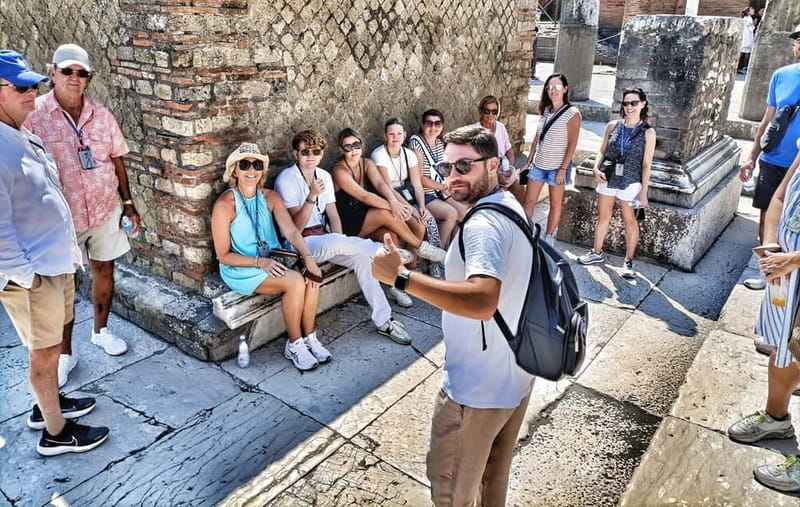
- Skip the ticket line with entry tickets included, so you spend time walking, not waiting
- Headsets help you hear your guide clearly across open courtyards and busy walkways
- An archaeologist-led route that explains civic life, trade, and how excavations shape what you see today
- Plaster casts at the Macellum, where the tragedy becomes personal
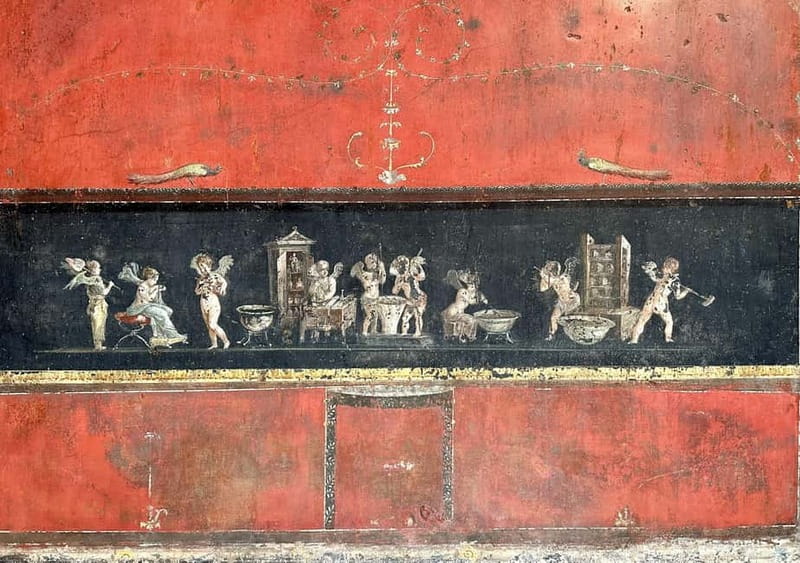
- Frescoes and mosaics in the best-known houses, plus context for what you’re looking at
- A focused 2-hour hit-list, ending with a drop-off at Piazza Esedra
Pompeii is a different place with a licensed archaeologist
If you’ve ever tried to see Pompeii on your own, you know the problem fast. You can stand in the Forum and still feel like you’re guessing. With an archaeologist guide, you get the “what am I looking at, and why it matters” story right as you arrive.
This tour is designed for learning without turning your afternoon into a lecture. Guides you’ll meet can include people like Livio, Raffaelle, Ivan, Antonio, Ricardo, and Pierluigi, and the common thread is how they connect the ruins to real systems: streets and neighborhoods, shops and markets, worship spaces, and the way excavations reveal daily life in layers.
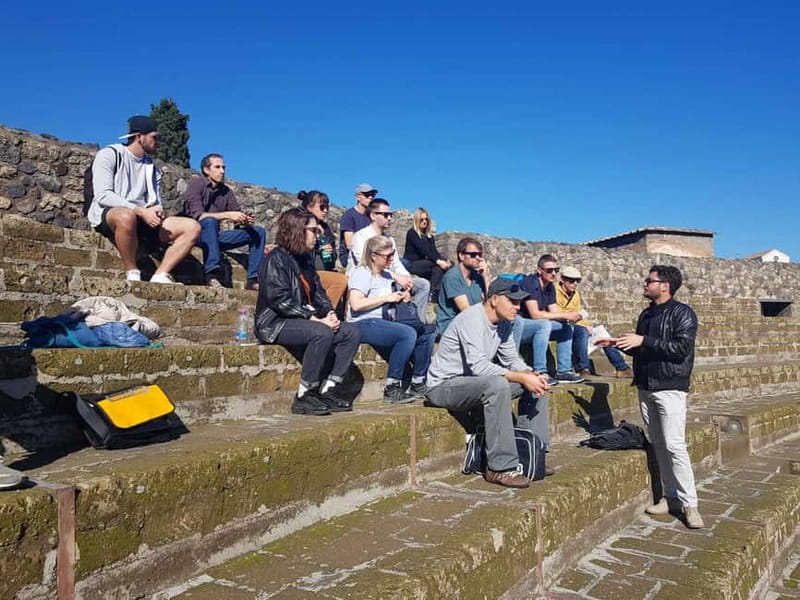
The small-group setup matters, too. You get to ask questions, and your guide can steer you away from the worst pinch points. Add the headsets, and you’re not stuck trying to read lips over tour groups and echoing stone alleys.
Is it still Pompeii, meaning there’s walking, sun, and dust sometimes? Yes. But the guide helps you see the city as a living place that froze mid-moment.
Our reviewers also walked through other Pompeii site visits in Pompeii Archaeological Site.
- Pompeii: Archaeological Park Tour with Ticket on request
★ 4.5 · 2,283 reviews - Pompeii Ruins Private Tour with Optional Skip-the-Line Entry
★ 4.9 · 732 reviews - Pompeii: Exclusive Tour with Archaeologist and Entry Tickets
★ 4.9 · 634 reviews - Pompeii: Group Tour with an Archeologist Guide
★ 4.4 · 490 reviews
Starting at Porta Marina Superiore, right by Pompei Scavi
Your tour begins outside Porta Marina Superiore, the Roman gate that still stands as a proud entry to the ancient city. The meeting point is outside the gate, in front of the train station Pompei Scavi – Villa dei Misteri (Circumvesuviana).
Look for your guide holding a sign that says Pompei VIP. A tip that can save you stress: don’t assume there’s only one station in the Pompeii area. The right stop depends on your train route, so double-check your plan before you head out.
Once you’re inside the park, the pacing shifts. You’re no longer arriving in “random sightseeing mode.” You’re walking a route your guide understands, so stops connect like chapters instead of disconnected photos.
Also keep in mind the practical reality: Pompeii sits on uneven ground, with stone steps and worn surfaces. Comfortable shoes are not optional.
The Roman Forum and Basilica stops that explain how the city worked
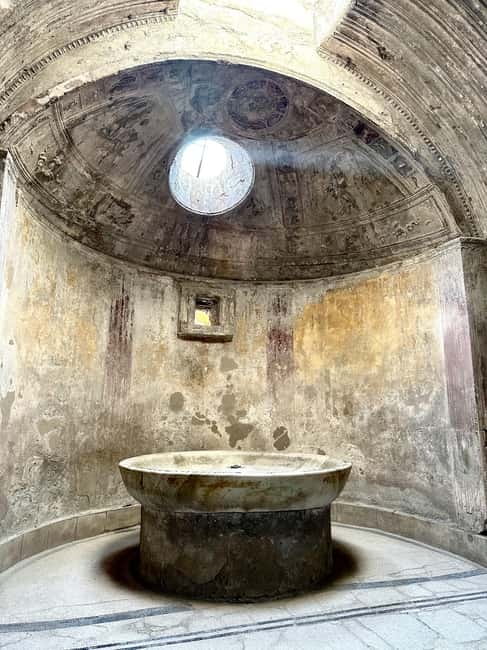
After the gate, you’ll move toward the civic heart of Pompeii: the Basilica and the Foro Civile di Pompei. These are the places where public life happened, and the guide’s job is to help you read the layout.
Here’s what makes this section valuable. It’s easy to look at the Forum and just see big ruins. But in about 10 to 20 minutes with a good guide, you start recognizing patterns: where people would gather, how civic space functioned, and how the city’s public buildings reflected politics and everyday commerce.
The guide also helps you notice the “why” behind what’s standing. For example, civic buildings weren’t just decoration. They were part of how decisions were made and how people interacted face-to-face.
If you’re visiting with kids, this is usually one of the best parts because the concepts are simple: this is where people met, argued, traded, and organized community life.
Temples of Jupiter and Apollo, plus what worship spaces tell you
Next up are temple stops, including the Temple of Jupiter and the Temple of Apollo. The tour description also points to temples dedicated to Venus as part of the experience.
This is where Pompeii shifts from city government to religion and identity. The guide can point out how worship spaces weren’t isolated monuments. They connected with the city’s calendar, status, and shared beliefs.
What I like about having a guide here is that you don’t just take in columns and stone. You start to understand how a Roman city shaped behavior through public ritual, and why certain areas felt “important” even before the eruption.
Forum Baths and the Macellum, where everyday life turns into evidence
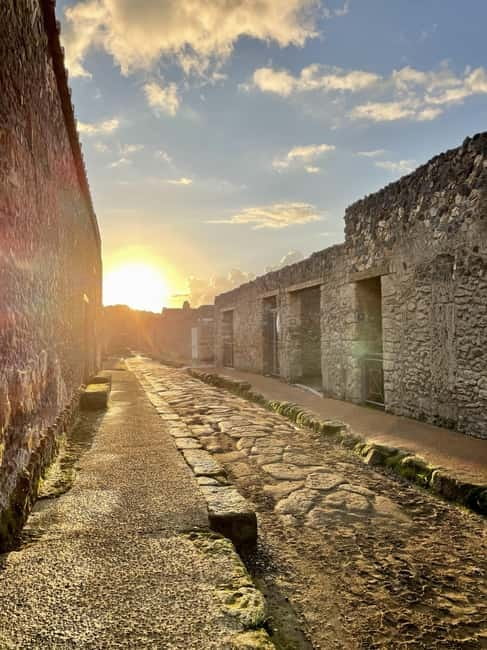
Two stops bring the city closer than most people expect: Forum Baths and the Macellum of Pompeii.
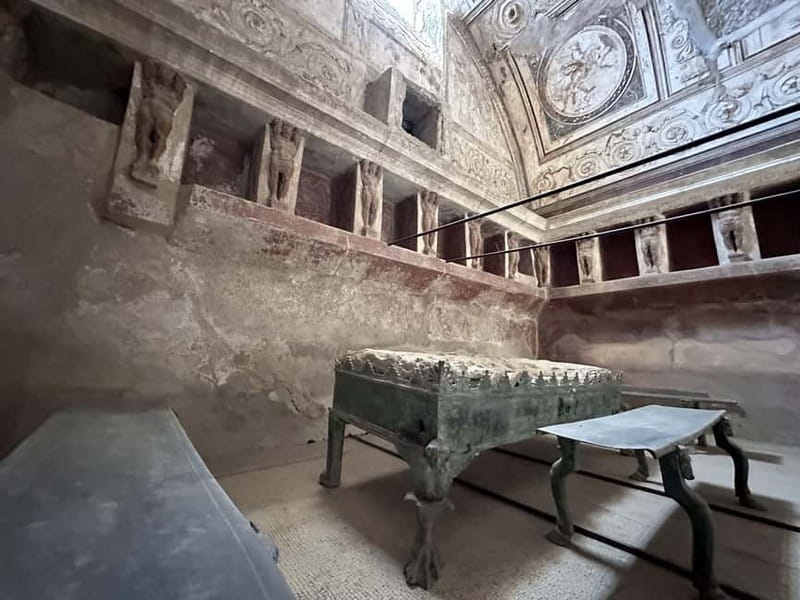
At the Forum Baths, you see how public routines worked. Baths in Roman cities weren’t only about hygiene. They were social spaces and places to pass time. When your guide explains the function of the rooms and the flow of movement, the buildings stop feeling random.
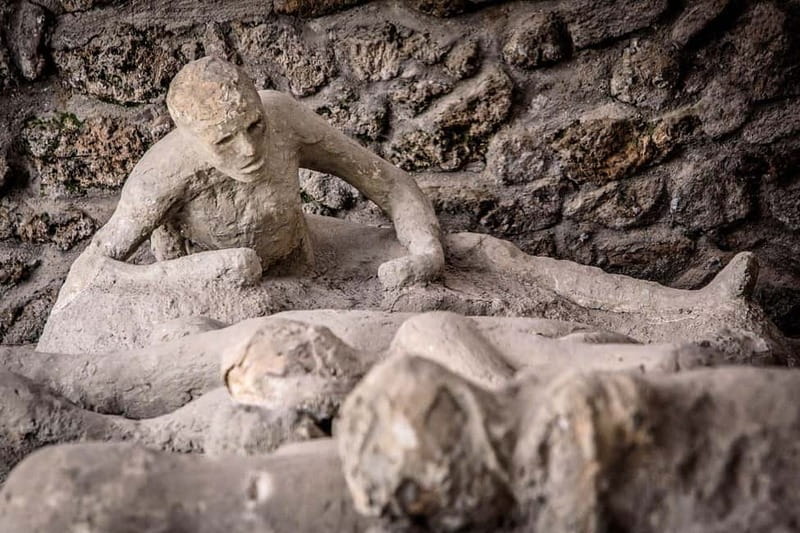
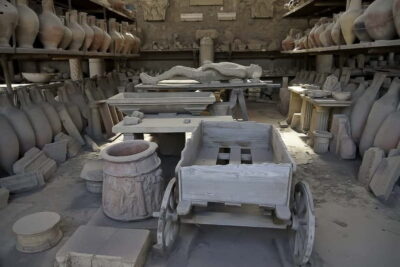
Then comes the Macellum, a market area that hits hard for a reason. This part of Pompeii is known for plaster casts tied to the human stories of the eruption. When you stand near them with a guide who can place them in context, it’s not just a visual shock. It’s a reminder that the city is not a set of artifacts. It’s people, and the evidence of how they lived and died.
This is the emotional pivot of the tour, and it’s also one of the highest-praise segments. In the group experiences, guides often emphasize excavation methods and interpretation, which helps you understand what you’re seeing and what it can and cannot tell you.
Houses of the Tragic Poet, Vettii, and the Faun: art with context

If you love wall art and floor mosaics, you’ll get your fix here. The route includes the House of the Tragic Poet, the House of the Vettii, and the House of the Faun.
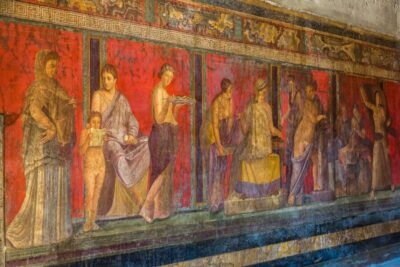
Here’s what changes when you have a guide: you don’t just admire frescoes and mosaics. You learn what they suggest about taste, status, and the way houses were designed for daily routines.
- The House of the Tragic Poet gives you a sense of how upper-class domestic spaces were organized, not just decorated.
- The House of the Vettii is especially focused on standout interior art, and guides often slow down just enough for you to actually look.
- The House of the Faun is famed for its mosaics, and the guide’s explanation makes the artwork easier to interpret, rather than feeling like a random floor pattern.
In the homes, your guide can also help you spot details that you’d likely miss at a glance, like how rooms relate to courtyards, why certain spaces feel more public, and what “luxury” meant in a Roman home.
One review detail I find useful for you: some guides build in short photo opportunities, so you can get the images you want without turning the tour into a stop-and-go mess.
We wrote up further entry tickets in Pompeii Archaeological Site on the same pass through the archive.
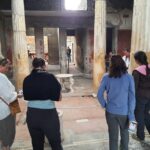
Lupanare and the Large Theatre, plus how spectacle shows up in the layout
After the homes, the tour shifts to two very different aspects of city life: the Lupanare and the Large Theatre.
The Lupanare is one of the more talked-about stops because it points to the realities of commerce and services inside the city. It’s not comfortable in the modern sense, but it’s honest. A good guide keeps it factual, explains the space, and ties it to how Pompeii functioned as a working town.
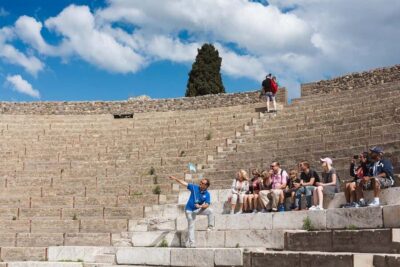
Then comes the Large Theatre, part of the broader theatre district feel. This is where you see Pompeii as entertainment and community gathering. With a guide, you can understand why theatre design mattered, how crowds would move, and how public spectacle sat alongside markets and temples.
If you’re the kind of person who likes your ruins to tell a complete story, this ending helps you connect the dots between civic life, home life, trade life, and leisure.
Price and value: what $50 gets you in real terms
At $50 per person for about 2 hours, this is a focused spend. The value comes from what’s included and what it saves you.
You’re getting:
- Skip-the-line entry plus the Pompeii admission Express ticket
- A licensed archaeologist and guide
- Headsets
- A route that includes major stops and the human-story heavy moments like the Macellum area
If you’ve ever paid for a guide and still had to waste time in queues, you’ll appreciate how this format works. The express entry means you’re more likely to arrive at the best parts of the route while you still have energy to pay attention.
Is it the cheapest way to see Pompeii? No. But it’s not trying to be. It’s paying for your time and your understanding, and that’s the real currency here.
What you should watch for is your own pace. Two hours goes fast, especially if it’s warm. If you want to linger in just one house or two, you’ll probably want to plan extra time on your own after the tour.
Practical tips: ID rules, what to bring, and how to enjoy the pace
This is one of those tours where small planning changes make the experience feel smooth.
First, bring passport or ID. Recent park rules require the ticket to include your full name and surname. The system also applies to children, so if you’re traveling as a family, make sure you have IDs ready.
Second, bring comfortable shoes and plan for uneven stone. The tour is not listed as suitable for people with mobility impairments, and wheelchair users are not supported. If that applies to you, you’ll want a different format.
Third, carry water. Food and drinks are not included, so you’ll either need to plan a snack break before or after your visit.
Finally, follow your guide’s pace. The route is designed to keep you moving efficiently, and the guide often helps you time photo stops without derailing the flow.
Should you book this Pompeii archaeologist tour?
If you want a fast, guided way to understand Pompeii instead of just wandering through stone, I’d book it. The biggest reason is the combination of express entry, headsets, and a guide who can connect the city’s systems to what you’re seeing, including the human-story impact of the plaster casts.
Skip it only if you know you want a slow, museum-length self-guided day, or if the physical demands of Pompeii’s walkways will be a problem for you.
If your goal is to leave Pompeii feeling like you actually understand the place, this tour is one of the better bets for your time.
FAQ
How long is the Pompeii VIP tour?
It lasts 2 hours.
Where do I meet the guide?
Meet outside Pompei Scavi – Villa dei Misteri (Circumvesuviana), at the Porta Marina entrance. The guide holds a sign reading Pompei VIP.
What’s included in the price?
The tour includes skip-the-line entry tickets, Pompeii admission Express ticket, a licensed archaeologist guide, and headsets. It also includes a small group experience, with private slot options available.
Which languages are offered?
The live tour guide is available in English, Italian, French, and Spanish.
Do I get a private group option?
Yes, a private group option is available.
What should I bring with me?
Bring a passport or ID card (photo is fine), comfortable shoes, and water.
Is this tour suitable for wheelchair users or pets?
No. It is not suitable for wheelchair users or people with mobility impairments, and pets are not allowed.
Our Wider Tours File for Pompeii Archaeological Site

The Rest of Our Pompeii Site Visits in Pompeii Archaeological Site
Not quite the day you had in mind? The rest of our Pompeii Archaeological Site write-ups sit below
- From Naples: Pompeii and Vesuvius Guided Day Trip with Lunch
- From Naples: Mount Vesuvius and Pompeii Ruins Combo Day Trip
- Ancient Pompeii Private Tour: Skip the Line & Kid-Friendly Option★ 5.0 · 167 reviews
- Pompeii: Private Tour with an Archaeologist★ 4.9 · 168 reviews
- Mt Vesuvius and Pompeii Tour by Bus from Sorrento★ 4.5 · 170 reviews
- Pompeii 2-hour Private Tour with an Archaeologist-Ticket included★ 5.0 · 181 reviews
- Pompeii Private Tour with an Archaeologist Guide★ 5.0 · 184 reviews
- Mount Vesuvius Tour from Pompeii Led by an Expert Guide★ 5.0 · 185 reviews
- Pompeii and Mount Vesuvius excursion from Naples★ 4.6 · 188 reviews
Pompeii Archaeological Site, top to bottom.
 ★ 4.8Pompeii: Entry Ticket and Guided Tour with an ArchaeologistFrom $3519,459 reviews
 ★ 4.2Pompeii: Entry Ticket with Optional Audio GuideFrom $2612,360 reviews
 ★ 4.8Pompeii: Small Group Tour with an ArchaeologistFrom $4012,264 reviews
 ★ 4.3From Naples: Pompeii Ruins & Mount Vesuvius Day TourFrom $12011,459 reviews
 ★ 4.6From Rome: Pompeii, Amalfi Coast, and Sorrento Day TripFrom $797,031 reviews
 ★ 4.6From Rome: Pompeii, Amalfi Coast and Positano Day TripFrom $996,620 reviews
★ 5.0Pompeii Small Group Tour with an ArchaeologistFrom $356,593 reviews
 ★ 4.5Pompeii, Amalfi Coast and Positano Day Trip from RomeFrom $1016,250 reviews
Filed under