
Reviewed · POMPEII ARCHAEOLOGICAL SITE
Pompeii 2-hour Private Tour with an Archaeologist-Ticket included
Pompeii hits harder when someone explains it. This 2-hour private tour is a smart way to see major parts of the site without the crush, with archaeologist-led context that turns ruins into real daily life. I love the pacing for a small group, and I love that your guide can point out the small stuff that self-walking often misses. One thing to consider is the short time window, so you’ll want to be clear on your priorities before you go.
You meet your guide at the main entrance and then walk a carefully chosen loop through Pompeii’s core. Expect comfortable shoes, uneven ground, and a moderate pace that still leaves room for questions and photos. The big payoff is leaving with a mental map of Pompeii, not just a pile of impressive stone.
In This Review
- Key Highlights Worth Zooming In On
- Private Pompeii in 2 Hours, Why This Format Works
- Where You Meet at Porta Marina Superiore (and How to Start Unstressed)
- The Core Loop: From the Archaeological Park to the Forum Street
- Granaries, Marble Tables, and the Everyday Genius of Forum Life
- Houses That Feel Like Stories: Menander and the House of the Faun
- Stabian Baths, the Lupanar, and the Side of Pompeii Many People Miss
- Theater Stops That Help You See Pompeii as a City
- Price and Value: Is $214.75 Worth It?
- Pacing, Footwear, and the Real Shape of Pompeii
- Should You Book This Private Pompeii Tour?
- FAQ
- What is included in the Pompeii admission?
- How long is the private tour?
- Where do we meet the guide, and where does the tour end?
- Is the tour only for my group?
- Is transportation or hotel pickup included?
- What is the cancellation policy?
Key Highlights Worth Zooming In On
- Archaeologist guidance with Pompeii admission included, so you are not doing the ticket math mid-trip
- Private group experience, so you can ask questions and slow down for photos
- Iconic stops in a tight route, from the Forum area to houses, baths, and the Lupanar
- Real-world interpretation, including everyday details like porticos, markets, and how spaces worked
- Clear meeting and “sign” pickup at Porta Marina Superiore, which helps you start on time
Private Pompeii in 2 Hours, Why This Format Works
A lot of Pompeii tours feel like sprinting. This one is built around staying on your feet long enough to learn the city, but not so long that you are exhausted before the good parts. With a private format, you also avoid that awkward moment where you are trying to catch up to a guide while pretending you are fine with missing details.
I like that the tour is only about two hours. That makes it easier to fit into a day trip schedule, especially if you are pairing Pompeii with travel from another base. It also means you will focus on a set of major locations rather than spending time re-orienting yourself again and again.
What you are paying for is not just a walk. You are paying for translation, connection, and interpretation. Pompeii is huge, and without context, many spaces look similar. An archaeological guide helps you connect each building to how people lived, worked, prayed, shopped, bathed, and spent their evenings.
The only possible catch is your own expectations. If you want to see everything, this will not do that. Think of it as a guided “greatest hits with real meaning,” not a full immersion marathon.
Our reviewers also walked through other Pompeii site visits in Pompeii.
- Pompeii Small Group Tour with an Archaeologist
★ 5.0 · 6,593 reviews - Discover the Ancient Ruins of Pompeii: Day Trip from Rome
★ 3.5 · 2,247 reviews - Pompeii and Herculaneum Small Group Tour with an Archaeologist
★ 5.0 · 1,350 reviews - Skip the Line Guided Tour of Pompeii led by an Archaeologist
★ 5.0 · 703 reviews
Where You Meet at Porta Marina Superiore (and How to Start Unstressed)
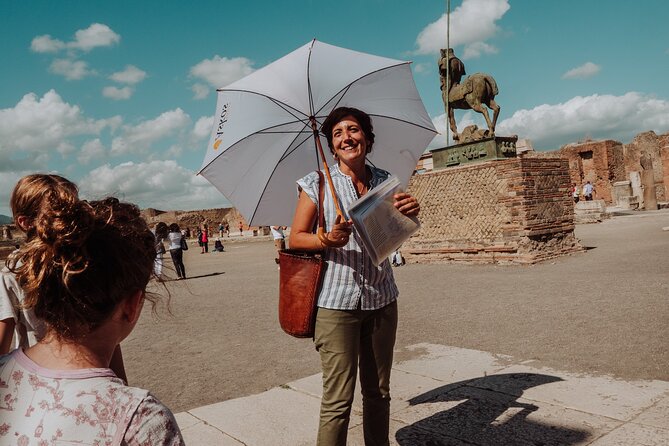
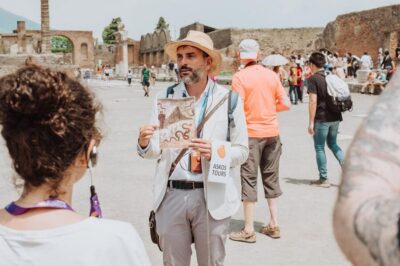
Your meeting point is set for the main entrance called Porta Marina Superiore, where your guide holds a sign with the company name Askos Tours. In practice, this matters because Pompeii entrances can be confusing if you are arriving with nerves and a backpack full of nerves.
The tour ends at Piazza Esedra, and the guide can help you with practical next steps to get back toward your accommodation or the nearest train station. That’s a small detail, but it can save you from the common “we saw Pompeii, now what” moment after the tour.
Because there is no hotel pickup, plan to arrive under your own steam. This is normal for Pompeii, and it helps keep the tour moving. If you are using public transport, the experience is described as being near public transportation, which is helpful if you are not renting a car.
One more useful tip: bring the same mindset you use in museums. You are meeting a guide, not just receiving directions. Arrive ready to walk, and treat the first ten minutes at the entrance as your orientation.
The Core Loop: From the Archaeological Park to the Forum Street
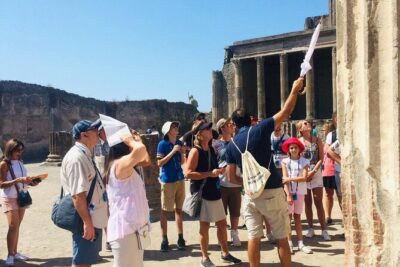
The tour starts inside the Archaeological Park of Pompeii and includes admission. You get the ticket handled as part of the experience, which is one less task you have to manage. The first stop is also where a good guide can set the tone. You are not just entering, you are learning how to “read” what you will see next.
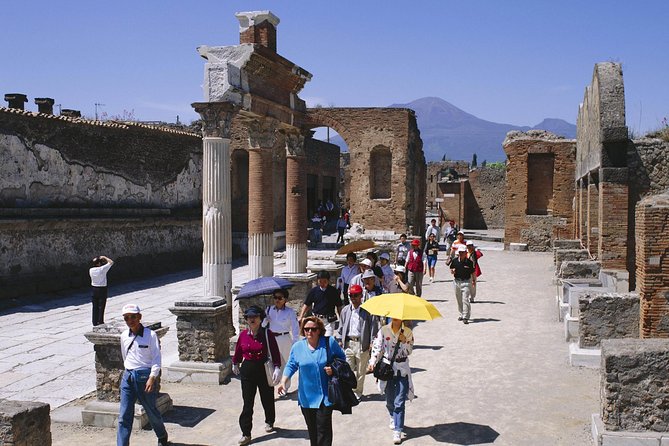
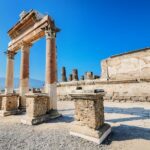
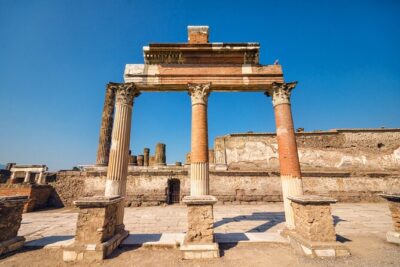
From there, you move into the Basilica, described as an open portico that gave shelter to merchants and other activities. This is a great early stop because it reminds you that Pompeii was not only temples and statues. It was also commerce, talk, and daily transactions, even in bad weather.
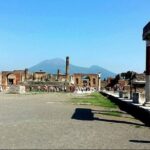
Next comes the Forum of Pompeii, the main square. The Forum is where you get your bearings. When you understand what the square was for, the surrounding buildings make more sense instead of feeling like random walls.
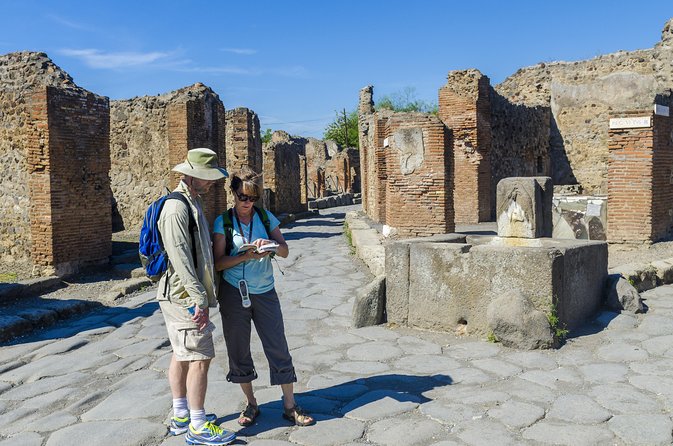
Then you walk down the main street. This section is underrated in a tour like this because street life is the connective tissue of Pompeii. When your guide points out how streets and crossings shaped movement, the site feels like a city again rather than an outdoor storage unit for old stones.
A smart detail here is that the route keeps you moving from public spaces to semi-public and then into domestic areas. That flow mirrors how many people would have experienced Pompeii: start in the center, then move out to work, shop, eat, bathe, and return home.
Granaries, Marble Tables, and the Everyday Genius of Forum Life
One of the stops focuses on the Granaries of the Forum. This is exactly the kind of stop that can feel boring if you are rushing. With an archaeologist guide, it becomes the “oh, that’s important” moment.
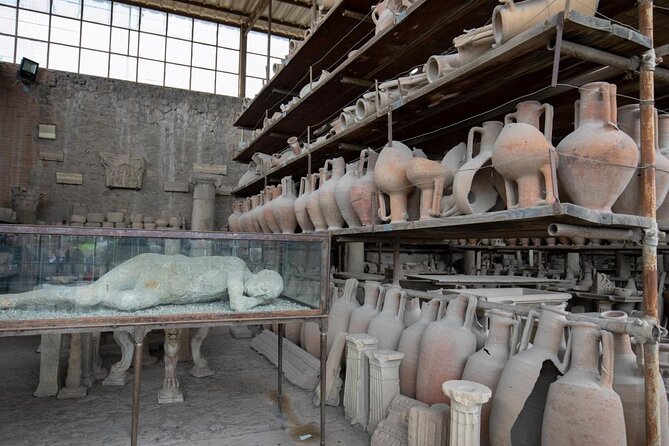
You get to see marble tables and details that relate to fountains and entrances of houses. You also see casts of victims of the eruption, and the stop includes mention of casts of a dog and a tree. That combination matters because it shows Pompeii’s scale of loss, but it also pushes you to understand how people tried to go about life even when disaster was building.
A big part of why this stop is valuable is that it changes your attention. It is not only about what a building looks like. It is about function, movement, and the emotional weight of the site. A good guide helps you hold those two realities at once.
In a private setting, you can also ask follow-ups that are impossible on a loud group tour. If something catches your eye at the granaries, you can pause, get it explained, and then keep walking with a better mental map.
Houses That Feel Like Stories: Menander and the House of the Faun
Pompeii’s most dramatic contrast is between public spaces and private homes. This tour makes that shift with two key house stops.
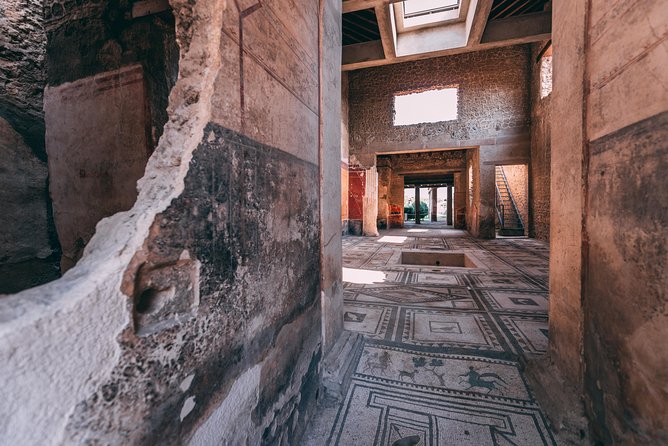
The first is the House of Menander, described as one of the richest and most magnificent residences in Pompeii for architecture, decoration, and contents. This is the moment where you start to notice luxury details and how domestic design signaled status. If you have ever wondered why one home looks “fancier” than another, this type of stop is where your questions start getting answered.
Then you move to the House of the Faun, noted as one of the largest and most impressive private residences in the city. Even when you are only spending about fifteen minutes at a house, the guide’s job is to point you toward the few details that make the home click. You’ll be looking at how rooms relate, how decoration communicates wealth, and how space supported daily life.
Here’s what I think you should watch for: do not try to memorize everything. Instead, pick one or two themes your guide highlights, like decoration choices, layout logic, or what the spaces suggest about daily routines. In a short tour, that approach keeps your brain from turning into a photo storage device.
Stabian Baths, the Lupanar, and the Side of Pompeii Many People Miss
Not every Pompeii tour spends real time on bathing and sexuality. This one does, and that’s part of what makes it feel more complete.
The Stabian Baths (Terme Stabiane) are described as the oldest thermal complex in the city, occupying a vast area between key crossroads and lanes. Baths were social spaces, not just places to get clean. With an archaeologist guide, you learn how a thermal complex shaped rhythms of the day: who went when, what the spaces did, and why the layout mattered.
Then comes the Lupanar, described as the most famous brothel in Pompeii. This stop can be uncomfortable for some people, but it also helps balance the story of the city. Pompeii included all kinds of lives, and this is part of that reality. A good guide keeps it grounded in context rather than turning it into shock entertainment.
If you are bringing kids or you are sensitive to adult themes, it helps that the tour is private. That means your guide can calibrate the tone to your group. One review specifically praised attention to keeping older family members comfortable and engaged, which gives you confidence that pacing and sensitivity are part of the guiding style here.
Our reviewers also walked through other two-hour experiences in Pompeii.

Theater Stops That Help You See Pompeii as a City
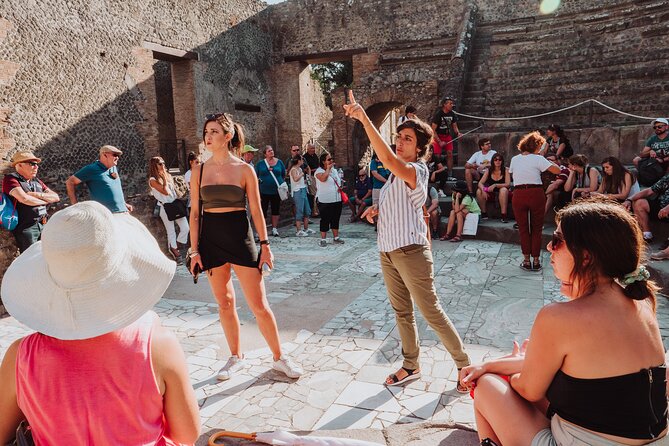
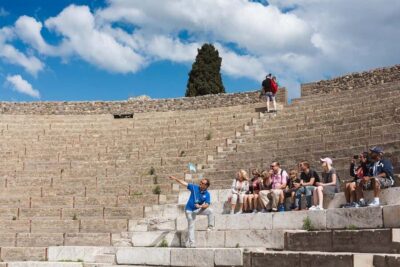
The tour includes a brief look at the so-called Teatro Piccolo, followed by the Teatro Grande, described as the most important theater in Pompeii.
Theater stops are useful because they pull you back into civic life. You learn that Pompeii was not just commerce and homes. It was also entertainment and gathering, with architecture designed for crowds and spectacle. When you understand that, the theater shapes what you think about the city’s social life.
Even if you are not a theater person, the Teatro Grande can be a turning point. The guide can connect seating, movement, and how performances fit into the culture. In a short tour, these stops give you a sense of how people spent their time after the workday.
Price and Value: Is $214.75 Worth It?
The price is $214.75 per person, and the big value question is what you get for that spend.
You get three things bundled together:
- A private archaeologist-led walking tour
- Admission fees to Pompeii included
- A focused route that hits key areas in about two hours
If you are going solo, this might feel steep compared with group tours. But if you want higher quality time, the private format changes the math. You are paying to reduce wasted time, increase clarity, and get answers to questions that would otherwise remain stuck in your brain.
If you are a small group, the value often improves fast. Pompeii is one of those places where a good guide can save you from misunderstanding what you are looking at. That means you leave with something you can actually use later, not just a list of stops.
My practical advice: if you already plan to self-guide with books or apps, you might not need this. But if you want Pompeii to make sense quickly, and you value expert interpretation over wandering, this is a solid buy.
Pacing, Footwear, and the Real Shape of Pompeii
This tour operates in all weather conditions, so you should dress for whatever Pompeii throws at you. Rain means slick ground and more careful footing. Even in dry conditions, the terrain is uneven. That’s why comfortable shoes are recommended.
The experience also notes a moderate physical fitness level. In plain terms, you should expect some walking and climbing, plus getting in and out of viewpoints along the way. If your group needs lots of breaks, a private guide is still an advantage, because you can ask for a slower pace rather than being swept along.
Also, it is a private tour/activity, only your group participates. That helps with comfort, photo rhythm, and asking questions without feeling like you are holding up strangers.
If you travel with a service animal, service animals are allowed, which is good to know for planning.
Should You Book This Private Pompeii Tour?
Book this tour if you want Pompeii to feel like a city, not a parking lot for ruins. The biggest reasons are the private pacing, the focus on major site areas, and the archaeologist-led context that turns buildings into real daily life. At around two hours, it’s also a smart choice if you are combining Pompeii with other stops.
Skip it or consider a different option if your goal is to roam every corner for half a day or more. This route is curated for understanding, and it is not designed to cover everything. In Pompeii, that can be a feature, not a flaw, as long as you go in knowing you are buying clarity and momentum, not total coverage.
If you can do one guided thing at Pompeii, do this one.
FAQ
What is included in the Pompeii admission?
Admission fees to Pompeii are included as part of the tour, and the tour describes the first stop entry ticket as included.
How long is the private tour?
The tour duration is about 2 hours.
Where do we meet the guide, and where does the tour end?
You meet at the main entrance of the archaeological site called Porta Marina Superiore (your guide holds a sign with Askos Tours). The tour ends at Piazza Esedra.
Is the tour only for my group?
Yes. It is a private tour/activity, and only your group will participate.
Is transportation or hotel pickup included?
No. Hotel pickup and drop-off, and transportation to and from the ruins are not included.
What is the cancellation policy?
You can cancel for a full refund up to 24 hours in advance of the experience start time. If you cancel less than 24 hours before, the amount paid is not refunded.
Our Wider Tours File for Pompeii
The Rest of Our Pompeii Site Visits in Pompeii

Not quite the day you had in mind? The rest of our Pompeii write-ups sit below
- Ancient Pompeii Private Tour: Skip the Line & Kid-Friendly Option★ 5.0 · 167 reviews
- Pompeii 2-hour Private Tour with an Archaeologist-Ticket included★ 5.0 · 181 reviews
- Pompeii Private Tour with an Archaeologist Guide★ 5.0 · 184 reviews
- Mount Vesuvius Tour from Pompeii Led by an Expert Guide★ 5.0 · 185 reviews
- Stories of Pompeii: Small Group tour with archeology expert guide★ 5.0 · 191 reviews
- Pompeii: 2 Hour Private Tour with an Archeologist Guide★ 5.0 · 214 reviews
- Pompeii and Mount Vesuvius Small Group Tour★ 4.5 · 233 reviews
- Pompeii Guided Group Tour with Entry Ticket and Archaeologist★ 4.5 · 269 reviews
- Pompeii: Guided Small Group Tour Max 6 People with Private Option★ 5.0 · 269 reviews
Pompeii Archaeological Site, top to bottom.
 ★ 4.8Pompeii: Entry Ticket and Guided Tour with an ArchaeologistFrom $3519,459 reviews
 ★ 4.2Pompeii: Entry Ticket with Optional Audio GuideFrom $2612,360 reviews
 ★ 4.8Pompeii: Small Group Tour with an ArchaeologistFrom $4012,264 reviews
 ★ 4.3From Naples: Pompeii Ruins & Mount Vesuvius Day TourFrom $12011,459 reviews
 ★ 4.6From Rome: Pompeii, Amalfi Coast, and Sorrento Day TripFrom $797,031 reviews
 ★ 4.6From Rome: Pompeii, Amalfi Coast and Positano Day TripFrom $996,620 reviews
★ 5.0Pompeii Small Group Tour with an ArchaeologistFrom $356,593 reviews
 ★ 4.5Pompeii, Amalfi Coast and Positano Day Trip from RomeFrom $1016,250 reviews