
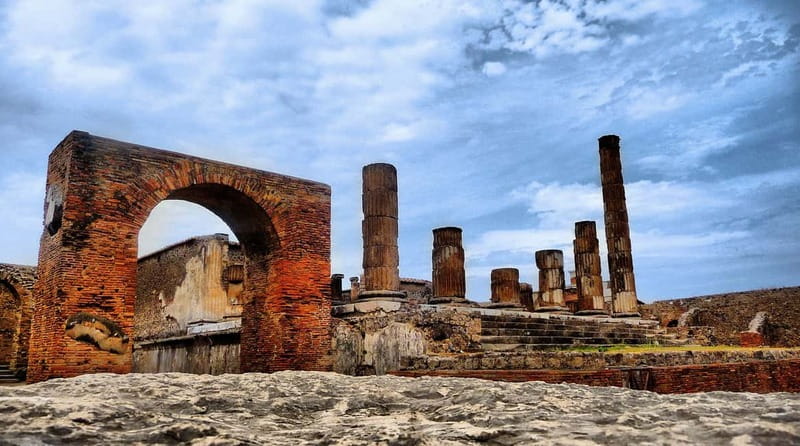
Reviewed · POMPEII ARCHAEOLOGICAL SITE
Pompeii: Group Tour with an Archeologist Guide
Pompeii comes alive fast with a real guide. This 2-hour walk through the ruins, led by a professional archaeologist, helps you see what you are looking at, not just where you are standing. I like the skip-the-line setup and the way the west-side highlights are stitched into a clear story of daily life before Vesuvius buried it. One thing to consider, though, is that it is not built for slow strolling, and the larger group means you will be following the pace of the tour.
If you care about getting value in a short window, this one hits. You get a focused route through places like the Marina Gate area, Basilica and Forum, baths, the Lupanar brothel, the main street, and the theaters, plus plaster casts that make the tragedy harder to ignore. Heat can be intense, so comfortable shoes matter even more than usual.
In This Review
- Key things to know before you go
- Why this Pompeii tour works so well in 2 hours
- Meeting up at Tempio Travel near Vircumvesuviana
- Porta Marina to the west-side highlights: your guided route
- Marina Gate, Basilica, and the Forum area
- Baths and the main street
- The Lupanar brothel
- The theaters
- Why skip-the-line plus whisper headsets is a serious value
- Plaster casts and the Garden of the Fugitives: seeing the tragedy with context
- Named houses you can actually point to later
- The route is designed for comprehension, not exhaustion
- Hearing real passion from archaeologist guides like Alfonso, Lena, and Giuseppe
- Finishing with suggestions for your remaining time in Pompeii
- Price and value: what $50.11 buys you
- Who should book this Pompeii archaeologist group tour
- Should you book it, or go it alone?
- FAQ
- How long is the Pompeii group tour with an archaeologist guide?
- Where do I meet for the tour?
- Does this tour include skip-the-line tickets?
- Are whisper headsets provided?
- Which languages are available for the live guide?
- What major areas will the tour cover in Pompeii?
- Is luggage allowed during the tour?
- What should I bring?
- Is the tour suitable for people with mobility impairments?
- Is entrance free on the first Sunday of each month?
Key things to know before you go
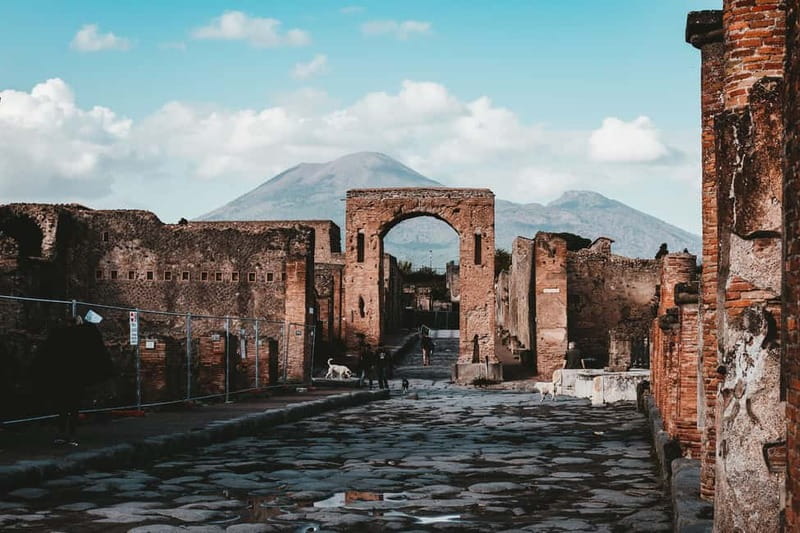
- Skip-the-line entrance tickets save time at one of Italy’s most in-demand archaeological sites
- Whisper headsets help you hear your English or Italian archaeologist guide in a bigger group
- The west-side route covers the big ticket buildings without trying to do everything
- Named locations like the Garden of the Fugitives and houses such as the House of the Tragic Poet and House of the Golden Cupid
- Plaster casts give you a stronger, more human sense of the 79 AD disaster
- You end where you started, at the Tempio Travel meeting point near Vircumvesuviana
Why this Pompeii tour works so well in 2 hours
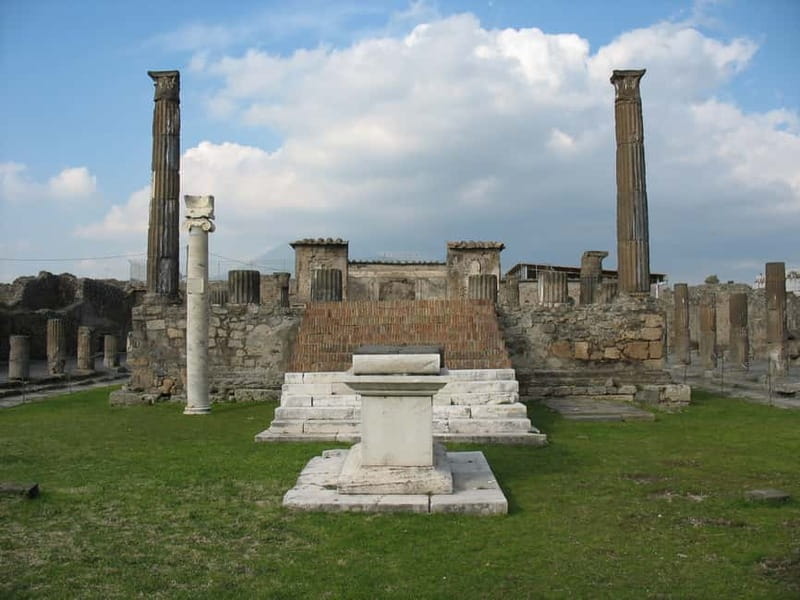
Pompeii is enormous, and trying to wing it usually turns into a lot of staring at walls. The best part of this tour is that it gives you an anchor. You walk the west part of town where the most important buildings are clustered, so you do not waste your limited time bouncing around the map.
The second big win is the guide quality. This is led by a professional archaeologist, so the explanations tend to connect architecture to real life. You see the Basilica and Forum as civic spaces, understand what the baths were for, and get context for the theaters, not just a quick description of stonework.
The one drawback is the pace. It is still a group tour in active ruins, so you will want good walking shoes and patience with the flow of other people.
Our reviewers also walked through other Pompeii site visits in Pompeii Archaeological Site.
- Pompeii: Archaeological Park Tour with Ticket on request
★ 4.5 · 2,283 reviews - Pompeii Ruins Private Tour with Optional Skip-the-Line Entry
★ 4.9 · 732 reviews - Pompeii: Exclusive Tour with Archaeologist and Entry Tickets
★ 4.9 · 634 reviews - Pompeii: Group Tour with an Archeologist Guide
★ 4.4 · 490 reviews
Meeting up at Tempio Travel near Vircumvesuviana
The tour meets at the Tempio Travel office, on the first floor of the Vircumvesuviana train station. It starts and ends back at the meeting point, so you do not have to figure out separate drop-off plans.
A practical tip that matters here: make sure you know the exact office location before you arrive. In past experiences with this kind of setup, the difference between finding it quickly and wandering around the station is often one floor and one sign, not a dramatic travel mystery. If you want an easy start, arrive a few minutes early and double-check you have the right building.
From there, the group moves to the Pompeii entrance with the time-saving advantage of skip-the-line tickets.
Porta Marina to the west-side highlights: your guided route
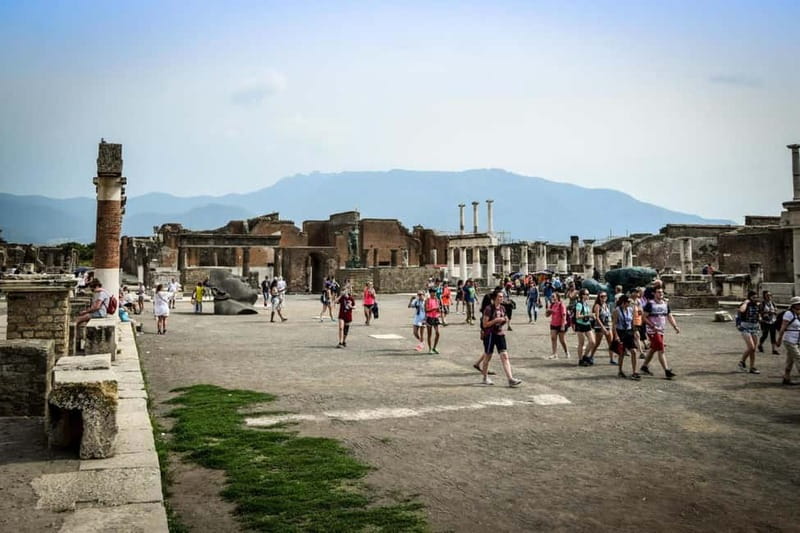
Your walkthrough begins at Porta Marina (Marina Gate), which is a logical entry point for the west-side focus of the tour. The whole route is designed to keep momentum while still covering the sites that most people come to see.
Here is what the main stretch typically gives you, in plain language:
Marina Gate, Basilica, and the Forum area
These are your backbone monuments. The Marina Gate area helps you understand how people moved into the city, and once you are inside the built-up core, the Basilica and Forum make civic Pompeii feel real. The guide’s job is to translate the layout into something you can picture, like where official meetings happened and why those spaces mattered.
The benefit for you is that you stop treating ruins like random locations. Instead, you understand them as a functioning city.
Baths and the main street
Pompeii was not only politics and temples. The tour includes the baths and the main street so you get a sense of daily routines and social life. Baths especially are a great reality check, because you can easily imagine what went on there once you have a guide pointing out the zones and purpose.
The Lupanar brothel
The Lupanar is one of the most talked-about stops, and for good reason. Even if you do not want details, you will benefit from the guide’s explanation of what it is, how it worked, and how it fits into street life. It is a reminder that Pompeii is not only about tragedy and big buildings. It includes the messy, human stuff too.
We wrote up further guided tours in Pompeii Archaeological Site on the same pass through the archive.

The theaters
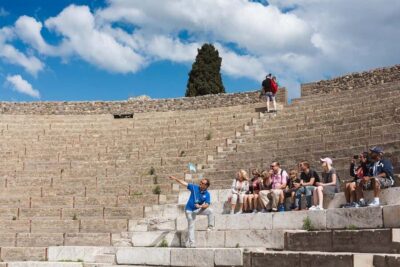
Theaters are your culture and entertainment stop. If you are the kind of person who loves matching what you see to how people lived, this is where the tour often clicks. You start noticing the scale and the design choices that would have shaped the experience of an audience.
Why skip-the-line plus whisper headsets is a serious value
This tour includes skip-the-line entrance tickets and whisper headsets for large groups. Those two details are not just comfort perks, they directly affect how much you get out of the 2 hours.
Without skip-the-line, you can lose the best part of a short visit to waiting. With skip-the-line, you spend that time inside Pompeii, where it counts. The headsets matter because Pompeii ruins are open air and noisy, especially around crowded landmarks. Being able to hear your archaeologist guide clearly keeps you connected to the story instead of drifting out of it.
Even better, this format is often ideal if you are traveling with kids or with a group that wants structure. You still get movement and the must-see sights, but you are not stuck doing everything alone.
Plaster casts and the Garden of the Fugitives: seeing the tragedy with context

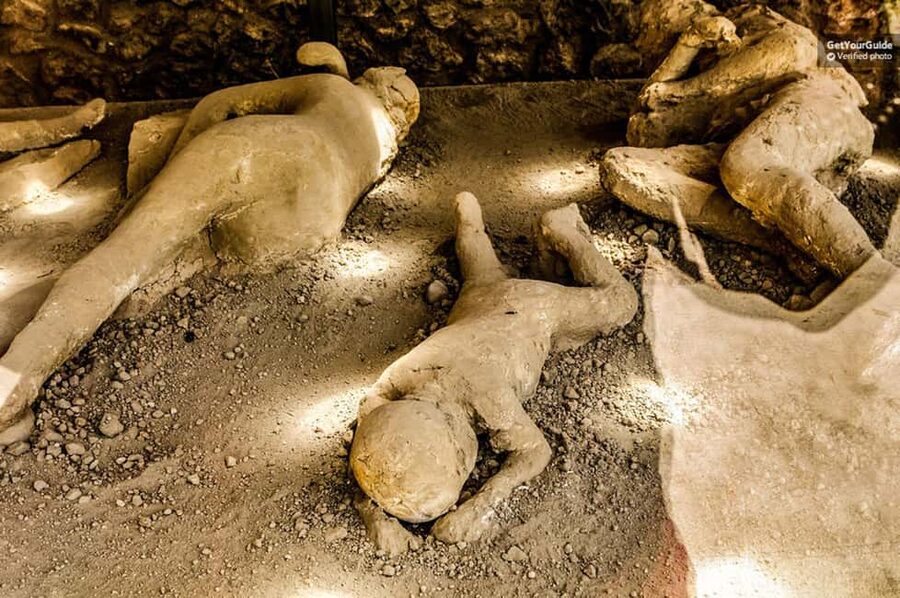
Pompeii’s tragedy is famous. The hard part is learning how to look at it without turning it into a checklist. This tour tackles that by combining two kinds of impact: the plaster casts and the Garden of the Fugitives.
The plaster casts are meant to represent Pompeiians affected by the eruption. Even if you have seen photos before, seeing the casts in context changes how you process the story. Your guide’s explanations help you connect the site to what happened in 79 AD, so it feels less like a grim photo spot and more like a moment in time.
The Garden of the Fugitives is another emotional stop, and it is often where the tour narrative turns from buildings to people. You will likely notice how the guide frames movement, fear, and the city’s final moments, not just the physical location.
If you want Pompeii to feel human, this is the part you will remember later.
Named houses you can actually point to later
A common problem in Pompeii is getting lost in impressions. One minute you are in a doorway; the next minute you are at another courtyard and you cannot recall why it mattered. This tour helps by covering named houses, the kind you can reference later:
- House of the Tragic Poet
- House of the Golden Cupid
- and other famous named houses in the same west-side focus
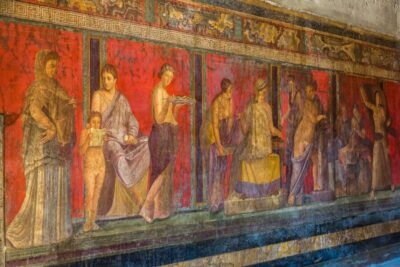
These stops matter because Pompeii’s interiors are where you start seeing art and domestic life. Frescoes show up, and the tour specifically calls out frescoes as part of the experience. With a guide, you learn what you are looking at and why it was there, not just that there was decoration.
The big value for you is memory. After a strong guided route, Pompeii stops become story points, not blurred scenery.
The route is designed for comprehension, not exhaustion

This is a two-hour tour, so it cannot cover everything. The honest upside is that it avoids the common trap of rushing from one end of the site to the other with zero context. Instead, the tour focuses on a cluster of important buildings and named areas.
You cover a lot of Pompeii’s “greatest hits” in a way that still feels logical: entry at Porta Marina, key civic and public spaces, street life, entertainment, and then named domestic sites and tragedy-focused stops.
One practical consideration: Pompeii can be hot, and your time inside open-air ruins will feel longer than you expect. If you are going in summer or in the afternoon, consider bringing something to manage sun, like a compact umbrella. It is the kind of simple move that keeps a 2-hour tour enjoyable instead of sticky and grumpy.
Hearing real passion from archaeologist guides like Alfonso, Lena, and Giuseppe
What repeatedly makes this kind of tour work is how the guide teaches. Names that have come through in this experience include Alfonso (including Alfonso Marie), Lena, Laura, Giuseppe, Antonio, and Eraldo/Eraldo-type variations. Different guides, same goal: clarity and pace.
A good guide also handles the “what am I supposed to notice?” moments. You get quick explanations that turn ruins into scenes. People often mention how the tone stays engaging, with good humor and answers to questions, which helps when the group is larger.
For you, the practical benefit is simple: you do not need to know Roman history coming in. The guide gives you enough structure to recognize patterns, like how civic spaces differ from domestic ones, and how art fits everyday life.
Finishing with suggestions for your remaining time in Pompeii
At the end of the tour, your guide provides suggestions for how to spend the rest of your day in the modern city of Pompeii. They can also direct you toward the Sanctuary Dedicated to Our Lady of the Holy Rosary, which is just a few steps from the archaeological site.
This matters more than it sounds. Most people do Pompeii and then stare at their phone trying to figure out what comes next. A guide’s local pointers can help you shift from ruins mode to food, streets, and nearby sights without wasting time.
Price and value: what $50.11 buys you
At about $50.11 per person, the value comes from three main things you do not have to manage yourself:
- Time savings with skip-the-line entry
- A professional archaeologist guide, which turns the route into learning instead of wandering
- Whisper headsets, which make sense in a group setting and help you actually hear explanations
If you are visiting Pompeii for a short stop or you want the top sights covered without guesswork, this price can feel fair fast. If you already planned a long, self-guided day with a detailed plan and audio guide, you might not need this. But for most people, two hours plus an expert route is exactly the sweet spot.
Who should book this Pompeii archaeologist group tour
This tour is a strong match if you:
- want a 2-hour guided structure for Pompeii’s main sites
- like frescoes, named houses, and understanding how daily life worked
- prefer skip-the-line entry and an organized route over navigating solo
- are okay with a group pace and comfortable walking for ruins
It is not suitable for people with mobility impairments, since the tour involves walking through the archaeological site.
Should you book it, or go it alone?
Book it if you want Pompeii to make sense quickly. The combination of skip-the-line tickets, whisper headsets, and an archaeologist guide focused on key west-side buildings is the formula for getting value in a limited time window. You will leave with clearer mental pictures of civic life, domestic life, and the eruption’s human impact.
Go alone only if you have a lot of extra time and you enjoy planning your own route without guidance. Pompeii rewards curiosity, but it punishes aimlessness. In a short visit, this tour is an efficient way to avoid that.
If you do book, bring comfortable shoes, and plan for sun and heat. Pompeii is stunning, and with a guide at your side, it is also easier to look at without feeling overwhelmed.
FAQ
How long is the Pompeii group tour with an archaeologist guide?
The tour lasts 2 hours.
Where do I meet for the tour?
Meet at the Tempio Travel office located on the first floor of the Vircumvesuviana train station.
Does this tour include skip-the-line tickets?
Yes. Skip-the-line entrance tickets are included.
Are whisper headsets provided?
Yes. Whisper headsets are included for large groups.
Which languages are available for the live guide?
The live tour guide is available in English and Italian.
What major areas will the tour cover in Pompeii?
The tour focuses on the west part of Pompeii, including places such as Porta Marina (Marina Gate), the Basilica, the Forum, the baths, the Lupanar brothel, the main street, the theaters, the Garden of the Fugitives, and named houses like the House of the Tragic Poet and House of the Golden Cupid.
Is luggage allowed during the tour?
No. Luggage or large bags are not allowed.
What should I bring?
Bring a passport or ID card and comfortable shoes.
Is the tour suitable for people with mobility impairments?
No. It is not suitable for people with mobility impairments.
Is entrance free on the first Sunday of each month?
Entrance is free on the first Sunday of each month, but tickets cannot be reserved ahead of time, so entry is not guaranteed.
Our Wider Tours File for Pompeii Archaeological Site


The Rest of Our Pompeii Site Visits in Pompeii Archaeological Site
Not quite the day you had in mind? The rest of our Pompeii Archaeological Site write-ups sit below
- From Naples: Pompeii and Vesuvius Guided Day Trip with Lunch
- From Naples: Mount Vesuvius and Pompeii Ruins Combo Day Trip
- Ancient Pompeii Private Tour: Skip the Line & Kid-Friendly Option★ 5.0 · 167 reviews
- Pompeii: Private Tour with an Archaeologist★ 4.9 · 168 reviews
- Mt Vesuvius and Pompeii Tour by Bus from Sorrento★ 4.5 · 170 reviews
- Pompeii 2-hour Private Tour with an Archaeologist-Ticket included★ 5.0 · 181 reviews
- Pompeii Private Tour with an Archaeologist Guide★ 5.0 · 184 reviews
- Mount Vesuvius Tour from Pompeii Led by an Expert Guide★ 5.0 · 185 reviews
- Pompeii and Mount Vesuvius excursion from Naples★ 4.6 · 188 reviews
Pompeii Archaeological Site, top to bottom.
 ★ 4.8Pompeii: Entry Ticket and Guided Tour with an ArchaeologistFrom $3519,459 reviews
 ★ 4.2Pompeii: Entry Ticket with Optional Audio GuideFrom $2612,360 reviews
 ★ 4.8Pompeii: Small Group Tour with an ArchaeologistFrom $4012,264 reviews
 ★ 4.3From Naples: Pompeii Ruins & Mount Vesuvius Day TourFrom $12011,459 reviews
 ★ 4.6From Rome: Pompeii, Amalfi Coast, and Sorrento Day TripFrom $797,031 reviews
 ★ 4.6From Rome: Pompeii, Amalfi Coast and Positano Day TripFrom $996,620 reviews
★ 5.0Pompeii Small Group Tour with an ArchaeologistFrom $356,593 reviews
 ★ 4.5Pompeii, Amalfi Coast and Positano Day Trip from RomeFrom $1016,250 reviews
Filed under