
Reviewed · POMPEII ARCHAEOLOGICAL SITE
Pompeii and Herculaneum Small Group Tour with an Archaeologist
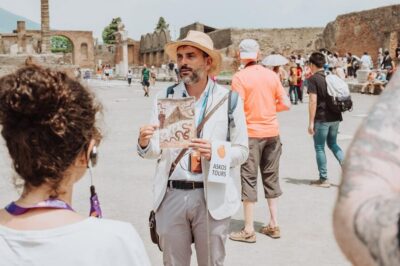
Two Roman cities, one archaeologist-led day. I like this setup because it trades map-wrangling for real site interpretation, and your guide’s route is built around the big, meaningful stops in both parks. I also appreciate the headsets, which make it easier to keep up even when the group moves fast. The one thing to plan for is that the schedule is tight, so Pompeii is two hours, not forever.
This is a small-group format (up to 20 people) with admission tickets to both Pompeii and Herculaneum included. Depending on where you start, you’ll ride by modern minibus or train between the sites, then finish based on your selected departure option (Naples, Sorrento, Rome via Naples station, or right inside Herculaneum if you start in Pompeii).
In This Review
- Key things I think you’ll notice right away
- Price and what you actually get for $77.09
- How the day runs, and why your meeting point matters
- Pompeii in two hours: what you can hit, and what you’ll have to save
- Basilica and the mercantile city feel
- Forum and the main square energy
- House of Menander, Pompeii’s decorated wealth
- Granaries, fountains, and the cast of victims
- Stabian Baths: Pompeii’s thermal complex
- Lupanar: the famous brothel stop
- House of the Faun and the scale of private life
- Odeon and Teatro Piccolo, then the Teatro Grande
- Travel between Pompeii and Herculaneum: train or minibus, both included
- Herculaneum after Pompeii: why the preserved houses hit harder
- The Herculaneum stops you won’t want to rush past
- House of the Deer and named-from-details archaeology
- La Terrazza di M. Nonio Balbo and the power behind rebuilding
- College of the Augustales: religion and imperial ties
- Casa del Rilievo di Telefo and a private connection to baths
- Partem Domus lignea: the wooden partition that survived
- House of the Skeleton: a grim clue to what happened
- Central Thermae: separate bathing spaces
- House of the Black Salon and carbonized door remnants
- Casa Sannitica and how regional styles show up
- Casa del Bel Cortile: an atrium alternative
- House of the Grand Portal: frescoes and charred wooden remains
- Pace, lunch choices, and how to avoid feeling rushed
- Who this tour suits best
- Should you book this Pompeii and Herculaneum tour?
- FAQ
- What is the duration of the tour?
- Are entrance tickets to Pompeii and Herculaneum included?
- How many people are in the group?
- How do you travel between Pompeii and Herculaneum?
- Is lunch included?
- What are the tour start and end options?
- Is the tour offered in English?
Key things I think you’ll notice right away
- Small group, up to 20 people, so you can actually ask questions and hear explanations without getting swallowed by a crowd
- Skip-the-line ticket handling plus “Pompeii express” entry tickets, so you lose less time to paperwork and queues
- An archaeologist guide for both sites, not just a basic walking tour
- Two different cities with different strengths, Pompeii for the civic and theatrical life, Herculaneum for houses and preserved interiors
- Included train transfer when you start in Pompeii, using the Circumvesuviana route plus a short walk
- Route built around iconic spots, from the Forum and baths to houses like the House of Menander and the House of the Black Salon
Price and what you actually get for $77.09
At $77.09 per person, this tour feels most “fair” because it bundles the stuff that usually eats your day and your budget: guided entry, admission to both Pompeii and Herculaneum, and transport between the sites. Pompeii and Herculaneum are paid parks on their own, and here you’re not doing the scramble of buying tickets and timing your arrival around busy days.
What you’re paying for is the structure. Pompeii is huge, and without help you tend to wander into the parts you can reach fastest. With a guide, you get a curated path that still hits the essentials: the Forum area, baths, theaters, major houses, and the plaster casts highlight. In Herculaneum, the guide focuses on why the preservation matters, so the houses and baths don’t feel like random rooms.
One practical note: meals and drinks are not included. You do get a lunch break, but it’s your expense.
Our reviewers also walked through other Pompeii site visits in Pompeii.
- Pompeii Small Group Tour with an Archaeologist
★ 5.0 · 6,593 reviews - Discover the Ancient Ruins of Pompeii: Day Trip from Rome
★ 3.5 · 2,247 reviews - Pompeii and Herculaneum Small Group Tour with an Archaeologist
★ 5.0 · 1,350 reviews - Skip the Line Guided Tour of Pompeii led by an Archaeologist
★ 5.0 · 703 reviews
How the day runs, and why your meeting point matters
The tour is designed around your start location. You meet the archaeologist guide at the meeting point tied to your option:
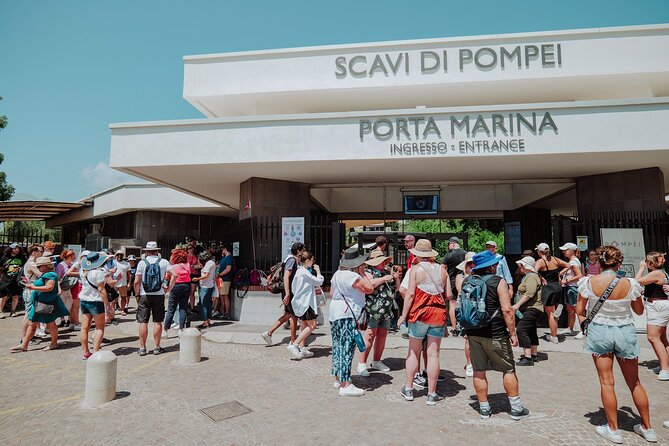
- Pompeii option: meet at Porta Marina Superiore, then later take the Circumvesuviana train toward Herculaneum
- Naples and Rome options: meet at Starhotels Terminus, then ride by modern minibus to Pompeii and onward
- Sorrento option: meet at Piazza Angelina Lauro, also by modern minibus
Duration is listed as 6 to 11 hours (approx.), which is a big window, but here’s what drives the range: travel time, the pace of the walking parts, and how smooth the transfers are.
Also pay attention to how the day ends. If you start in Pompeii, the tour concludes directly in the Herculaneum ruins, and you handle the return on your own. If you start in Naples or Sorrento, you return there. For Rome travelers, the tour drops you at Naples station.
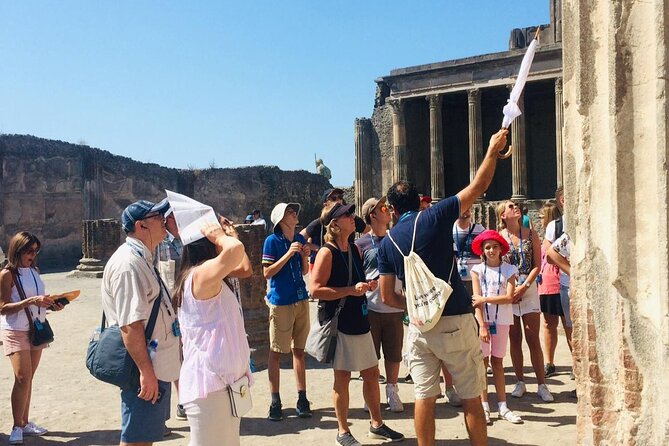
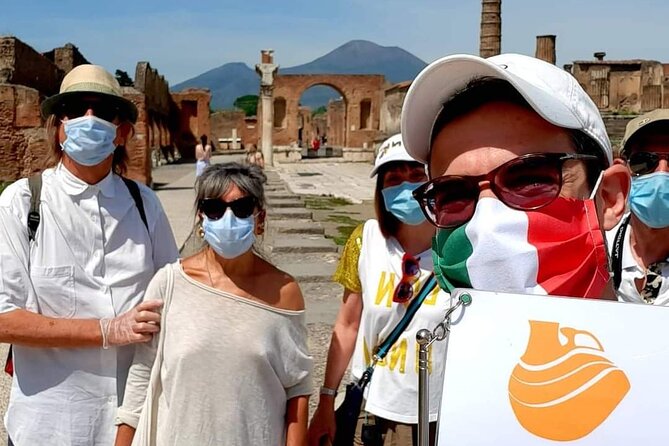
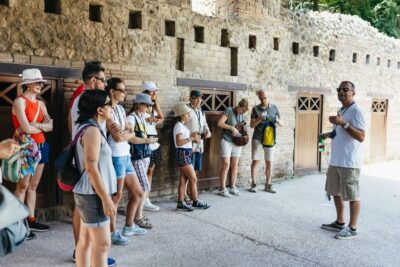
Finally, the group max is 20 people, and you get headsets for all participants. That small-group factor matters in archaeology sites where people pause, look back, and then move again.
Pompeii in two hours: what you can hit, and what you’ll have to save
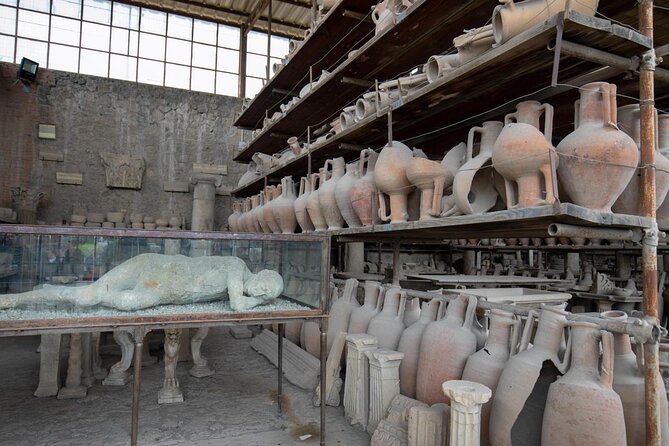
Pompeii is where you get the public city life. You’ll spend about two hours exploring major highlights with your archaeologist guide, typically covering the Forum zone, baths, top houses, and theater spaces. You also get the plaster casts moment, which helps you understand the tragedy in a way that’s hard to grasp from ruins alone.
Here’s how the stops connect into a sensible Pompeii story.
Basilica and the mercantile city feel
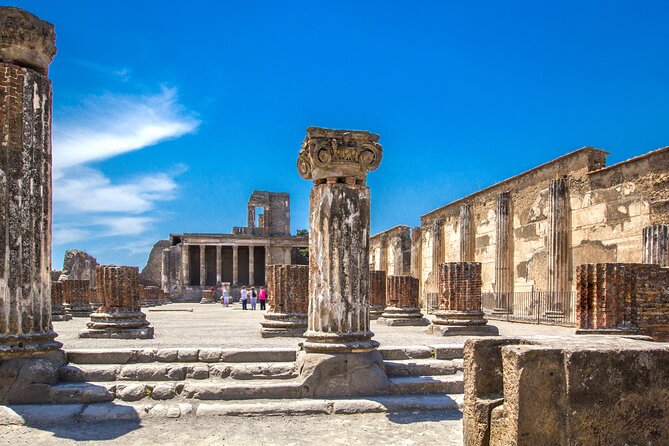
The day starts with the Basilica, an open portico used for merchants and other activities. Even in ruins, it helps you picture Pompeii as a working city, not just a museum.
A small caution: open-air sites mean you feel the weather. Wear shoes that handle uneven stone and keep an eye on footing.
Forum and the main square energy
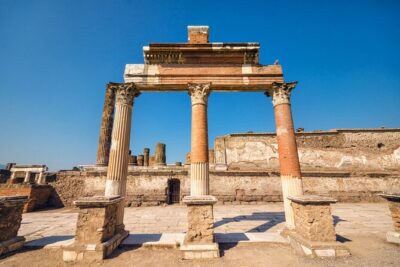
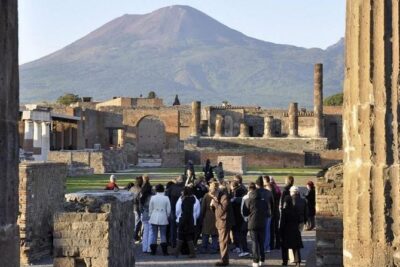
Next is the Foro de Pompeya. This is Pompeii’s ancient main square, and it’s one of the quickest ways to understand how civic life was organized. You also get time to walk through Pompeii’s main street, which helps stitch the public spaces together.
House of Menander, Pompeii’s decorated wealth
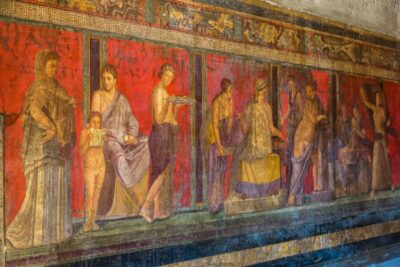
Then you’ll visit the House of Menander, one of the richest and most magnificent homes in Pompeii for architecture, decoration, and contents. This is where you start seeing how much space and artistry went into private life.
The drawback here is simple: a house that huge can’t be fully appreciated in 15 minutes. You’ll see key areas, but if you want to slow down for details like floor mosaics or wall paintings, you’ll likely want a return visit.
Kept in the same folder as this one, Herculaneum and Vesuvius visits in Pompeii.


Granaries, fountains, and the cast of victims
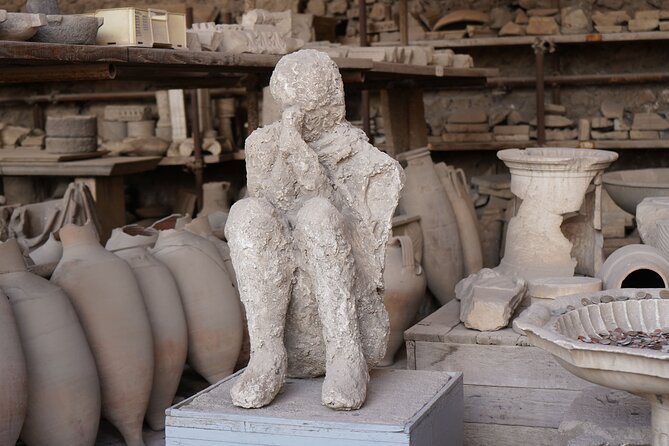
The Granaries of the Forum are a strong stop because they combine infrastructure with human story. You’ll see marble tables and baths for fountains that adorned entrances, and you’ll also encounter plaster casts of victims of the eruption, plus casts of a dog and a tree.
This is a point where a guide’s interpretation makes a big difference. The ruins can look like fragments until someone explains what each feature was for.
Stabian Baths: Pompeii’s thermal complex
The Stabian Baths (Terme Stabiane) take you into the oldest thermal complex in the city. Baths were not just about washing. They were social spaces with routines and status.
Time is limited here, so focus on the big layouts: how circulation worked, and how the bath complex connected to surrounding streets.
Lupanar: the famous brothel stop
The Lupanar is the most famous brothel in ruined Pompeii. It’s a striking stop because it’s so recognizable as a specialized business space, not just a random building.
It’s also a reminder that Pompeii’s economy included all kinds of services, and Roman daily life had its own version of nightlife.
House of the Faun and the scale of private life
Then comes the House of the Faun, one of the largest and most impressive private residences in Pompeii. You get a sense of how wealth translated into space, and how elite homes were organized around light, courtyards, and decorative priorities.
Odeon and Teatro Piccolo, then the Teatro Grande
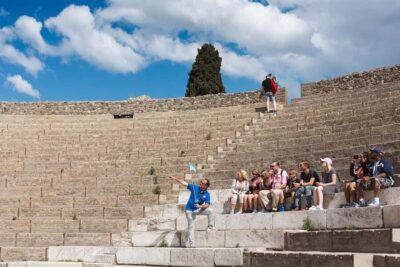
You’ll see the Odeon, also called Teatro Piccolo, and the Teatro Grande, the most important theater in Pompeii. Together, they show how performance and civic identity were tied together.
In this part, your guide’s pacing matters. If you want photos, do it while you’re moving along the key viewpoints. Once the group commits to the next stop, it’s hard to backtrack.
Travel between Pompeii and Herculaneum: train or minibus, both included
After the Pompeii portion, there’s a quick lunch break (own expense), then you head to Herculaneum. From Naples, Sorrento, and Rome options, you go directly by modern minibus. If you start in Pompeii, you use the included Circumvesuviana train ticket for about 30 minutes, plus a 10-minute walk.
This transfer is not filler. It’s part of making the two sites feel like one connected day. Pompeii gives you the civic map, and the ride helps reset your expectations so Herculaneum feels different instead of repetitive.
One practical tip from actual on-the-day experience: if you get hungry after Pompeii, grab a snack before the train to Herculaneum. It’s a simple way to keep the vibe from collapsing during the transfer and the brief walk.
Herculaneum after Pompeii: why the preserved houses hit harder
Herculaneum is smaller than Pompeii, and that matters. You get about two hours here, with the guide leading you to the ticket office when you arrive.
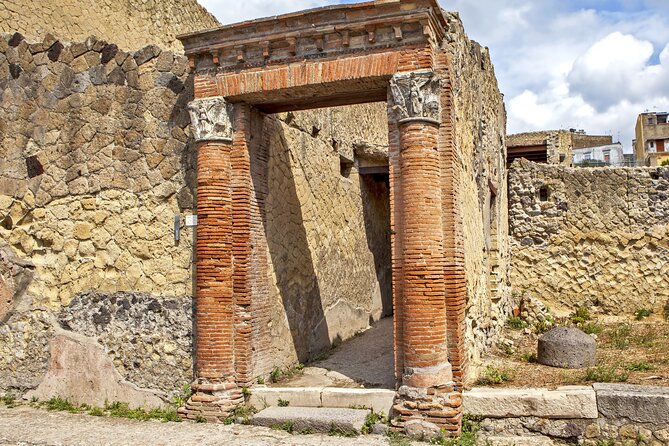
The big difference is the kind of ruins you’re seeing. Herculaneum’s preservation helps you understand daily life through houses, baths, and public buildings that still feel like rooms you could walk into. After Pompeii’s open civic layout, Herculaneum’s interiors and details can feel more intimate.
The Herculaneum stops you won’t want to rush past
Herculaneum’s route is packed, but each stop serves a theme: elite life, public worship, bathing culture, and even the survival of wood and door structures.
House of the Deer and named-from-details archaeology
The House of the Deer gets its name from marble statues of stags or deer found in the peristyle. This is a great example of how archaeologists connect a household’s identity to specific objects.
La Terrazza di M. Nonio Balbo and the power behind rebuilding
La Terrazza di M. Nonio Balbo is tied to the city’s major benefactor, with details explained by the long inscription on his funeral altar. You learn how patronage shaped what was built and restored.
College of the Augustales: religion and imperial ties
The College of the Augustales relates to a cult of Emperor Augustus and may have served as the headquarters of the Collegium Augustalium, or possibly the local curia. This stop adds a political and religious layer to what you’re walking through.
Casa del Rilievo di Telefo and a private connection to baths
Casa del Rilievo di Telefo is unusual in that it has its own private access to the adjoining Suburban Thermae to the south. It’s the kind of architectural quirk that makes a guide’s explanations feel worth it.
Partem Domus lignea: the wooden partition that survived
The Partem Domus lignea, Casa del Tramezzo di Legno stop is important because it preserves an elegant wooden partition. You see how even everyday structures could survive in exceptional conditions.
House of the Skeleton: a grim clue to what happened
The House of the Skeleton derives its name from human remains found in a second-floor room in 1831. It’s not a “fun” stop, but it anchors the scale of the event in something painfully specific.
Central Thermae: separate bathing spaces
At the Central Thermae, you learn about baths built around the beginning of the 1st century AD and divided into men’s and women’s bathing areas with separate entrances. This is one of those moments where ruins teach social structure.
House of the Black Salon and carbonized door remnants
The House of the Black Salon is one of Herculaneum’s more luxurious mansions. You’ll see the monumental entrance with carbonised doorposts and lintel remains.
Casa Sannitica and how regional styles show up
Casa Sannitica reflects a layout typical of the Samnites, with a splendid atrium and a gallery with Ionic columns, plus frescoes. This stop helps you understand that Herculaneum was influenced by people from beyond the immediate city.
Casa del Bel Cortile: an atrium alternative
Casa del Bel Cortile is original for its courtyard with a stairway and a stone balcony instead of an atrium. It’s a reminder that even “house types” varied.
House of the Grand Portal: frescoes and charred wooden remains
Finally, the House of the Grand Portal stands in the center of the archaeological area with collonnati, frescoes, and charred remains of wooden parts. This is a fitting closer because it ties together elite design and the material evidence of destruction.
Pace, lunch choices, and how to avoid feeling rushed
Let’s be honest: this tour gives you highlights, not a slow, hour-by-hour wander. Pompeii’s two-hour block can feel short if you want to stop at every mosaic and plaster cast and stare.
There’s also a meal reality. A lunch break is available at your own expense. One common pattern is a stop at a shopping area for convenience. If you prefer a more relaxed meal with better atmosphere, plan to treat lunch like a logistics step, and focus your time on the ruins.
The best way to protect your experience is to go in with priorities:
- If you’re mainly here for architecture and public life, you’ll feel satisfied with Pompeii’s hit list.
- If you’re here for houses and preserved details, Herculaneum is the place to give your attention, because two hours is a strong payoff for what survives there.
If rain happens, it’s still workable, but you’ll want water-resistant layers and grippy shoes. A guide can keep you moving and make sure you still see the key rooms.
Who this tour suits best
This is a great fit if you:
- Want two major sites in one day without planning logistics
- Like archaeology that explains how people lived, built, and organized public life
- Prefer small-group pacing with headsets and a guide who can answer questions
- Know you’ll be tempted to get lost in Pompeii without help
It may be less ideal if you:
- Need long viewing time at every stop, especially in Pompeii
- Rely on special accessibility support, since the tour is noted as not recommended for visually impaired guests unless accompanied by a dedicated personal assistant
Should you book this Pompeii and Herculaneum tour?
If your goal is to see Pompeii and Herculaneum without the stress of tickets, navigation, and figuring out transfers, this tour is a strong choice. The value comes from the combination of guided interpretation, included admission, headsets, and a transfer that ties the two parks together.
Book it if you want a smart route with big payoffs and you’re okay with a brisk pace. Skip it only if your top priority is slow, deep wandering through Pompeii with lots of personal time at each section. For most people, this is the kind of day that makes the ruins feel understandable instead of overwhelming.
FAQ
What is the duration of the tour?
The tour duration is listed as 6 to 11 hours (approx.).
Are entrance tickets to Pompeii and Herculaneum included?
Yes. Admission tickets to both Pompeii and Herculaneum are included, along with Pompeii express entry tickets for quicker access.
How many people are in the group?
The tour has a maximum group size of 20 travelers.
How do you travel between Pompeii and Herculaneum?
If you start in Naples, Sorrento, or Rome, you travel with the guide by modern minibus directly to Herculaneum. If you start in Pompeii, you use an included Circumvesuviana train ticket (about 30 minutes) plus a short 10-minute walk.
Is lunch included?
No. Meals and drinks are not included, but there is a quick lunch break available before the transfer where you pay your own lunch.
What are the tour start and end options?
You meet your guide at the meeting point for your selected option. The tour ends based on that option, including returning to Naples or Sorrento, dropping off Naples station for Rome travelers, or ending directly inside the Herculaneum ruins if you start in Pompeii.
Is the tour offered in English?
Yes, it is offered in English, and headsets are provided for all participants.
Herculaneum and Vesuvius Visits in Pompeii That Made the Same Shortlist



The Rest of Our Pompeii Site Visits in Pompeii

Not quite the day you had in mind? The rest of our Pompeii write-ups sit below
- Ancient Pompeii Private Tour: Skip the Line & Kid-Friendly Option★ 5.0 · 167 reviews
- Pompeii 2-hour Private Tour with an Archaeologist-Ticket included★ 5.0 · 181 reviews
- Pompeii Private Tour with an Archaeologist Guide★ 5.0 · 184 reviews
- Mount Vesuvius Tour from Pompeii Led by an Expert Guide★ 5.0 · 185 reviews
- Stories of Pompeii: Small Group tour with archeology expert guide★ 5.0 · 191 reviews
- Pompeii: 2 Hour Private Tour with an Archeologist Guide★ 5.0 · 214 reviews
- Pompeii and Mount Vesuvius Small Group Tour★ 4.5 · 233 reviews
- Pompeii Guided Group Tour with Entry Ticket and Archaeologist★ 4.5 · 269 reviews
- Pompeii: Guided Small Group Tour Max 6 People with Private Option★ 5.0 · 269 reviews
Pompeii Archaeological Site, top to bottom.
 ★ 4.8Pompeii: Entry Ticket and Guided Tour with an ArchaeologistFrom $3519,459 reviews
 ★ 4.2Pompeii: Entry Ticket with Optional Audio GuideFrom $2612,360 reviews
 ★ 4.8Pompeii: Small Group Tour with an ArchaeologistFrom $4012,264 reviews
 ★ 4.3From Naples: Pompeii Ruins & Mount Vesuvius Day TourFrom $12011,459 reviews
 ★ 4.6From Rome: Pompeii, Amalfi Coast, and Sorrento Day TripFrom $797,031 reviews
 ★ 4.6From Rome: Pompeii, Amalfi Coast and Positano Day TripFrom $996,620 reviews
★ 5.0Pompeii Small Group Tour with an ArchaeologistFrom $356,593 reviews
★ 4.6From Rome: Pompeii, Amalfi Coast and Positano Day TripFrom $996,620 reviews
★ 5.0Pompeii Small Group Tour with an ArchaeologistFrom $356,593 reviews
 ★ 4.5Pompeii, Amalfi Coast and Positano Day Trip from RomeFrom $1016,250 reviews