

Reviewed · POMPEII ARCHAEOLOGICAL SITE
Pompeii Guided Group Tour with Entry Ticket and Archaeologist
Pompeii goes from ruins to meaning fast. This guided group walk is built around an archaeology-first route through the most important parts of town, with your entry handled so you can focus on what you are seeing. I especially like that the tour includes the Pompeii entry ticket express, so you spend less time lining up and more time learning where to look.
I also like the way the itinerary concentrates on everyday Roman life, from the marketplace and bath area to big-city homes like the House of the Faun and the House of the Vettii. You get headsets when the group is over 15, which can make it easier to keep up in a loud, crowded site.
One drawback to consider is that sound quality can vary. A few visitors reported the headset audio being echoey or hard to hear, so if you are sensitive to that kind of thing, try to stay close to your guide when possible.
In This Review
- Key things to know before you go
- Where You Meet (and how not to waste time at Porta Marina)
- Start at Porta Marina Superiore, then get oriented fast
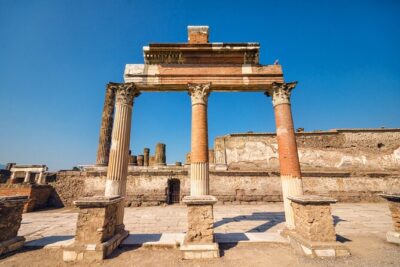
- The Forum of Pompeii: political center, religious center, and the place people gathered
- Macellum: the Roman marketplace for meat, fish, and walls covered in food
- Forum Baths: a gender-split routine, fed by an aqueduct
- Two big houses in one tour: Casa del Fauno and Casa dei Vettii
- Casa del Fauno: aristocratic scale and a famous mosaic copy
- Casa dei Vettii: Pompeii art and an uncomfortable room of erotic paintings
- Via dell’Abbondanza: the spine connecting the biggest landmarks
- Thermopolium: the ancient fast-food stop for takeaway meals
- Price and value: what you get for about $59
- The guides and headsets: strong explanations, but audio can be hit or miss
- Timing advice for a smoother, less chaotic Pompeii
- Should you book this Pompeii guided group tour?
- FAQ
- Where is the meeting point for the tour?
- Is the Pompeii entry ticket included?
- How long is the tour?
- Is the tour offered in English?
- Are headsets included?
- What is not included?
- What is the maximum group size?
- What is the cancellation policy?
- Does weather affect the tour?
Key things to know before you go
- Express entry included: you start with the ticket taken care of, not a last-minute scramble.
- Meeting point is inside the Circumvesuviana station: it is on the first floor, 15 minutes before departure time.
- A tight, smart route: the walk focuses on the forum core, major homes, and street life along Via dell’Abbondanza.
- Real daily-life stops: market space, forum baths, quick meals at a thermopolium, and household rooms with art.
- Headsets for larger groups: helpful for listening, but audio quality can be uneven.
- 2 hours is not the whole site: you will see a lot, but Pompeii is huge and you will want extra time afterward.
Where You Meet (and how not to waste time at Porta Marina)

Your tour starts at Via Villa dei Misteri 1, at the Circumvesuviana station Pompei Scavi Villa dei Misteri. Plan to arrive 15 minutes early. The meeting point is on the first floor of the red station building, at the office called Tempio Travel / Pompeii Tickets, about 100 meters from the Porta Marina Superiore entrance.
This matters more than you might think. Pompeii gets hectic, and even a few minutes of confusion can throw off the whole start. I like this setup because it is specific and walkable from the main entrance, but I also suggest you do a quick sanity check on your phone before you show up. One reason people get stressed is that mapping apps can point you to a nearby area that feels right but is not the exact check-in floor.
Also, since this is a group tour with a maximum of 35 travelers, you do not want to be the person trying to sprint through the crowd after everyone else has started.
Our reviewers also walked through other Pompeii site visits in Pompeii.
- Pompeii Small Group Tour with an Archaeologist
★ 5.0 · 6,593 reviews - Discover the Ancient Ruins of Pompeii: Day Trip from Rome
★ 3.5 · 2,247 reviews - Pompeii and Herculaneum Small Group Tour with an Archaeologist
★ 5.0 · 1,350 reviews - Skip the Line Guided Tour of Pompeii led by an Archaeologist
★ 5.0 · 703 reviews
Start at Porta Marina Superiore, then get oriented fast
The walk begins at Porta Marina Superiore, one of Pompeii’s key entry points. The first stop is the Archaeological Park of Pompeii area itself, with your admission ticket included. Think of this as the “get your bearings” stage.
What makes this first chunk useful is that it sets up the rest of your route. Pompeii can feel like a maze if you wander in cold without a plan. Starting with a guided approach helps you learn what you are looking at as you move between spaces that were once connected by streets, daily errands, and public events.
From there, you head into the city’s most important public zone, the forum area, where the big ideas of Roman town life become visible in stone.
The Forum of Pompeii: political center, religious center, and the place people gathered
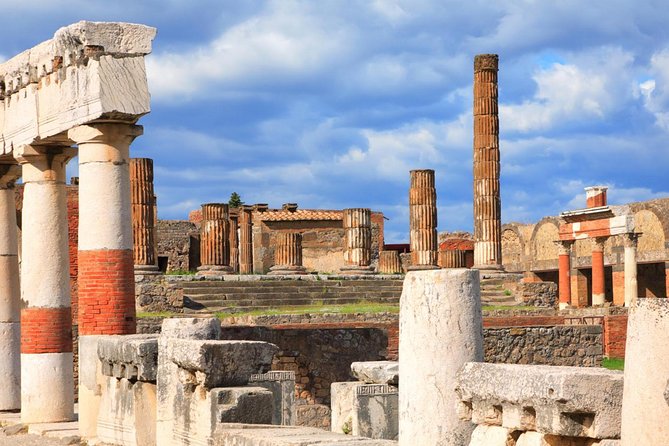
Your tour’s next stop is the Foro de Pompeya, described as the main square of the city and the hub of political, economic, and religious life. This is where Pompeii stops being “pretty ruins” and becomes a functioning urban plan.
You get about 30 minutes here, which is a good length for the forum because it gives you time to look carefully without getting lost in details that would take days. I like that the tour treats the forum as more than a photo stop. It is a place to understand how people moved through power, worship, and trade in one concentrated area.
One practical tip: if you want strong photos, aim to pause at your turn points and then reposition slightly rather than trying to fight for perfect angles in the busiest spots.
Macellum: the Roman marketplace for meat, fish, and walls covered in food
Next up is the Macellum, located on the forum. This stop is short, around 10 minutes, but it is a great “compression” of what everyday commerce meant in Roman life. The Macellum is tied to the market for meat and fish, and you can also see frescoes that depict foods eaten in the first century A.D.
Here is why this stop is more valuable than it sounds: it makes daily life concrete. Pompeii often impresses people with scale and architecture, but the Macellum reminds you that people ate. And when you look at painted food, it stops being abstract. It becomes a visual menu of an ancient world.
This is also a good moment to slow down your walking pace, because market details tend to reward close attention. Even if your time is limited, focusing for a minute or two at the right spots makes the stop feel longer.
Forum Baths: a gender-split routine, fed by an aqueduct
Then you move to the Terme del Foro, the Forum Baths, behind the Temple of Jupiter. This part lasts about 15 minutes, and it is one of the most interesting stops because it is built into Pompeii’s sense of routine.
You will hear that the bath sector covered around 410 square meters and had both male and female sections, each with independent entry. Water came from the Serino aqueduct, though there was also a well available if water was short. The tour also points out original ceiling details and surviving stucco, plus a marble tub in the calidarium and a mosaic floor.
Why you should care: baths were not only about cleanliness. They were social, practical, and part of how people organized their day. Seeing the layout, and especially hearing that the building had separate entry areas, helps you understand the rhythms of separation and community that existed in everyday Roman spaces.
It is also a great area for you to notice how Pompeii’s preservation makes details readable. The ceilings and surface work can look “just decorative” until a guide frames what you are actually seeing.
Two big houses in one tour: Casa del Fauno and Casa dei Vettii
After the forum zone, the route shifts toward residential life. You visit two domus, both short stops around 10 minutes each. The smart move here is to treat them like “you are seeing highlights now, not learning every room.”
We wrote up further entry tickets in Pompeii on the same pass through the archive.
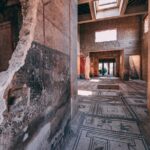
Casa del Fauno: aristocratic scale and a famous mosaic copy
The Casa del Fauno is one of the largest and most luxurious aristocratic homes of the Roman Republic period. Inside, you can see the Mosaic of Alexander, though this one is a copy, with the original preserved at the MANN.
Even in a brief visit, the point is clear. This is not a modest house. It is a statement property, designed to project power and taste. The mosaic theme also connects to how wealthy households used art and legend to communicate identity.
If you are the kind of visitor who likes to compare what a copy tells you versus what an original might, this stop rewards that mindset. It also keeps you from feeling like you missed the “real masterpiece,” because the guide frames what you are viewing.
Casa dei Vettii: Pompeii art and an uncomfortable room of erotic paintings
Next is the Casa dei Vettii, a Roman-era domus buried during the eruption of Mount Vesuvius in 79 A.D. Archaeology later uncovered it, and it is tied to owners Aulo Vettio Restituto and Aulo Vettio Conviva.
This is one of the stops people remember because it is very specific. Within the house, you can encounter a room that preserves erotic paintings, and the interpretation is that it was used by a prostitute who lived with the owner.
If you prefer your tours to stay away from uncomfortable topics, you might want to mentally prepare for this. The good news is that Pompeii is not a sanitized theme park, and the tour does not pretend otherwise. The uncomfortable details are part of the reality of how people lived and how art could serve different functions in different rooms.
From a value standpoint, this second house is a strong payoff because it moves beyond decoration into what people did inside those walls.
Via dell’Abbondanza: the spine connecting the biggest landmarks
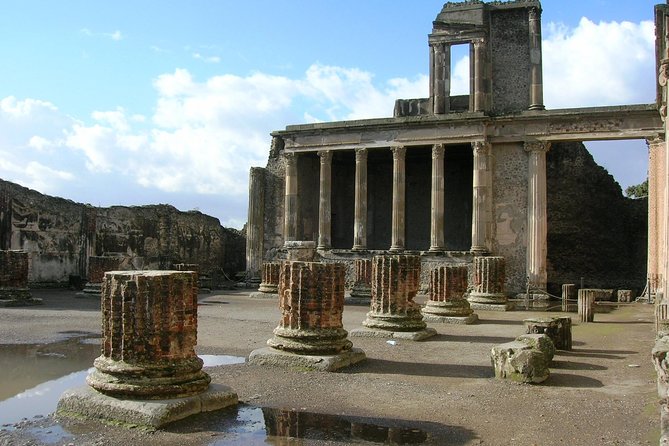
After Casa dei Vettii, you continue along Via dell’Abbondanza. The tour frames this street as a main artery linking major city zones between the forum and Porta Sarno, including places like the Forum Baths, the theaters, the Temple of Isis, and the amphitheater.
You do not have long blocks of time here, but this stretch helps you connect the dots. When you walk a street that used to connect daily destinations, the city plan starts clicking into place. It also helps you understand why Pompeii feels so big once you leave the guided route.
If you plan to wander after the tour, this street is a good mental anchor. You will have an easier time planning where to go next because you already walked the connective tissue once.
Thermopolium: the ancient fast-food stop for takeaway meals
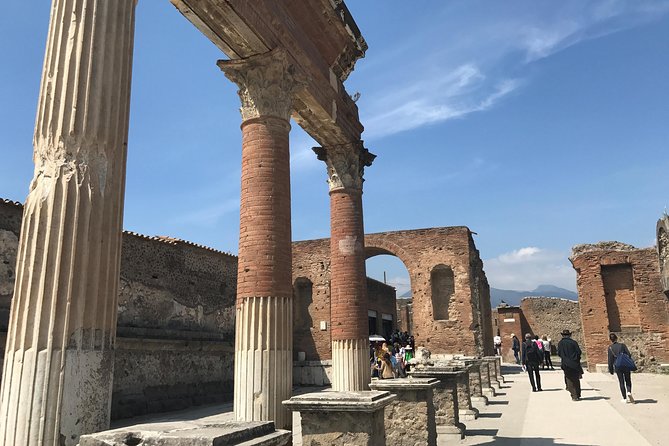
The last highlighted stop is the Thermopolium, listed as Regio VI, Insula VIII, 8. The term means a place where hot items were sold, and the tour explains it as the equivalent of an ancient takeaway food spot.
This stop lasts about 10 minutes. It is a small slice of time, but it is a smart “wrap-up” because it returns you to daily habits: quick meals, street commerce, and the constant movement of food in and out of Pompeii’s life.
If the market and baths felt like Roman routine, the thermopolium makes it even more real. It is the day-to-day energy of the city, not just elite architecture.
At the end, the tour finishes back at the meeting point, so you can continue on your own without figuring out where to go next.
Price and value: what you get for about $59
At $59.13 per person for roughly a two-hour guided walk, this tour can feel like a fair deal because it bundles three things many people otherwise have to juggle separately: an entry ticket to the Pompeii Archaeological site (express), a timed guided route, and headsets for groups over 15.
The value gets strongest when you are short on time or not sure where to start. Pompeii is huge, and walking without a plan can turn into backtracking. A guided highlights route helps you see key zones without wasting half your day getting oriented.
That said, value is personal. A couple of people felt the price was high compared with other options, and at least one guest thought the content leaned more toward a general tour-guide style rather than a true archaeologist approach. If you are paying for expert depth, you will want a guide who can make the details feel specific, not just memorized.
Also, the route is not the full site. In two hours, you cannot cover everything, even if you are moving briskly. If you want a once-only, maximum-see-everything visit, you should plan to add self-guided time afterward.
The guides and headsets: strong explanations, but audio can be hit or miss
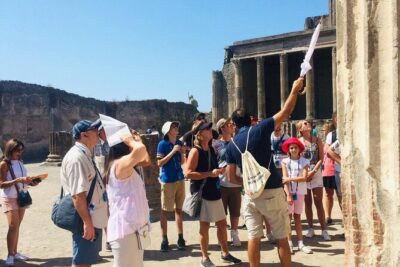
This tour uses headsets when the group is over 15 travelers. That is usually a big help for listening while walking, especially in open areas where you can get far from the guide.
Many visitors like the storytelling style, including guides who are described as patient and entertaining. Names that show up in English experiences include Laura, Alessandra, Eraldo, and Rita. The common thread is pacing. Good guides keep the group together while still giving you time to look.
But here is the practical caution: one visitor reported poor headset quality with echo, plus difficulty hearing through the device. If you notice your audio is not clear, try moving a bit closer to the guide and use visual cues from their hand gestures and pointing. And if you are sensitive, bring a tiny amount of patience with you. Pompeii is loud, and devices can vary in quality day to day.
Timing advice for a smoother, less chaotic Pompeii
Booking ahead is smart. This kind of tour is often reserved close to peak days, and Pompeii entry lines can get messy. People also recommend booking early in the day if you can, because it is chaotic when everyone arrives at once.
This tour is about 2 hours, so choose a start time that gives you breathing room afterward. You will almost certainly want extra time to wander, especially because the itinerary focuses on a core set of highlights.
One more timing thought: if you are doing other stops in the area the same day, pick the Pompeii slot that keeps you from rushing. When you feel rushed, you stop looking closely, and Pompeii rewards slow attention.
Should you book this Pompeii guided group tour?
Book it if:
- You want a high-impact highlights route in about two hours.
- You prefer guidance for the forum zone and the big houses instead of wandering without direction.
- You like structure, including included entry and a clear meeting point.
- You want headsets for group listening in larger numbers.
Skip or compare if:
- You are extremely sensitive to headset audio quality and you dislike any risk of echo or low clarity.
- You expect a deep archaeologist-only lecture. The tour is sold with archaeological expertise, but delivery can vary by guide.
- You want to see almost everything in Pompeii in one go. This route is a strong start, not a complete sweep.
My best advice is simple: treat this as your orientation and your “greatest hits” pass. Then use the rest of your time in Pompeii to go slower, pick a few extra buildings, and linger where you felt the tour turned on the lights.
FAQ
Where is the meeting point for the tour?
The meeting point is Via Villa dei Misteri 1, 80045 Pompei NA, Italy. You meet about 15 minutes before the indicated time at the Tempio Travel / Pompeii Tickets office on the first floor of the Circumvesuviana station Pompei Scavi Villa dei Misteri.
Is the Pompeii entry ticket included?
Yes. The tour includes an Entrance Ticket Express to the Pompeii Archaeological site.
How long is the tour?
The duration is approximately 2 hours.
Is the tour offered in English?
Yes, the tour is offered in English.
Are headsets included?
Yes. Headsets are included for groups with more than 15 people.
What is not included?
Parking fee, transport, and food or drinks are not included. Also, entrance ticket plus for the Villa of Mysteries is not included.
What is the maximum group size?
This activity has a maximum of 35 travelers.
What is the cancellation policy?
You can cancel for a full refund if you cancel at least 24 hours in advance of the experience start time. Free cancellation is offered up to 24 hours ahead.
Does weather affect the tour?
This experience requires good weather, and if it is canceled due to poor weather, you will be offered a different date or a full refund.
Our Wider Tours File for Pompeii
The Rest of Our Pompeii Site Visits in Pompeii

Not quite the day you had in mind? The rest of our Pompeii write-ups sit below
- Ancient Pompeii Private Tour: Skip the Line & Kid-Friendly Option★ 5.0 · 167 reviews
- Pompeii 2-hour Private Tour with an Archaeologist-Ticket included★ 5.0 · 181 reviews
- Pompeii Private Tour with an Archaeologist Guide★ 5.0 · 184 reviews
- Mount Vesuvius Tour from Pompeii Led by an Expert Guide★ 5.0 · 185 reviews
- Stories of Pompeii: Small Group tour with archeology expert guide★ 5.0 · 191 reviews
- Pompeii: 2 Hour Private Tour with an Archeologist Guide★ 5.0 · 214 reviews
- Pompeii and Mount Vesuvius Small Group Tour★ 4.5 · 233 reviews
- Pompeii Guided Group Tour with Entry Ticket and Archaeologist★ 4.5 · 269 reviews
- Pompeii: Guided Small Group Tour Max 6 People with Private Option★ 5.0 · 269 reviews
Pompeii Archaeological Site, top to bottom.
 ★ 4.8Pompeii: Entry Ticket and Guided Tour with an ArchaeologistFrom $3519,459 reviews
 ★ 4.2Pompeii: Entry Ticket with Optional Audio GuideFrom $2612,360 reviews
 ★ 4.8Pompeii: Small Group Tour with an ArchaeologistFrom $4012,264 reviews
 ★ 4.3From Naples: Pompeii Ruins & Mount Vesuvius Day TourFrom $12011,459 reviews
 ★ 4.6From Rome: Pompeii, Amalfi Coast, and Sorrento Day TripFrom $797,031 reviews
 ★ 4.6From Rome: Pompeii, Amalfi Coast and Positano Day TripFrom $996,620 reviews
★ 5.0Pompeii Small Group Tour with an ArchaeologistFrom $356,593 reviews
 ★ 4.5Pompeii, Amalfi Coast and Positano Day Trip from RomeFrom $1016,250 reviews
Filed under