
Reviewed · POMPEII ARCHAEOLOGICAL SITE
Pompeii 2h Small-Group Tour with Expert Archaeologist
Pompeii in two hours is a smart trade. This small-group tour is built for people who want major highlights fast, with an archaeology-focused guide and enough structure to help you understand what you’re looking at. You also get guided context for places that can feel confusing when you’re simply walking on your own.
I especially like the pace and stop selection. You hit the big visual wins, like the theaters and the House of Menander, without losing the plot. And you’re not stuck staring at signs, you’re getting the “why” behind the murals, street layout, and everyday spaces.
One thing to consider: small-group size can vary by day. The tour advertises a maximum of 30, and at least one experience ended up bigger than expected, plus headset volume issues showed up for a few people. If you’re bringing kids, read the room too, because while many guides handle families well, there is at least one account of inappropriate teasing toward parents and children.
In This Review
- Key things that make this Pompeii tour worth it
- Entering Pompeii in a time crunch, and doing it right
- Meeting at Ristorante Suisse, so you start with less stress
- Stop-by-stop: what you actually see in about two hours
- Archaeological Park of Pompeii, plus fresco-focused context
- Odeon (Teatro Piccolo), then Teatro Grande for the show-business story
- House of Menander, a luxury home you can read with your eyes
- Stabian Baths (Terme Stabiane), Pompeii’s oldest thermal complex
- Lupanar, the famous brothel, explained without turning it into a spectacle
- Via dell’Abbondanza, then House of the Faun, for street energy and household scale
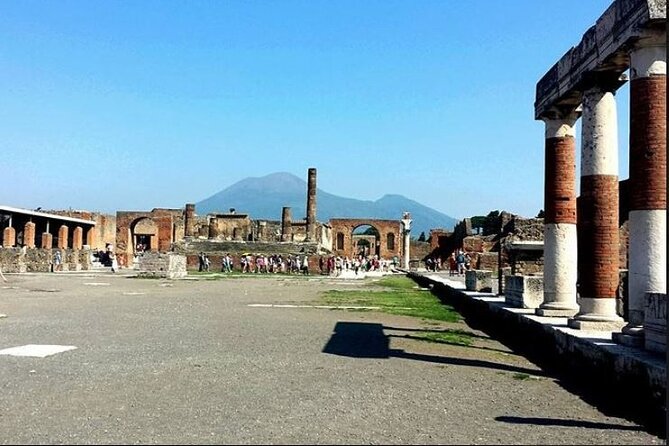
- Forum de Pompeya and the Basilica, where business and civic life meet shelter
- Price and value: what $32.67 buys you in real terms
- Small-group reality: “small” can mean different things on different days
- Guides are the secret ingredient: Luca, Roberta, Manuela, Clare, and more
- Family-friendly, but plan for kids and temperament
- Best fit: who should book this and who should choose another plan
- Should you book it
- FAQ
- How long is the Pompeii tour?
- What language is the tour offered in?
- Is Pompeii admission included?
- Where do we meet for the tour?
- What group size should I expect?
- Is it suitable for families and kids?
- What is the physical fitness level requirement?
- Are there any free admission days for Pompeii?
- Can I cancel and get a refund?
- Do I need a printed ticket?
Key things that make this Pompeii tour worth it
- Time-saving route: you cover major Pompeian zones instead of guessing what matters most
- Theaters and public life: you get context for the Odeon (Teatro Piccolo) and Teatro Grande
- Bathrooms and adult sites: Stabian Baths and the Lupanar are included, so you see more than the postcard rooms
- High-status houses: stops at House of Menander and House of the Faun focus on architecture and decoration
- Civic center stops: the Forum and Basilica help you understand how the city worked
- Guides can shape the experience: named guides like Luca, Manuela, Roberta, and Clare are repeatedly praised for keeping people engaged
Entering Pompeii in a time crunch, and doing it right
Pompeii can eat your whole day, even if you’re fit and motivated. The problem is not walking, it’s deciding what to see once you’re inside. A guided 2-hour loop is a practical fix, because you get a planned order and you’re less likely to wander into places that are interesting but not the best use of limited time.
I like that this is built around “high visibility” stops. You see theaters, baths, a famous brothel site (the Lupanar), and key city-center areas like the Forum and Basilica. Even if you only come away with a handful of scenes, you’ll understand how private life, public life, and commercial life tied together.
Also, the guide factor matters here. In Pompeii, the difference between a good visit and a great one is often whether someone helps you connect what you see to how people lived. Accounts of guides such as Luca, Manuela, Roberta, Enzo, and Clare point to exactly that: clear storytelling, strong pacing, and answers to questions.
Our reviewers also walked through other Pompeii site visits in Pompeii.
- Pompeii Small Group Tour with an Archaeologist
★ 5.0 · 6,593 reviews - Discover the Ancient Ruins of Pompeii: Day Trip from Rome
★ 3.5 · 2,247 reviews - Pompeii and Herculaneum Small Group Tour with an Archaeologist
★ 5.0 · 1,350 reviews - Skip the Line Guided Tour of Pompeii led by an Archaeologist
★ 5.0 · 703 reviews
Meeting at Ristorante Suisse, so you start with less stress
You meet at Ristorante Suisse, Piazza Esedra, 10/13, 80045 Pompei NA, Italy, and the tour ends back at the same meeting point. That round-trip convenience matters in Pompeii, where it’s easy to lose track of time and end up circling for the next entry point.
This tour also lists itself as near public transportation. Translation: it’s generally easier to show up on schedule, especially if you’re combining Pompeii with a Naples or Sorrento day plan. For a 2-hour experience, being even 10 to 15 minutes late can shrink the time you spend in the best sections.
Tip: keep your first priority simple. Plan to arrive early enough to find your group, then let the guide handle the routing. When the visit is short, the “where do we go next” part is where tours earn their keep.
Stop-by-stop: what you actually see in about two hours
This tour’s structure is a highlight sweep. Each stop is short, but the list is designed so you’re not only seeing buildings, you’re seeing how Pompeii worked.
Archaeological Park of Pompeii, plus fresco-focused context
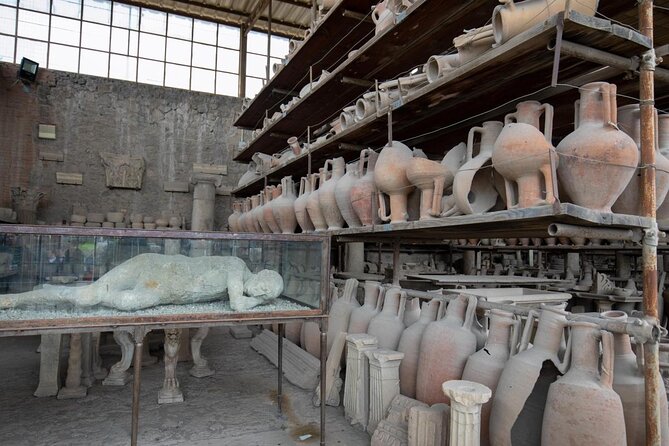
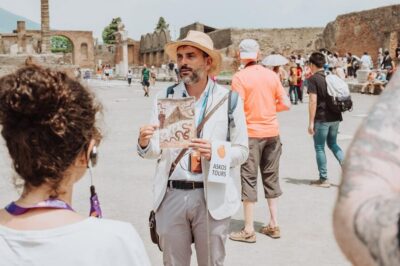
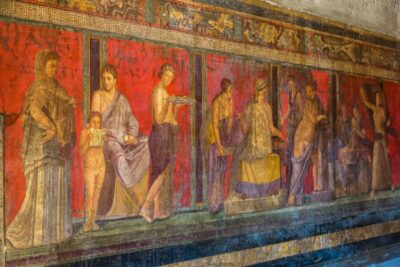
The first stop is the Archaeological Park of Pompeii, with an emphasis on famous areas and frescoes. That opening matters because frescoes and wall paintings are one of the fastest ways to make the city feel real. Without context, they can look like decoration. With context, they start to read like stories about status, taste, and daily life.
You also get admission ticket time built into the schedule here. That means less time standing in line, and more time listening and looking. One practical drawback of a 2-hour format: you won’t see everything, and you may wish you had longer if you’re a high-detail archaeology person.
Odeon (Teatro Piccolo), then Teatro Grande for the show-business story
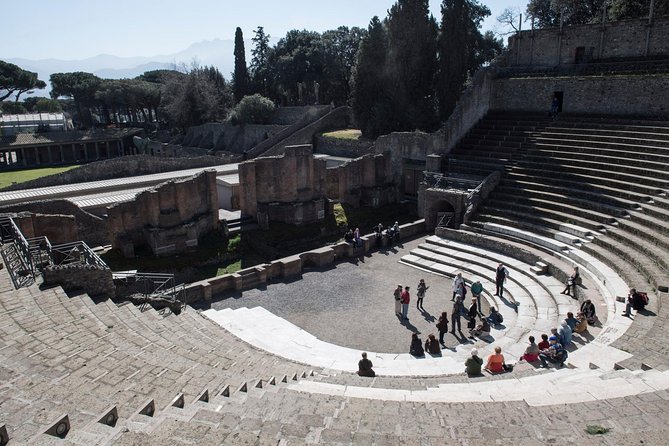
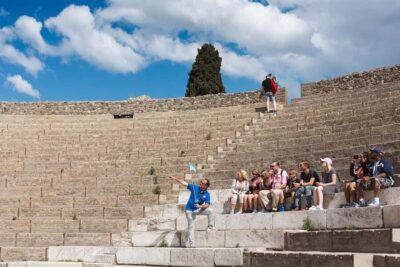
Next comes Odeon, sometimes described as the Teatro Piccolo of Pompeii. Then you move to Teatro Grande, the most important theater in the city. Together, these give you a quick “public entertainment ladder,” from smaller venues to the big stage.
What I like about pairing these two: you can spot differences in scale and layout, and a good guide will help you connect them to how Romans gathered. Theaters weren’t just buildings, they were social engines. In a short visit, theaters help you understand Pompeii as an active city, not only a preserved relic.
Because these stops can be visually dense (lots to look at, lots of people), having a guide who can keep the group moving at a moderate pace is key. Some guides are specifically praised for pacing that works even for older visitors and for families.
House of Menander, a luxury home you can read with your eyes
The House of Menander is one of the richer homes in Pompeii, highlighted here for architecture, decoration, and contents. This is where your understanding shifts from “what does it look like” to “what did wealth signal here.”
The value of including this house in a 2-hour route is simple. Pompeii can overwhelm you with ruins, but a standout residential stop gives you a clear anchor. Decoration and layout help you picture where people ate, socialized, and displayed status.
Short stop length is the only limitation. You’ll want to look, but you also have to move on. If you crave maximum time in houses, you might consider the private tour upgrade mentioned in the offering, since it can slow things down.
Our reviewers also walked through other two-hour experiences in Pompeii.

Stabian Baths (Terme Stabiane), Pompeii’s oldest thermal complex
The Stabian Baths cover a vast area and are described as the oldest thermal complex in the city. Baths in Pompeii are a big deal, because they were not only about cleanliness. They were about routine, community, and public conversation.
This stop helps you balance the residential and entertainment themes with something more everyday. It also works well because bath areas are easy to recognize in photos and in person, so your brain can track the space even when time is tight.
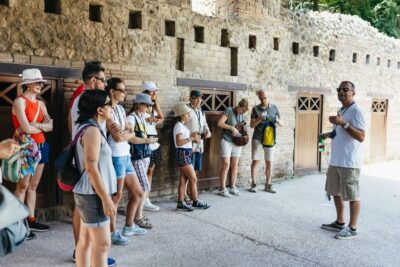
One practical consideration: Pompeii days can be hot. Several accounts mention heat management, including shaded pauses for commentary. A guide who adapts on the fly can make the difference between enjoying the tour and rushing through it just to survive the sun.
Lupanar, the famous brothel, explained without turning it into a spectacle
The Lupanar is included as the famous brothel in the ruined Roman city of Pompeii. This is one of those stops that people either skip on self-guided visits or over-simplify on their own, because it can turn into shock value.
With a good guide, it becomes more useful: you can connect the site to the city’s social structure, commerce, and urban planning. With a less careful approach, it can become awkward or too heavy for families. This is also where it’s smart to check your expectations if you’re bringing kids, since one account describes an experience that did not handle children well.
Via dell’Abbondanza, then House of the Faun, for street energy and household scale
Via dell’Abbondanza is one of Pompeii’s main streets, so it’s a great place to reorient yourself. It helps you understand movement through the city, not just isolated buildings.
Then you visit House of the Faun, described as one of the largest and most impressive private residences. If House of Menander is “wealth and decoration,” House of the Faun is “space and scale.” Together, they show you Pompeii’s private world at two different angles.
Because both are residential, this is also where a strong guide can make the scenes feel connected. You should come away thinking, not only seeing.
Forum de Pompeya and the Basilica, where business and civic life meet shelter
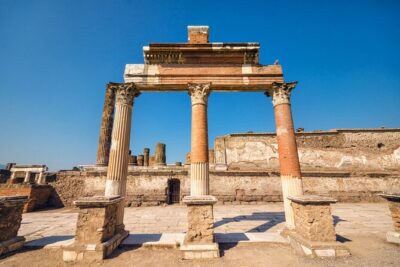
The Forum de Pompeya is the ancient main square, then you finish with the Basilica. The Basilica is described as an open portico that gave shelter to merchants and other activities.
This is valuable because these areas explain the city’s rhythm. Streets brought people in. The Forum and Basilica handled the public stuff, including commerce and gathering. It’s a strong way to end a highlight tour, because you see “the center” after seeing houses and entertainment spaces.
A real-world travel point: these central areas can be crowded. If you’re sensitive to noise or you want quieter photo time, a guide who knows crowd timing helps.
Price and value: what $32.67 buys you in real terms
At $32.67 per person for about two hours, the big value is not just a guided walk. It’s that admission ticket time is built into the schedule for every main stop listed. In practice, that reduces the math and friction of figuring out tickets while you’re already inside the park.
When this price feels fair:
- You want a fast, curated understanding of the best scenes
- You’re not sure what to prioritize and want the guide to choose for you
- You like asking questions, since many guides are praised for answering and adapting
When you might skip and do it on your own:
- If you’re very comfortable navigating Pompeii independently and you already have a plan for what matters to you
- If you know you want a longer, slower house-by-house visit
One review note came from a person who felt the tour was too basic and suggested buying admission and walking with a self-guided audio option instead. That’s a reminder to match the tour to your style. If you want depth at each site, two hours can feel short. If you want a clean overview that saves time, this fits.
Small-group reality: “small” can mean different things on different days
This is presented as a small-group tour, with a maximum of 30 travelers. Some experiences note truly small groups, even around 4 people, which makes the guide’s pace and attention feel more personal. Other experiences describe a larger group when changes happen, including a switch that added more people with headphones.
Here’s the practical takeaway: don’t assume you’ll always have the smallest possible group size. If you care about intimate pacing, consider the private tour upgrade mentioned in the offering.
Also note: if your hearing is sensitive, pay attention to how the headset setup is handled. One account mentions difficulty hearing via the headset, which is worth knowing before you book if you rely on clear audio.
Guides are the secret ingredient: Luca, Roberta, Manuela, Clare, and more
With tours like this, the site is always the star. But the guide can seriously change how much you get from it.
You’ll see repeated praise for guides such as:
- Luca, for passion and story telling, including good pacing for mixed ages
- Manuela and Roberta, for engaging delivery and helping families stay interested
- Clare, for bringing the town to life and doing well with kids, including managing heat
- Enzo, for strong performance even when the group size changed
The pattern is consistent. Great guides in Pompeii do three things well: they explain what you’re seeing, they keep you moving at a manageable pace, and they find moments to slow down for questions.
If you’re hoping for a very academic approach, one account suggested the guide was more of an overview than a deep archaeology lesson. That doesn’t mean every guide is the same, but it does mean you should choose with your expectations in mind.
Family-friendly, but plan for kids and temperament
The offering is described as family-friendly, and there are multiple accounts of guides doing a solid job with children in the 7 to 13 range. A guide like Roberta is described as working well with a 10-year-old, and Manuela is praised for keeping kids engaged.
But you should also know there’s at least one unhappy experience involving kids, where the reviewer said their children were mocked through the headset. That’s a big red flag for anyone who wants a gentle tone for younger visitors.
My practical advice:
- If your kids have short attention spans, aim for a guide who is known for keeping families engaged
- If you’re worried about inappropriate humor, message the provider in advance and ask how they handle kid questions and pacing
- Bring patience for heat and crowding. Pompeii is not a quiet museum
Best fit: who should book this and who should choose another plan
This tour is a good fit if:
- You have a tight schedule and want a highlight path
- You want admission included and don’t want to spend energy on logistics
- You like guided explanations for theaters, baths, rich homes, and civic spaces
- You want a moderate physical effort plan that’s manageable for many people
Consider a different option if:
- You want a deeper, longer look at frescos or houses, without frequent short stops
- You are very sensitive to group size changes and headset audio
- You need a guaranteed child-first experience with no chance of awkward humor
If you have time, you can also do this tour first, then walk sections on your own afterward using your new mental map. That way, the guide gives you orientation, and you decide what deserves your time.
Should you book it
Book it if your goal is a smart two-hour introduction that hits the major sites and helps you understand Pompeii beyond surface photos. The price feels reasonable for what you get, especially since admission time is included across the stops and the route is designed to keep you from missing key zones.
Skip or upgrade if you know you want a slower, more detailed “study session” in one or two areas, or if group size and audio comfort are deal-breakers. If you’re traveling with kids, ask questions in advance about how the guide handles families, since the experience can vary.
If you want Pompeii without the overwhelm, this is one of the most practical ways to do it.
FAQ
How long is the Pompeii tour?
It runs for about 2 hours.
What language is the tour offered in?
The tour is offered in English.
Is Pompeii admission included?
Admission tickets are included for the listed stops.
Where do we meet for the tour?
The meeting point is Ristorante Suisse, Piazza Esedra, 10/13, 80045 Pompei NA, Italy, and the tour ends back at the same location.
What group size should I expect?
The tour has a minimum of 6 people per tour, a maximum of 30 travelers, and group discounts are part of the offering.
Is it suitable for families and kids?
The tour is described as family-friendly, and many guides are praised for keeping children engaged. Still, there are mixed accounts about child handling, so it’s worth being mindful of your expectations.
What is the physical fitness level requirement?
A moderate physical fitness level is recommended.
Are there any free admission days for Pompeii?
Yes. The Pompeii entrance ticket is free on the first Sunday of each month, and it is also free for people under 18 years old with valid ID or passport.
Can I cancel and get a refund?
You can cancel for a full refund up to 24 hours before the experience start time, and free cancellation is available.
Do I need a printed ticket?
A mobile ticket is part of the features, so you likely won’t need a printed copy.
Our Wider Tours File for Pompeii
The Rest of Our Pompeii Site Visits in Pompeii

Not quite the day you had in mind? The rest of our Pompeii write-ups sit below
- Ancient Pompeii Private Tour: Skip the Line & Kid-Friendly Option★ 5.0 · 167 reviews
- Pompeii 2-hour Private Tour with an Archaeologist-Ticket included★ 5.0 · 181 reviews
- Pompeii Private Tour with an Archaeologist Guide★ 5.0 · 184 reviews
- Mount Vesuvius Tour from Pompeii Led by an Expert Guide★ 5.0 · 185 reviews
- Stories of Pompeii: Small Group tour with archeology expert guide★ 5.0 · 191 reviews
- Pompeii: 2 Hour Private Tour with an Archeologist Guide★ 5.0 · 214 reviews
- Pompeii and Mount Vesuvius Small Group Tour★ 4.5 · 233 reviews
- Pompeii Guided Group Tour with Entry Ticket and Archaeologist★ 4.5 · 269 reviews
- Pompeii: Guided Small Group Tour Max 6 People with Private Option★ 5.0 · 269 reviews
Pompeii Archaeological Site, top to bottom.
 ★ 4.8Pompeii: Entry Ticket and Guided Tour with an ArchaeologistFrom $3519,459 reviews
 ★ 4.2Pompeii: Entry Ticket with Optional Audio GuideFrom $2612,360 reviews
 ★ 4.8Pompeii: Small Group Tour with an ArchaeologistFrom $4012,264 reviews
 ★ 4.3From Naples: Pompeii Ruins & Mount Vesuvius Day TourFrom $12011,459 reviews
 ★ 4.6From Rome: Pompeii, Amalfi Coast, and Sorrento Day TripFrom $797,031 reviews
 ★ 4.6From Rome: Pompeii, Amalfi Coast and Positano Day TripFrom $996,620 reviews
★ 5.0Pompeii Small Group Tour with an ArchaeologistFrom $356,593 reviews
★ 4.6From Rome: Pompeii, Amalfi Coast and Positano Day TripFrom $996,620 reviews
★ 5.0Pompeii Small Group Tour with an ArchaeologistFrom $356,593 reviews
 ★ 4.5Pompeii, Amalfi Coast and Positano Day Trip from RomeFrom $1016,250 reviews